

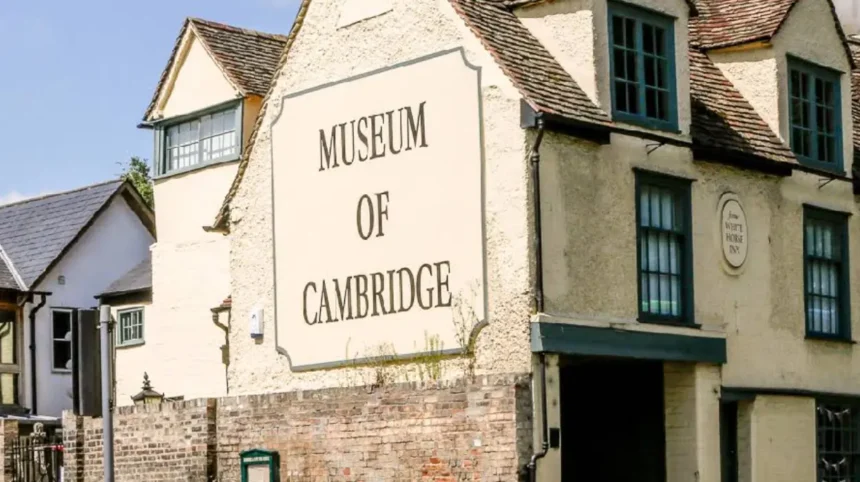
Cambridge museums represent a continuous lineage of academic collection, curation, and preservation spanning nearly three centuries within the United Kingdom. These institutional repositories developed from individual scholarly donations, university department expansions, and civic heritage initiatives designed to safeguard human material culture and scientific specimens.
- Which collections form the University of Cambridge Museums consortium?
- How do Cambridge museums manage their historical and scientific preservation processes?
- What are the major statistical data and visitor impacts of Cambridge museums?
- What future developments will shape the structural relevance of Cambridge museums?
- FAQs About Cambridge Museums
- How much does it cost to visit the main University of Cambridge museums?
- Which Cambridge museum is most suitable for viewing dinosaur fossils?
- Can independent researchers access the archived collections of the museums?
- Are all Cambridge museums fully accessible to visitors with limited mobility?
- Where can visitors see original items collected by Charles Darwin?
The formal origin of systemic collection in the region dates back to 1728 when John Woodward bequeathed his vast geological compilation to the University of Cambridge, establishing the foundation for earth science curation. This momentum accelerated in 1816 when Richard Fitzwilliam left his substantial library and art collection to the university, creating a monumental public museum. The late nineteenth and twentieth centuries witnessed further expansion as specialized academic departments established dedicated spaces to house global artifacts, biological specimens, and technological records. Today, these sites operate as distinct legal and educational entities that preserve more than five million separate objects for public engagement and international research.
The geographic layout of these buildings aligns closely with the historical evolution of university campus sites across the city center. Visitors exploring these cultural landmarks can discover cost-effective travel strategies by accessing a comprehensive guide on what are the best free things to do in Cambridge. This structural integration between academic discovery and city geography ensures that the conservation sites remain physically accessible to millions of international tourists annually. The historical growth of these spaces reflects the broader shift from private aristocratic curiosity cabinets to public educational frameworks open to global audiences.
Which collections form the University of Cambridge Museums consortium?
The University of Cambridge Museums consortium consists of eight distinct museum structures and a dedicated botanic garden operating under a unified collaborative network. This specific infrastructure includes the Fitzwilliam Museum, the Museum of Archaeology and Anthropology, the Polar Museum, the Sedgwick Museum of Earth Sciences, the Museum of Classical Archaeology, the Whipple Museum of the History of Science, Kettle’s Yard, and the University Museum of Zoology.
The Fitzwilliam Museum acts as the lead partner within this consortium, holding more than half a million individual works of art and antiquities spanning ancient civilizations. The Museum of Archaeology and Anthropology contains two million years of human history through ethnographic materials, including carved totem poles, pacific voyage textiles, and local Anglo-Saxon treasures. The Sedgwick Museum of Earth Sciences preserves at least two million fossil specimens, including historic specimens gathered by Charles Darwin during his voyage on the HMS Beagle between 1831 and 1836. Specialized scientific tracking continues at the Whipple Museum of the History of Science, which displays astronomical instruments, antique microscopes, and mathematical tools dating from the medieval period to the twentieth century.
Beyond the major centralized institutions, independent civic spaces document the industrial and residential heritage of the Cambridgeshire region. Tourists seeking unique perspectives on local history can identify unusual locations by reading about what are the most extraordinary hidden gems in Cambridge. These smaller, specialized installations complement the massive university collections by focusing specifically on domestic life, regional agricultural transformations, and urban manufacturing processes. Together, this complete network provides a thorough educational taxonomy covering fine art, evolutionary biology, polar exploration, and local socioeconomic development.
How do Cambridge museums manage their historical and scientific preservation processes?
Cambridge museums manage preservation through specialized environmental controls, preventative conservation methodologies, and advanced digital archiving infrastructure managed by professional conservators. These technical processes protect vulnerable physical substrates, such as oil pigments, organic fibers, skeletal remains, and prehistoric fossils, from atmospheric degradation and mechanical damage.
The primary mechanism of preservation requires the maintaining of strict ambient environments inside galleries, featuring fixed relative humidity levels between 45 percent and 55 percent. Conservators utilize specialized monitoring tools, including electronic telemetric hygrothermographs, ultraviolet filtering films on window panes, and sealed inert gas cases, to stabilize delicate artifacts. Chemical stabilization procedures involve using non-acidic storage materials, reversible consolidants, and microscopic laser cleaning systems to remove surface soot without altering original historical layers. Digital preservation initiatives involve high-resolution three-dimensional scanning, multi-spectral imaging analysis, and open-access relational databases that catalog millions of individual items for global researchers.
Scientific research occurs concurrently with physical preservation, converting historical artifacts into active datasets for modern global investigations. Academic teams analyze ancient DNA extracts from zoological specimens, verify paint layers using X-ray fluorescence spectroscopy, and determine manufacturing origins via stable isotope analysis. These investigative processes require clean laboratory environments, specialized safety clothing, and precision mass spectrometers to extract data without damaging structural integrity. The combination of structural material preservation and digital document replication ensures that physical items remain secure while intellectual content stays globally accessible.
What are the major statistical data and visitor impacts of Cambridge museums?
Jake Boscarino
Cambridge museums generate substantial quantifiable impacts, attracting over two million public visitors annually and supporting hundreds of active academic research projects worldwide. These metrics confirm the position of the regional institutions as primary contributors to both the tourism economy of eastern England and international educational advancement.
Demographic studies show that regional educational institutions utilize these sites for foundational learning, with over 100,000 schoolchildren attending organized curatorial sessions annually. Economic assessments indicate that museum operations contribute more than thirty million pounds to the local economy through secondary tourism spending. The high volume of foot traffic requires structured visitor routing plans, digital ticketing platforms, and variable seasonal opening schedules to protect heritage architectures. Furthermore, peer-reviewed research publications drawing directly from the university collections exceed three hundred papers annually, covering diverse fields like paleontology, history of science, and classical art history. These figures demonstrate that the collections function simultaneously as public leisure spaces and critical centers of global intellectual production.
What future developments will shape the structural relevance of Cambridge museums?
Future developments in Cambridge museums focus on expanding digital inclusion, decolonizing historical collections, and implementing carbon-neutral building management systems by 2030. These strategic transformations address changing global ethics regarding material ownership and national requirements for environmental sustainability within public sectors.
Curatorial teams are actively revising collection documentation to acknowledge provenance histories, colonial sourcing methods, and the specific cultural contexts of indigenous artifacts. Architectural upgrades involve installing geothermal heat pumps, LED illumination networks, and intelligent insulation materials to decrease institutional greenhouse gas outputs significantly. Digital expansion plans aim to establish virtual reality gallery tours, machine-learning search tools for global databases, and interactive open-source educational curricula. These initiatives ensure the physical structures remain resilient against shifting economic realities while extending their educational value far beyond traditional geographic boundaries.
Planning a budget-friendly trip to the city? Discover what are the best free things to do in Cambridge for budget travelers to maximize your itinerary without spending a penny.
FAQs About Cambridge Museums
How much does it cost to visit the main University of Cambridge museums?
The main University of Cambridge museums operate with completely free admission for all public visitors throughout the year. Specialized temporary exhibitions or public workshops occasionally require separate paid entry tickets, but general gallery access remains free. Visitors must check individual institution websites prior to arrival because certain sites recommend reserving free timed-entry vouchers online to manage gallery capacity.
Which Cambridge museum is most suitable for viewing dinosaur fossils?
The Sedgwick Museum of Earth Sciences is the premier regional repository for viewing dinosaur fossils and prehistoric rock specimens. Located on Downing Street, this specialized institution displays more than two thousand separate fossil remains, including a complete Iguanodon skeleton and ancient marine reptiles. The gallery layout follows a chronological path tracking 4.5 billion years of planetary history, making it highly educational for families and researchers.
Can independent researchers access the archived collections of the museums?
Independent researchers can access the archived collections of the museums by submitting a formal academic request to the specific curatorial department. Applicants must provide a detailed research proposal, clear identification documents, and a statement of intent at least four weeks before their desired visit date. Approved scholars receive supervised access to specialized research rooms, digital microscopic tools, and primary archive catalogs.
Are all Cambridge museums fully accessible to visitors with limited mobility?
The majority of Cambridge museums feature step-free entrance ramps, automated doors, and internal passenger elevators designed for visitors with limited mobility. Historic architectural elements in certain older buildings can present physical navigation challenges, which staff mitigate using specialized stair climbers or alternative sensory guides. Visitors can request wheelchair loans, accessible parking maps, and detailed floor plans at the welcome desks of each site.
Where can visitors see original items collected by Charles Darwin?
Visitors can view original biological and geological specimens collected by Charles Darwin at the University Museum of Zoology and the Sedgwick Museum of Earth Sciences. The zoological collection displays preserved insects, small mammals, and deep-sea specimens collected during the historic 1831 voyage of the HMS Beagle. Curators label these historic artifacts clearly with Darwin’s original field notes, providing direct insights into early evolutionary research.