

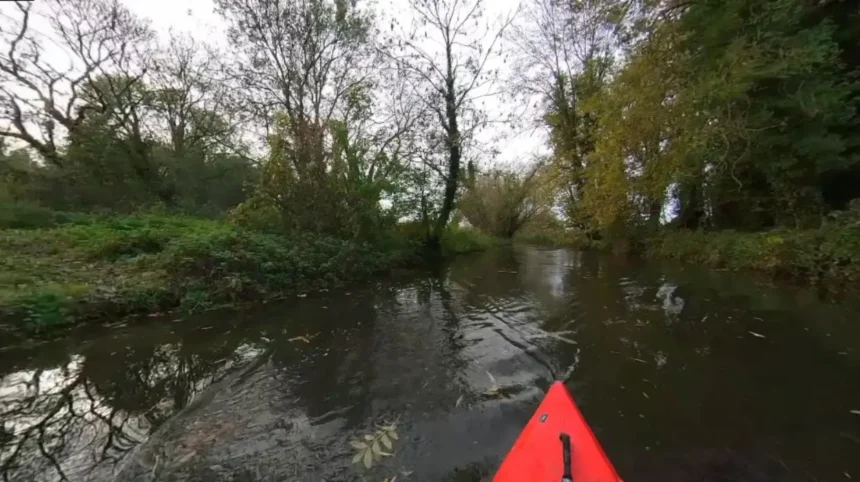
Byron’s Pool Local Nature Reserve is a 4.4-hectare designated ecological site situated along the River Cam near Grantchester in Cambridgeshire. The reserve encompasses mature woodland, a former millpond, a concrete weir structure, and a fish pass constructed to aid river migratory species.
The reserve operates under joint ecological management by Cambridge City Council and the City Greenways Project. Historically, the site served as the millpond for Trumpington Mill, which is documented in medieval records and identified as the setting for The Reeve’s Tale in Geoffrey Chaucer’s Canterbury Tales.
The mill structure fell into disuse and disappeared prior to the twentieth century. Flood control engineering in 1947 replaced the original timber weir with a concrete sluice system to regulate water flow from the River Cam. In 1949, the Trumpington Hall Estate transferred ownership of the land to Cambridge City Council, leading to its formal status as a Local Nature Reserve in 2005.
The modern reserve acts as a critical riparian habitat within the Cambridgeshire green infrastructure grid. The central pool feature measures approximately 20 metres in width with variable depths reaching up to 2.5 metres depending on seasonal rainfall and upstream sluice discharge. The terrestrial zone features native broadleaf trees including Salix alba, Fraxinus excelsior, and Alnus glutinosa. The local aquatic environment supports various freshwater organisms, water birds, and native invertebrate species.
Byron’s Pool functions as a public access node for outdoor recreation, ecological study, and pedestrian transit between Cambridge, Trumpington Meadows Country Park, and Grantchester village. Visitors access the site via designated public footpaths connecting Grantchester Road to the River Cam corridor. The reserve maintains gravelled paths to provide step-free access for wheel users and strollers across the central woodland trail network.
How Did Lord Byron and History Shape Byron’s Pool?
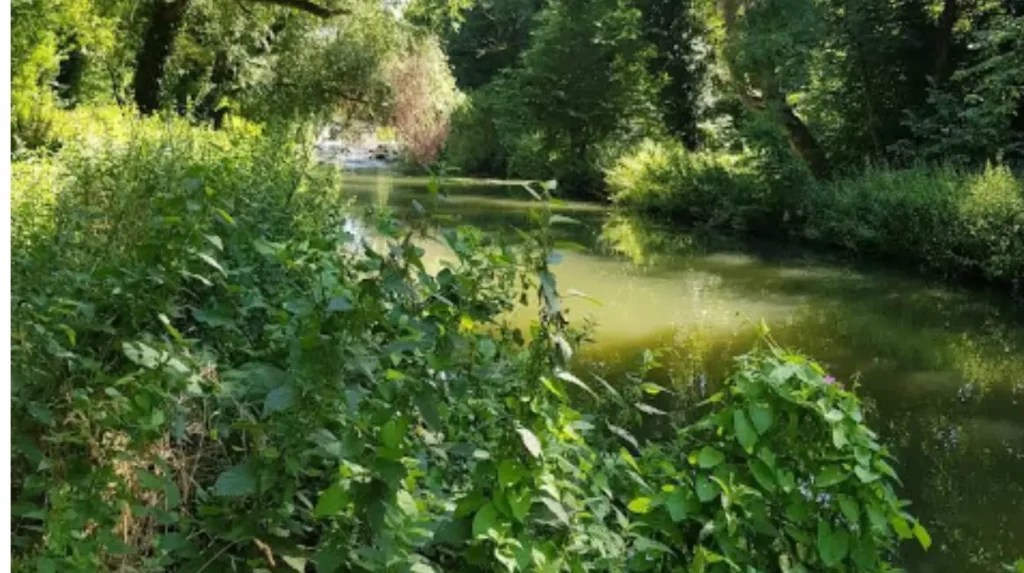
Lord Byron established the swimming tradition at Byron’s Pool between 1805 and 1808 while studying at Trinity College, Cambridge. The poet routinely bathed in the deep millpond waters, creating a cultural association that persists today.
George Gordon Byron resided at Trinity College from October 1805 through May 1808. During his undergraduate studies, Byron frequented the secluded river bend south of Cambridge to practice long-distance swimming. Byron documented his affinity for aquatic exercise in personal correspondence, noting that open-water swimming provided relief from physical ailments and strict academic routines. Historical accounts confirm Byron swam across the pool multiple times per week during summer terms.
The site held literary significance prior to Byron’s residence. Archival research links the location to Trumpington Mill, referenced by Geoffrey Chaucer in the fourteenth century. Following Byron’s departure from Cambridge, the pool remained a destination for literary figures connected to the university.
In the early twentieth century, poet Rupert Brooke and members of the Neo-Pagan movement frequented the pool while residing in Grantchester. Brooke referenced the location and Byron’s aquatic habits in his 1912 poem The Old Vicarage, Grantchester.
The historical site underwent significant physical alteration over two centuries. The original wooden mill dam deteriorated during the early twentieth century and was entirely replaced following major flooding across Eastern England in 1947.
Municipal engineers constructed a concrete weir to control river dynamics, which altered the water velocity and sedimentation patterns within the main pool. The site transitioned from an active agricultural mill pond to a private estate parkland, before achieving public protection under municipal ownership.
What Ecological Features and Wildlife Exist at Byron’s Pool?
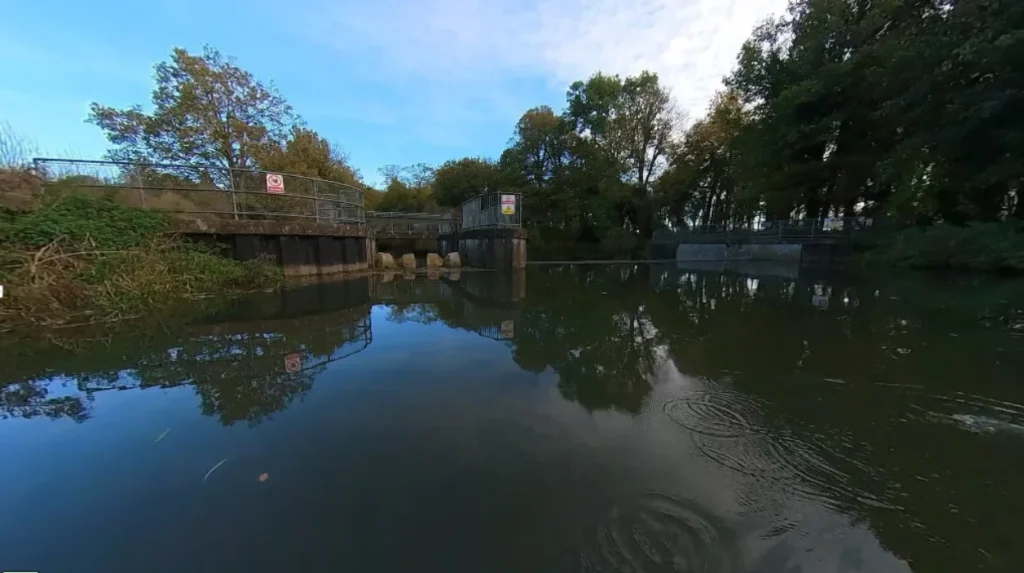
Byron’s Pool features diverse freshwater and woodland ecosystems housing protected avian, aquatic, and invertebrate species. The reserve contains 4.4 hectares of mixed broadleaf canopy, chalk stream river habitat, and marshland vegetation.
The River Cam at Byron’s Pool exhibits chemical characteristics typical of lowland chalk rivers fed by underlying aquifers. The water temperature ranges from 4°C in January to 18°C in July, with a stable pH range between 7.5 and 8.2. Dissolved oxygen levels average 8.5 milligrams per litre, supporting diverse aquatic organisms. Aquatic flora includes Nuphar lutea, Ranunculus fluitans, and Myriophyllum spicatum, which cover 30 percent of the riverbed during peak growing months.
Avian species documented within the reserve boundaries include Alcedo atthis, Tachybaptus ruficollis, Motacilla cinerea, and Ardea cinerea. The reserve provides nesting habitat for 35 confirmed bird species. The damp woodland floor supports amphibian populations including Rana temporaria and Bufo bufo. Invertebrate surveys record 18 species of Odonata, including Calopteryx splendens and Aeshna grandis.
Fish populations within Byron’s Pool comprise 12 native freshwater species. Mainstream species include Salmo trutta, Esox lucius, Squalius cephalus, Rutilus rutilus, and Perca fluviatilis. In 2000, Cambridge City Council installed a bypass channel parallel to the concrete weir. This fish pass features a series of low-velocity step pools that allow migratory species, such as Anguilla anguilla and Salmo trutta, to navigate past the physical barrier of the weir during upstream spawning runs.
Is Wild Swimming Legal and Safe at Byron’s Pool?
Wild swimming at Byron’s Pool operates under specific legal access rights, local bylaws, and physical water safety considerations. Swimmers must evaluate water quality, current velocity, structural hazards, and cold water shock risks prior to entry.
The Right to Roam under the Countryside and Rights of Way Act 2000 does not automatically confer open-water swimming permissions on all inland watercourses. At Byron’s Pool, public footpaths grant legal pedestrian access to the riverbank, but Cambridge City Council manages the water edge under local nature reserve regulations. While historical precedent permits open-water access, wild swimmers enter the water at their own risk without lifeguard supervision.
Physical hazards at the site include hydraulic undertows generated by the concrete weir discharge. Water moving over the weir crest creates a recirculating current that can trap swimmers against the submerged concrete apron. Deep silt deposits along the pool floor present entrapment risks, reducing water depth unpredictably. Submerged tree roots and debris line the banks, increasing collision risks during entry.
Biological and chemical risks require monitoring. The River Cam receives agricultural runoff and storm overflow discharges upstream. Bacterial testing reveals variable levels of Escherichia coli and Enterococci, particularly following heavy precipitation events exceeding 10 millimetres in 24 hours. Swimmers face exposure risks for Leptospirosis, caused by bacteria excreted by rodents into watercourses. Water temperatures below 15°C trigger cold water shock, leading to involuntary gasping, hyperventilation, and rapid loss of muscle control.
How Do You Access Byron’s Pool and Plan a Visit?
Reaching Byron’s Pool requires navigating local transport networks, public footpaths, and designated nature reserve entry points. Visitors can access the site via bicycle paths, public buses, personal vehicles, or pedestrian walking routes.
The reserve lies approximately 3 miles south of Cambridge city centre, situated near Grantchester Road and the M11 motorway corridor. Pedestrians walking from central Cambridge follow the River Cam south through Grantchester Meadows, continuing along the marked public footpath for 1.2 miles beyond Grantchester village. The total walking distance from the Cambridge Mathematical Bridge to Byron’s Pool measures 3.4 miles.
Cyclists utilize National Cycle Network Route 11, which connects Cambridge to Trumpington Meadows. The cycle path transitions to a gravel track near the reserve boundary, requiring off-road tires or dismounting. Public transit users take stagecoach bus service numbers 18 or 75 from Cambridge Drummer Street Bus Station to Trumpington village. From the Trumpington bus stops, a 15-minute walk along Grantchester Road leads directly to the reserve entrance carpark.
Vehicle parking is available at the dedicated Byron’s Pool car park located off Grantchester Road (Postcode CB2 9LH). The car park contains 15 standard vehicle bays and 2 designated blue badge spaces. Parking operates free of charge with height restriction barriers set at 2.1 metres. Opening times run from 8:00 AM until dusk daily. Facilities at the site remain minimal to preserve the natural ecosystem. Visitors must bring appropriate footwear, water, and waste bags, as no public toilets or refuse bins exist inside the nature reserve boundaries.
What Is the Future Conservation Plan for Byron’s Pool?
The future management of Byron’s Pool focuses on habitat preservation, climate resilience, and sustainable public access. Local conservation authorities balance biodiversity monitoring with infrastructure maintenance along the River Cam.
The Cambridge City Council Nature Conservation Strategy outlines ecological priorities for the reserve through 2030. Key objectives include controlling invasive non-native plant species, such as Impatiens glandulifera and Hydrocotyle ranunculoides, which threaten native riverbank vegetation. Conservation teams perform selective coppicing of Alnus glutinosa along the river channels to maintain light penetration and prevent complete canopy closure over breeding fish habitats.
Climate change poses hydrologic challenges to the River Cam basin. Extended summer droughts reduce river discharge volumes, leading to lower dissolved oxygen levels and elevated water temperatures in Byron’s Pool. Conversely, winter flood events cause erosion along the unreinforced riverbanks. To mitigate channel degradation, conservationists install soft engineering structures, including hazel hurdles and willow faggots, to stabilize soil banks without compromising natural habitats.
Public engagement programs aim to minimize human impact on the nature reserve. High visitor numbers during summer months cause soil compaction around tree root zones and litter accumulation along water margins. Future management initiatives focus on installing updated educational signage, restoring designated access platforms to prevent bank erosion, and conducting volunteer-led biological surveys to track dragonfly, bat, and bird populations across the reserve.
Can you legally swim at Byron’s Pool in Grantchester?
Public footpaths provide legal pedestrian access to the riverbanks at Byron’s Pool Local Nature Reserve. While open-water swimming occurs based on historical tradition, swimmers enter the water at their own risk without formal municipal supervision or lifeguard presence. Visitors must respect local nature reserve conservation guidelines and avoid disturbing wildlife.
Where do you park when visiting Byron’s Pool?
Free public parking is available at the Byron’s Pool car park situated directly off Grantchester Road (Postcode CB2 9LH). The car park contains 15 vehicle spaces, including 2 designated accessible bays, and features a 2.1-metre height barrier. The gates remain open daily from 8:00 AM until dusk.
How deep is the water at Byron’s Pool?
Water depth within the main pool varies between 1.2 metres in shallower river sections and 2.5 metres directly below the weir structure. Depths shift seasonally depending on precipitation levels and sluice operations upstream. Submerged silt beds make depth estimation difficult, making diving extremely dangerous.
What wildlife can you see at Byron’s Pool Nature Reserve?
The 4.4-hectare reserve supports Kingfishers, Grey Wagtails, Little Grebes, and Grey Herons along the watercourse. The woodland and river corridor house 18 species of dragonflies and damselflies, alongside native fish including Brown Trout and European Eels.
How did Byron’s Pool get its name?
The site takes its name from the romantic poet Lord Byron, who studied at Trinity College, Cambridge from 1805 to 1808. Byron regularly swam in the former Trumpington Mill pond during his student years, establishing the location’s historic literary connection.