
Key Points
- 20mph limits in Cambridge could be introduced on 18 roads and road sections under proposals from Cambridgeshire County Council.
- A public consultation on the plans has closed, with a decision expected later in 2026.
- Any approved changes could be implemented in early 2027.
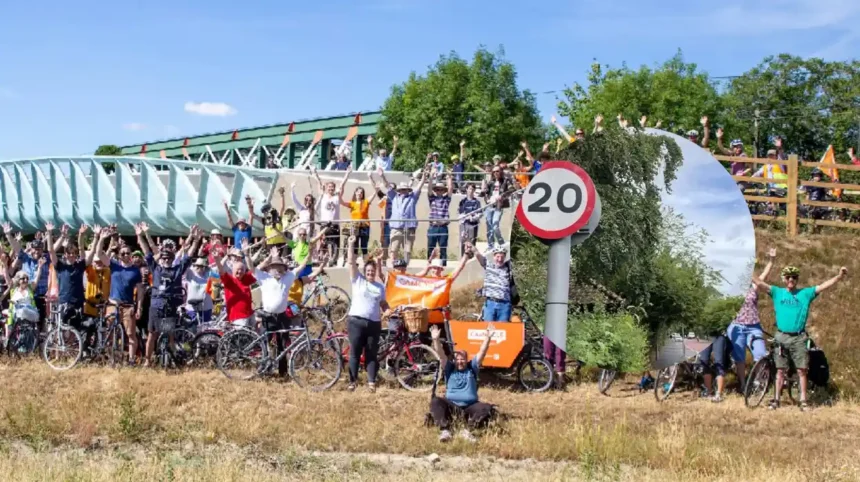
- Cycling charity Camcycle supports the proposals and wants a default 20mph limit across all roads within Cambridge’s city boundary.
- Camcycle representative Anna Williams said the proposals were not a “war against the motorist”.
- The council said lower speed limits could improve safety for people walking and cycling, particularly vulnerable road users.
- The proposed roads include sections of Barton Road, Chesterton Road, East Road, Hills Road, Newnham Road, Queen’s Road and Trumpington Road.
- Cambridgeshire County Council said more than 100 people had been seriously injured on Cambridge’s roads since 2017.
- The council also said a person was about five times more likely to be killed when hit by a vehicle travelling at 30mph than at 20mph.
- The proposals build on plans developed in 2024 to expand the number of 20mph streets in Cambridge.
Cambridge (Cambridge Tribune) August 6, 2026 — proposals to introduce 20mph speed limits on 18 roads and road sections in the city have received support from cycling charity Camcycle, although the final decision has not yet been made.
- Key Points
- Which roads could receive 20mph limits?
- Why does Camcycle support the proposals?
- What road-safety evidence has the council cited?
- How could slower roads affect transport in Cambridge?
- When could the Cambridge speed-limit changes begin?
- What is the background to Cambridge’s 20mph expansion?
- How could the proposals affect Cambridge residents and road users?
The public consultation on the proposals has now closed. The county council is expected to decide later this year whether all, some or none of the proposed roads should receive the lower speed limit. If approved, changes could be made in early 2027.
The plans form part of wider efforts to reduce vehicle speeds in residential areas and busy urban locations. Cambridgeshire County Council previously outlined plans in 2024 to expand the number of 20mph streets across Cambridge. Feedback from local communities was reported to have been positive since those proposals were developed.
The current proposals do not introduce a blanket 20mph limit across the entire city. Instead, they focus on selected routes and sections of roads where the council believes lower speeds could provide the greatest road-safety benefits.
Which roads could receive 20mph limits?
The council’s proposals cover a number of roads around the city centre and include sections of several major routes. The roads and sections listed in the plans are:
- Barton Road, between Grantchester Road and Kings Road.
- Brooklands Avenue.
- Chesterton Lane.
- Chesterton Road, between Mitcham’s Corner and Magdalene Bridge.
- Coldhams Lane, between Cromwell Road and the Brook’s Road roundabout.
- Corona Road.
- Croft Holme Lane, including part of the Mitcham’s Corner gyratory.
- East Road and the Grafton Centre service roads.
- Gonville Place.
- Hills Road, between Lensfield Road and Brooklands Avenue.
- Lensfield Road.
- Milton Road, at the Mitcham’s Corner junction.
- Newnham Road.
- Northampton Street.
- Queen’s Road.
- Trumpington Road, between Trumpington Street and Brooklands Avenue.
- Trumpington Street, between Mill Lane and Trumpington Road.
- Victoria Avenue, at the Mitcham’s Corner junction.
The list includes roads used by motorists, buses, cyclists and pedestrians travelling into and around central Cambridge. Several proposals apply only to specific sections rather than the full length of a road.
The council’s approach differs from Camcycle’s preferred policy. The charity wants a default 20mph limit across all roads within the Cambridge city boundary. The council, however, has concentrated its current proposals on residential streets and busy urban roads where officials believe reduced speeds would be particularly beneficial.
Why does Camcycle support the proposals?
Camcycle has argued that expanding 20mph zones would improve conditions for people walking and cycling and would not represent an attempt to prevent people from using cars.
As reported by Dan Mason of Greatest Hits Radio Cambridgeshire, Anna Williams of Camcycle acknowledged that some residents would continue to depend on cars for certain journeys. She said the city would benefit if walking, cycling and public transport were made as attractive as possible.
“There will always be a need for some people to drive or to drive for some journeys, but if we can make active travel and public transport as attractive as possible, we’ll have a better city for everyone,”
Williams said.
Williams also said there would be a range of views about the plans. However, she argued that people should not be seriously injured while travelling to school, shops or work.
“There’s always going to be a range of opinions, but I hope we can all agree that we don’t think people should be hurt on their way to school, shops, work; we want to reduce that suffering to individuals and families and this will make a big difference,” she said.
Camcycle’s published policy also supports 20mph speed limits on residential streets. The organisation says rural speed restrictions should be reduced where local conditions make lower speeds appropriate.
What road-safety evidence has the council cited?
Cambridgeshire County Council said more than 100 people had been seriously injured on Cambridge’s roads since 2017. The authority also stated that a person was approximately five times more likely to be killed if hit by a vehicle travelling at 30mph than if hit by a vehicle travelling at 20mph.
Councillor Alex Beckett, chair of Cambridgeshire County Council’s Highways and Transport Committee, said 20mph limits could make a substantial difference to road safety, particularly for vulnerable road users.
“20mph limits can make a huge difference in improving safety especially for our most vulnerable road users,” Beckett said.
The safety argument is central to the proposals because people walking and cycling have less physical protection than people travelling in cars. A lower speed limit is intended to reduce the severity of collisions and give drivers more time to react to hazards.
The proposals are also linked to the council’s broader transport objectives. Camcycle says slower roads can create a more comfortable environment for walking and cycling, while the council has indicated that lower limits could be most useful on roads with significant interaction between vehicles and other road users.
How could slower roads affect transport in Cambridge?
Anna Williams said slower traffic could make streets more attractive to people walking and cycling. She said this could encourage more residents to use active travel for some journeys.
“Slower streets are safer streets; by bringing the speed limit down, that makes things safer for people walking and cycling so if you’re hit, you’re less likely to be seriously injured,” Williams said.
She added that reduced traffic speeds could improve the environment for people travelling without cars. Williams also argued that Cambridge could not provide enough road space for every resident, including future residents, to drive for every journey.
“There isn’t space for everybody that lives here or going to live here to drive for every journey, so we need to look at the modes of transport that can move the most people more efficiently but not damage our city,” she said.
The proposed limits would therefore affect more than vehicle speeds. They form part of a wider debate about how Cambridge manages limited road space and balances the needs of drivers, pedestrians, cyclists and public transport users.
At this stage, the proposals remain subject to the council’s decision-making process. The closure of the consultation does not mean that every listed road will automatically receive a 20mph limit.
When could the Cambridge speed-limit changes begin?
Cambridgeshire County Council is expected to consider the consultation responses before deciding whether to proceed with all, some or none of the proposed changes. The decision is due later in 2026.
If the authority approves the proposals, the new limits could be introduced in early 2027. The final scope of the scheme, including which roads are selected and whether any details are amended, will depend on the council’s assessment of the consultation and its road-safety considerations.
The timetable means that motorists, residents, businesses and transport users may not see immediate changes. Until new signs and any associated road markings are installed, existing speed limits remain in place.
The council’s plans are part of a longer-running countywide programme. Cambridgeshire County Council operates a funding programme for introducing 20mph limits or zones across the county, with applications considered through annual rounds.
What is the background to Cambridge’s 20mph expansion?
Cambridgeshire has introduced 20mph zones and limits in a number of towns and villages as part of efforts to improve road safety. Earlier schemes were introduced in locations including Barton, Duxford, Godmanchester, Great Gransden, Hauxton, Melbourn, Oakington, Sawston, Somersham, St Neots, Stilton, Toft and Woodhurst.
In Cambridge, the county council’s 2024 proposals aimed to extend 20mph restrictions to dozens of additional roads. The plans included routes and residential areas across the north, east, south and west of the city, including parts of Milton Road, Newmarket Road, Hills Road, Trumpington Road, Barton Road and Huntingdon Road.
The latest proposals are more specific and concern 18 roads or road sections. They build on the previous expansion plans and reflect the council’s stated preference for targeting residential streets and busy urban routes.
Camcycle has continued to call for a wider approach. Its policy position supports 20mph limits on residential roads and argues that speed restrictions should reflect the conditions of individual locations.
How could the proposals affect Cambridge residents and road users?
If approved, the proposals are likely to have the greatest direct effect on drivers using the 18 listed roads and sections. Motorists would need to comply with the lower limit once it was legally introduced and signed.
For people walking and cycling, the intended effect would be safer and more comfortable journeys. However, the final impact would depend on driver compliance, the design and placement of signs, enforcement and how the new limits interact with existing traffic-management measures.
The development is also likely to keep the focus on the balance between road safety and journey times. Camcycle views lower speeds as part of a safer, more efficient transport system, while the council must consider consultation responses and the practical operation of each proposed limit before making a final decision.