
Key Points
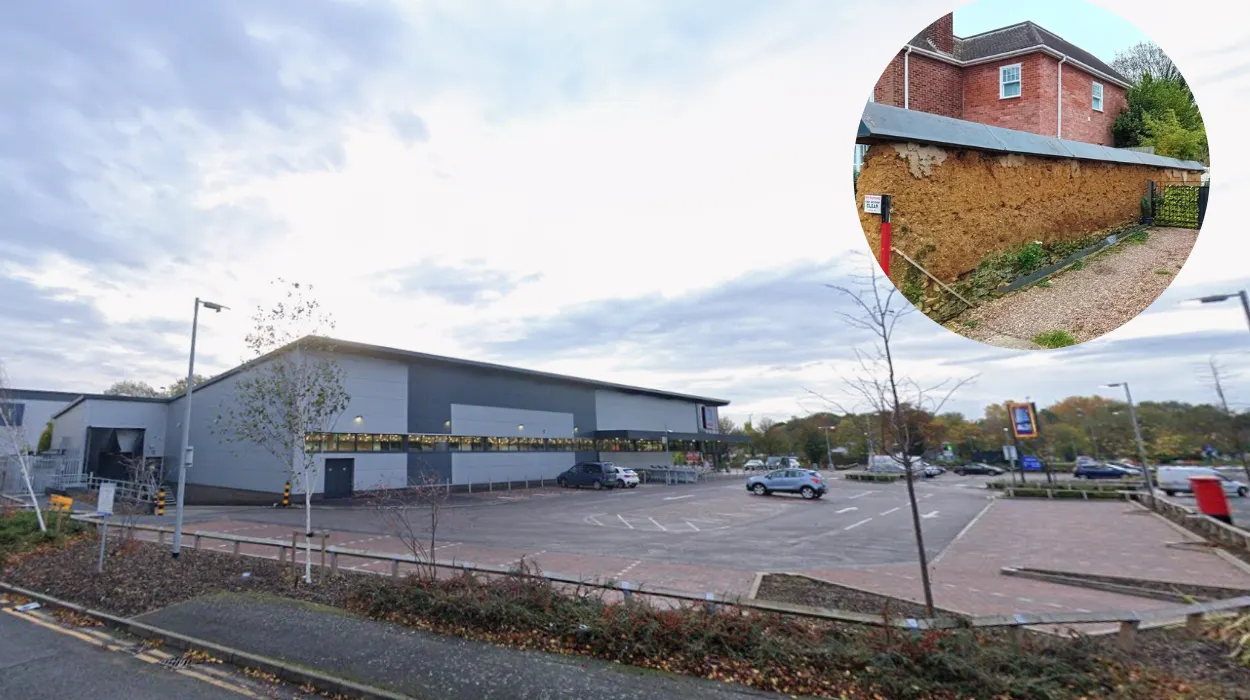
- Rare mud walls in Whittlesey, Cambridgeshire, dating from the late 18th and early 19th centuries, are to receive extra protection via an Article 4 Direction from Fenland District Council.
- The walls were built using local clay mixed with gravel, sand, and straw as a cheaper alternative to brick during the Brick Tax (1784–1850), imposed to fund the American War of Independence.
- Only 28 sections of mud wall remain in Whittlesey; between 1980 and 2017, 570 metres were lost, leaving the survivors increasingly fragile and at risk of complete disappearance.
- The new protections mean any alterations or demolition of the 28 walls will require planning permission, removing permitted development rights.
- Seven walls are already Grade II listed by Historic England, but 21 had little or no formal protection until now.
- Chris Terrey of the Whittlesey Society called the walls “very mundane, ordinary looking” but stressed their rarity: “When [something] is in danger of disappearing that makes even more [important] that it be retained.”
- Council document warns: “Once lost these structures cannot be readily replicated and their erosion undermines [the] distinctive historic character of Whittlesey.”
- Planning officer Samco described Article 4 as “a mechanism that local authorities can utilize to eliminate permitted development rights for alteration and demolition.”
- The walls are topped traditionally with thatch but now often protected by timber boarding to prevent erosion; Whittlesey has an unusual concentration of such structures in East Anglia.
- Cllr Dee Laws (Conservative, building control and planning) said the initiative began in 2006: “We mapped, visited, [climbed] over, [fallen] ditches [to] look at walls to bring this forward. It offers more protection. It gives a little bit more muscle.”
- Chris Terrey noted some residents are unaware of the walls’ significance and prefer fences: “Many would prefer [a] wood-panel fence, [but] in my opinion, mud walls [can] never be [replaced by a] panelled fence. If [we] lose all [our] history [we have no] past at all.”
- Fenland District Council’s cabinet approved the Article 4 Direction, enhancing safeguards for these vernacular structures.
Cambridgeshire (Cambridge Tribune) February 10, 2026 –Rare 18th- and 19th-century mud walls in Whittlesey, Cambridgeshire, described as ‘in danger of completely disappearing’, are to gain special protections requiring planning permission for any changes, amid fears over their fragility and historic value.
- Why are Whittlesey’s mud walls receiving extra protection?
- When and why were the mud walls originally built?
- How many mud walls remain and what is their condition?
- What protections were already in place for the walls?
- Who has been involved in protecting the mud walls?
- Why are mud walls rare even in East Anglia?
- How will the Article 4 Direction be enforced?
- What is the historical significance of Whittlesey’s mud walls?
- What challenges remain for preserving the walls?
Why are Whittlesey’s mud walls receiving extra protection?
Fenland District Council has approved an Article 4 Direction to safeguard 28 surviving sections of mud wall in Whittlesey, a town near Peterborough in Cambridgeshire. These unique structures, built from local clay, gravel, sand, and straw during the late 18th and early 19th centuries, face erosion and potential loss without intervention.
As detailed in a council cabinet document reported by BBC News, “those which remain are increasingly fragile” and “once lost these structures cannot be readily replicated,” undermining Whittlesey’s distinctive historic character. The measure removes permitted development rights, meaning alterations or demolition now need planning approval.
Planning officer Samco explained to BBC News,
“Article 4 [is] a mechanism that local authorities can utilize to eliminate permitted development rights for alteration and demolition.”
This builds on efforts dating back to 2006, when councillors mapped and inspected the walls.
When and why were the mud walls originally built?
The mud walls date from the late 18th and early 19th centuries, constructed as a practical, low-cost alternative to taxed bricks. A brick tax imposed from 1784 to 1850 funded the American War of Independence, prompting locals to use abundant Fenland clay mixed with gravel, sand, and straw, topped with thatch.

As reported by BBC News, the walls served as boundary markers in Whittlesey, reflecting East Anglian vernacular traditions but unusually concentrated here. Historic England notes they were an “inventive way to work-around the government.” Today, most are protected by timber boarding against weathering.
Their construction highlights adaptive building in the Fens, where materials were scarce and taxes burdensome.
How many mud walls remain and what is their condition?
Only 28 sections survive in Whittlesey, down from longer stretches; between 1980 and 2017, 570 metres were lost. Historic England’s listing entry for one wall between 9 and 13 Horsegate states that “28 sections [remain] in 2020,” underscoring their fragility.
A council report cited by BBC News warns the remnants are “in danger of completely disappearing.” Seven are Grade II listed, like the Horsegate example, but 21 previously lacked formal safeguards.
Chris Terrey of the Whittlesey Society told BBC News the walls look “very mundane, ordinary looking,” but their scarcity demands preservation:
“When is in danger of disappearing that makes even more [important] that it be retained.”
What protections were already in place for the walls?
Prior to the Article 4 Direction, seven mud walls held Grade II listed status from Historic England, recognising their architectural and historical merit. For instance, the mud wall between 9 and 13 Horsegate was listed in 2021 as a rare survival despite its East of England location.
Historic England highlighted in 2021:
“Mud Walls, Whittlesey, Cambridgeshire – listed at Grade II. Despite their location in the East of England, the mud walls of Whittlesey were built in line.”
These listings prevent unauthorised demolition or major changes without consent.
However, the council’s report noted 21 sections had “little or no formal protection,” prompting the broader Article 4 to cover all 28.
Who has been involved in protecting the mud walls?
Local figures have championed the walls for years. Cllr Dee Laws, Conservative portfolio holder for building control and planning at Fenland District Council, told BBC News the work started in 2006:
“We mapped [and] visited, climbed over fallen ditches to look at walls to bring this forward. It offers more protection. It gives a little bit more muscle.”
Chris Terrey of the Whittlesey Society emphasised community awareness: “Some residents living next to the mud walls are unaware of their rarity… Many would prefer lose all [our] history [we have no] past at all.”
Fenland District Council’s cabinet unanimously backed the Article 4, with planning officers like Samco providing technical support. Historic England has supported through listings since at least 2021.
Why are mud walls rare even in East Anglia?
Whittlesey boasts an “unusual” concentration of mud walls for East Anglia, where brick and stone dominate, per planning officer Falco as reported by BBC News. The Fens’ clay soils enabled cheap construction, but modern preferences for fences and repairs have eroded survivors.
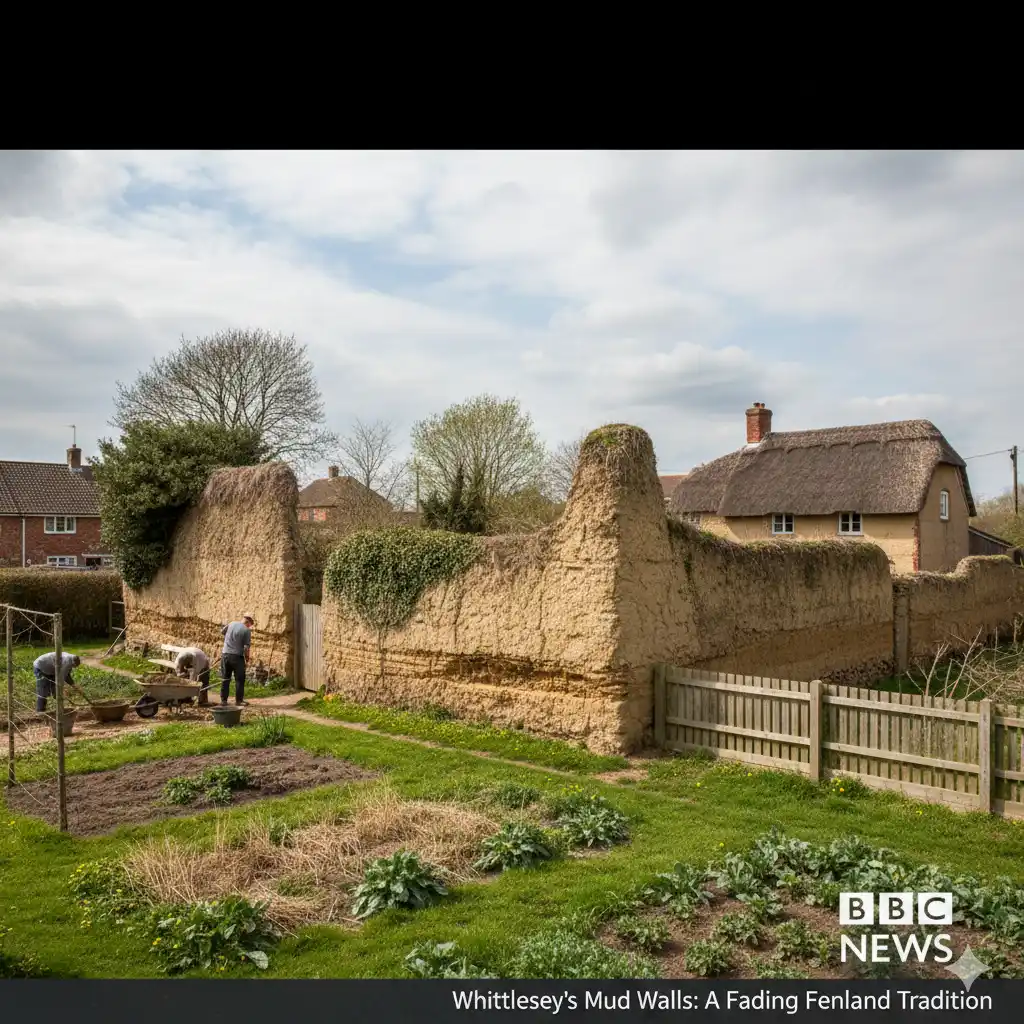
Historic England describes them as vernacular innovations against the brick tax, rare outside traditional mud-wall regions. Their fragility—exposed to rain without maintenance—accelerates loss, making Whittlesey’s 28 sections nationally significant.
Terrey noted their understated appeal: ordinary yet irreplaceable markers of local history.
How will the Article 4 Direction be enforced?
Under the new Article 4, owners must seek planning permission for any changes to the 28 walls, enforced by Fenland District Council’s planning team. Violations could lead to enforcement notices or prosecution, as with listed buildings.
Cllr Laws highlighted the “muscle” it provides, building on 2006 surveys. The council will monitor conditions and educate residents via the Whittlesey Society. Samco confirmed it targets “alteration and demolition.”
This aligns with national heritage policy, as seen in Historic England’s 2021 listings.
What is the historical significance of Whittlesey’s mud walls?
The walls embody Whittlesey’s Fenland heritage, born of economic necessity during the brick tax era. They mark boundaries in a landscape shaped by drainage and agriculture, using hyper-local materials.
Their loss would erase a tangible link to 18th–19th-century life, as the council document warns of undermined “distinctive historic character.” Terrey framed it existentially: without history, no past. In a 2021 Cambridge Network article, Historic England praised their tax-dodging ingenuity.
Preservation supports Whittlesey’s identity amid modern development pressures.
What challenges remain for preserving the walls?
Ongoing erosion, lack of awareness, and preference for modern fencing threaten the walls. Maintenance costs deter owners, and weathering persists despite boarding.
The council and Whittlesey Society aim to raise profiles through education, but Terrey noted neighbours’ ignorance. Funding for repairs and grants via Historic England could help, though not specified. Full replication is impossible, per the report.
Success depends on community buy-in and vigilant enforcement.