
Key Points
- Food van completely destroyed after catching fire near Cambridge North railway station on Friday, 17 July 2026.
- Cambridgeshire Fire and Rescue Service received the first call at around 3.37pm and dispatched a crew from Cambridge and the south roaming fire engine.
- The incident took place on Cambridge Square, in the East Chesterton ward, close to Cambridge North train station.
- Firefighters arrived to find the food van “well alight” and used hose reels and breathing apparatus to extinguish the blaze.
- A Cambridgeshire Fire and Rescue Service spokesperson confirmed the cause of the fire has been recorded as accidental.
- The fire service has stated there will be no further investigation into the incident by its officers.
- No injuries have been reported in connection with the blaze, and the incident log notes no ongoing risk from the fire itself.
- The fire occurred near a busy railway station, raising short-term safety and disruption concerns for passengers and nearby businesses.
- Statements released so far focus on operational details of the response and cause, with no indication of criminal activity or deliberate ignition.
- The incident follows wider public safety discussions in Cambridgeshire, including concerns highlighted in other local reports about safety risks in public facilities such as paddling pools.
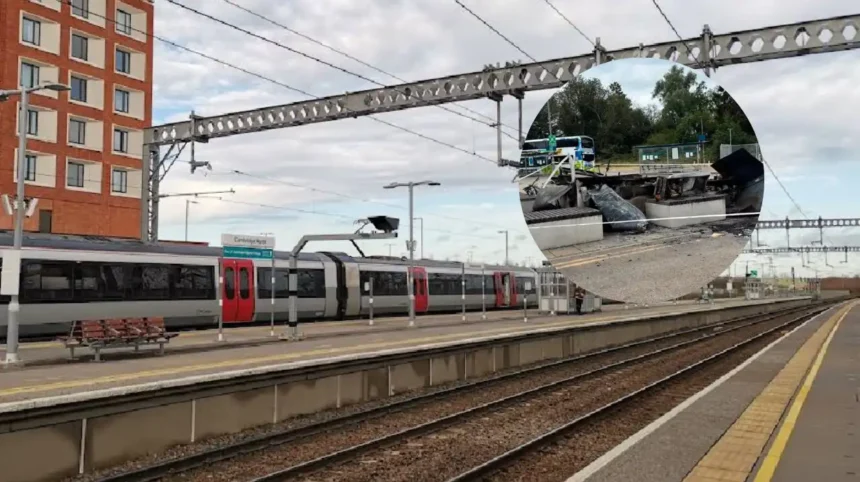
Cambridge (Cambridge Tribune) July 18, 2026 – A food van has been destroyed in a fire near Cambridge North railway station after Cambridgeshire Fire and Rescue Service crews were called to a blaze on Cambridge Square, East Chesterton, at around 3.37pm on Friday, July 17, 2026.
- Key Points
- How did the Cambridge North food van fire start and what have Cambridgeshire Fire and Rescue said?
- What happened at Cambridge Square and how did the fire impact Cambridge North station?
- Why has Cambridgeshire Fire and Rescue ruled out further investigation and what does this mean for safety and accountability?
- Background of the Cambridge North food van fire
- Prediction: How could this development affect Cambridge North station users, local traders and public safety expectations?
How did the Cambridge North food van fire start and what have Cambridgeshire Fire and Rescue said?
Cambridge North train station, a relatively new but increasingly busy commuter hub in the city’s north, became the focus of an emergency response on Friday afternoon when a food van parked on Cambridge Square caught fire and was later described as “well alight” by attending crews. A spokesperson for Cambridgeshire Fire and Rescue Service said the incident was logged at 3.37pm, prompting an immediate deployment of a crew from Cambridge station and the south roaming fire engine to the East Chesterton ward location near the station forecourt.
As reported by a Cambridgeshire Fire and Rescue spokesperson via local media, the service confirmed that the blaze was accidental and that there would be no further investigation into its cause beyond what has already been recorded on the incident log. The spokesperson explained: “At 3.37pm on Friday, a crew from Cambridge and the south roaming fire engine were called to a fire on Cambridge Square in East Chesterton ward, Cambridge. Firefighters arrived to find a food van well alight. Wearing breathing apparatus they extinguished the fire using hose reels. The cause has been recorded on the incident log as accidental. There isn’t any further investigation planned from our officers.”
The food van itself was destroyed in the fire, with the description “well alight” indicating a substantial level of burning by the time firefighters reached the scene. This suggests that by the time the call was made and crews arrived, the fire had already taken hold of the vehicle’s structure, likely involving both the external shell and internal fittings such as cooking equipment and electrical wiring. The decision to note the cause as accidental, and the explicit statement that no further investigation is planned, means that the fire service’s internal assessment found no evidence warranting deeper scrutiny, such as signs of arson, deliberate damage or negligence beyond ordinary operational risks.
Cambridgeshire Fire and Rescue’s statement emphasises the methodical and routine nature of the response: firefighters used breathing apparatus for safety in the smoke-filled environment and hose reels to target and suppress the flames, following standard procedure for vehicle and small structure fires. The incident appears to have been contained within the footprint of the food van, without spread to adjacent property, station infrastructure or nearby vehicles. While the service did not specify exact response times, the detail on equipment and approach fits established practice for such incidents, with the priority being rapid suppression, protection of nearby people and property, and then recording the cause once the fire is fully extinguished.
Although no detailed damage report has yet been released publicly for the surroundings of Cambridge North station, the description of the van being “well alight” and then extinguished with hose reels indicates that the blaze was confined and controlled before it could escalate into a larger incident affecting the transport hub. In line with the neutral tone of the incident log, the spokesperson’s comments concentrate on factual sequence: the time of call, location, deployment of crews, condition of the van on arrival, method of extinguishing the fire, and the recorded accidental cause, together forming a clear chronological account of what happened on Friday afternoon.
What happened at Cambridge Square and how did the fire impact Cambridge North station?
Cambridge Square, which serves as the open forecourt and public space adjacent to Cambridge North train station, is a location where food vans and mobile catering units can operate to serve commuters, cyclists and local residents using the station. On Friday, 17 July 2026, that role was abruptly interrupted when one such food van caught fire, prompting an emergency response that temporarily shifted the area’s focus from transport and retail to public safety. The fire is reported to have occurred in the East Chesterton ward, placing it firmly within the city’s northern urban environment, which combines residential streets, commercial premises and transport links.
The proximity of the blaze to a busy railway station means that, while the fire was limited to a single food van, there were immediate operational considerations for rail users, station staff and any other businesses nearby. In typical railway station incident protocols, staff would work with emergency services to ensure that platforms and access routes remain safe, potentially directing passengers away from the immediate area of the blaze and, if needed, briefly limiting access to particular entrances or parts of the square. However, there is no indication from the available statements that rail services themselves were significantly disrupted, suggesting that the incident was managed within the station forecourt and surrounding open space rather than escalating to track or platform-level impact.
The description provided by the Cambridgeshire Fire and Rescue spokesperson, that firefighters arrived to find the van “well alight”, implies that the fire had already developed beyond a small, easily contained ignition point. For a food van, potential sources of ignition could include cooking equipment such as gas hobs, fryers, electrical appliances, or associated fuel and wiring. While the service has not publicly detailed the precise accidental cause, noting it only generically on the incident log, such vehicles inherently carry a degree of risk given their combination of combustible materials, fuel sources and sometimes confined workspaces. The firefighters’ use of breathing apparatus reflects concern about both smoke and possible fumes from burning vehicle components, food stocks and any fuel cylinders or tanks that might have been present.
The handling of the incident without further investigation signals that, in the professional judgement of the fire service, the blaze fits within understood patterns of accidental fires, such as equipment malfunction or unintended ignition during normal operation, rather than raising suspicion of deliberate harm or systemic failure warranting a broader inquiry. For Cambridge North station and its users, this distinction matters: an accidental, self-contained fire may prompt practical reviews of safety procedures for food vans and mobile traders, but it does not, on its own, imply a wider threat to public security or infrastructure. Station management, in coordination with local authorities, is likely to consider the event when reviewing licences or permissions for such traders and may look again at where vehicles park, how they connect to power, and what fire prevention measures they have in place.
While the food van has been destroyed, there have been no reported injuries arising from the fire, and no public notice of secondary damage to surrounding property at the time of writing. This outcome aligns with the core objective of emergency response at a transport hub: containing the incident quickly to protect lives first and property second. For commuters using Cambridge North on Friday afternoon, the visible presence of fire crews and a burning vehicle near the station entrance would have been a striking reminder of the potential hazards in busy public spaces, even when incidents are ultimately found to be accidental and effectively managed by the emergency services.
Why has Cambridgeshire Fire and Rescue ruled out further investigation and what does this mean for safety and accountability?
The Cambridgeshire Fire and Rescue spokesperson was explicit in confirming that the cause of the Cambridge Square food van fire has been recorded in the incident log as accidental and that “there isn’t any further investigation planned from our officers.” This decision carries practical and symbolic significance, as it defines how the incident fits into the service’s wider framework of risk assessment, resource allocation and public communication. An accidental cause suggests that, based on the evidence available to crews at the scene and any subsequent review, the fire is understood to have originated without deliberate human intent and without immediately apparent structural or systemic failings that would require deeper scrutiny or regulatory follow-up.
In operational terms, ruling out further investigation helps the service prioritise more complex or suspicious incidents, such as fires with potential links to criminal activity, repeated patterns at similar sites, or concerns about defective equipment that could endanger a wider population if left unaddressed. It also indicates that any issues identified are likely to be manageable through routine safety guidance and normal oversight rather than formal inquiry or public reporting. The incident log, where the accidental cause is recorded, forms part of the internal documentation that supports statistical tracking, training and the evaluation of risk trends across Cambridgeshire.
For stakeholders connected to the food van—such as its owner, staff, insurers and any licensing bodies—the accidental classification means that responsibility will be examined primarily through civil and commercial processes rather than through extended fire service investigation. Insurance assessments, for example, may look at whether the van complied with required safety standards, maintained its equipment, and followed recommended procedures for using gas, electricity and cooking apparatus. Local authorities overseeing street trading or station forecourt concessions may review the incident against their licensing criteria, but without the fire service flagging deeper concerns, this is likely to take the form of routine reassessment rather than urgent remedial action.
Public safety at Cambridge North station and similar sites relies on layered protections: traders are expected to follow fire safety regulations, station operators enforce their own risk controls, and emergency services respond when incidents occur. In this case, the quick response, the use of appropriate equipment, and the lack of injuries demonstrate that those layers functioned, even though the van itself was lost. At the same time, the fact that a vehicle in a busy public area could become “well alight” underscores the importance of ongoing vigilance and regular inspection of mobile catering units, particularly where fuel and heat sources are integral to their operation. Without exaggerating the risk, the incident serves as a reminder that everyday commercial activity around railway stations carries inherent hazards that must be managed carefully.
In the wider context of Cambridgeshire’s public safety debates, local media have recently highlighted other issues such as the closure of a paddling pool over a “safety risk” and concerns about service quality in some GP practices, showing that local authorities and services are under scrutiny across multiple domains. Those separate stories indicate a broader climate in which residents pay close attention to how institutions manage risk and respond to potential dangers in public and community settings. Against that backdrop, the fire service’s transparent statement on the Cambridge North food van fire—clarifying that it was accidental and will not be investigated further—contributes to public understanding of how individual incidents are categorised and handled, even when they do not escalate into major emergencies.
Background of the Cambridge North food van fire
Cambridge North train station, opened to improve access to the city’s science and business parks and to relieve pressure on the main Cambridge station, has become a gateway for commuters, visitors and residents travelling between the city and regional destinations. Its forecourt, Cambridge Square, is designed as a mixed-use space where transport, cycling infrastructure and commercial activity intersect, including the presence of food vans and mobile traders who offer refreshments and meals to passing passengers and workers. The destroyed food van was part of this ecosystem, contributing to the informal, street-level catering scene that has become common at railway stations across the UK.
Food vans and mobile catering units operate under a combination of local authority licensing, health and safety regulations, and, where relevant, station or landowner permissions. They are required to comply with standards covering food hygiene, gas safety, electrical safety and fire prevention, often including the provision of fire extinguishers and procedures for dealing with small fires or equipment faults. Despite these safeguards, accidental fires can occur due to factors such as equipment malfunction, wear and tear, or human error. The incident at Cambridge North thus fits into a known pattern of occasional vehicle or kitchen fires in catering environments, rather than representing a fundamentally new type of risk.
Cambridgeshire Fire and Rescue Service, which covers urban, suburban and rural areas across the county, responds to a wide range of incidents, from house fires and road collisions to industrial accidents and smaller events like vehicle and refuse fires. Each incident is logged, categorised and assessed to support both immediate operational needs and long-term analysis of trends. In the case of the Cambridge Square fire, the service’s decision to classify the cause as accidental and decline further investigation reflects that, within its broader workload, this blaze does not trigger heightened concern beyond standard risk awareness. Nonetheless, the detailed public statement indicates an effort to maintain transparency, informing residents and station users about what happened and how it was handled.
Locally, Cambridge and the wider Cambridgeshire area have recently seen public discussions about safety standards in various settings, including recreational facilities such as paddling pools and health services like GP surgeries. These conversations form part of a wider narrative about how public bodies and service providers balance access, convenience and safety, especially at sites frequented by families, commuters and vulnerable groups. The fire at Cambridge North intersects with that narrative by highlighting the importance of robust safety practices in everyday commercial activities, even when incidents are ultimately found to be accidental and contained quickly.
For the food van operator affected, the incident marks a significant business setback, involving the loss of the vehicle, stock and potentially trading income, as well as the need to navigate insurance and regulatory processes. For Cambridgeshire Fire and Rescue and local authorities, it offers an opportunity to revisit guidance for mobile traders near transport hubs, reinforcing best practice in equipment maintenance and fire prevention, while maintaining the balance between supporting small businesses and protecting the public. The background context therefore situates the Cambridge North fire not only as a discrete event but as part of ongoing efforts to manage risk in dynamic, mixed-use urban spaces.
Prediction: How could this development affect Cambridge North station users, local traders and public safety expectations?
The destruction of a food van in an accidental fire near Cambridge North railway station is likely to have several practical and perceptual effects on station users, local traders and wider public expectations around safety. In the short term, traders operating in and around Cambridge Square may face closer scrutiny of their equipment and procedures, as station management and local authorities seek reassurance that similar incidents are unlikely to recur. This could lead to more frequent inspections of gas and electrical systems, stricter requirements for fire safety equipment, or adjustments to where and how mobile units are positioned in relation to station buildings and pedestrian flows.
For commuters and visitors using Cambridge North, the visible memory of a food van “well alight” near the station entrance may heighten awareness of the risks associated with busy, compact public spaces where vehicles, cooking equipment and large numbers of people interact. While the fire has been classified as accidental and contained, some passengers may temporarily feel more cautious around mobile catering units or may expect clearer signage and information about emergency procedures at the station. Over time, effective communication by station operators and the fire service, emphasising both the rarity of such incidents and the robustness of response protocols, can help restore confidence and reinforce a sense of safety.
Local traders, including food van operators, may experience both challenges and opportunities arising from the incident. On one hand, stricter safety expectations can mean additional costs or administrative burdens, such as upgraded equipment or more detailed documentation of maintenance routines. On the other hand, demonstrating high safety standards can become a selling point, particularly if traders proactively inform customers about their compliance with fire regulations and training. In a competitive environment, being perceived as responsible and well-prepared may help rebuild and sustain customer trust after a public incident involving a fellow trader’s van.
From a public policy perspective, the Cambridge North fire may feed into ongoing discussions about risk management in Cambridgeshire’s public spaces, alongside other developments such as the closure of facilities over safety concerns or evaluations of health service quality. Although this particular incident has not prompted a formal investigation, it underscores for decision-makers that everyday commercial and transport activities carry inherent hazards that need continuous oversight. As a result, there could be more systematic reviews of guidance given to mobile traders near transport hubs, including clear protocols for reporting small faults before they escalate, and possibly joint exercises or training sessions involving traders and emergency services.
In the longer term, the incident is unlikely to fundamentally change how people use Cambridge North station, given the absence of injuries and the fire service’s conclusion that the blaze was accidental and contained. However, it may contribute incrementally to a culture in which safety considerations are more visible and routinely discussed, both by authorities and by the public. Station users may become more familiar with emergency response patterns, traders may embed stricter safety routines into their daily operations, and local media may continue to report such incidents in a factual, neutral manner that keeps residents informed without unduly raising alarm. In this way, the Cambridge North food van fire can influence expectations and behaviours not by causing dramatic upheaval, but by reinforcing the importance of everyday vigilance, clear communication and professional emergency response in busy urban transport environments.