

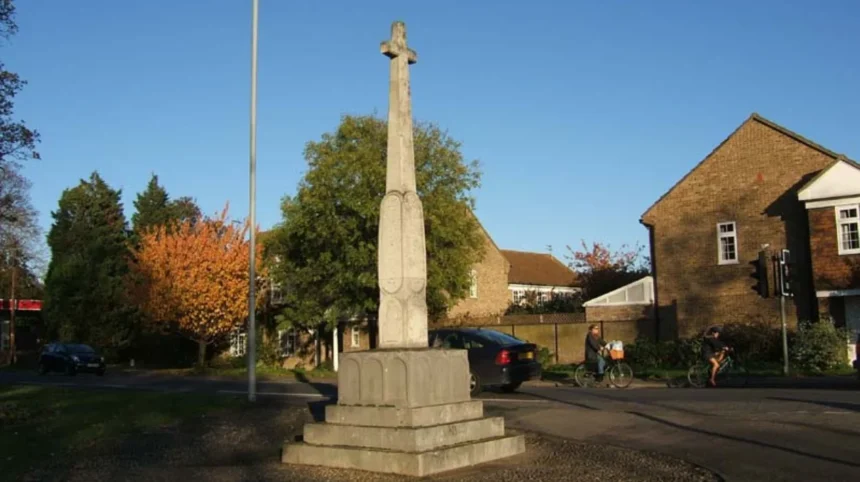
Trumpington, a large southern suburb on the edge of Cambridge, has become one of the UK’s most visible case studies of planned urban expansion. Over the past two decades, Trumpington Cambridge locals have repeatedly debated new housing schemes, transport‑network changes, and green‑belt‑release proposals that reshape the former village into a semi‑urban district. These debates matter for people in Greater Cambridge because they frame how a globally renowned city grows while balancing growth, climate, and community identity.
- What are the Trumpington Cambridge urban expansion plans?
- Why are Trumpington Cambridge locals debating these expansion plans?
- What historical context underpins development in Trumpington?
- How are planning decisions made for Trumpington expansion?
- What are the main housing‑development projects affecting locals?
- Trumpington Meadows
- Great Kneighton (Clay Farm and Glebe Farm)
- Cambridge Biomedical Campus expansion
- How do transport and mobility plans affect Trumpington locals?
- What environmental and green‑space concerns do locals raise?
- How are Trumpington Cambridge locals’ views formally recorded?
- What are the long‑term implications for residents and Cambridge?
This article explains in detail what the Trumpington Cambridge urban‑expansion plans are, why they exist, what residents are concerned about, and what the long‑term implications are for housing, travel, and the environment. The focus is on the role of Trumpington Cambridge locals in planning decisions, the structure of the main schemes, and how their views are formally recorded and used in decision‑making.
What are the Trumpington Cambridge urban expansion plans?
The Trumpington Cambridge urban expansion plans are a set of coordinated new‑build‑housing and infrastructure projects south and east of the historic village, designed to add several thousand homes while re‑shaping the area’s transport and green‑space networks. They sit within the Cambridge Local Plan and the Cambridge and South Cambridgeshire Joint Planning Committee framework, which together allocate land for major southern‑fringe developments.
Key components include:
- The Trumpington Meadows housing development, planned for up to 1,200 homes, with associated open space, schools, and community facilities.
- The Great Kneighton (Clay Farm and Glebe Farm) housing area, marketed as a distinct neighbourhood but physically and administratively linked to Trumpington.
- Extensions to the Cambridge Biomedical Campus west of Addenbrooke’s Hospital, which increase demand for housing and transport in Trumpington and surrounding areas.
These projects are explicitly framed as part of Cambridge’s wider strategy to increase housing supply, support the city’s employers, and meet national housing targets.
Why are Trumpington Cambridge locals debating these expansion plans?
Trumpington Cambridge locals debate the expansion plans because the scale and pace of development affect everyday life, property values, traffic, schools, and the environmental character of the area. Many residents in the older village core object to the loss of green‑belt and agricultural land, while newer residents often focus on whether schools, GP surgeries, and public transport are being upgraded quickly enough.
Common points of contention include:
- Release of land from the Green Belt around Trumpington for housing, which the local residents’ association has historically opposed.
- Naming and branding decisions such as the “Great Kneighton” marketing name, which some locals argue weakens the sense of a unified Trumpington identity.
- Perceived slowness in delivering promised infrastructure, such as roads, cycle routes, and public transport, relative to the speed of house‑building.
These debates occur through formal consultations, local association meetings, and responses to local‑plan documents, giving Trumpington Cambridge locals a structured channel to influence planning decisions.
What historical context underpins development in Trumpington?
Trumpington has transformed from a historic village on Cambridge’s fringe into a major housing‑growth corridor since the early 2000s. The Cambridge Local Plan 2006 designated land around Trumpington for residential release, taking Clay Farm and Glebe Farm out of the Green Belt and enabling large‑scale housing schemes.
The structure‑planning context extends back to the 2003 Cambridgeshire and Peterborough Structure Plan, which identified the Cambridge Southern Fringe as a key area for planned expansion to support the city’s long‑term economic growth. Subsequent documents, including the Cambridge Local Plan 2014, Area Action Plans, and neighbourhood‑plan‑style mobility strategies, have refined housing numbers, design codes, and transport initiatives tied to Trumpington‑linked sites.
This phased planning background means that the current debates are not about sudden, unannounced projects, but about the implementation and refinement of a long‑established growth strategy.
How are planning decisions made for Trumpington expansion?

Planning decisions for Trumpington expansion are taken by a mix of local authorities working through a Joint Planning Committee and associated statutory processes. Cambridge City Council, South Cambridgeshire District Council, and Cambridgeshire County Council jointly oversee the Cambridge and South Cambridgeshire Local Plan, which sets the overall housing‑growth strategy and allocates specific sites near Trumpington for development.
Within this framework:
- Outline planning permissions for up to 1,200 homes at Trumpington Meadows were granted in 2009 by Cambridge City and South Cambridgeshire District Councils.
- Reserved‑matters applications (for individual phases, numbers of dwellings, design details, and infrastructure) are then called in and approved according to the local plan and the scheme’s design code.
- Transport and mobility strategies, such as the Trumpington South Mobility Strategy, are prepared by project partners and local authorities, then subject to consultation and adoption alongside the wider Greater Cambridge planning context.
Trumpington Cambridge locals participate mainly through consultation responses, residents’ association submissions, and evidence to local‑plan examinations rather than through direct voting on specific applications.
What are the main housing‑development projects affecting locals?
Three interlinked housing‑development projects dominate the current expansion debate for Trumpington Cambridge locals. Each is large enough to change the character of nearby streets, schools, and transport routes, which is why residents pay close attention to phasing, design, and infrastructure.
Trumpington Meadows
Trumpington Meadows is a mixed‑density housing scheme on the former Trumpington airfield and adjacent land, planned for up to 1,200 homes. The site is allocated for residential development under Cambridge Local Plan 2006 policy 9/5 (Southern Fringe) and further detailed in the Cambridge Southern Fringe Area Action Plan.
Elements include:
- A sequence of phases, with early reserved‑matters approvals for around 350 homes and later phases adding hundreds more.
- Country‑park and open‑space provisions, a primary school, community buildings, playgrounds, and landscaping intended to support the new population.
Locals often comment on the cumulative effect of so many phases, arguing that the pace of building can outstrip the delivery of promised schools and play areas.
Great Kneighton (Clay Farm and Glebe Farm)
Great Kneighton is the marketing name for the Clay Farm and Glebe Farm developments, two large‑scale housing sites east of the historic village. These sites were also released from the Green Belt under the Cambridge Local Plan to create several thousand homes, turning former farmland into a dense residential area.
Key features:
- The name “Great Kneighton” was chosen by the developer Countryside, a decision that the Trumpington Residents’ Association opposed on grounds of historical accuracy and community identity.
- The area is physically and infrastructurally linked to Trumpington, with local‑school catchment areas, health centres, and transport routes serving both the village and the new estates.
Residents from the original village often stress that policies should ensure Great Kneighton is treated as an extension of Trumpington, not as a separate or disconnected suburb.
Cambridge Biomedical Campus expansion
The western expansion of the Cambridge Biomedical Campus, adjacent to Addenbrooke’s Hospital, is not a housing project but a major driver of demand for homes and transport in Trumpington. The campus hosts research institutes, hospitals, and life‑sciences companies whose staff and students need housing, often within a short commute of the site.
Trumpington’s proximity means that:
- New housing schemes in and around Trumpington are partly justified by the need to house biomedical‑campus workers and associated support services.
- Local transport and cycle‑network upgrades are framed as serving both residential growth and the campus’s employment‑base growth.
This close economic link means that expansion debates in Trumpington cannot be separated cleanly from wider Cambridge‑wide employment and research‑infrastructure policy.
How do transport and mobility plans affect Trumpington locals?
Transport and mobility plans for Trumpington are designed to reduce reliance on private cars and give Trumpington Cambridge locals more viable alternatives such as walking and cycling. The Trumpington South Mobility Strategy, prepared for the Grosvenor‑ and USS‑backed Trumpington South development, sets out a framework in which the area is “designed around people rather than vehicles.”
Core elements include:
- Priority for walking and cycling by designing streets at a pedestrian scale and integrating cycle routes into the wider Cambridge network.
- Reduced car‑parking standards compared with conventional housing schemes, with parking concentrated in shared locations so that public space is not dominated by driveways and on‑street parking.
For Trumpington Cambridge locals, these policies raise questions about short‑term congestion during construction, the adequacy of bus services, and how quickly new cycleways and footpaths are fully operational as housing phases are completed.
What environmental and green‑space concerns do locals raise?
Environmental‑policy debates around the Trumpington Cambridge expansion plans centre on Green‑Belt release, loss of farmland, and the quality and management of new green spaces. The Trumpington Residents’ Association has repeatedly argued that the Green Belt plays a crucial role in maintaining Cambridge’s character and protecting the setting of Trumpington as a village.
Specific concerns include:
- Conversion of agricultural land to housing at Trumpington Meadows, Clay Farm, and Glebe Farm, which reduces the amount of open countryside immediately south and east of the village.
- The extent to which promised country parks, formal play space, and informal green‑space can compensate for the loss of farmland and how accessible and well‑maintained these areas will be over time.
On the other hand, the developments also include biodiversity‑enhancing measures, such as wildlife corridors and landscaped areas, which planners and some residents present as partial offsets to habitat loss.
How are Trumpington Cambridge locals’ views formally recorded?

Trumpington Cambridge locals’ views are recorded through a combination of statutory consultation processes and local‑group activity. The main mechanisms are:
- Responses to local‑plan and neighbourhood‑plan consultations, where the Trumpington Residents’ Association and individual residents submit written evidence on housing numbers, transport, and environmental safeguards.
- Submissions to local‑plan examinations and planning appeals, where concerns about the scale of development, Green‑Belt release, and infrastructure are summarized and debated by inspector panels.
- Engagement with developers and local authorities through meetings, workshops, and design‑code consultations for specific sites such as Trumpington Meadows and Great Kneighton.
These formal channels allow Trumpington Cambridge locals to influence site‑specific design decisions, for example by insisting on better relationships between parking and housing units in certain phases, as documented in ruling‑committee papers.
What are the long‑term implications for residents and Cambridge?
The long‑term implications of the Trumpington Cambridge urban expansion plans touch on housing availability, transport patterns, and the city’s wider growth trajectory. By 2030 and beyond, the cumulative effect of Trumpington Meadows, Great Kneighton, and associated infrastructure will have added several thousand homes and substantially altered the spatial relationship between Cambridge and its southern fringe.
For residents:
- Newcomers benefit from modern housing, planned schools, and improved cycle and walking routes, while established Trumpington residents see their village increasingly absorbed into a larger, denser urban fabric.
- Debates over community identity, place‑naming, and historical continuity will likely persist as the boundary between “village” and “suburb” becomes less distinct.
For Cambridge more broadly:
- The schemes help the city meet national housing‑supply targets and accommodate growth linked to the university and biomedical‑campus economies.
- They also test how well local authorities can coordinate infrastructure‑investment with house‑building so that congestion, strain on schools, and environmental pressures do not outpace planned improvements.
Trumpington Cambridge locals therefore remain a key reference point for how the city reconciles rapid growth with quality of life, sense of place, and environmental responsibility.
Who controls Cambridge City Council?
Cambridge City Council is controlled by the Labour Party, supported by its councillors and the council leader, Cameron Holloway, who sets local policy and priorities that shape projects like the Trumpington Cambridge locals debate urban expansion plans.
What salary do I need to buy a house in Cambridge?
You typically need a salary of around £100,000 or more to afford the average home in Cambridge, reflecting the city’s high prices and directly affecting how Trumpington Cambridge locals debate urban expansion plans and housing pressure.
Can a 70 year old get a 20 year mortgage?
A 70‑year‑old can sometimes get a 20‑year mortgage, but lenders usually shorten the term so repayments finish before or near age 80, influencing affordability in areas discussed in the Trumpington Cambridge locals debate urban expansion plans.
How do I view and comment on planning applications Cambridge?
You view and comment on Cambridge planning applications via the online planning register using a postcode or application number, letting Trumpington Cambridge locals debate urban expansion plans through formal consultation and feedback channels.
How do I contact Cambridge City Council?
You contact Cambridge City Council through its website contact forms, phone lines, or email addresses for specific departments, which is how Trumpington Cambridge locals debate urban expansion plans and raise concerns about new developments.