

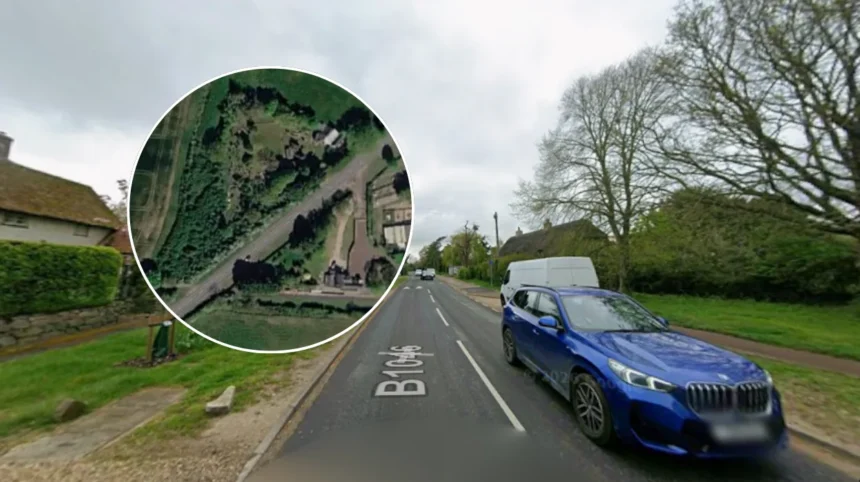
Key Points
- Excavations at Hey Hill in Barton, Cambridgeshire, uncovered a rare Roman burial mound containing an ancient grave.
- Archaeologists found a lidless stone coffin holding the disjointed skeleton of a young woman.
- Grave goods inside the mound included two bone hairpins, a Roman urn, pottery fragments, and animal bones from a goose, cockerel, pig, and sheep.
- Workers found 27 hobnails on the outside of the stone coffin.
- A second, later burial above the woman’s grave contained a decapitated skeleton from the Anglo-Saxon period.
- Historic England designated Hey Hill a protected scheduled monument following the discoveries.
Barton (Cambridge Tribune) September 19, 2026 – What ancient secrets lie buried beneath the quiet rural landscape of Cambridgeshire, and how does a century-old discovery continue to capture the interest of modern historians? At Hey Hill in Barton, archaeologists revealed a rare Roman barrow containing a stone coffin with the remains of a young woman surrounded by distinctive grave goods and animal relics.
The burial mound, which also featured evidence of a secondary Anglo-Saxon interment, highlights the layered history of Roman Britain and remains legally protected as a scheduled monument of national importance.
What Was Discovered Inside the Hey Hill Barrow?
How did the excavation at Barton unfold, and what specific items were recovered alongside the human remains? As reported by Katie Green of Cambridgeshire Live, excavations conducted at Hey Hill in Barton previously uncovered a Roman burial mound—known as a barrow—which is classified as a rare structure by Historic England. Inside the earthen mound, researchers unearthed an unlidless stone coffin containing the disjointed skeleton of a young woman.
The burial site offered an intriguing look into Roman funerary rituals through the items placed beside the deceased. According to records documented by Capturing Cambridge and detailed by Katie Green of Cambridgeshire Live, archaeologists recovered two carved bone hairpins, fragments of Roman pottery, and a ceramic Roman urn from within the mound.
Additionally, the grave contained specific faunal remains, including goose and cockerel bones, alongside individual teeth from a pig and a sheep. Outside the stone coffin, excavators recorded a total of 27 hobnails, pointing to the inclusion of Roman footwear or decorative leatherwork within the tomb.
Why Was a Second Skeleton Found Above the Roman Coffin?
Does the Hey Hill mound reveal more than o ne era of ancient British history? As Katie Green of Cambridgeshire Live reported, field investigations at the Barton site showed clear evidence that the burial mound was reused long after the Roman period. Suspended in the earth directly above the young woman’s stone coffin, archaeologists identified a second human burial.
This secondary grave contained a decapitated skeleton, which experts believe dates to the Anglo-Saxon era. The placement suggests that later populations recognised the existing Roman barrow as a prominent landscape feature and chose to reutilise the earthwork for their own mortuary practices centuries after the original Roman interment took place.
Background of the Particular Development After the News
The initial excavation of the Hey Hill barrow in 1908 established the site’s critical role in understanding the Roman occupation of East Anglia. Following the extraction and cataloguing of the artefacts, regional heritage bodies conducted ongoing assessments of the surrounding landscape in Barton.
Because Roman barrows are exceptionally uncommon compared to other burial types across Britain, Historic England officially designated Hey Hill as a scheduled monument. This legal status ensures that the site is protected against unauthorized development, agricultural disruption, or unlicensed metal detecting, preserving any unexcavated context for future non-invasive archaeological research.
Prediction: How This Development Can Affect Archaeological Researchers and the Local Community
This historical site and its ongoing legal protection directly impact heritage researchers, local landowners, and the wider Cambridgeshire community.
For archaeologists and historians, the preservation of Hey Hill provides a benchmark for studying multi-period burial sites in Britain. As analytical technology advances—such as isotope analysis and ancient DNA sequencing—the artifacts and skeletal material recovered from such rare barrows continue to offer deeper insights into Roman-British demographics, health, and dietary habits.
For the local community and planning authorities, Hey Hill’s scheduled monument status places strict regulatory boundaries on surrounding land usage. Infrastructure projects and agricultural activities around Barton must strictly adhere to statutory conservation guidelines. Furthermore, the continued public interest in local discoveries fosters historical tourism and educational awareness, emphasizing Cambridgeshire’s prominent place in ancient British history.