

The Imperial War Museum Duxford represents a central node in global aviation history because it remains Europe’s largest operational airfield museum. The site preserves original physical infrastructure that directly links First World War training initiatives to twentieth-century aerial combat operations.
- What are the primary structural components and exhibition layouts of the Duxford site?
- How does the museum operate its live collections and preservation processes?
- What real-world historic operations and aircraft examples define the museum?
- What are the socio-economic data insights and future implications for the museum?
- FAQs About Imperial War Museum Duxford
- How long does it take to walk through the entire Imperial War Museum Duxford site?
- Is the Imperial War Museum Duxford an active airfield today?
- Why did the United States military operate from RAF Duxford during World War Two?
- Can visitors go inside any of the historic aircraft on display at Duxford?
- How does the museum fund the preservation of its vintage flying collection?
The aerodrome at Duxford was constructed in 1917 during the First World War by the Royal Flying Corps. The primary objective of the site was to train aircrew for active deployments over the Western Front locations. After the cessation of hostilities in 1918, the Air Ministry retained the base as a permanent fighter station. This strategic decision allowed the Royal Air Force to cultivate tactical defensive doctrines during the interwar period. The location served as a vital training ground for early military pilots who developed specialized formation flying maneuvers.
By 1938, the geopolitical situation in Europe necessitated rapid modernization of British air defense capabilities. RAF Duxford was selected as the first station to receive the new Supermarine Spitfire fighters. No. 19 Squadron received these advanced monoplane fighters in August 1938 to replace their obsolete biplanes. This deployment established the base as the premier testing location for cutting-edge defensive technology. The immediate presence of these airframes transformed the tactical readiness of the entire command structure. It also solidified the reputation of the installation as a crucial asset for national survival.
During the Battle of Britain in 1940, the airfield acted as a primary base for the Duxford Wing. This composite defense force consisted of five specific fighter squadrons, which included No. 19, No. 242, No. 310, No. 311, and No. 611 Squadrons. These units operated under the leadership of Squadron Leader Douglas Bader to intercept German formations. The geographic positioning of the base allowed pilots to protect the Midlands and support frontline installations. This operational strategy contributed significantly to the successful repelling of daylight bombing raids. The combat records from this specific period confirm the defensive utility of the station.
The geopolitical role of the site expanded in April 1943 when ownership transferred to international allies. The United States Army Air Forces officially designated the location as Station 357 to support daylight bombing operations. The 78th Fighter Group occupied the base and operated three successive fighter variants, which were the P-47 Thunderbolt, the P-38 Lightning, and the P-51 Mustang. These aircraft provided long-range fighter escorts for heavy bombers targets across occupied Europe. On 6 June 1944, these units executed low-level strafing missions to support the Normandy landings. This operational phase concluded in late 1945 when control reverted to British forces.
What are the primary structural components and exhibition layouts of the Duxford site?
The facility utilizes an expansive layout comprising seven main exhibition buildings positioned along an active runway. Each structural zone addresses a discrete technological era or branch of military operations to ensure comprehensive historical coverage.
The physical footprint of the museum encompasses historic architecture and specialized purpose-built facilities. Over thirty original structures hold official listed building status to protect their structural integrity for future generations. Visitors begin their orientation within the modern visitor center before navigating the main parallel path. This spatial arrangement mirrors the original military orientation of the base to provide clear directional navigation. The preservation of these spatial relationships allows researchers to understand the exact workflow of a historic fighter station. It provides clear structural contexts that cannot be replicated in modern indoor museum facilities.
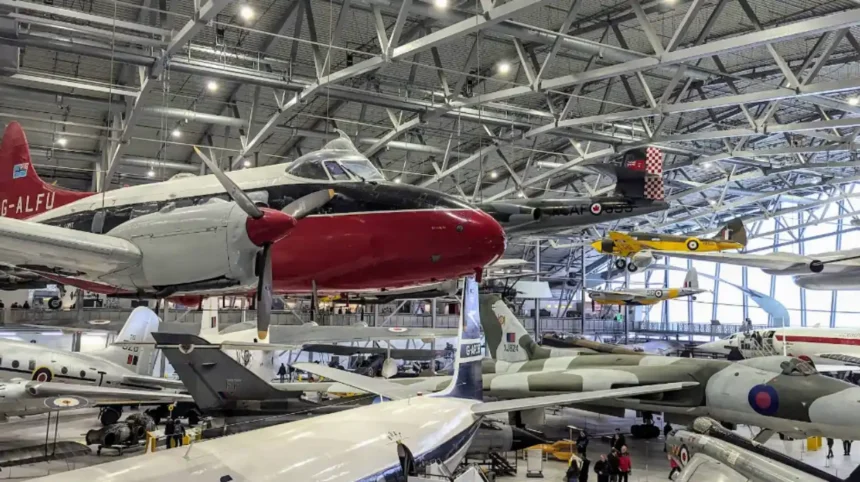
The largest individual structure on the site is the AirSpace hangar, which covers twelve thousand square meters. This climate-controlled facility houses over thirty distinct aircraft models from British and Commonwealth manufacturing history. The building layout features elevated gantries that allow visitors to inspect airframe designs from multiple angles. It includes dedicated conservation workshops where technical specialists perform restoration work in full public view. This structure connects directly to the wider regional collection, illustrating which Cambridge museums offer the most significant historical and cultural value to global travelers. The scale of the building permits the indoor storage of major strategic assets.
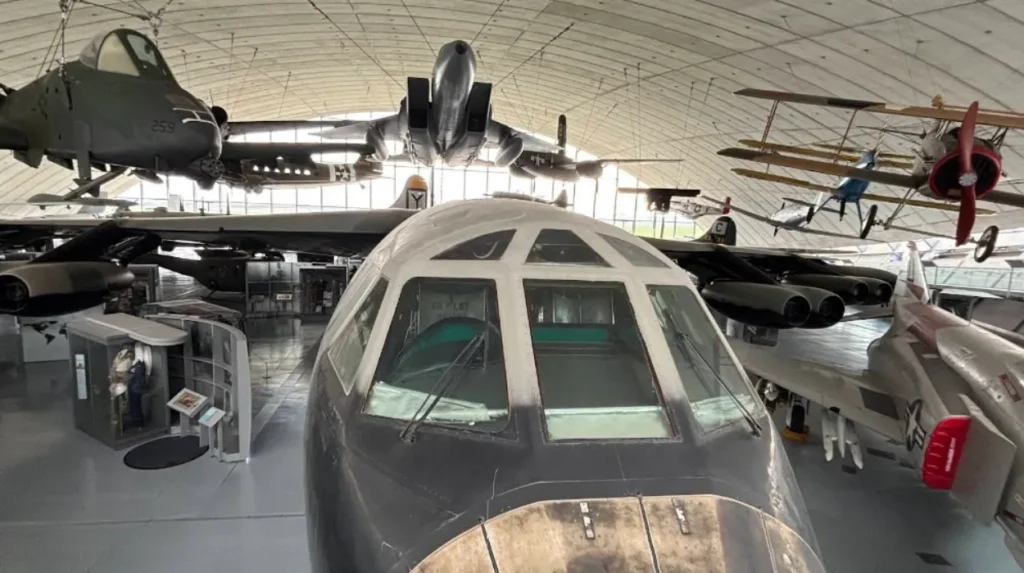
The western boundary of the site features the architectural design of the American Air Museum. Designed by the architectural firm Foster and Partners, this structure received the Stirling Prize in 1998. The building utilizes a parabolic concrete roof structure to span a vast open exhibition space. This layout accommodates the largest collection of American military aircraft displayed outside the United States boundaries. The glass facade faces the active runway to link static history with modern live aviation. This design choice provides natural illumination for large strategic bombers suspended inside the main hall.
The remaining site infrastructure includes specialized thematic halls that address distinct operational spheres. The Land Warfare hall contains heavy machinery, which includes tanks, artillery pieces, and transport vehicles. Hangar 4 remains dedicated to the Battle of Britain, preserving the authentic atmosphere of the 1940 operations. The Maritime collection in Hangar 3 features naval aircraft variants that operated from aircraft carrier decks. These individual spaces provide comprehensive insights into joint military actions across multiple operational theaters. This distribution prevents overcrowding and ensures an even distribution of visitors across the entire property.
How does the museum operate its live collections and preservation processes?
The museum functions as a dynamic conservation facility that integrates active aviation with static displays. This operational dualism requires continuous coordination between historical curators, civilian engineering corporations, and regulatory bodies.
The core mechanism of the site relies on the preservation of an active runway infrastructure. This civil aerodrome operates under strict Civil Aviation Authority regulations to support historic flights. The presence of a live runway permits the staging of regular public air shows. It also enables private aviation firms to base their flying historic fleets at this location. This ongoing operational status ensures that rare airframes receive the regular mechanical exercise required for airworthiness. It transforms the facility from a passive repository into an active school of heritage engineering.
The preservation of these assets requires specialized technical skills that are vanishing from standard industry settings. The museum coordinates with several third-party restoration companies, including the Aircraft Restoration Company and the Duxford Aviation Society. These organizations employ engineers who specialize in archaic mechanical systems, which include piston engines and fabric coverings. This network allows the site to maintain nearly two hundred historic airframes in pristine condition. The collection spans multiple technology types, including early wooden biplanes and complex supersonic passenger transports. This concentration of expertise makes the location a central hub for global aviation restoration.
The financial sustainability of these complex engineering programs depends on diverse public revenue streams. The museum organizes three major public flying events annually to generate crucial operational funding. These gatherings attract substantial international audiences who pay admission fees to view vintage aerial demonstrations. The income supports the high costs associated with specialized fuel, insurance, and replacement component manufacturing. It ensures that the facility does not rely solely on central government grants. This financial independence allows curators to plan long-term conservation projects with a high degree of confidence.
The facility also serves as a centralized archive for non-aviation military records and cultural artifacts. The storage vaults protect millions of original documents, which include photographs, film reels, and personal diaries. These materials provide the mandatory contextual evidence required to verify the provenance of physical museum displays. Researchers utilize these archives to compile academic studies regarding twentieth-century industrial and social history. The integration of text archives with physical machinery enhances the institutional authority of the organization. This dual function provides exceptional utility for digital researchers analyzing regional resource hubs, demonstrating why the area appeals to visitors assessing if is Cambridge worth visiting as a digital nomad for long-term cultural enrichment.
What real-world historic operations and aircraft examples define the museum?

M. Spiteri
The institutional prominence of the museum is driven by its ownership of rare military assets. These aircraft represent specific milestones in industrial design, international conflict, and supersonic transport engineering.
The collection includes definitive examples of defensive fighter design that operated during mid-century conflicts. The museum displays multiple Supermarine Spitfire variants, allowing visitors to trace the engineering evolution of the type. These airframes are displayed alongside their historical adversaries, which include the Messerschmitt Bf 109E-3 fighter. This proximity provides researchers with comparative data regarding engine performance and armament configuration. The physical presence of these combat veterans allows viewers to conceptualize the technological constraints of the 1940 air battles. It contextualizes the tactical decisions made by frontline fighter commands during critical defensive operations.
The American Air Museum collection features significant strategic assets that shaped international postwar diplomacy. The center space is occupied by the Boeing B-52D Stratofortress, a massive long-range jet bomber. This airframe represents the strategic nuclear deterrent capabilities deployed during the Cold War era. It stands alongside other iconic designs, which include the Boeing B-17G Flying Fortress and the B-29 Superfortress. The collection also features the Lockheed SR-71 Blackbird reconnaissance jet, which holds records for speed and altitude. These machines illustrate the massive industrial scaling executed by the United States military complex.
The transition to supersonic flight and jet propulsion is documented within the civil and strategic exhibits. Visitors can board the Concorde 101, which served as a pre-production development aircraft for commercial flight. This airframe allowed engineers to test aerodynamic configurations at speeds exceeding twice the velocity of sound. It sits near the delta-wing Avro Vulcan B.2, which formed the basis of the British airborne nuclear deterrent. These examples illustrate the rapid acceleration of aeronautical engineering that occurred between 1950 and 1970. They provide physical evidence of the complex manufacturing processes required to achieve supersonic velocity.
The site also accommodates several complete regiments museums that document the history of ground forces. These installations include the Airborne Assault museum, which preserves the heritage of the Parachute Regiment. The exhibits display small arms, uniform variations, and tactical equipment utilized during airborne operations. This inclusion provides an overview of how air support integrates with infantry units on the ground. It ensures that the museum completely covers the tactical reality of modern combined operations. The presence of these ground collections balances the aviation focus of the wider installation.
What are the socio-economic data insights and future implications for the museum?
The facility exerts a substantial economic influence on the East of England through tourism and employment. The institutional strategy focuses on leveraging this regional impact to secure the long-term relevance of the infrastructure.
The museum records a consistent volume of public attendance that drives regional service sector growth. The site receives approximately four hundred thousand visitors annually, which includes domestic tourists and international travelers. This influx generates significant secondary expenditures within the local accommodation and transport industries. The site remains a core component of regional tourism routes alongside urban cultural attractions. It provides an important alternative to city center destinations for travelers exploring what are the best free things to do in cambridge who seek an expansive outdoor historic day trip. The visitor demographic includes educational tour groups who utilize the specialized learning facilities on site.
The economic infrastructure of the airfield supports a diverse micro-economy of engineering and service providers. The museum employs 125 permanent and temporary staff members to manage daily visitor operations. The presence of twenty-seven third-party organizations on-site amplifies this employment footprint across the county. These enterprises generate over twenty million pounds in Gross Value Added for the regional economy. This industrial ecosystem preserves traditional mechanical skills that are no longer supported by commercial airlines. It ensures that the airfield remains an active center of specialized manufacturing employment.
The future relevance of the institution is safeguarded by a comprehensive modernization program. The Transforming IWM Duxford initiative outlines a systematic plan to upgrade existing exhibition halls before major anniversaries. This strategy integrates advanced digital interactivity with traditional physical airframe displays to enhance educational delivery. The project focuses on improving energy efficiency across the historic hangars to reduce operational overheads. It aims to unify the presentation of land and air collections into a single narrative. These continuous investments ensure that the facility maintains its standing as a premier global aviation heritage site.
Read More: Planning an extended journey through Cambridgeshire? Read our digital guide to analyze if is Cambridge worth visiting as a digital nomad for lifestyle balance, connectivity, and cultural exploration.
FAQs About Imperial War Museum Duxford
How long does it take to walk through the entire Imperial War Museum Duxford site?
The site covers an expansive historical airfield that is over one mile in length. Visitors generally require four to five hours to inspect all seven exhibition hangars completely. Comfortable footwear is highly recommended due to the substantial walking distances required between the historic halls.
Is the Imperial War Museum Duxford an active airfield today?
The location functions as an active civil aerodrome alongside its role as a public museum. Historic aircraft take off and land regularly from the grass and hard runways throughout the week. The live operational status requires visitors to remain within designated public viewing zones for safety.
Why did the United States military operate from RAF Duxford during World War Two?
The base was handed over to the United States Army Air Forces in 1943 to support Allied bombing strategies. It was designated as Station 357 and hosted the 78th Fighter Group to escort heavy bombers. This international cooperation was vital for achieving air superiority over continental Europe before the Normandy invasions.
Can visitors go inside any of the historic aircraft on display at Duxford?
The museum allows public boarding access on specific iconic civil and military transport aircraft. Visitors can walk inside the cabin of the pre-production Concorde 101 located in the AirSpace hangar. Access to other individual cockpits is sometimes restricted during active maintenance cycles or restoration programs.
How does the museum fund the preservation of its vintage flying collection?
The conservation of the collection is funded through general admission ticket sales, commercial venue hire, and charitable donations. The three annual public air shows generate crucial financial revenue to offset engineering costs. These diverse funding sources ensure the long-term survival of rare airframes without total reliance on state subsidies.