

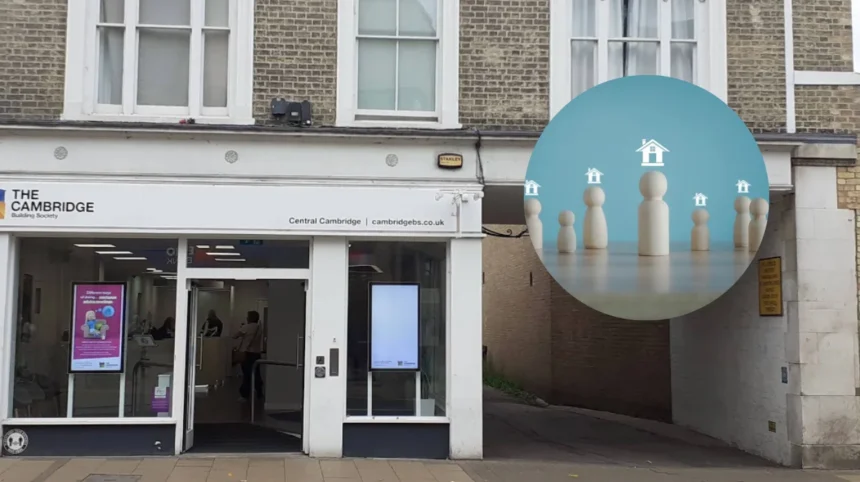
Cambridge Widens 98% Mortgage to Whole of Market in 2026
Key Points
- How does the Cambridge’s 98% mortgage expansion change access for first-time buyers in 2026?
- What are the exact terms and conditions of the First Step 2-Year Fixed mortgage?
- Why is the Cambridge extending the First Step mortgage to the whole of the market now?
- How does this development fit with wider mortgage market trends in 2026?
- What role will intermediaries play in delivering the First Step 2-Year Fixed mortgage?
- Background: The development of the First Step programme and its 2026 expansion
- Prediction: How could widened access to 98% mortgages affect first-time buyers and brokers?
- The Cambridge Building Society has extended its 98% loan-to-value (LTV) “First Step” two-year fixed mortgage from a limited distribution to the whole of the market.
- The product is priced at 5.89% and is available to all mortgage intermediaries from 8 July 2026 to assist clients with smaller deposits.
- It is open to first-time buyers only, with borrowing up to 98% LTV against a maximum property value and loan size of £500,000.
- The Cambridge will lend up to 5.5 times income; gifted deposits and loans on new-build houses are accepted, and self-employed applicants are considered under standard criteria.
- The mortgage carries a £499 product fee, includes a free standard valuation, and allows overpayments of up to 10% each year.
- The minimum purchase price is £100,000, and the First Step mortgage is not available for new-build flats.
- Dan Barker, product and propositions manager at The Cambridge, said the move gives brokers another route for eligible first-time buyers who can demonstrate affordability but lack a large deposit.
Cambridge (Cambridge Tribune) July 08, 2026 – The Cambridge Building Society has made its 98% loan-to-value (LTV) First Step two-year fixed mortgage accessible to the whole of the market, following a period of limited distribution. The product is priced at 5.89% and is available to all intermediaries from 8 July to assist clients with smaller deposits, with the scheme remaining open to first-time buyers only.
How does the Cambridge’s 98% mortgage expansion change access for first-time buyers in 2026?
The move represents a significant widening of access to high-LTV borrowing for first-time buyers across the UK, rather than a product launch. As reported by the editor of Mortgages Solutions in March 2026, the First Step programme had previously been relaunched for 2% deposits with a more restricted distribution model, but from 8 July 2026 it is now available to the whole of the market. This shift means that mortgage brokers operating with any intermediary platform can now offer the product to eligible clients, potentially increasing the number of first-time buyers who can secure a mortgage with a 2% deposit.
Under the terms described by The Cambridge, borrowers can borrow up to 98% of a property’s value, capped at a maximum loan of £500,000, with a minimum purchase price of £100,000. The lender will assess affordability on up to 5.5 times income, a relatively high multiple compared with many mainstream lenders, which may help those with moderate deposits but stronger earnings. Gifted deposits and new-build house loans are accepted, although the product is not available for new-build flats, a distinction that reflects risk weighting on different property types.
What are the exact terms and conditions of the First Step 2-Year Fixed mortgage?
The Cambridge has set the interest rate at 5.89% for the two-year fixed period, with a £499 product fee and a free standard valuation included in the package. Borrowers can make overpayments of up to 10% of the outstanding balance each year without penalty, providing some flexibility for those who receive bonuses, tax refunds, or other windfalls. The mortgage is not available for new-build flats, and the maximum property value considered is £500,000, aligning the product with mid-range urban and suburban housing rather than high-value regional properties.
As explained by Dan Barker, product and propositions manager at The Cambridge, the lender continues to apply “responsible lending criteria, individual underwriting, and fixed monthly payments” to ensure that affordability is assessed on a case-by-case basis rather than through automated shortcuts. Self-employed applicants are considered in accordance with the mutual’s standard criteria, which typically involve reviewing at least two years of accounts or tax returns, depending on the lender’s policy.
Why is the Cambridge extending the First Step mortgage to the whole of the market now?
The decision to widen distribution appears driven by a combination of market conditions and the mutual’s strategic aim to support first-time buyers who face deposit barriers. As reported by Dan Barker of The Cambridge, brokers are seeking
“practical options to support first-time buyer clients who can demonstrate affordability but may not have access to a large deposit”.
By making the product available to the whole of the market, the lender gives intermediaries “another route to consider for eligible clients looking to borrow up to 98% LTV”.
Industry commentary from earlier in 2026 suggests that high interest rates and elevated house prices have continued to squeeze first-time buyers, particularly those without access to family wealth or large savings. The First Step programme, with its 98% LTV and 5.5 times income multiple, is designed to address that gap, while the July 2026 expansion aims to increase the volume of cases that can be placed through a wider range of brokers.
How does this development fit with wider mortgage market trends in 2026?
The Cambridge’s move aligns with a broader trend among lenders and building societies to reintroduce or expand high-LTV products for first-time buyers, even in a higher-rate environment. While many mainstream lenders have tightened deposit requirements or reduced income multiples, society-backed and mutual lenders have often positioned themselves as more flexible on deposits, in part to meet social objectives around homeownership. The 5.89% two-year fix sits within the range of current high-LTV offerings but is underpinned by the mutual’s emphasis on individual underwriting rather than purely automated decisions.
By extending the product to the whole of the market, The Cambridge is effectively increasing the competitive pressure on rivals that still limit similar high-LTV deals to selected intermediary channels. This could encourage other lenders to consider broader distribution for their own first-time buyer products, particularly if they seek to maintain market share in a segment where demand remains resilient despite economic headwinds.
What role will intermediaries play in delivering the First Step 2-Year Fixed mortgage?
Intermediaries are central to the rollout, as the product is now available to “all intermediaries” rather than a restricted set of partners. Brokers will need to assess whether a client meets the first-time buyer criteria, the income and affordability thresholds, and the property eligibility rules, including the prohibition on new-build flats. The inclusion of gifted deposits and new-build house loans means that brokers can consider a wider range of funding structures, provided that source-of-deposit documentation is in line with the lender’s standard requirements.
As Dan Barker noted, the product is intended to help intermediaries “place cases where a lower deposit is the main barrier to homeownership”. This suggests that brokers may increasingly use the First Step mortgage as a core option in their first-time buyer toolkit, particularly for clients who have strong earnings but limited savings. The 10% annual overpayment allowance also gives brokers a potential selling point for clients who anticipate future income growth.
Background: The development of the First Step programme and its 2026 expansion
The First Step programme was previously relaunched in March 2026 as a 2% deposit product for first-time buyers, initially with a limited distribution model. That relaunch was reported by Mortgages Solutions, which highlighted the scheme’s focus on enabling borrowers to access up to 98% LTV while maintaining responsible lending standards. The July 2026 decision to extend the product to the whole of the market marks a scaling-up of that initial approach, allowing a broader range of intermediaries to offer the mortgage and potentially increasing the volume of first-time buyer cases that can be supported.
The underlying development reflects a strategic response to ongoing challenges in the UK housing market, where high house prices and elevated borrowing costs have made it difficult for many first-time buyers to accumulate sufficient deposits. By combining a 98% LTV, a 5.5 times income multiple, and a flexible stance on gifted deposits and new-build houses, The Cambridge has created a product tailored to buyers who are income-strong but deposit-constrained.
Prediction: How could widened access to 98% mortgages affect first-time buyers and brokers?
For first-time buyers, the expansion of the First Step mortgage to the whole of the market could meaningfully increase the number of people who can purchase a home with only a 2% deposit. Those who previously struggled to save a 10% or 15% deposit may now be able to enter homeownership earlier, albeit with a higher loan-to-value ratio and potentially higher monthly payments due to the 5.89% rate. The ability to lend up to 5.5 times income could particularly benefit earners in higher-paying sectors, such as tech, finance, or healthcare, who have strong cash flows but limited capital for savings.
However, the higher LTV also carries risks. Borrowers with minimal deposits will have less equity cushion if property prices fall, and the 5.89% two-year fix means that once the initial period ends, they could face significant rate increases if the market remains at elevated levels. Brokers will need to stress-test affordability carefully and ensure that clients understand the long-term cost implications of high-LTV borrowing.
For intermediaries, the change offers a new, widely available product to pitch to first-time buyer clients, potentially increasing conversion rates and strengthening relationships with lenders. It may also encourage other mortgage providers to broaden distribution of their own high-LTV products, tightening competition in the first-time buyer segment. In the longer term, if more lenders adopt similar models, the overall deposit barrier for first-time buyers in the UK could be reduced, though this would need to be balanced against responsible lending concerns and the macroeconomic risks of high-leverage household debt.