
Key Points
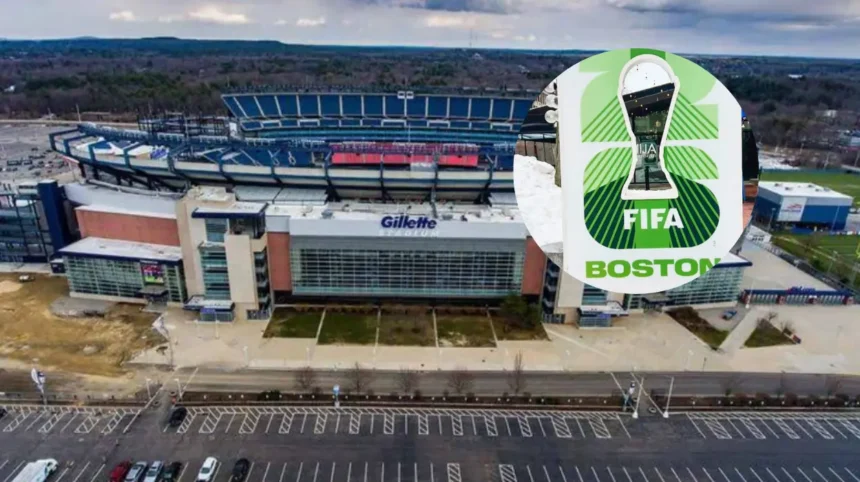
- Seven FIFA World Cup 26 matches will be held at Gillette Stadium in Foxborough from June 13 to July 7, 2026
- Throngs of soccer fans have already flooded the metro Boston area, with locals spotting fans in kilts before Scotland vs Haiti game
- Cambridge organized multiple watch parties, legalized alcohol-to-go, and created public consumption districts for summer festivals
- Boston and Cambridge jointly funded $100,000 grant for Jane Doe Inc. to support domestic violence and sexual assault victims during World Cup
- 2013 UK study showed 26% increase in domestic abuse when English team won, 38% increase when they lost
- Jane Doe Inc. created service map including shelters, counseling, and legal representation available during tournament
- Staff at bars and restaurants hosting watch parties trained to identify warning signs of gender-based violence
- U.S. Marshall’s service recovered 35 vulnerable high-risk missing children through “Operation Yellow Card” human trafficking investigation
- Human trafficking risks heightened during major tourist events with strong correlation between sporting events and sex trafficking
- Cambridge Department of Public Health on high alert for communicable diseases and food-borne illnesses
- Heat-related illness is primary public health concern, especially among older people, children, and those with chronic illnesses
- Cambridge Police Department will maintain visible presence for public safety support during World Cup festivities
Cambridge (Cambridge Tribune) June 13, 2026 – The city of Cambridge has officially launched comprehensive preparations as throngs flocked to the metro Boston area for the FIFA World Cup 2026, with seven matches scheduled at Gillette Stadium in Foxborough between Saturday, June 13 and July 7. As reported by Jane Petersen of Cambridgeday, locals have already spotted soccer fans donning kilts as they roam the streets ahead of Saturday’s game between Scotland and Haiti, signaling the beginning of what officials describe as an “extravaganza and excess” period.
- Key Points
- How Has Cambridge Organized Watch Parties and Public Consumption Areas?
- What Resources Are Available for Domestic Violence and Sexual Assault Victims?
- How Many Children Were Recovered Through Operation Yellow Card?
- What Public Health Measures Has Cambridge Implemented?
- How Is Cambridge Police Department Preparing for Festivities?
- Background of Cambridge’s World Cup 2026 Development
- How Will World Cup Preparations Affect Cambridge Residents and Visitors?
How Has Cambridge Organized Watch Parties and Public Consumption Areas?
In Cambridge, the city has organized several watch parties as confirmed on the Cambridge United – Where the World Comes Together webpage, and has made alcohol-to-go legal, as well as creating public consumption districts. These public consumption districts will also be in place for other summer festivals, according to information from the Cambridge government news release dated June 2026. Where there are crowds, there is also the potential for problems, and local nonprofits and officials have been offering their support for residents and guests across the globe to enjoy a safe and healthy summer of football fun.
What Resources Are Available for Domestic Violence and Sexual Assault Victims?
World Cup and domestic violence concerns have prompted Boston and Cambridge to work together to fund a grant of $100,000 for the Massachusetts branch of Jane Doe Inc., a coalition of local and statewide nonprofit service providers aimed at supporting and advocating for victims of sexual assault and domestic violence. As reported by Jane Petersen of Cambridgeday, the group has worked in the run-up to the World Cup in creating a map of services that will be offered during the World Cup during the tournament, including shelters, counseling, and legal representation.
Some research has linked televised sports to domestic violence. A 2013 study in the United Kingdom showed a 26 percent increase in domestic abuse reports to police when the English national team won a World Cup match and a 38 percent increase when they lost, according to research cited in the Cambridgeday report.
The funding for Jane Doe Inc. will matter beyond the World Cup, said Greta Hagen, the organization’s deputy director, who called it a “catalyst” for the network. “We will be better prepared, but in the future, because of this strengthening our network,” Hagen stated.
Jane Doe Inc. has also been working with Cambridge’s Domestic and Gender Based Violence Prevention Initiative 9 (DGBVPI) and Boston’s Domestic and Sexual Violence Prevention Initiative to help train staff at local bars and restaurants hosting World Cup watch parties to look out for warning signs of gender-based violence.
But it isn’t the stranger danger brought on by an influx of tourists that is the biggest risk, said Shameka Gregory, executive director of DGBVPI. As reported by Jane Petersen, Gregory stated: “People are more likely to experience violence from people they know. This is happening to our neighbors, our friends … in real time. We should still be paying attention to these things, even when FIFA goes away.”
Gregory also highlighted the importance of placing responsibility for violence on the perpetrators, not the victims. “The message should be: don’t harm people, don’t abuse people, don’t rape people,” Gregory said.
If someone does experience gender-based or sexual violence, Jane Doe Inc. is partnering with two hotlines staffed with professionals that can direct them to services. These hotlines will be advertised inside MBTA commuter rail trains into Foxboro. FIFA, however, would not allow them to be advertised in Gillette Stadium. It did not respond to requests for comment about whether public service announcements inside Gillette were allowed.
How Many Children Were Recovered Through Operation Yellow Card?
Human trafficking is another issue that can happen with major tourist events. On Friday, the U.S. Marshall’s service announced 35 “vulnerable high risk missing children” had been recovered from Massachusetts as a part of its “Operation Yellow Card,” an inter-agency investigation into human trafficking in the Bay State that was started in April and will continue through the duration of the World Cup.
“Large-scale international gatherings historically bring a heightened risk of predatory exploitation targeting our communities’ most vulnerable youth,”
said Dennis Matulewicz, U.S. Marshal for the District of Massachusetts, in a statement.
Jane Doe Inc. member organizations also offer services for victims of human trafficking. Massachusetts and federal agencies have also raised alarms about potential trafficking associated with the massive influx of tourism associated with World Cup events.
“Sex trafficking is real, it’s harmful, it’s definitely a scourge in our community, and there is a very strong correlation between major sporting events and sex trafficking,”
said Kimberly Mendoza Iraheta, director of the Domestic and Sexual Violence Prevention Initiative for the Boston Health Commission.
What Public Health Measures Has Cambridge Implemented?
Public health preparations have been intensified as the Cambridge Department of Public Health (DPH) has epidemiology staff and public health nurses at the ready to do contact tracing if cases of communicable disease are reported, and a process with following up with restaurants if food-borne illness is contracted.
“We’re really now just on high alert, so that we’ll be ready if there are higher incidences of the things that we typically do,”
said Dawn Baxter, DPH’s communications director.
But headline-making outbreaks of hantavirus and Ebola elsewhere in the world are not likely to be coming to Cambridge. The ailment residents and travelers alike should be the most concerned about is a much more familiar summertime visitor: the sun.
“Heat-related illness is more common if there are several consecutive days of high temperatures without cooldowns at night,”
Baxter said. She added that heatstroke is more common among older people, children and people with chronic illnesses.
“We want people to really learn more about the signs and symptoms of heat-related illness, so that they can just be aware of it for themselves and for the people around you,”
Baxter emphasized.
How Is Cambridge Police Department Preparing for Festivities?
The Cambridge Police Department also says they’re preparing for festivities.
“The city does expect that the World Cup games and watch parties will bring visitors from near and far to our community,”
CPD Public Information Officer Sergeant Bob Reardon said via email.
“We look forward to welcoming them and will have an appropriate, visible presence to provide any necessary public safety support.”
Background of Cambridge’s World Cup 2026 Development
Cambridge’s World Cup 2026 preparation represents a coordinated citywide effort between municipal officials, nonprofit organizations, and public health agencies. The city secured grant funding in February 2026 to bring 2026 FIFA World Cup watch parties to neighborhoods, as confirmed by Cambridge’s official news release. The “Cambridge United – Where the World Comes Together” initiative encompasses a citywide series of free World Cup watch parties in June-July 2026, bringing international soccer fans together with local residents.
The $100,000 joint grant between Boston and Cambridge for Jane Doe Inc. represents unprecedented collaboration between the two cities on domestic violence prevention during major sporting events. This funding strengthens the network of service providers including shelters, counseling centers, and legal representation services specifically mapped for World Cup duration availability.
Operation Yellow Card, launched by the U.S. Marshall’s service in April 2026, demonstrates federal commitment to addressing human trafficking risks associated with the World Cup. The recovery of 35 vulnerable high-risk missing children from Massachusetts represents the largest single operation result in this inter-agency investigation continuing through July 7, 2026.
Cambridge’s public consumption districts and alcohol-to-go legalization align with broader summer festival policies, creating consistent regulatory frameworks for public gatherings throughout the season. The Cambridge Department of Public Health’s epidemiology staff and public health nurses represent existing infrastructure deployed at heightened alert levels rather than new emergency staffing.
How Will World Cup Preparations Affect Cambridge Residents and Visitors?
The World Cup development will significantly affect Cambridge residents and visitors across multiple dimensions. For local residents, the influx of throngs flocking to metro Boston area means increased crowding on streets, public transportation, and neighborhood spaces. Residents will experience both the economic benefits of increased tourism and the challenges of managing large crowds during the June 13 to July 7 period.
Domestic violence survivors and at-risk individuals will benefit from enhanced services through Jane Doe Inc.’s service map, including readily available shelters, counseling, and legal representation. The $100,000 grant strengthens existing support networks, creating long-term benefits beyond the World Cup duration. Bar and restaurant staff trained to identify gender-based violence warning signs provide additional protection layers for patrons attending watch parties.
Families with children face heightened human trafficking risks that Operation Yellow Card addresses through continued inter-agency investigation. The recovery of 35 vulnerable children demonstrates active protection measures, but parents should remain vigilant given the “heightened risk of predatory exploitation targeting our communities’ most vulnerable youth” during large-scale international gatherings.
Public health concerns primarily center on heat-related illness rather than exotic disease outbreaks. Older people, children, and individuals with chronic illnesses face elevated heatstroke risks during consecutive high-temperature days without nighttime cooldowns. Residents and visitors should consult Cambridge’s extreme heat webpage for signs and symptoms awareness, enabling self-protection and care for others around them.
Visitors from near and far will experience Cambridge’s “appropriate, visible presence” of Cambridge Police Department providing public safety support. The city’s welcoming approach combined with visible policing creates balanced security without deterring the festive atmosphere. Alcohol-to-go legalization and public consumption districts enable flexible enjoyment of watch parties while maintaining regulatory oversight.
The World Cup’s economic impact will benefit local businesses hosting watch parties, while nonprofit service providers receive strengthened funding for long-term network sustainability. However, residents should maintain awareness that violence risks come primarily from people they know rather than tourist influx, requiring continued attention to domestic safety even after FIFA departure.
Heat preparedness becomes critical for all attendees, particularly those with chronic health conditions, older adults, and children. Understanding heat-related illness signs enables proactive protection for oneself and community members. The combined efforts of public health, law enforcement, and nonprofit organizations create comprehensive safety infrastructure supporting both immediate World Cup needs and future community resilience.