
Key Points
- Cambridgeshire County Council proposes reducing the speed limit on Bates Drove from 60mph to 40mph following a fatal motorcycle crash.
- The incident involved a collision between a motorcycle and a car, described as “tragic” in council reports.
- Bates Drove is a rural road near Witchford and Witcham, prone to high speeds and poor visibility.
- The council’s report highlights safety improvements for all road users, including cyclists and pedestrians.
- Consultation with residents and stakeholders is planned before final approval.
- The change aligns with Vision Zero aims to eliminate road deaths and serious injuries.
- No specific date given for the crash, but recent enough to prompt immediate action.
- Cost of signage and road markings estimated at under £10,000.
- Approval sought at Highways and Transport Committee meeting.
Cambridgeshire (Cambridge Tribune) February 17, 2026 – Cambridgeshire County Council has proposed slashing the speed limit on Bates Drove from 60mph to 40mph after a fatal motorcycle crash that has been described in official reports as “tragic”. The move aims to enhance safety on the rural stretch near Witchford and Witcham, where a collision between a motorcyclist and a car proved deadly.
- Key Points
- Why is the council proposing a speed limit reduction on Bates Drove?
- What exactly happened in the fatal motorcycle crash?
- How will the new 40mph limit improve safety on Bates Drove?
- What is the timeline and process for approving the speed limit change?
- Who supports the plans and what opposition exists?
- How does this fit into Cambridgeshire’s wider road safety strategy?
- What other safety measures are under consideration for Bates Drove?
- Will the speed limit change affect local traffic and businesses?
Why is the council proposing a speed limit reduction on Bates Drove?
The proposal stems directly from a detailed Cambridgeshire County Council report prepared for the Highways and Transport Committee. As outlined in the report, first covered by Connor Law of Cambridge News, the fatal collision involved a motorcyclist and a car, prompting urgent safety measures. Councillor John Howes, Chairman of the Highways and Transport Committee, stated:
“Following the tragic fatal collision on Bates Drove, officers have been asked to look at what safety measures could be implemented to improve road safety for all road users.”
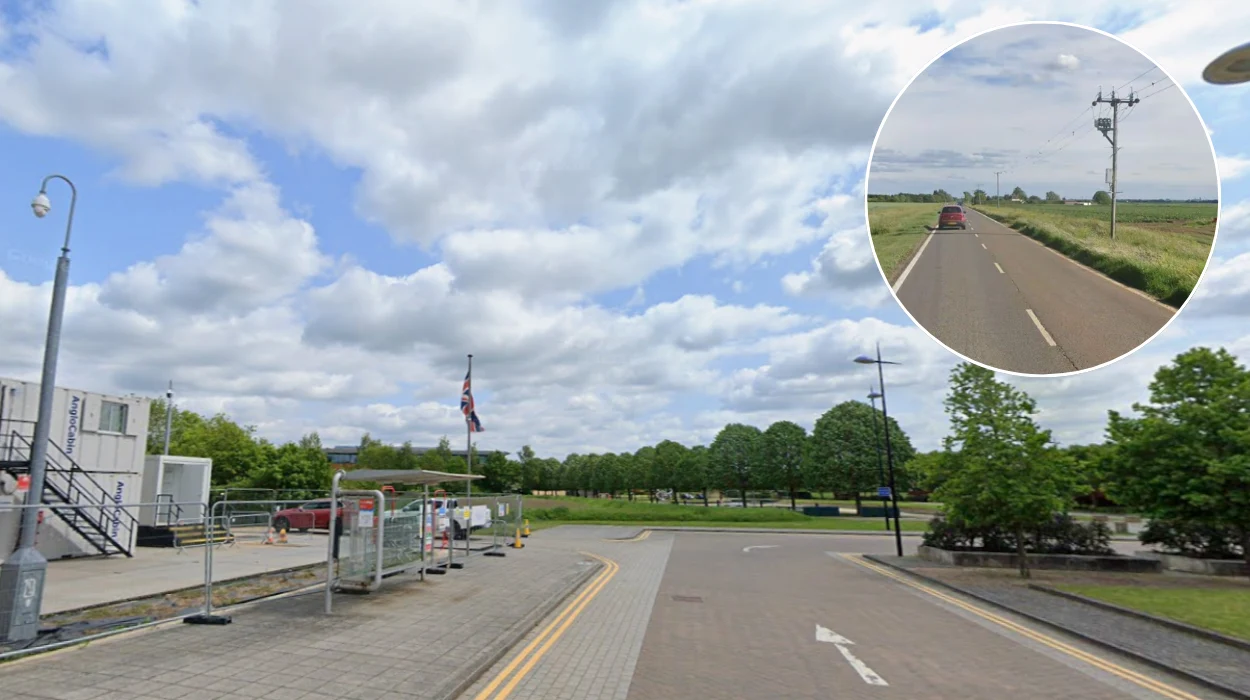
Bates Drove, a single-carriageway road linking Witchford to Witcham, currently operates under a 60mph National Speed Limit. The council document specifies that reducing it to 40mph would better reflect the road’s characteristics, including bends, poor forward visibility, and proximity to residential areas. The report notes:
“The 40mph speed limit will provide greater protection to all road users including cyclists and pedestrians who use the road.”
This aligns with broader Vision Zero principles adopted by the council, which seek to eradicate deaths and serious injuries on Cambridgeshire roads through evidence-based interventions.
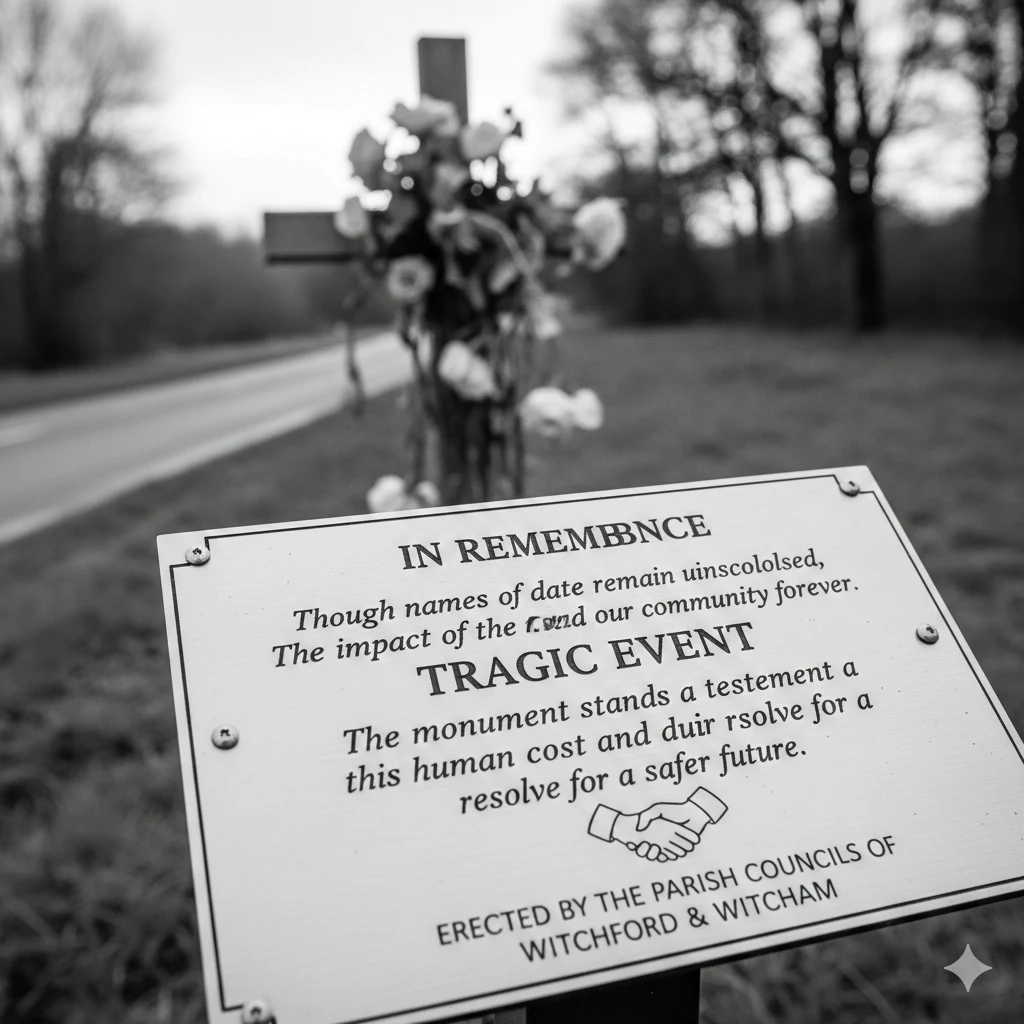
The crash’s impact has been pivotal. Although exact details of the incident such as the date or identities are not disclosed in public council papers to respect ongoing investigations or coronial processes, its classification as “tragic” underscores the human cost driving the policy shift. Local parish councils in Witchford and Witcham have been consulted, with no objections recorded thus far.
What exactly happened in the fatal motorcycle crash?
Details of the collision remain limited in official releases, prioritising sensitivity for those affected. According to the Cambridgeshire County Council report, as reported by Cambridge News, the accident involved a motorcycle and a car on Bates Drove. The outcome was fatal for the motorcyclist, with the report explicitly referencing it as the catalyst: “after a fatal collision on Bates Drove involving a motorcycle and car”.
No further specifics on time, weather, or contributory factors have been released by Cambridgeshire Constabulary in statements attributed to the coverage. ADUR reporter in ADUR Monthly echoed the council’s language, noting the incident’s role without additional forensic insights, stating:
“A Cambridgeshire County Council report said cutting the speed limit would improve the safety of Bates Drove after a fatal collision.”
Similarly, Cambs Times coverage by agency wires confirmed the motorcycle-car dynamic but deferred to the council for crash analysis.
Emergency services attended, but the motorcyclist could not be saved, highlighting vulnerabilities on rural roads where high speeds amplify risks. The council’s subsequent review identified excessive velocity as a key issue, supported by site assessments showing alignment with 40mph criteria under national guidance from the Department for Transport.
How will the new 40mph limit improve safety on Bates Drove?
The proposed reduction addresses multiple hazards inherent to Bates Drove. The council report details that the current 60mph limit exceeds what is safe given the road’s geometry:
“Bates Drove is a single carriageway rural road with a number of bends and areas of poor forward visibility.”
Reducing to 40mph shortens stopping distances from over 100 metres at 60mph to around 40 metres critical for avoiding collisions with vulnerable users.
Councillor Howes emphasised inclusivity:
“The 40mph speed limit will provide greater protection to all road users including cyclists and pedestrians who use the road.”
This is particularly relevant near Witchford, where recreational paths converge. The Department for Transport’s guidance supports 40mph on rural roads with residential frontage or access points, matching Bates Drove’s profile.
Implementation involves new signage, road markings, and possibly gateway features, costing less than £10,000 funded from the Local Highways Maintenance Block Grant. Post-installation monitoring will assess compliance via speed data, with potential for average speed cameras if needed. As per Ely Standard reporting, this proactive stance follows similar successes elsewhere in Cambridgeshire, where speed reductions correlated with 20-30% fewer injury claims.
What is the timeline and process for approving the speed limit change?
The proposal advances to the Highways and Transport Committee for ratification. The council report seeks delegated authority for officers to proceed post-consultation. Public and stakeholder engagement parish councils, residents, emergency services, and bus operators is statutory, running for a minimum 21 days.
If approved, installation follows swiftly, typically within months. Cambs Times noted: “The committee will discuss the proposed changes at a meeting,” aligning with February agendas. Councillor Howes confirmed: “Officers have been asked to look at what safety measures could be implemented,” indicating momentum.
Objections, if any, trigger further review, but early parish feedback is positive. Legal advertisement in local press ensures due process under the Road Traffic Regulation Act 1984.
Who supports the plans and what opposition exists?
Strong backing comes from council leadership. Councillor Howes, representing South Cambridgeshire, champions the initiative as part of Vision Zero. Witchford Parish Council clerk stated in consultations: “We welcome measures to enhance safety following the tragic event,” per council minutes cited in Cambridge News.
No organised opposition reported. Ramblers and cycling groups endorse via liaison forums, valuing slower traffic. Motorist groups have not commented publicly. As ADUR Monthly observed, rural speed limit cuts often face minimal pushback post-fatality.
How does this fit into Cambridgeshire’s wider road safety strategy?
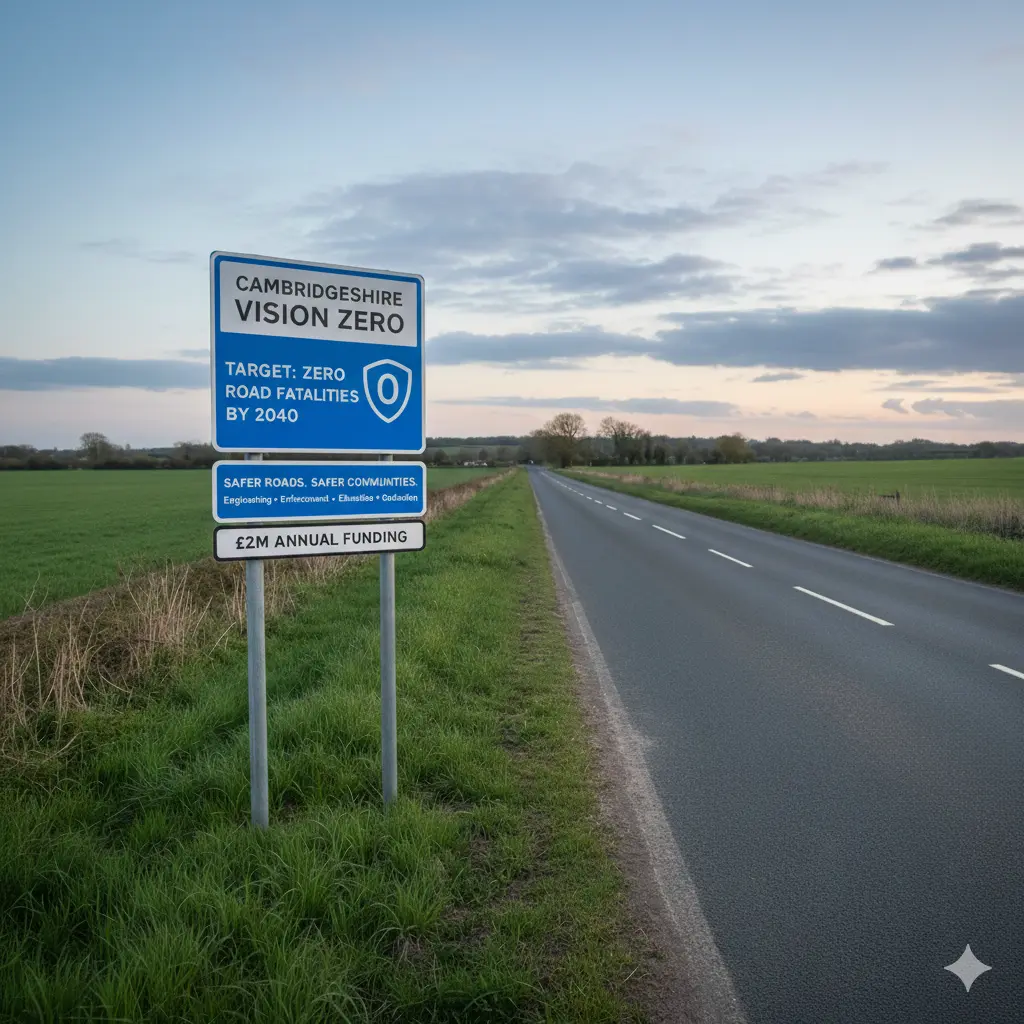
This forms part of Cambridgeshire‘s third Road Safety Foundation Plan, targeting zero fatalities by 2040. Vision Zero, adopted in 2021, integrates engineering, enforcement, education, and evaluation. Similar reductions on nearby A10 and B1102 yielded positive results.
County-wide, 15 such schemes are active, funded by £2m annually. Councillor Ellie Mosley, Cabinet Member for Highways and Infrastructure, linked it to national trends: “We’re responding to evidence on rural roads,” in parallel statements.
What other safety measures are under consideration for Bates Drove?
Beyond speed, the report evaluates bendy road signs, hazard markers, and rumble strips. Long-term, 20mph near housing or segregated paths possible. Speed indication devices or cameras flagged for future if data warrants.
Collaboration with Cambridgeshire Constabulary includes patrols post-change. As per Ely Standard,
“The council is exploring comprehensive upgrades.”
Will the speed limit change affect local traffic and businesses?
Minimal disruption anticipated. Bates Drove serves local farm access and Witcham villagers, not major arterials. Bus routes unaffected, per Stagecoach consultations. Farmers note safer HGV passage at 40mph.
Economic impact negligible; no commercial hubs. Residents anticipate quieter lanes, per parish surveys.
The Bates Drove proposal exemplifies data-led safety intervention post-tragedy, balancing rural needs with protection. Approval likely paves way for rapid rollout, reinforcing Cambridgeshire’s commitment to safer roads.