

Key Points
- A fossil long stored in a Cambridge collection has been identified as the first dinosaur bone ever found in Antarctica.
- The specimen was collected during a 1985 Antarctic expedition and later stored in the British Antarctic Survey geology collection in Cambridge.
- Recent re-examination by palaeontologists showed the fragment is a tail vertebra from a titanosaur, a group that includes some of the largest land animals known.
- The fossil lay unrecognised for roughly 40 years until a collections manager and researchers re-analysed it.
- Identification of the bone fills a significant gap in the fossil record for Antarctica and offers new insight into past dinosaur distribution and Antarctic palaeoenvironments.
- The find emphasises the scientific value of museum and survey collections and the importance of revisiting archived specimens with modern techniques.
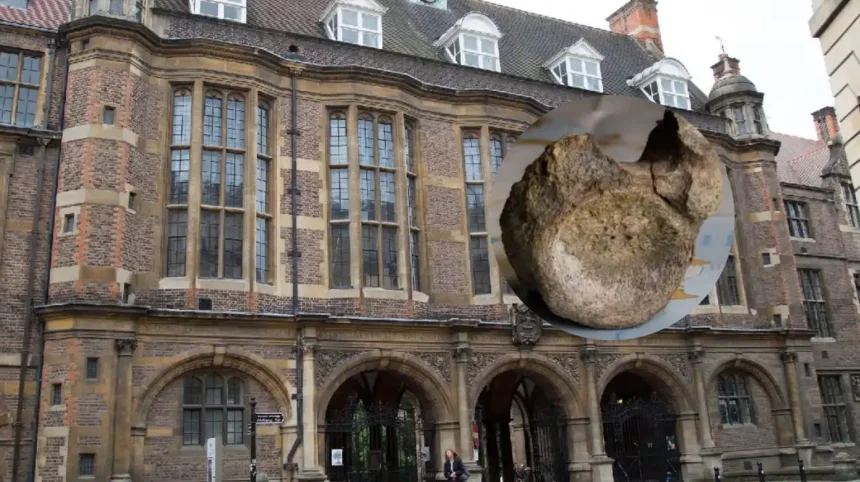
Cambridge (Cambridge Tribune) June 30, 2026 — A fossil fragment that remained stored in a drawer for about 40 years has been identified as the first dinosaur bone ever found in Antarctica. The specimen, examined by researchers and collections staff, is a tail vertebra from a titanosaur, a group of giant sauropod dinosaurs.
How was the bone found?
The fossil was originally collected during a 1985 expedition to Antarctica and later entered the British Antarctic Survey geology collection in Cambridge. It remained there, unrecognised for decades, until a recent re-examination led scientists to identify it as dinosaur material.
What did scientists discover?
Researchers concluded that the fragment belongs to a titanosaur tail vertebra. That identification is significant because titanosaurs were among the largest land animals to have lived, and their confirmed presence in Antarctica adds a new data point to the continent’s prehistoric record.
Why does the finding matter for science?
The discovery helps fill a major gap in the fossil record of Antarctica. It also suggests that the continent once supported conditions suitable for large herbivorous dinosaurs, pointing to a much warmer and more vegetated environment than the ice-covered landscape seen today.
Who was involved in the re-identification?
The fossil was re-examined by collections staff and palaeontologists working with the British Antarctic Survey. Their review of the specimen’s features confirmed its dinosaurian origin and its place among titanosaurs.
What does this say about museum collections?
The case shows that old collections can still contain important scientific discoveries. Fossils or specimens that were previously overlooked can become highly significant when re-analysed with better reference material and modern expertise.
Background of the Development
The fossil was collected during Antarctic fieldwork in 1985, but it could not be fully identified at the time because it was fragmentary and there was limited comparative material available. As a result, it was stored in the BAS collection and effectively forgotten until recent research brought it back into focus. The re-identification adds to growing evidence that Antarctic collections may still hold undiscovered scientific value.
Prediction: How could this affect scientific audiences?
This discovery is likely to encourage museums, survey organisations, and researchers to re-check archived fossil collections more carefully. For palaeontologists, it may lead to renewed interest in Antarctic dinosaur research and more studies on how dinosaurs lived in polar environments. For students and the wider public, it highlights how major discoveries can come from old collections rather than only from new fieldwork.