
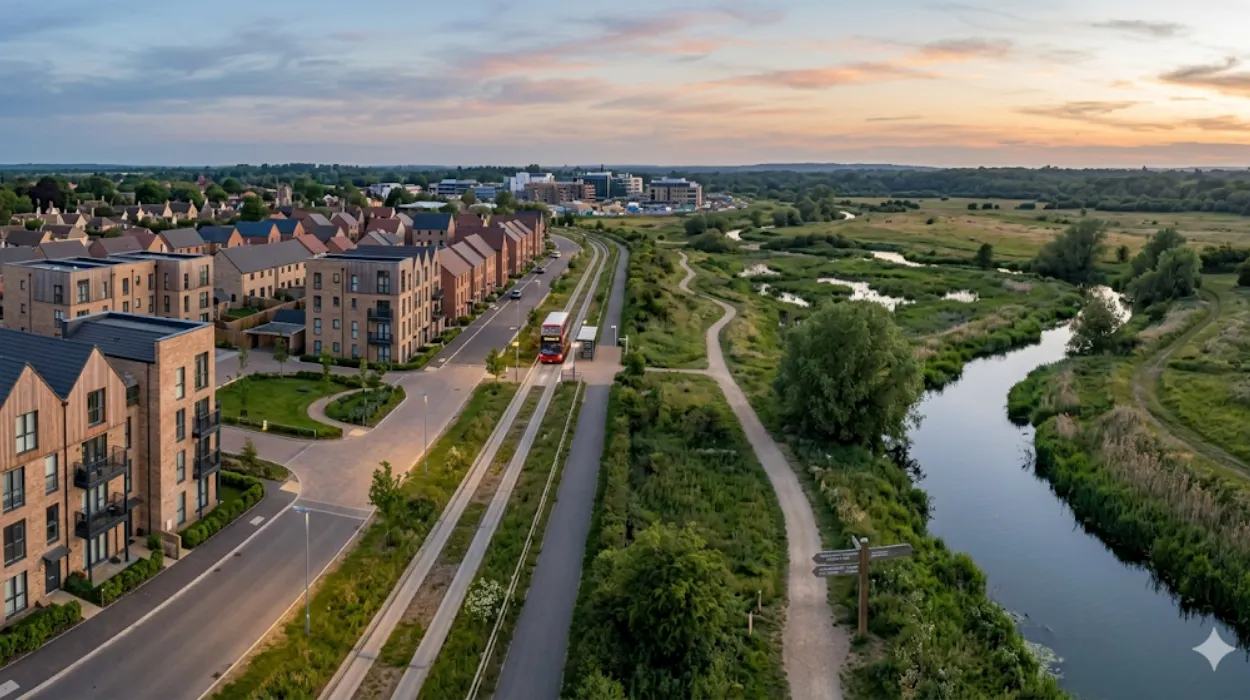
Trumpington Meadows stands as a prominent housing development on Cambridge‘s southern edge, blending natural beauty with contemporary living. Yet, it sparks debate among potential buyers due to its mix of advantages and challenges.
- Historical Roots of Trumpington Meadows
- Development Overview and Key Features
- Environmental Wins and Green Credentials
- Housing Market Insights
- Accessibility and Transport Links
- Amenities, Schools, and Community Life
- Why Buyers Love Trumpington Meadows
- Traffic and Parking Headaches
- The Soulless New Build Critique
- Cost and Affordability Concerns
- Voices from Residents and Forums
- Future Prospects and Ongoing Changes
- Weighing the Decision for Cambridge Buyers
Historical Roots of Trumpington Meadows
Trumpington Meadows occupies land with deep historical significance, tracing back to Neolithic times through recent archaeological finds. Excavations have revealed burial structures from the 4th millennium BC, alongside Iron Age, Roman, and Anglo-Saxon remains, including a rare 7th-century bed burial of a young woman adorned with a garnet-inlaid gold cross, suggesting ties to an elite family or monastic site.
The area evolved from medieval agricultural roots, noted in the Domesday Book with 33 peasants, into a hub for plant breeding in the 20th century at the nearby Plant Breeding Institute on Maris Lane. This site developed globally influential crops like Maris Piper potatoes before relocating in 1990.
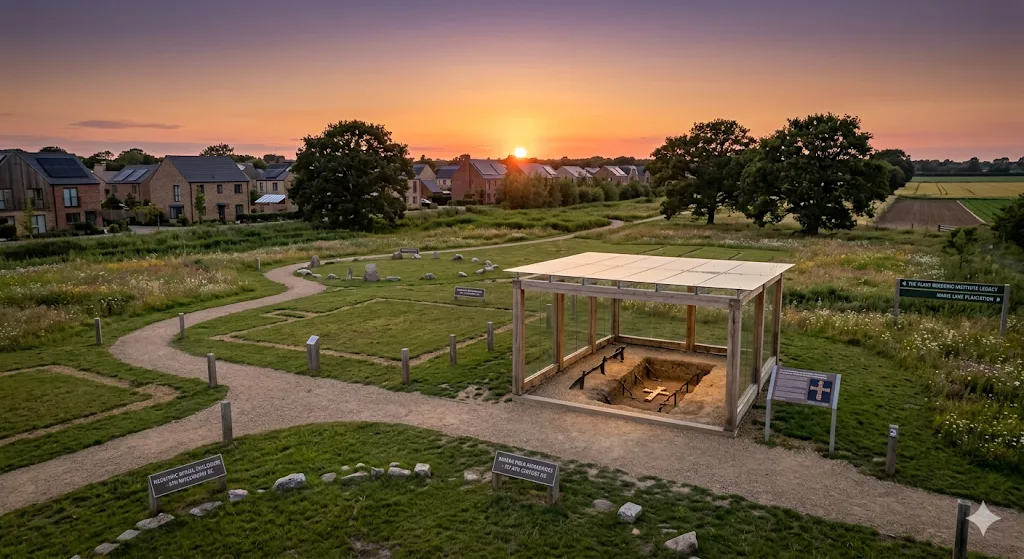
Formerly an agricultural research facility, the land transformed into a housing project post-2006 when Cambridge’s Local Plan released green belt areas for development. Outline planning approval came in 2008, with construction ramping up by 2009 under master developer Grosvenor and partners like the Universities Superannuation Scheme.
Development Overview and Key Features
Spanning the southern fringe of Cambridge, Trumpington Meadows delivers around 1,200 apartments and townhouses inspired by the adjacent historic Trumpington village. High design standards ensure award-winning architecture, catering to the city’s housing demands amid rapid growth.
A standout element is the 148-acre country park and nature reserve, converted from farmland into a biodiversity hotspot. This space boasts a 46% biodiversity net gain far exceeding later 10% mandates hosting otters, lapwings, skylarks, and the UK’s smallest butterfly, the Small Blue.
In 2022, developers transferred the park to the Wildlife Trust with endowment funding, securing its future as a community asset for health, wellbeing, and wildlife. Proximity to the River Cam enhances its appeal, with walking paths linking to Byron’s Pool Nature Reserve.
Environmental Wins and Green Credentials
Trumpington Meadows exemplifies sustainable development on former green belt land, earning praise for environmental integration. The country park’s wildflower meadows, supporting red clover and field scabious, demonstrate how housing can coexist with nature in high-growth areas.
Strategic collaboration among councils, developers, and conservationists transformed low-wildlife farmland into thriving habitats. Residents and visitors now enjoy public green spaces that mitigate urban pressures, setting a model for future projects.
This focus on ecology appeals to eco-conscious Cambridge buyers seeking respite from city intensity, with the park fostering community events and daily recreation.
Housing Market Insights
Property prices in Trumpington Meadows reflect Cambridge’s premium market, with CB2 9 postcode homes averaging £5,550 per square meter as of recent data. Recent sales include a 106 sqm house at £892,500 and larger properties up to £810,000, though values dipped 4.2% last year, adjusted for inflation at -7.2%.
Buyers find options from apartments to family townhouses, priced £380,000 to £900,000, appealing to academics and professionals near the Biomedical Campus. Newer builds dominate, with slower sales noted for some developers like Bovis compared to rivals.
Despite fluctuations, the area’s connectivity sustains demand, though affordability concerns persist amid Cambridge’s £5,150 per sqm citywide average.
Accessibility and Transport Links
Excellent transport defines Trumpington Meadows’ allure, with the Busway providing segregated cycle paths to the city center, Science Park, and Biomedical Campus. Nearby Trumpington Park and Ride, South West Travel Hub, and future Cambridge Autonomous Metro enhance sustainable mobility.
Proximity to Cambridge South Station and East-West Rail supports commutes to London and beyond. Cycle corridors and the CAM corridor prioritize active travel, aligning with Cambridge’s cycling culture.
However, this convenience fuels division, as growing traffic clogs roads, particularly for car-dependent buyers.
Amenities, Schools, and Community Life
Modern amenities abound, including a new primary school, Trumpington Meadows Primary, with state-of-the-art facilities alongside sister school Fawcett. Secondary options like Trumpington Community College, Netherhall, and St Bede’s serve families.
Local shops, pubs, King George V Playing Field, and Hobson’s Square offer everyday needs, while countryside walks provide leisure. The development fosters a family-friendly vibe with quiet streets and green access.
Community groups like the Trumpington Residents’ Association and a dedicated Facebook group build ties, though some lament lost village charm from expansion.
Why Buyers Love Trumpington Meadows
Eco-features top the pros list, with the country park drawing families for its wildlife and health benefits. Since opening in 2015, it has become a beloved haven, boosting wellbeing in a high-pressure academic city.
Proximity to Cambridge bikeable or bus-accessible suits professionals, especially at the Biomedical Campus. Ample schools and amenities make it ideal for raising children, with safe, quiet surroundings.
Modern homes meet diverse needs, from starter apartments to spacious townhouses, in a maturing neighborhood ten years post-first residents.
Traffic and Parking Headaches
Intense traffic emerges as a primary grievance, with roads overwhelmed by new residents and commuters. Residents report awful congestion, exacerbated by limited facilities in new builds.
Parking restrictions spark fury: proposals for controlled zones, visitor permits, and fines faced backlash for restricting access near homes, blocking driveways, and hindering emergency services. Objections highlight inadequate bins, meter placements, and pavement parking dangers.
On-street parking outside peak hours obstructs services, while private enforcement exceeds council rates, deterring buyers wary of daily hassles.

The Soulless New Build Critique
Many describe the area as “soulless,” with uniform Lego-like houses lacking character or community hubs. Litter, poor maintenance, and drab green spaces disappoint, contrasting historic Trumpington’s charm.
Expansion has eroded village identity, with blocks of housing dominating without integrated facilities. Some warn against it outright, citing antisocial behavior and noise.
State schools receive mixed reviews, with affluent families opting for privates, potentially impacting quality.
Cost and Affordability Concerns
High entry prices divide opinion: while offering value near Cambridge, costs strain budgets amid stagnant wages. Slower sales signal hesitation over premiums for new builds facing these issues.
Inflation-adjusted declines question long-term investment, especially versus more established areas. Buyers weigh green perks against premiums that exclude first-timers.
Voices from Residents and Forums
Reddit threads reveal a split: positives include family safety, amenities, and walks, but negatives dominate on traffic, soullessness, and parking. One resident called it “okay” but uninspiring; another praised quiet for families near work.
Forums echo snagging worries with builders like Bovis and parking objections from the Residents’ Association. Safety concerns arise sporadically, tied to parking chaos rather than crime.
Future Prospects and Ongoing Changes
A new South Trumpington parish manages southern edges, including Meadows land, signaling maturation. Planned infrastructure like CAM promises better mobility, potentially easing traffic.
Biodiversity commitments endure via Wildlife Trust stewardship, while housing demand persists with Cambridge’s growth. Buyers monitor price stabilization and amenity expansions.
Weighing the Decision for Cambridge Buyers
Trumpington Meadows polarizes with its green heart and connectivity against urban-fringe pains like congestion and uniformity. Families prioritizing nature and schools may embrace it, while car-reliant or charm-seekers hesitate.
Ultimately, visiting the park, test-driving commutes, and reviewing sales data clarify fit. In Cambridge’s tight market, it remains a viable, if debated, option for balanced living.