The city of Cambridge hosts centuries of academic history, architectural achievement, and folklore traditions. Its historical development created numerous urban legends, ghostly hauntings, and mythic explanations for architectural anomalies. Scholars, residents, and visitors pass down these tales, preserving the cultural identity of the region.
- What Legends Surround the Foundation of Kings College Chapel?
- Why Is the Corpus Clock Associated with Dark Local Myths?
- What Ghost Stories Originate from Corpus Christi College?
- How Did the Mathematical Bridge Earn Its Assembly Myth?
- What Myths surround the Eagle Pub and its RAF Wall?
- What Secrets Are Hidden Behind the Round Church History?
- Why Is the Oliver Cromwell Skull Legend So Famous?
- What Mysterious Tales surrounds Magdalen College Pepys Library?
- What is the oldest legend associated with Cambridge University?
- Can visitors see the location of Oliver Cromwell’s skull at Sidney Sussex College?
- Is the Mathematical Bridge completely built without nails or bolts?
- Why does the Corpus Clock display time inaccurately on purpose?
- Are there guided ghost tours available for Cambridge landmarks?
Cambridge grew from a medieval trading settlement into a global center of education. Over eight hundred years, historical events combined with local imagination to create distinct legends. Architectural features across colleges and churches often serve as physical evidence for these mythical narratives throughout the town.
Local folklore reflects the social structures and academic pressures of different historical eras. Stories about mischievous students, tragic lovers, and supernatural occurrences provide insight into the lives of historical residents. These legends continue to shape public perception of the city institutions today.
What Legends Surround the Foundation of Kings College Chapel?
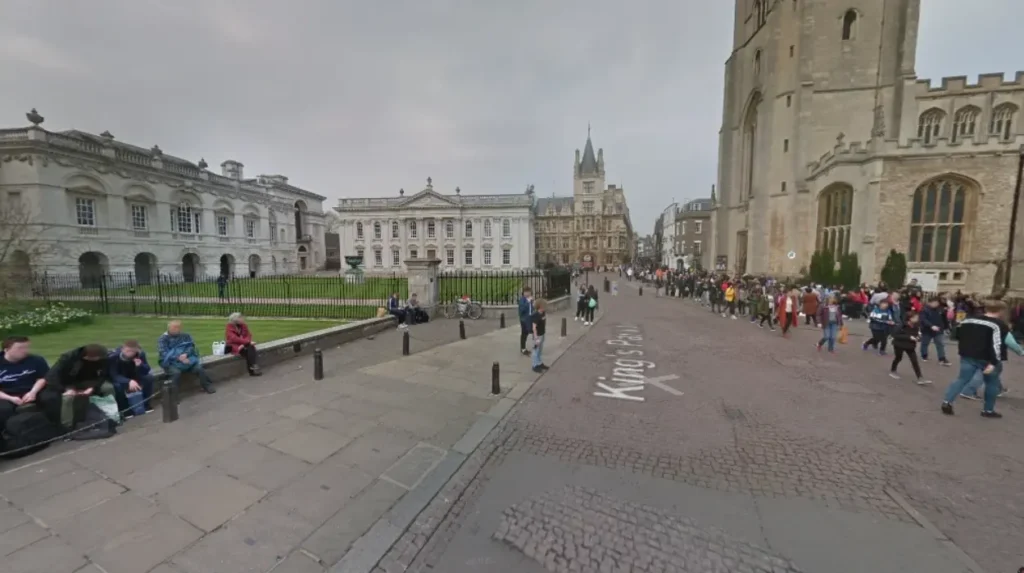
Legends claiming King Henry VI selected the location of King’s College Chapel due to divine visions are historically inaccurate. Construction began in 1446 based on royal planning, but local folklore attributes supernatural endurance to the building through political instability.
The establishment of King’s College Chapel represents a major event in fifteenth-century English architecture. King Henry VI laid the foundation stone on July 25, 1446. The Wars of the Roses delayed construction for decades, leading local populations to invent tales of cursed building conditions and divine intervention.
Architectural details of the chapel gave rise to specific folk beliefs over the centuries. The vast fan-vaulted ceiling, completed between 1512 and 1515 under King Henry VIII, features complex stone masonry. Local stories falsely claimed the masons used secret alchemy to support the immense weight of the stone structures without visible pillars.
Historical records demonstrate that master mason John Wastell designed the ceiling using advanced geometry and structural engineering principles. The chapel contains twelve large windows on each side, which survived the English Civil War. Local legends state Oliver Cromwell spared the glass due to personal ties to the region, though historical evidence shows practical military decisions saved the structures.
Why Is the Corpus Clock Associated with Dark Local Myths?
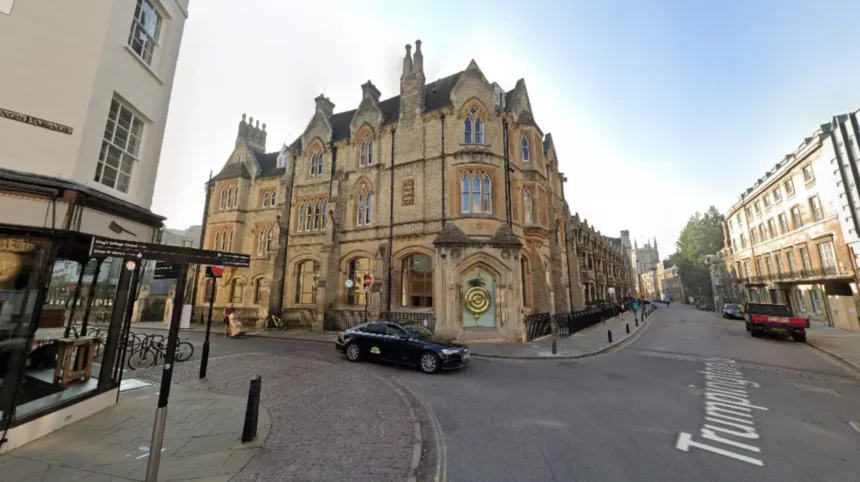
The Corpus Clock features an intimidating sculptural creature called the Chronophage, designed by John C. Taylor to symbolize the physical consumption of time. Unveiled in 2008, it immediately generated modern urban legends regarding mechanical curses and mortality.
Located at Corpus Christi College, the Corpus Clock represents a unique fusion of horology and public art. Dr. John C. Taylor funded and designed the device, which Stephen Hawking officially unveiled on September 19, 2008. The face consists of a gold-plated stainless steel disc measuring 1.5 meters in diameter.
The movement of the clock relies on a mechanical grasshopper escapement, which Taylor enlarged into a terrifying top-mounted sculpture. The creature opens its jaws at regular intervals, visually demonstrating the continuous loss of human life. This design choice sparked rumors among students that the clock was built to ward off bad luck or mark tragic deaths.
The mechanical operation intentionally lacks precise timekeeping on a second-by-second basis. The clock speeds up, slows down, and stops at unpredictable intervals, correcting itself only on the minute mark. This irregular movement reinforces local superstitions that the clock reacts directly to the moral choices of people standing nearby.
What Ghost Stories Originate from Corpus Christi College?
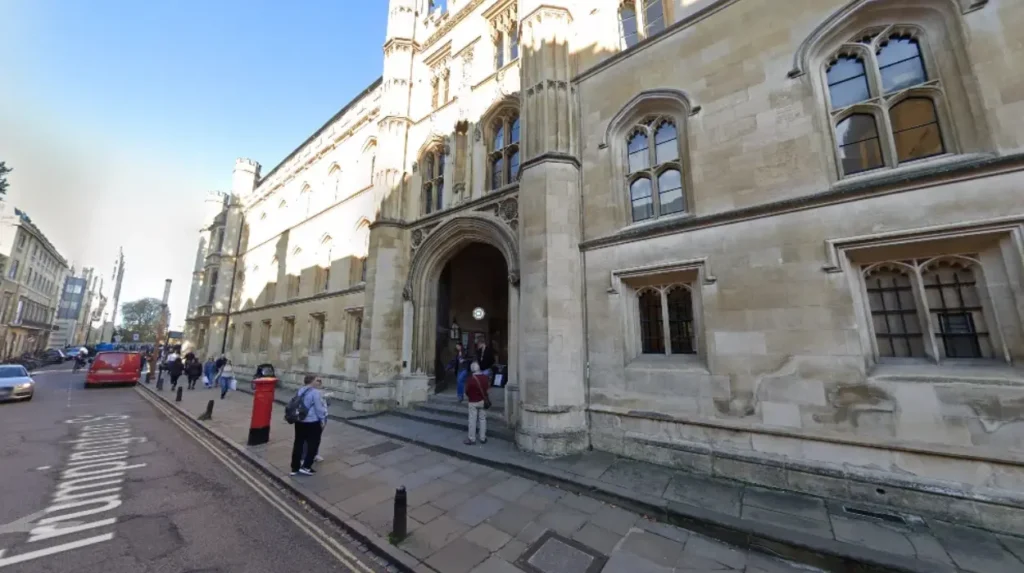
Corpus Christi College contains famous ghost legends dating back to the seventeenth century, focusing primarily on Doctor John Butts and the tragic lovers Elizabeth Spencer and Thomas Tompkins. Accounts describe apparitions appearing in the Old Court quarter.
Corpus Christi College was established in 1352 by local town guilds, making it the sixth oldest college in Cambridge. Old Court dates to the fourteen century and retains its original medieval structure. The dense historical layers of the site fostered tales of hauntings over many generations.
The most prominent ghost story involves Doctor John Butts, who served as Master of the College during the plague outbreak of 1630. Historical records confirm Butts remained on campus to care for sick residents when others fled. Folklore claims his spirit haunts the Master’s Lodge after he suffered a fatal depressive episode on Easter Sunday.
Another famous narrative concerns Elizabeth Spencer, daughter of a seventeenth-century college Master, and a student named Thomas Tompkins. Legend states Spencer hid Tompkins in a cupboard, where he suffocated. Both figures are allegedly seen walking the Old Court on specific winter nights, representing classic folklore motifs of academic tragedy.
How Did the Mathematical Bridge Earn Its Assembly Myth?
Popular folklore asserts Sir Isaac Newton built the Mathematical Bridge without nuts or bolts using advanced geometry. In reality, William Etheridge designed the bridge, and Etheridge built it in 1749, twenty-two years after the death of Newton.
The Mathematical Bridge spans the River Cam at Queens’ College, connecting the older parts of the college with newer campus buildings. The official name of the structure is the Wooden Bridge. Its tangential arch design creates load-bearing strength using straight timber beams arranged in an intricate geometric pattern.
The myth regarding Sir Isaac Newton originated in the nineteenth century as an educational legend. The narrative claimed students dismantled the original bridge to discover its secrets but failed to reassemble it without using iron bolts. Historical documents prove Newton died in 1727 and had no role in designing the bridge.
Master carpenter James Essex constructed the bridge in 1749 using iron pins and joint fasteners at key stress points. The college rebuilt the structure twice, once in 1866 and again in 1905, maintaining the original geometric layout. The visible radial timbers continue to intrigue visitors, keeping the engineering myth alive today.
What Myths surround the Eagle Pub and its RAF Wall?
The Eagle Pub holds stories of World War II airmen who burned their service numbers into the ceiling using candles. Local folklore claims these writings carry protective charms, keeping the memory and spirits of the airmen present.
Operating as an inn since 1667, The Eagle is one of the oldest pub establishments in Cambridge. During the Second World War, the pub served as a popular social hub for Allied aircrews stationed at local airfields. Royal Air Force and United States Army Air Forces personnel frequented the back room, now known as the RAF Bar.
Airmen used lighter flames and candle smoke to write their names, squadron numbers, and personal messages on the ceiling plaster. Maintenance staff preserved these historical markings over subsequent decades. Local urban legends suggest the room exhibits sudden temperature drops attributed to airmen who never returned from missions.
The establishment also played a pivotal role in scientific history. On February 28, 1953, Francis Crick and James Watson announced their discovery of the double helix structure of DNA inside the pub. This real event merged with local folklore, creating a popular story that the pub brings intellectual inspiration to patrons.
What Secrets Are Hidden Behind the Round Church History?
The Church of the Holy Sepulchre, known as the Round Church, is associated with the Knights Templar in local folklore. Built around 1130, its circular design mirrors the Church of the Holy Sepulchre in Jerusalem.
The Church of the Holy Sepulchre stands as one of four surviving medieval round churches in England. A local brotherhood called the Fraternity of the Holy Sepulchre constructed the building around 1130. The architectural shape features heavy Norman columns, rounded arches, and an inner nave surrounded by an ambulatory passage.
Popular legends frequently link the site to the secretive Order of the Knights Templar. While the Templars built circular churches elsewhere in England, historical records indicate they never owned or managed the Cambridge structure. The architectural design simply reflected popular twelfth-century trends inspired by holy sites visited during the Crusades.
In 1841, the Cambridge Camden Society managed extensive repairs after the original stone vault collapsed. The restoration altered portions of the medieval fabric, adding new decorative elements. These nineteenth-century alterations generated new myths regarding hidden symbols and secret passages beneath the stone floor of the church.
Why Is the Oliver Cromwell Skull Legend So Famous?
Folklore claims the severed head of Oliver Cromwell was buried secretly beneath Sidney Sussex College chapel in 1960. Historical evidence confirms the burial took place to prevent vandalism after decades of display.
Oliver Cromwell attended Sidney Sussex College as a student in 1616. Following his death in 1658 and the subsequent restoration of the monarchy under King Charles II, royalists exhumed Cromwell’s body in 1661. Authorities performed a posthumous execution, placing his head on a spike outside Westminster Hall for nearly thirty years.
A storm dislodged the head from its spike, launching a long journey through private collections, museums, and traveling shows. Scholars and private owners conducted anatomical examinations throughout the eighteenth and nineteenth centuries to verify its identity. The skull passed to private owners before being offered to Sidney Sussex College.
On March 25, 1960, college officials buried the head in an undisclosed location near the college chapel. The ceremony occurred in secrecy to prevent grave robbers or political protests. Local legends claim Cromwell’s headless spirit wanders the campus gardens searching for his missing head, maintaining an eerie reputation.
What Mysterious Tales surrounds Magdalen College Pepys Library?
Folklore claims Samuel Pepys placed a curse on his diary collection to prevent unauthorized reading or reorganization. Pepys bequeathed his entire private library of 3,000 volumes to Magdalene College under strict binding legal conditions.
Samuel Pepys was an English naval administrator and diarist who attended Magdalene College in the 1650s. Upon his death in 1703, he left his extensive book collection to the institution. His will mandated that the library remain completely unchanged, with books arranged strictly by size rather than subject matter.
The physical conditions of the bequest state that if Magdalene College alters the organization of the books, the entire collection transfers to Trinity College. This unusual legal requirement created urban legends suggesting the room harbored dark secrets or hidden codes within the historic leather bindings.
The library contains the original six-volume diary written by Pepys in a custom shorthand system between 1660 and 1669. Scholars spent decades decoding the text, uncovering detailed records of historic events like the Great Plague of London and the Great Fire. The strict preservation rules preserve the authentic seventeenth-century atmosphere today.
What is the oldest legend associated with Cambridge University?
The oldest legends date back to the thirteenth century, focusing on violent conflicts between local townspeople and university scholars. These tales describe medieval riots, secret escape tunnels beneath colleges, and early academic rituals designed to protect students from hostile residents.
Can visitors see the location of Oliver Cromwell’s skull at Sidney Sussex College?
Visitors cannot see the exact burial spot of Oliver Cromwell’s skull. The college buried the relic in a secret location near the chapel in 1960 to prevent vandalism. A modest plaque on the chapel wall acknowledges his connection to the institution.
Is the Mathematical Bridge completely built without nails or bolts?
No, the Mathematical Bridge uses steel bolts and iron pins at critical structural joints. James Essex used metal fasteners when constructing the bridge in 1749. The myth that Sir Isaac Newton built it without bolts is historically incorrect.
Why does the Corpus Clock display time inaccurately on purpose?
The Corpus Clock uses an unpredictable mechanical movement to symbolize the unpredictable nature of human life. It speeds up, slows down, and stops occasionally, but corrects itself precisely on every minute mark to demonstrate time passing.
Are there guided ghost tours available for Cambridge landmarks?
Yes, local historians and tour operators offer guided ghost walks throughout Cambridge year-round. These walking tours cover famous stories, including the hauntings at Corpus Christi College, Sidney Sussex College, and the historical streets of the city center.