
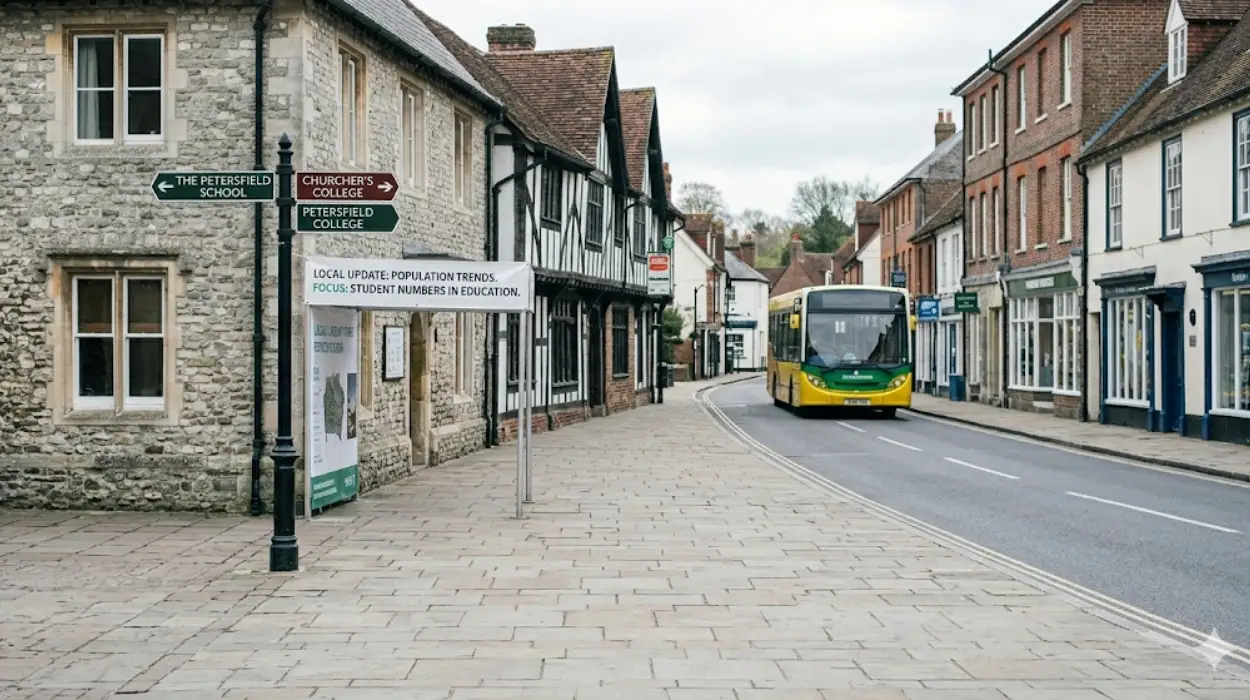
Petersfield is a compact, highly urban ward immediately east of Cambridge city centre, covering the area around Mill Road, East Road, Gonville Place and the railway line. It sits between the historic core and the railway station, which makes it a prime location both for University of Cambridge and Anglia Ruskin University students as well as for commuters and professionals.
- What the data says about students in Petersfield
- Why Petersfield attracts so many students
- Housing pressure and affordability: the central tension
- Community life: term-time vibrancy vs seasonal emptiness
- Local services, amenities and the changing high street
- Is Petersfield really becoming “too” student‑heavy?
- Balancing student demand with long‑term community needs
- Future outlook: what residents and policymakers should watch
According to Census 2021 ward-level estimates, Petersfield has a population of just over 10,900 residents in a land area of roughly 1.6 square kilometres, giving it one of the highest population densities in the city. The age profile is significantly skewed towards younger adults, with around 3,280 residents aged 20–29, far more than in many suburban or rural wards. This demographic shape is one of the clearest signals of a strong student footprint, even before looking at term-time residence or occupation.
Petersfield’s housing stock is dominated by terraces, flats and converted properties, with a median house price above £460,000 already recorded in local government profiling before the pandemic. The relatively small average household size of about 2.2 people and the prevalence of smaller dwellings make the area especially attractive to sharers and students, who typically seek centrally located, well-connected accommodation.
What the data says about students in Petersfield
To ask whether Petersfield is becoming “too student-heavy”, it helps to look at how many residents are actually students and how that compares to broader benchmarks.
Census 2021 data for the ward show a very high concentration of young adults, with the 20–29 age group accounting for about 30 per cent of all residents. While not every person in this age band is in higher education, Cambridge-wide evidence suggests a large proportion are students or recent graduates, especially in central wards close to colleges and campus sites.
More granular demographic analysis indicates that Petersfield has among the highest proportions of people in full-time education across Cambridgeshire. One recent local profile notes that students make up more than one‑third of Petersfield’s residents, at around 38 per cent, significantly higher than the national average share of students in the population. This figure aligns with the surrounding context: Cambridge as a whole is a university city with a large term-time population, and central wards such as Market, Castle, Newnham and Petersfield all report very elevated levels of student presence compared to typical English towns.
In other words, Petersfield is not just “a bit studenty”; it is structurally shaped by higher education, with students forming a substantial part of the local population year after year. That reality underpins much of the local conversation about whether the balance is right.
Why Petersfield attracts so many students
There are several clear reasons why Petersfield has become one of the most student-intensive parts of Cambridge.
First, location is paramount. Petersfield borders both the city centre and the station area, and it sits within easy walking or cycling distance of many colleges, Anglia Ruskin University’s East Road campus and key department buildings. This cuts daily travel time and costs, which is particularly appealing to students with busy timetables and late library sessions.
Second, the area offers a dense mix of private rented housing that lends itself to shared occupancy. The ward contains around 3,700–3,800 dwellings, with a comparatively high proportion of flats, maisonettes and subdivided Victorian terraces. Overcrowding is higher than the city average, reflecting both housing pressure and the common practice of multiple unrelated adults sharing a property. For landlords and letting agents, student demand for these smaller, central homes provides a consistent and often lucrative market.
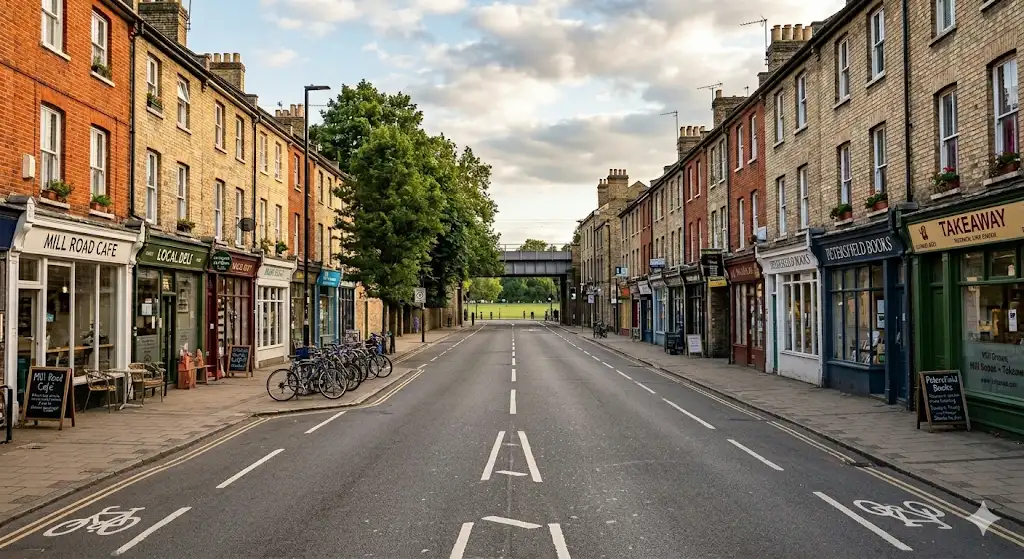
Third, Petersfield’s social and cultural offer aligns with student preferences. Mill Road and surrounding streets are packed with independent cafes, restaurants, takeaways and small shops, creating an informal, cosmopolitan atmosphere. Donkey Common, local play areas and the proximity of Parker’s Piece offer green space and meeting spots that are used by both students and long-term residents. The result is a neighbourhood that feels lively and convenient, especially to younger adults and new arrivals to Cambridge.
Housing pressure and affordability: the central tension
The most immediate effect of a large student presence in Petersfield is on housing, where competition for limited stock has been intense for many years. The ward profile shows that even prior to the latest house price inflation, Petersfield’s median property price exceeded £460,000, higher than several neighbouring areas. This reflects both the desirability of central Cambridge locations and the rent‑generating potential of houses let by the room.
For local households who want to buy, this creates a significant barrier. Deposit requirements and mortgage costs in such a high‑value market can push aspiring first‑time buyers out to peripheral wards or into surrounding villages, especially if they need more space or family‑sized accommodation. At the same time, those remaining in the private rented sector face strong competition from students, whose demand keeps rents buoyant and encourages some landlords to prioritise short fixed-term lets over longer, more stable tenancies.
Average household size in Petersfield is slightly lower than the Cambridgeshire and England averages, but the rate of overcrowded households sits close to or above city benchmarks. This combination suggests a split between smaller one- or two‑person homes and multi‑occupancy properties where each room is individually let, a pattern that is common in university districts. As more dwellings drift into student‑only use, the pool of homes available to families and older residents may shrink further, reinforcing the sense that the neighbourhood is tilting away from a balanced mix.
Community life: term-time vibrancy vs seasonal emptiness
The student presence in Petersfield does not only affect bricks and mortar; it also shapes rhythms of daily life and community identity. During university terms, the area feels intensely active, with busy pavements, full cycle racks and strong evening footfall on routes to and from the city centre. Local businesses that rely on foot traffic, such as cafes and late‑opening supermarkets, often benefit from this concentration of nearby customers.
However, term-time vibrancy can be accompanied by a sense of discontinuity for long-term residents. Neighbours may change every year as tenancy cycles refresh, and some streets develop a reputation for late‑night noise or short-notice parties. While many students are considerate neighbours, the constant churn makes it harder for some residents to build long‑lasting relationships on their street, and it can be challenging for community groups to maintain engagement with such a transient population.
Outside term, the picture flips. As students leave, certain roads and buildings may feel noticeably quieter, with fewer lights on in the evenings and reduced custom for some businesses. Some residents welcome this respite; others worry that seasonal emptiness chips away at the sense of a stable, year‑round neighbourhood. This contrast between busy terms and quieter vacations is typical of university cities, but it is more pronounced in wards like Petersfield where students make up such a large share of the population.
Local services, amenities and the changing high street
Petersfield’s “student-heaviness” also shows up in the pattern of local services and commercial amenities. High‑density housing and the area’s proximity to the centre mean demand for everyday services is strong, but the profile of customers shapes what opens and survives.
Around Mill Road, East Road and adjoining streets, there is a notable concentration of budget‑friendly food outlets, late‑opening convenience shops and takeaways, alongside independent retailers and cafes. These businesses typically thrive in areas with many young adults, renters and car-free households, such as student neighbourhoods, inner-city quarters and transport hubs. Over time, this can tilt the retail mix away from some traditional services that might appeal more to older residents or families, although Petersfield still retains a range of such facilities within walking or cycling distance.
Public services in and around Petersfield have had to accommodate a large, fluctuating population in a relatively small geographic area. Health services, waste collection, parking and cycling infrastructure all feel the pressure of high density and student demand. While Cambridge City Council and the county‑level public health and transport authorities plan on the basis of total population, the concentration of young, active adults in central wards like Petersfield means that peak‑time usage can be particularly intense. That shapes local debates about whether student numbers should be capped or better managed through planning agreements, infrastructure investment or dedicated student accommodation.
Is Petersfield really becoming “too” student‑heavy?
Whether Petersfield is too student‑heavy is ultimately a value judgment, but several evidence‑based points can help frame the discussion.
First, the data confirm that Petersfield is one of the most student‑intensive wards in Cambridgeshire. With students accounting for well over one‑third of residents and a high concentration of 20–29 year‑olds, the area’s demographic profile is very different from that of a typical English neighbourhood. From that perspective, residents describing Petersfield as “student-heavy” are simply reflecting measurable reality.
Second, this pattern has developed over many years rather than overnight. Cambridge’s growth as a global university centre, together with the expansion of Anglia Ruskin University and increasing international student recruitment, has steadily increased demand for centrally located accommodation. With its housing mix, position and amenities, Petersfield has naturally absorbed a significant share of that demand, and there is little sign of a rapid reversal; students will likely continue to make up a large share of the local population in the medium term.
Third, “too student-heavy” usually encodes concerns about specific impacts: rising rents, noise, transience, or the loss of a perceived community character. On housing and affordability, evidence does indicate that central Cambridge wards like Petersfield are expensive and under pressure, with high prices and notable overcrowding. Those pressures cannot be blamed solely on students, as wider market forces and Cambridge’s jobs boom play a major role, but student demand clearly contributes. On community cohesion, the annual turnover of student households can make neighbourhood-building harder for some long-term residents.
At the same time, students also bring energy, cultural diversity and economic activity. Local shops, restaurants and cultural venues benefit from their custom, and many students volunteer or participate in community initiatives during their time in the city. For some Petersfield residents, proximity to universities is part of the area’s appeal; for others, it feels like a trade‑off they did not consciously choose.
Balancing student demand with long‑term community needs
Because Petersfield’s student‑heaviness is rooted in structural features location, housing type, city‑wide higher‑education growth no single policy can dramatically change the picture. However, a combination of planning tools, housing strategies and community initiatives can help keep the neighbourhood in better balance.
One approach is to channel more student housing into purpose‑built developments that relieve pressure on the general private rented sector. In Cambridge, universities and colleges already provide a large quantity of dedicated accommodation, but some students still live in the wider market, especially postgraduate and international students. Where universities commit to delivering additional purpose‑built rooms, particularly on or near campuses and on suitable sites, this can free up some existing homes in areas like Petersfield for families, key workers and long‑term residents.
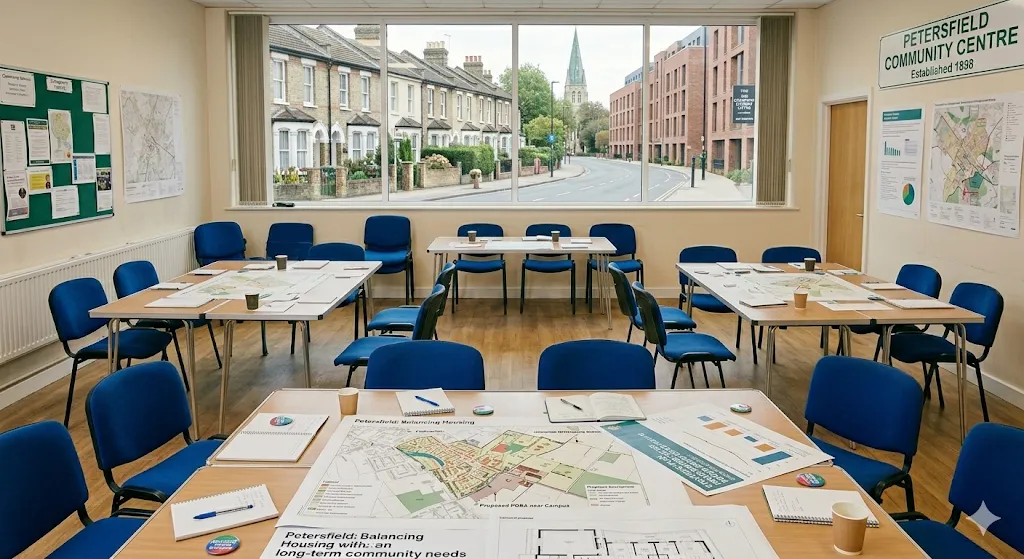
Planning policy can also play a role by resisting the loss of existing family‑sized dwellings to small‑unit conversions where this would further unbalance the housing mix. Local evidence on overcrowding, tenure and household size in Petersfield supports careful monitoring of new Houses in Multiple Occupation (HMOs) and subdivided properties. Complementing this with investment in affordable housing and shared‑ownership schemes city‑wide offers more realistic options for people who want to stay near the centre but are being priced out.
On the community side, building stronger links between students and long‑term residents can mitigate some of the challenges of transience. Work by local councils and community groups in Cambridge has explored student‑resident liaison forums, joint volunteering projects and clear codes of conduct for neighbourhood behaviour. In a ward like Petersfield, where multiple colleges and thousands of students are present, sustained effort on this front can make a meaningful difference to day‑to‑day quality of life, even if the underlying population ratios do not dramatically shift.
Future outlook: what residents and policymakers should watch
Looking ahead, Petersfield’s trajectory will be shaped by wider trends in Cambridge: university growth, housing policy, transport investment and the evolution of inner‑city land use. Several indicators will be important for residents, local representatives and planners to track.
First, ongoing census‑based and administrative data on age structure, term‑time residence and student status by ward will show whether the student share in Petersfield is still rising or plateauing. If further growth continues without corresponding expansion in purpose‑built student accommodation, pressure on the private rented sector may intensify.
Second, housing affordability metrics including median prices, rent levels and overcrowding rates will reveal whether efforts to rebalance the market are bearing fruit. If more homes can be retained or created for long‑term residents, the perception of Petersfield as “only for students and young professionals” may soften over time.
Third, changes in local services, business mix and public realm investment can alter how the neighbourhood feels day to day. Street design that prioritises walking and cycling, noise management strategies, and support for community venues all shape the lived experience of residents regardless of their student status. If this infrastructure keeps pace with the ward’s high density and youthful population, some of the frictions associated with a large student presence may be reduced.
In that sense, the question is less about whether Petersfield is “too student‑heavy” in an abstract way and more about whether the neighbourhood’s housing, services and civic life are keeping pace with its evolving population. The statistics confirm that Petersfield is one of Cambridge’s most student‑dominated wards, but thoughtful planning and community action can help ensure it remains a liveable, welcoming part of the city for both students and long‑term residents.