
King’s Hedges at a Glance
King’s Hedges is a residential ward in north Cambridge, developed mainly as a post‑war council estate and now home to over 11,000 residents, with a mix of families, students and working professionals. Online opinions often stereotype it as “rough” or “just estates”, but the reality on the ground is a more complex blend of social housing, improving infrastructure, strong community networks and excellent connectivity to Cambridge’s key employment hubs.
- King’s Hedges at a Glance
- A Brief History and How It Shaped Today’s Area
- What the Data Says: Demographics and Deprivation
- Housing: Estates, Tenure Mix and Realistic Expectations
- Transport and Everyday Connectivity
- Education and Family Life
- Community Facilities, Green Space and Local Amenities
- Safety, Crime and Online Perception
- Work, Study and Everyday Opportunities
- Community Identity vs Online Stereotypes
- Long‑Term Prospects: Regeneration and Growth
- Reality vs Online Opinions: How to Read the Contrast
Physically, the area sits between Arbury, Orchard Park and the Cambridge Science Park, with the Cambridgeshire Guided Busway skirting the ward and fast links to the A14 and city centre. This location means that daily life in King’s Hedges is shaped as much by proximity to jobs and colleges as by the reputation that circulates on social media and property forums.
A Brief History and How It Shaped Today’s Area
King’s Hedges was planned and built during the late 1960s and 1970s as a large council estate on former fields to the north of Cambridge, part of a wider push to relocate families from older, sub‑standard inner‑city housing. Construction began around 1967 on a 125‑acre site, and by the mid‑1980s the estate contained around 1,570 households, largely in low‑rise blocks of three and four storeys that stretched out to the then city limits.
Early years were far from smooth: local archives and ward profiles note complaints about vandalism, a lack of shops and community facilities and the sense of isolation people felt when moved away from tight‑knit central neighbourhoods. These early problems still echo in online narratives that portray King’s Hedges as an experiment that went wrong, even though the physical and social landscape has changed significantly over the last three decades.
One of the distinctive features of the original design is its network of segregated walking and cycling routes, built to allow residents to move around and reach schools or shops without relying on cars. Urban planners often cite King’s Hedges as a notable Cambridge example of cycle‑first residential design, in contrast to newer, more car‑oriented fringe developments around the city.

What the Data Says: Demographics and Deprivation
At the 2021 census, King’s Hedges had a population of around 11,099 residents, making it one of the more densely populated wards in Cambridge. As with many north‑city wards, there is a relatively young age profile, influenced by students at Cambridge Regional College and young workers employed at the nearby Science Park and other technology and service employers.
Council and county‑level reports show that King’s Hedges ranks relatively high on several measures of deprivation when compared with other Cambridge wards, including demand for food vouchers and support services. For example, a Cambridge City community report for the late 2010s states that King’s Hedges recorded the highest number of food‑related vouchers fulfilled in the city, underlining the financial pressures some households face despite living in a fast‑growing, high‑income university city.
However, those same ward profiles also highlight assets that rarely appear in online criticism: eight green spaces in the north area, a concentration of community facilities and targeted work by local organisations to strengthen social cohesion and support vulnerable residents. This contrast between socio‑economic challenge and social investment is central to understanding everyday life here, and it explains why lived experiences often differ from the more one‑dimensional picture painted by some online commentators.
Housing: Estates, Tenure Mix and Realistic Expectations
Most of the housing in King’s Hedges dates from the original council estate build‑out brick and concrete low‑rise blocks, terraced maisonettes and houses arranged around cul‑de‑sacs, greens and pedestrian paths. Over time, Right to Buy and infill development have created a more mixed tenure pattern, with a blend of social rent, leasehold ex‑council flats, privately rented units and some newer private homes on the fringes.
From a practical living point of view, this stock is generally more affordable than Victorian terraces closer to the historic centre or the premium new‑build apartments around the station and southern fringe. For many households—key workers, young families, students at Cambridge Regional College King’s Hedges represents one of the more realistic ways to live within Cambridge without moving to outlying villages and commuting in.
Online forums sometimes focus heavily on the visual impression of the 1960s and 1970s architecture, describing it as “concrete” or “drab”, and they occasionally conflate older photos of neglected blocks with the present. While there are still corners that look tired and some small clusters of flats that suffer from anti‑social behaviour, council investment, housing association management and resident‑led improvements have gradually upgraded many blocks, improved insulation and windows and enhanced the immediate environment.
Transport and Everyday Connectivity
One of the biggest differences between online opinions and on‑the‑ground experience is transport. Many negative comments gloss over the practical advantage of living in a ward that sits next to both the Cambridgeshire Guided Busway and the A14 corridor, and within cycling distance of central Cambridge. The Guided Busway runs along the edge of the ward, providing frequent services into the city centre, the railway station, Addenbrooke’s Hospital, St Ives and other destinations across the sub‑region.
Bus routes and road links also make getting around relatively straightforward: local bus services connect King’s Hedges to key employment areas, and the A14 trunk road offers rapid car access to the wider region, including the M11 and A1. For those who prefer active travel, the estate’s internal network of cycle and footpaths, combined with Cambridge’s citywide cycling infrastructure, allows many residents to commute to the Science Park, city centre or neighbouring wards by bike in a short time.
Day‑to‑day, this connectivity means that residents can balance living in a more affordable, residential setting with easy access to the historic centre, the station, shopping areas and major educational institutions. While some online comments focus on perceived distance from “where things happen”, the reality is that in a compact city like Cambridge, King’s Hedges is closer in practical terms than many commuter villages that receive more favourable reputations.
Education and Family Life
For families considering King’s Hedges, local schools and childcare play a major role in the decision to move in or to stay. The ward is home to King’s Hedges Primary School, built in the late 1960s, and The Grove Primary School, alongside nearby St Laurence Catholic Primary School just outside the ward boundary. External school‑comparison tools and Ofsted summaries rate these primary schools as “Good”, which provides reassurance to parents who may be deterred by negative online narratives but who find that local classrooms are stable and supportive.
At secondary and further‑education level, Cambridge Regional College sits within the ward, offering a wide range of vocational and academic courses and drawing students from across Cambridgeshire and beyond. While teenagers still typically travel to secondary schools in nearby areas, the presence of a major further‑education college on the doorstep adds a distinctive educational dimension to local life, with increased footfall at peak times and a youthful feel in the surrounding streets and bus stops.
On a day‑to‑day basis, green spaces and play areas distributed across the north area—including those around King’s Hedges and Arbury help support family life and outdoor play. Ward profiles note eight green spaces in the North Area Committee, many with children’s play facilities, and several of these lie within or immediately adjacent to King’s Hedges, allowing most families to reach a park or play area on foot without crossing major roads.
Community Facilities, Green Space and Local Amenities
Official ward and community development profiles list an array of community facilities serving King’s Hedges and the broader north of Cambridge, from community centres to church halls and sports facilities. These include venues managed by groups such as the North Cambridge Community Partnership, which coordinates events, activities and trips from bases including Lawrence Way and Nun’s Way pavilion to support local residents and build social ties.
Sports facilities in and close to the ward include the King’s Hedges Learner Pool, the sports hall at Cambridge Regional College and Chesterton Sports Centre with its pool, helping residents to access swimming and indoor sports without travelling across the city. Local shops such as small parades, convenience stores and a nearby Tesco supermarket cover everyday needs, complementing larger retail areas accessible by bus, bike or car.
Greenery is an important part of daily experience. While some city‑wide environmental reports highlight variations in tree canopy between wards, the north area includes a series of open spaces, playing fields and pedestrian routes that weave between housing. For many residents, these modest but frequent greens matter more than headline canopy percentages, offering dog‑walking routes, informal recreation space and the sense of “breathing room” between blocks, even if online aerial images or statistics give a more neutral impression.
Safety, Crime and Online Perception
When people search “King’s Hedges” online, one of the first themes they encounter is crime, often framed in stark language that does not always reflect the statistical picture or the diversity of local experiences. Area‑insight tools that aggregate police and deprivation data do show that King’s Hedges is among the more challenged wards in Cambridge on several indicators, including crime rates and demand for support services.
However, it is crucial to put this in context. Cambridge as a city has lower overall crime rates than many comparably sized urban areas, and intra‑city comparisons can exaggerate differences between wards that share many of the same broad trends. Community reports also point to sustained council and partner investment in community development, youth activities and environmental improvements, precisely to address the issues that online commenters highlight and to support residents who are most affected.
Lived experience varies street by street: some residents report feeling very settled and safe, particularly around well‑maintained cul‑de‑sacs and close‑knit blocks, while others, especially near certain clusters of flats or busy pedestrian routes, may encounter occasional anti‑social behaviour or noisy evenings. Online posts often amplify the more negative stories, but ward‑level evidence suggests a more balanced picture in which challenges coexist with strong social networks, long‑standing neighbours and active local groups working to improve the area.
Work, Study and Everyday Opportunities
One of the most significant practical advantages of living in King’s Hedges is proximity to major employment and education hubs on the northern edge of Cambridge. The Cambridge Science Park, home to a cluster of technology, biotech and research companies, borders the ward, placing a large number of high‑skill jobs within easy walking, cycling or short bus distance. Adjacent business parks and industrial estates add a broader mix of roles in services, logistics and light industry, creating opportunities at different income levels.
For students and trainees, Cambridge Regional College provides on‑site access to vocational and academic courses, from apprenticeships to higher‑level technical training. This concentration of education and employment is not always visible in online reputational debates, which may focus more on housing tenure or older crime statistics than on the day‑to‑day reality of people commuting to labs, offices and workshops from front doors just a few minutes away.
At the same time, the strong transport links described earlier connect residents to the wider Cambridge economy: people working in the historic university centre, at the biomedical campus to the south or in neighbouring towns can still base themselves in King’s Hedges and travel relatively efficiently. This mix of local and cross‑city opportunity is a key part of why the area remains in demand in spite of occasional negative online commentary.

Community Identity vs Online Stereotypes
Perhaps the biggest gap between online opinions and everyday reality in King’s Hedges lies in community identity. Internet discussions often reduce the ward to a label “council estate”, “deprived area”, “avoid at all costs” without acknowledging the long‑standing relationships, neighbourhood pride and local organisations that shape the social fabric. In contrast, community development reports and council documents emphasise the role of support groups, tenants’ associations and faith and voluntary organisations in running events, mutual aid and local projects.
Residents who have lived in King’s Hedges for many years often describe a strong sense of informality and mutual recognition: neighbours looking out for one another, children walking familiar paths to school and multi‑generational families staying in the area because of established networks rather than glossy marketing. Online property reviews and social media snapshots rarely capture this slower, relationship‑based reality, which is harder to quantify but fundamental to what living in a place actually feels like.
At the same time, it would be misleading to ignore the frustrations that some residents express about litter, patchy maintenance, occasional noise or anti‑social behaviour around specific blocks. The most accurate picture is one of contrast and ongoing change: areas of stability and quiet coexist with pockets where social and economic pressures are more visible, and both experiences sit behind the short, definitive statements that people encounter in search results.
Long‑Term Prospects: Regeneration and Growth
Looking ahead, King’s Hedges sits within a city that is forecast to grow substantially over coming decades, with tens of thousands of new homes and jobs planned across Cambridge and the surrounding districts. North Cambridge in particular has been a focus for strategic planning, with redevelopment proposals for community centres, new housing schemes and transport enhancements that will affect the ward and its neighbours.
Council community facilities strategies have included plans to redevelop sites such as the Meadows and Buchan Street Community Centres, consolidating facilities and adding housing, as well as new provision at locations like Akeman Street. Although these projects are subject to planning processes and may evolve over time, they signal a shift from viewing north‑city estates as static to treating them as integral parts of a growing, knowledge‑driven city.
For residents and potential movers, this means that King’s Hedges is unlikely to remain frozen in the image that online threads sometimes evoke. As wider investment flows into transport, housing quality, open spaces and community provision, the lived reality is likely to continue diverging from dated stereotypes based on the estate’s early decades.

Reality vs Online Opinions: How to Read the Contrast
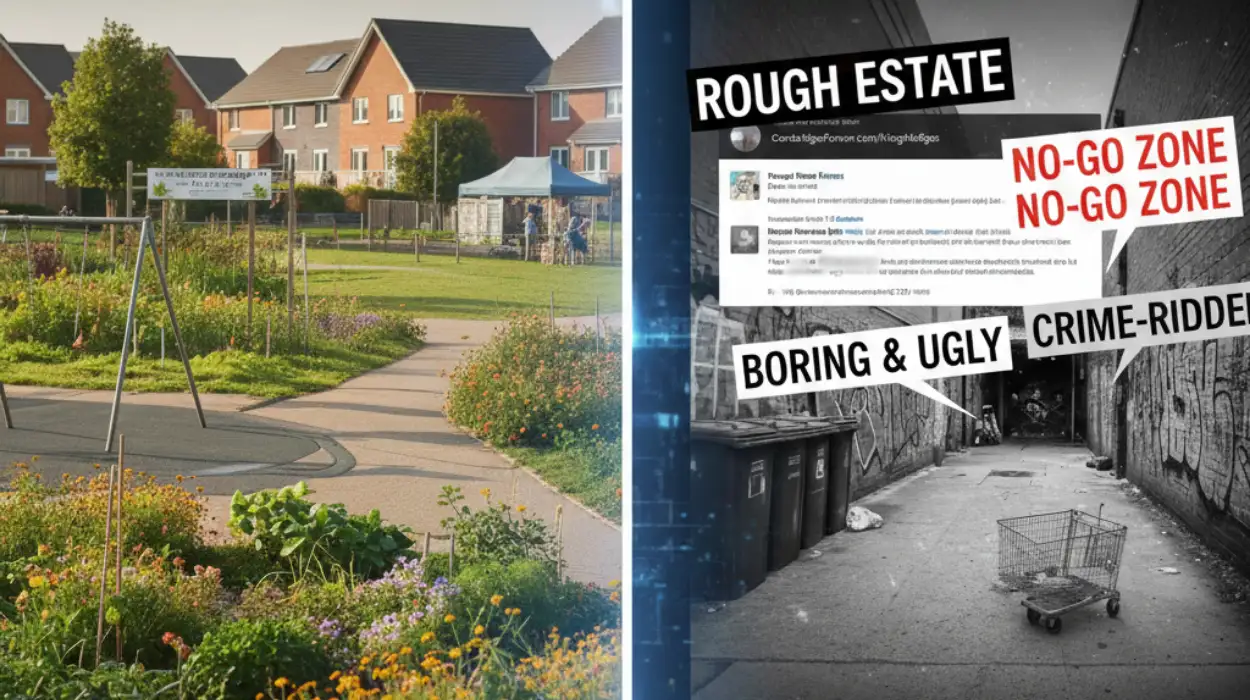
When you compare what data and local reports say about King’s Hedges with what you read on property forums or social media, a clear pattern appears. Online opinions tend to fixate on snapshot negatives, historic crime concerns, the visual look of older council stock or isolated incidents while official and academic sources describe a more nuanced mix of deprivation, resilience, connectivity and gradual improvement.
In reality, living in King’s Hedges means accepting a straightforward, sometimes scruffy but well‑connected suburban environment: a place where 1960s and 1970s estates sit beside cutting‑edge science parks, where community facilities and green spaces are woven between blocks, and where local identity is shaped as much by schools and neighbourly ties as by statistics. For some households, especially those prioritising affordability within Cambridge and access to work or study in the north of the city, those practical positives outweigh aesthetic or reputational concerns.
For others who value period housing, postcard views or proximity to the historic core above all else, King’s Hedges may not match aspirations and online commentary often reflects that preference rather than an objective verdict. Understanding this gap between perception and reality is essential when deciding whether this part of Cambridge fits your priorities, and it underlines why visiting in person, walking the paths and talking to residents remains the best way to judge what “living in King’s Hedges” really means.