

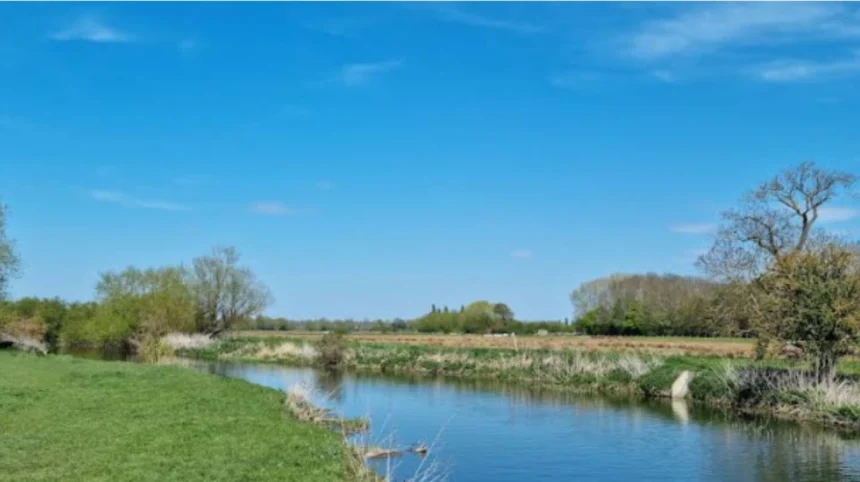
Grantchester Meadows provides fifty acres of protected floodplains along the River Cam, offering space for walking, wildlife observation, and traditional punting. Located two miles south of central Cambridge, the area remains free from heavy commercial development.
- Where Can You Find the Secluded Trails of Byron’s Pool?
- How Does The Orchard Tea Garden Preserve Its Hidden Atmosphere?
- What Historic Features Lie Hidden Near Saint Andrew and Saint Mary Church?
- Where Is the Quiet Path Along the Grantchester Grind?
- What is the best time of day to visit Grantchester Meadows to avoid crowds?
- Can you walk from central Cambridge to Grantchester all year round?
- Are dogs allowed off-leash in Grantchester Nature Reserves?
- How do locals access Byron’s Pool without using main roads?
- Is there parking available near the quiet spots in Grantchester?
The land is maintained under environmental stewardship by the Cambridge Past, Present & Future charity to preserve its rural character. The meadow ecosystem contains native chalk stream vegetation, ancient pollarded willow trees, and grazing cattle that maintain the grassland height naturally during summer months. Visitors access the site via a flat tarmac path or a riverside dirt track that links the suburb of Newnham directly to the village perimeter.
Historical usage of the meadows spans over two centuries, serving as an escape for university academics and writers. Sylvia Plath composed poetry about the landscape, while Pink Floyd recorded an acoustic track named after the location in 1969. Unlike the formal university gardens in central Cambridge, the meadows lack rigid enclosures, allowing open movement across the floodplain. The absence of motor vehicle access along the main paths keeps ambient noise levels exceptionally low throughout the year.
Where Can You Find the Secluded Trails of Byron’s Pool?
Byron’s Pool Local Nature Reserve sits at the southern edge of Grantchester village, featuring a historic weir system, small woodland trails, and quiet river banks. Lord Byron swam in these waters during his studies at Trinity College.
The reserve spans approximately 4.5 hectares of mixed broadleaf woodland and wetland habitat situated along the upper stretches of the River Cam. Managed by the South Cambridgeshire District Council, the site features a designated circular walk, timber footbridges, and specific bird hides positioned for observing local wildlife. Kingfishers, grey herons, and daubenton bats utilize the quiet water channels and surrounding tree canopy for nesting and foraging activities throughout the year.
The historical weir structure regulates local water flow and marks the precise location where university scholars sought isolation from city life. Lord Byron frequented this specific pool between 1805 and 1808 during his tenure as an undergraduate student. Today, the reserve receives low foot traffic compared to the central village tea rooms due to its hidden entrance past Trumpington Meadows. The shaded paths provide cool walking conditions even during peak summer months.
How Does The Orchard Tea Garden Preserve Its Hidden Atmosphere?
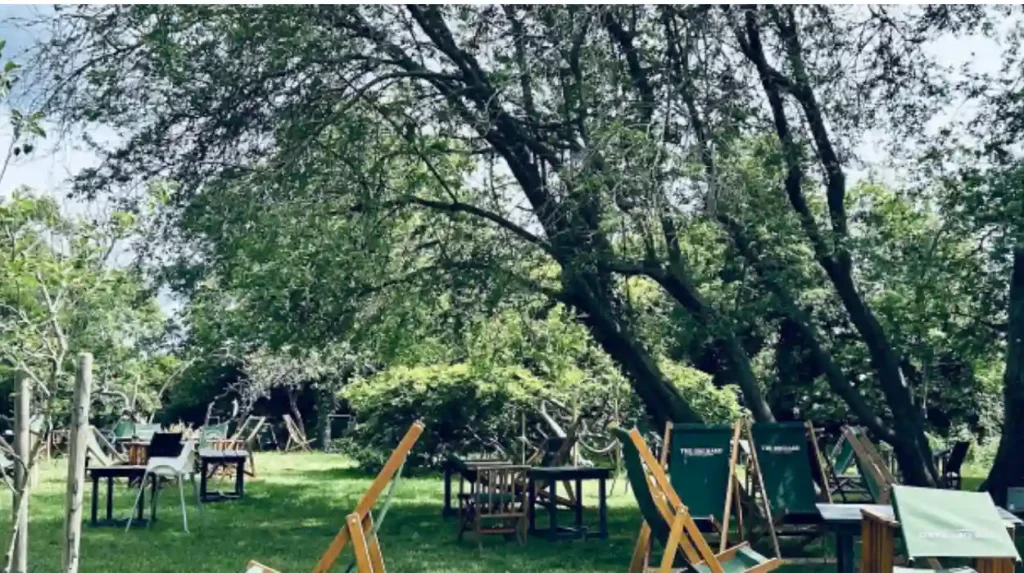
The Orchard Tea Garden maintains a historic fruit orchard layout where guests sit on traditional deckchairs beneath old apple trees. Operating since 1897, the garden limits structural development to preserve its traditional nineteenth-century setting.
The site covers roughly one acre of land situated between the Church of Saint Andrew and Saint Mary and the River Cam. Commercial operations are restricted to serving food and beverages out of original timber pavilions rather than modern glass or concrete structures. The property intentionally lacks paved outdoor dining terraces, maintaining continuous grass turf underneath the aging fruit tree canopy to preserve its historic aesthetic.
Rupert Brooke lived at Orchard House in 1909, attracting an intellectual circle known as the Neo-Pagans that included Virginia Woolf, Ludwig Wittgenstein, and Bertrand Russell. Later visitors included scientists Ernest Rutherford, Alan Turing, and Stephen Hawking. While central Cambridge tea rooms face high tourist volume, the spacious layout of the orchard absorbs visitors across independent seating zones, allowing patrons to find quiet corners away from main footpaths.
What Historic Features Lie Hidden Near Saint Andrew and Saint Mary Church?
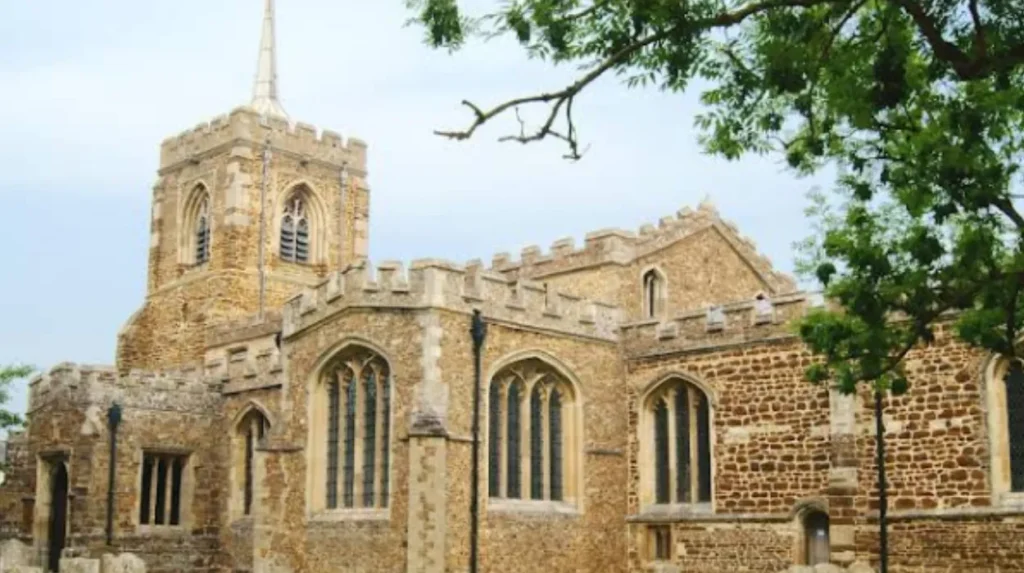
The Church of Saint Andrew and Saint Mary features fourteenth-century chancel architecture, Saxon structural foundations, and a secluded churchyard garden. It stands tucked away at the edge of the village along Mill Way.
The building displays architectural elements spanning multiple centuries, including a 14th-century chancel constructed with clunch and fieldstone, alongside a 15th-century western tower. Inside, the church houses historic monuments, medieval carved bench ends, and clear stained-glass windows that illuminate the interior space. The surrounding churchyard contains historic graves hidden beneath mature yew trees, bordered by low flint walls that separate the consecrated grounds from adjacent farm pastures.
The location offers historical value linked directly to the literary work of poet Rupert Brooke. His famous 1912 poem, The Old Vicarage, Grantchester, referenced the church clock, cementing the structure within English literature. The churchyard remains a silent spot where tourists rarely congregate, providing an authentic space for quiet contemplation and historical exploration away from the primary walking paths.
Where Is the Quiet Path Along the Grantchester Grind?
The Grantchester Grind refers to the traditional two-mile walking route connecting Cambridge Mill Pond to Grantchester village via Paradise Nature Reserve. The path provides an uninterrupted traffic-free corridor through natural river landscapes.
The route begins at the Mill Pond in Cambridge, crosses Coe Fen, and passes through the boardwalks of Paradise Local Nature Reserve before emerging into open fields. Paradise Nature Reserve consists of marshy woodland dominated by wet alder trees, small backwaters, and rare flora like the butterbur plant. Footbridges elevated over swampy ground allow pedestrians to observe river species without disturbing delicate wetland soil profiles along the bank.
The trail has served as the primary pedestrian route for university students and academics traveling between the city and the village since the Victorian era. Because the path avoids main roads entirely, noise pollution is virtually non-existent along the central stretches. Walking the full distance provides clear views of historical cattle pastures, natural river bends, and traditional thatched cottages tucked away along the village border.
What is the best time of day to visit Grantchester Meadows to avoid crowds?
Early morning hours before 9:00 AM offer the quietest experience across the meadows. Foot traffic increases significantly during late afternoon hours on summer weekends.
Can you walk from central Cambridge to Grantchester all year round?
Yes, the paved footway along the main meadow trail remains open and usable throughout all seasons. The lower riverbank path can become muddy or flooded during heavy winter rainfall.
Are dogs allowed off-leash in Grantchester Nature Reserves?
Dogs are permitted throughout the meadows and Byron’s Pool, but must remain under close control. Local regulations require leashes near grazing livestock and wildlife nesting zones.
How do locals access Byron’s Pool without using main roads?
Locals access the reserve via footpaths originating at the southern end of Grantchester Meadows or through the pedestrian entrances at Trumpington Meadows.
Is there parking available near the quiet spots in Grantchester?
Limited street parking is available within the village, but locals prefer walking or cycling via the Grantchester Grind. Parking near Byron’s Pool is located off Grantchester Road near Trumpington.