
Family life in Cambridge centers on high-performing state and independent schools, over eight hundred hectares of public parkland, and modern community infrastructure. The city combines academic excellence with accessible green spaces and structured civic services designed specifically for raising children.
- What Are the Main Features of the Education System in Cambridge?
- How Do Parks and Open Spaces Enhance Family Living in Cambridge?
- What Community Facilities Are Available for Families in Cambridge?
- How Does Cambridge Transport Support Safe Family Mobility?
- What Are the Best Neighborhoods in Cambridge for Raising a Family?
The City of Cambridge in Cambridgeshire, England, provides a specialized urban environment structured for families. The municipality covers forty-one square kilometers and supports a population exceeding one hundred and forty-five thousand residents.
Historical urban planning around the University of Cambridge created expansive green corridors alongside residential zones. The local economy relies heavily on technology, biotechnology, and higher education sectors. These economic drivers attract working parents who require strong educational institutions, childcare facilities, and secure public spaces.
The historical foundation of family infrastructure in Cambridge stems from the 1906 Education Act and subsequent post-war urban green belt designations. Local authorities maintained open commons like Midsummer Common and Parker’s Piece to prevent dense industrial overdevelopment.
This planning framework ensured that residential neighborhoods remained within walking distance of public parks. The primary mechanical function of family life in the city involves localized catchments where primary schools feed directly into secondary academies. Transport networks prioritize pedestrian footpaths and segregated cycle routes over private vehicle access.
Primary statistics demonstrate the structural focus on youth and education within the district. According to Cambridgeshire County Council demographic data, over twenty-one percent of the resident population is under nineteen years of age. The city contains more than thirty state-funded primary schools, eight state secondary schools, and twelve independent academic institutions.
Public open spaces account for seventeen percent of the total land area within the city boundary. This physical spatial distribution ensures high access metrics for outdoor recreation across all municipal wards.
The broader implications of this structured environment show high retention rates for professional families settling in East Anglia. High housing costs represent a structural barrier, yet access to top-tier educational outcomes maintains strong domestic demand. The city demonstrates how historic urban preservation can integrate with modern public services to support multi-generational living.
What Are the Main Features of the Education System in Cambridge?
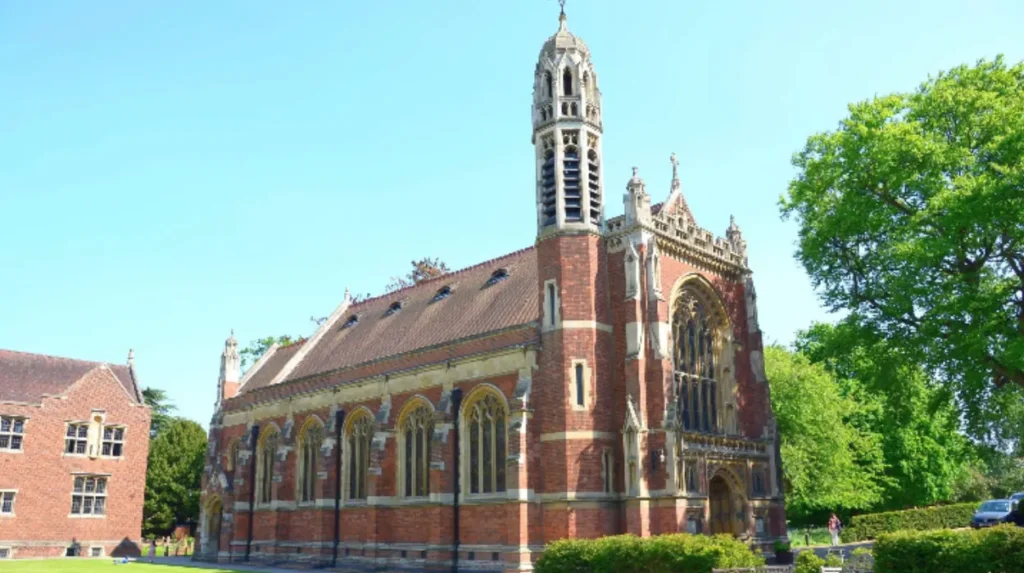
The Cambridge education system features high-performing state academies, historic independent schools, and specialized early years provision. Primary and secondary institutions consistently achieve above-national-average Key Stage outcomes, driven by rigorous academic standards, comprehensive catchment structures, and direct links to higher education institutions.
The structural layout of education in Cambridge follows the national curriculum of England while operating through localized multi-academy trusts. State-funded secondary options include institutions such as Chesterton Community College, Parkside Community College, and St Bede’s Inter-Church School, all rated Outstanding by Ofsted.
These secondary providers feed into specialized post-16 institutions, including Hills Road Sixth Form College and Long Road Sixth Form College. The primary sector operates on localized geographic catchment areas managed through Cambridgeshire County Council admissions frameworks.
Historically, the presence of the University of Cambridge shaped the local school ecosystem by attracting academic staff and driving institutional investment. The establishment of free grammar schools in the sixteenth century laid the foundation for modern educational access in the region.
During the comprehensive school reorganizations of the 1970s, Cambridge transitioned its state system into community colleges. These colleges act as both educational centers and neighborhood community hubs, offering evening adult education and facility rentals for local families.
Statistically, Cambridge educational standards rank among the highest in the United Kingdom outside of London. Data from the Department for Education indicates that over eighty-five percent of secondary students achieve grade five or higher in English and Mathematics GCSEs.
Higher Education Statistics Agency reports show that thirty percent of local sixth-form graduates progress to Russell Group universities. Early years education includes over fifty registered nurseries and preschools across the city, maintaining high capacity for working parents.
The long-term impact of this concentrated academic network is a highly skilled local labor force and sustained residential property demand. Families prioritize catchment location when purchasing homes, directly influencing neighborhood demographics. The integration of science, technology, engineering, and mathematics programs within secondary curricula ensures direct pathways into local biotechnology and software research sectors.
How Do Parks and Open Spaces Enhance Family Living in Cambridge?
Parks and open spaces enhance family living in Cambridge by providing accessible places for physical recreation, active travel, and community events. Expansive green commons, dedicated play areas, and nature reserves are integrated into every residential neighborhood to support child development.
Public parks in Cambridge are divided into historic central commons, formal municipal gardens, and local neighborhood play parks. Jesus Green, Parker’s Piece, Midsummer Common, and Coldham’s Common form a contiguous green belt through the urban core.
Specialized spaces such as the Cambridge University Botanic Garden and Cherry Hinton Hall Park provide educational grounds and structured play zones. Cambridge City Council manages more than eighty individual playgrounds equipped with safety-compliant apparatus for diverse age groups.
The origin of these open spaces dates back to medieval grazing rights preserved under municipal enclosure acts. Midsummer Common has hosted public gatherings and livestock grazing continuously since the twelfth century. In the nineteenth century, Parker’s Piece became the birthplace of the official rules of modern football. City planners preserved these lands during rapid Victorian expansion, creating a permanent spatial buffer that protects biodiversity and prevents dense urban sprawl across central residential sectors.
Quantitative measurements highlight the extensive nature of the green space network across the municipality. The city contains over fifty distinct parks and local nature reserves covering more than eight hundred hectares in total. According to public health data, ninety-four percent of Cambridge residents live within a five-minute walk of a public green space. Facilities within these areas include outdoor table tennis tables, splash pads, skate parks, and fully enclosed fenced enclosures for infant safety.
The health and ecological implications of these spaces are substantial for local child development. Regular access to urban nature lowers stress levels and lowers childhood obesity metrics relative to national urban averages. Furthermore, these open areas act as pedestrian and cycle transit corridors, reducing household dependence on motor vehicles for everyday school commutes and weekend recreational travel.
What Community Facilities Are Available for Families in Cambridge?
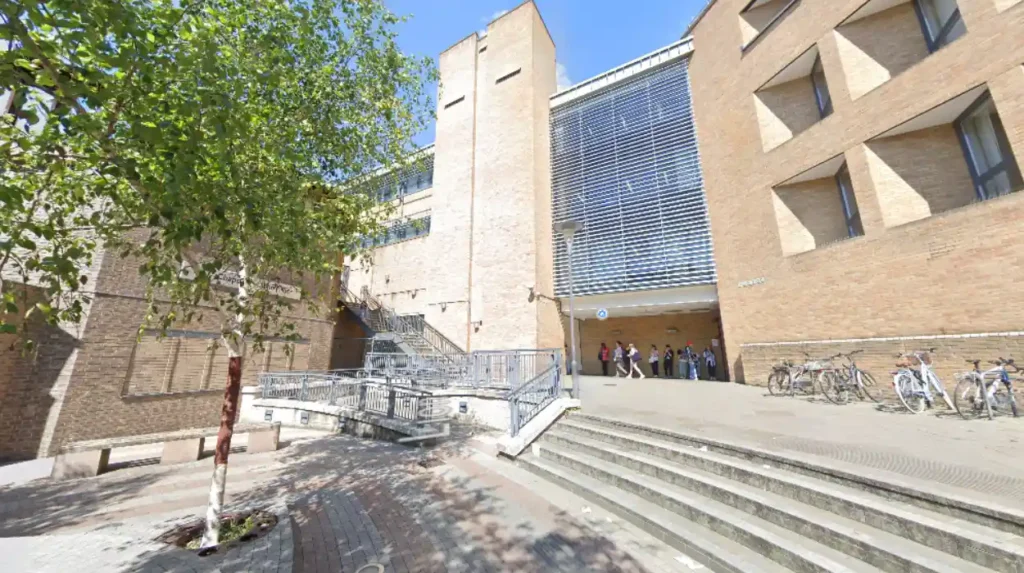
Community facilities available for families in Cambridge include modern civic centers, public libraries, indoor leisure complexes, and specialized child healthcare centers. These council-run and trust-operated hubs deliver affordable recreational programs, early learning groups, public sports facilities, and local civic services.
Civic infrastructure in Cambridge is organized around purpose-built community centers such as The Meadows Community Center in Arbury, Clay Farm Centre in Trumpington, and the Storey’s Field Centre in Eddington.
Sports facilities are anchored by Parkside Pools, the Cambridge Leisure Park, and Abbey Leisure Complex. The Cambridgeshire Libraries network operates a central library at Grand Arcade alongside branch libraries in Barnwell, Rock Road, Chesterton, and Milton Road, providing free literacy programs and family activities.
The structural development of these community centers expanded rapidly alongside modern edge-of-city housing developments. Municipal planning policies mandated that new residential developments, such as the Southern Fringe and North West Cambridge, build fully integrated civic facilities alongside primary housing.
Section 106 legal agreements between property developers and local government funded the construction of dual-use facilities, ensuring that expanding suburban populations gained immediate access to public services, childcare clinics, and hall rentals.
Operational data shows high utilization metrics across all municipal family centers. The central library records over five hundred thousand visits annually, delivering weekly rhyme-time sessions for pre-school children. Parkside Pools features an indoor competition pool, splash pools with flumes, and a health suite serving thousands of families weekly.
Community centers host over two hundred independent user groups, ranging from post-natal support networks to youth martial arts clubs and local drama societies.
The civic impact of these accessible facilities is stronger social cohesion and targeted support for young families.
By hosting health visitor clinics, early-years workshops, and affordable leisure programs under unified roof structures, the city mitigates social isolation among new parents. These hubs maintain high utility across winter months, providing indoor spaces that maintain public health standards year-round.
How Does Cambridge Transport Support Safe Family Mobility?
Cambridge transport supports safe family mobility through an extensive network of segregated cycleways, pedestrian-only city center zones, and structured public bus services. Priority traffic management policies reduce urban car speeds, making daily school journeys and family travel exceptionally safe.
Transport infrastructure in Cambridge is built around active travel priority systems. The city features over eighty miles of designated cycle routes, including off-road tracks like the Guided Busway maintenance path and the Chisholm Trail.
Residential neighborhoods utilize low-traffic neighborhood designs, traffic calming chicanes, and twenty-mile-per-hour speed limits. Public transit relies on Stagecoach East bus networks and the Cambridge Guided Busway, which connects peripheral family developments directly to the city center and main railway station.
The mechanical shift toward non-motorized transport began in the late twentieth century in response to extreme traffic congestion in narrow medieval streets. Local transport authorities implemented radical parking controls and road closures, transforming central shopping districts into pedestrianized areas.
The construction of the Cambridge Guided Busway in 2011 created a dedicated, bus-only transport corridor completely separated from general road traffic, allowing rapid north-south transit across the district.
Statistical indicators confirm Cambridge as the leading cycling city in the United Kingdom. Department for Transport census data shows that fifty-three percent of residents cycle at least once a week, compared to a national average of under twelve percent.
Over forty percent of all secondary school students commute to school via bicycle or on foot. The safety infrastructure keeps cyclist casualty rates significantly lower than comparable historic English cities per vehicle mile traveled.
The systemic result of this transportation model is reduced urban carbon emissions, cleaner localized air quality, and high physical autonomy for older children. Teenagers navigate the city safely without requiring private car transport from parents.
The ease of pedestrian and cycle travel lowers total household transportation costs while embedding physical activity into the daily routines of resident families.
What Are the Best Neighborhoods in Cambridge for Raising a Family?
The best neighborhoods in Cambridge for raising a family are Trumpington, Chesterton, De Freville Avenue, Cherry Hinton, and Newnham. These residential areas combine close proximity to top-rated schools, well-maintained parks, quiet residential streets, and convenient local shopping amenities.
Geographic zones across Cambridge offer distinct living environments tailored to varying family requirements. Trumpington in the south features brand-new housing developments, modern primary schools, and direct access to Byron’s Pool Local Nature Reserve.
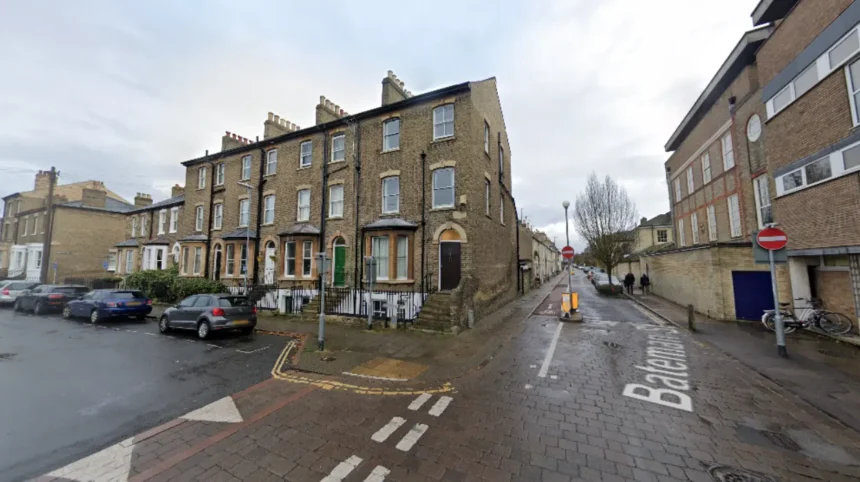
Chesterton in the north sits alongside the River Cam, offering Victorian and mid-century housing near Chesterton Community College. Newnham provides a village-style atmosphere near central university meadows, while Cherry Hinton offers suburban housing centered around Cherry Hinton Hall Park.
Neighborhood development patterns reflect historical growth from the medieval core outward along key radial routes. The late nineteenth century saw the expansion of terraced housing in Mill Road and Petersfield, while mid-twentieth-century suburban planning established estate housing in King’s Hedges and Arbury.
Modern twenty-first-century planning created major extension sites, such as Eddington and the Southern Fringe, designed explicitly around sustainable urban drainage, communal green quadrangles, and integrated district heating systems.
Demographic data illustrates strong family occupancy across these key residential wards. Census figures show that in wards such as Queen Edith’s and Trumpington, over sixty-five percent of households consist of families with dependent children. Average residential property prices across Cambridge exceed five hundred and fifty thousand pounds, reflecting high demand for locations situated within the catchment boundaries of Outstanding state schools.
Choosing a family neighborhood in Cambridge directly affects daily access to education, commuting times, and community interaction. Outer suburban wards provide larger internal floor space and private garden access, whereas inner wards prioritize walkability to the central railway station and city center stores. The overall structural variation allows families to select housing models that align with their specific economic parameters and lifestyle preferences.
What are the top-rated state secondary schools in Cambridge?
Chesterton Community College, Parkside Community College, and St Bede’s Inter-Church School are top-rated state secondary options. These institutions consistently earn Outstanding Ofsted ratings and deliver GCSE pass rates well above national averages. Admission depends strictly on living within defined geographical catchment zones.
Is Cambridge a safe city for raising young children?
Cambridge is widely considered one of the safest cities in the United Kingdom for raising children. Low violent crime statistics, dedicated twenty-mile-per-hour traffic zones, and extensive cycle networks protect children during daily routines. Active community surveillance and public park maintenance further enhance neighborhood safety.
How expensive is family housing in Cambridge?
Family housing in Cambridge is significantly higher than the national average, with mean house prices exceeding five hundred and fifty thousand pounds. Renting a three-bedroom family home typically costs between eighteen hundred and twenty-five hundred pounds per month. Prices vary depending on proximity to catchment areas and the central railway station.
Are there good outdoor activities for families in Cambridge during winter?
Cambridge offers numerous winter outdoor activities, including walks through the Cambridge University Botanic Garden, winter wildlife trails at Coldham’s Common, and indoor-outdoor play at Cherry Hinton Hall Park. Public libraries, indoor swimming pools, and community centers also host structured year-round indoor programs.
How does the primary school catchment system work in Cambridge?
Primary school admissions in Cambridge are managed centrally by Cambridgeshire County Council using distance-based catchment criteria. Living within a catchment area gives priority access, but places are awarded based on physical distance from home to school gates when oversubscribed. Parents must apply in the autumn preceding their child’s fourth birthday.