
Cycling in Cambridge represents the dominant form of urban mobility due to flat topography, compact medieval layouts, extensive dedicated path networks, and high vehicle parking costs, making bicycles the fastest, most economical transport option for residents, students, and daily commuters.
- What Are the Most Efficient Cycle Routes across Cambridge?
- What Infrastructure and Facilities Support Cyclists in Cambridge?
- How Does Cycling Impact Daily Travel, Public Health and Environment?
- What Regulations and Safety Standards Apply to Cyclists in Cambridge?
- How Will Future Infrastructure Projects Expand Cycling in Cambridge?
- What are the best routes for commuting by bike in Cambridge?
- Where can I safely park my bicycle in central Cambridge?
- Is cycling safe for visitors and beginner riders in Cambridge?
- Do I need a helmet and lights to ride a bike legally in Cambridge?
- How do I rent an electric or standard bicycle in Cambridge?
Cambridge holds the highest cycling rate in the United Kingdom, with Office for National Statistics census data confirming over thirty percent of working residents commute by bicycle. The city features flat geography across the Cam River valley, removing topographic barriers for daily riders. Compact historical urban planning places core residential neighborhoods, university departments, and commercial centers within a three-mile radius.
Car parking restrictions and severe traffic congestion inside the central ring road create strong financial and operational disincentives for personal motor vehicle use.
Cambridgeshire County Council and the Greater Cambridge Partnership maintain hundreds of kilometers of segregated cycle tracks, active travel corridors, and traffic-filtered streets. The municipal transport ecosystem prioritizes non-motorized road users through physical infrastructure, low speed limits, and widespread bike storage facilities at transit hubs.
What Are the Most Efficient Cycle Routes across Cambridge?
The most efficient cycle routes across Cambridge include the Chisholm Trail north-south spine, the Busway Off-Road Cycleway running to St Ives, the CERA corridor to Addenbrooke’s Hospital, and the historic central radial routes linking residential districts.
The Chisholm Trail serves as a high-capacity north-south arterial route connecting Cambridge North Station directly to Cambridge Main Station. Phase one features the Abbey-Chesterton Bridge across the River Cam, providing grade-separated cycling path access away from heavy goods vehicle traffic.
The Busway Cycleway provides a continuous twenty-five kilometer maintenance track repurposed as a paved, traffic-free path parallel to the guided busway line. Commuters use this route to travel from rural hinterlands, St Ives, and Swavesey straight into the Cambridge Science Park.
The Cambridge Estate Rail Access corridor links the central train station to the Cambridge Biomedical Campus, accommodating thousands of NHS healthcare staff daily. Adams Road operates as the first formal cycle street in England, where motor vehicles are permitted only as guests while bicycle priority remains legally protected. Three prominent radial routes include Mill Road, Barton Road, and Hills Road, each providing key links into central business locations.
What Infrastructure and Facilities Support Cyclists in Cambridge?
Cambridge supports cyclists through segregated cycle lanes, traffic-filtered low-traffic neighborhoods, signal-controlled cycle crossings, and large-scale secure cycle parking hubs, including the two-thousand eight-hundred space CyclePoint facility located at Cambridge main railway station
Physical infrastructure in Cambridge relies heavily on grade separation to prevent collisions between light personal vehicles and heavy transit vehicles. Raised hybrid cycle lanes run along major arterial roads like Hills Road and Huntingdon Road, using concrete step curbs to physically segregate riders from general traffic lanes. Junctions incorporate advanced stop lines, dedicated cycle traffic lights, and Dutch-style roundabout designs that mandate motor vehicle yield obligations.
Cycle parking infrastructure features the three-story CyclePoint hub at Cambridge Main Station, offering free, covered, CCTV-monitored parking for two thousand eight hundred bicycles. Park and Ride stations surrounding the city perimeter feature secure lockup lockers and public repair stands fitted with air pumps.
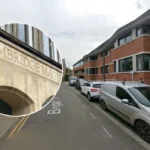
Traffic filtering systems on roads like Mill Road bridge restrict private cars while permitting unrestricted passage for cycles, buses, and emergency vehicles. Cambridgeshire Police and local councils deploy tracking technologies, registration initiatives, and physical boundary anchors across city facilities to mitigate cycle theft risks.
How Does Cycling Impact Daily Travel, Public Health and Environment?
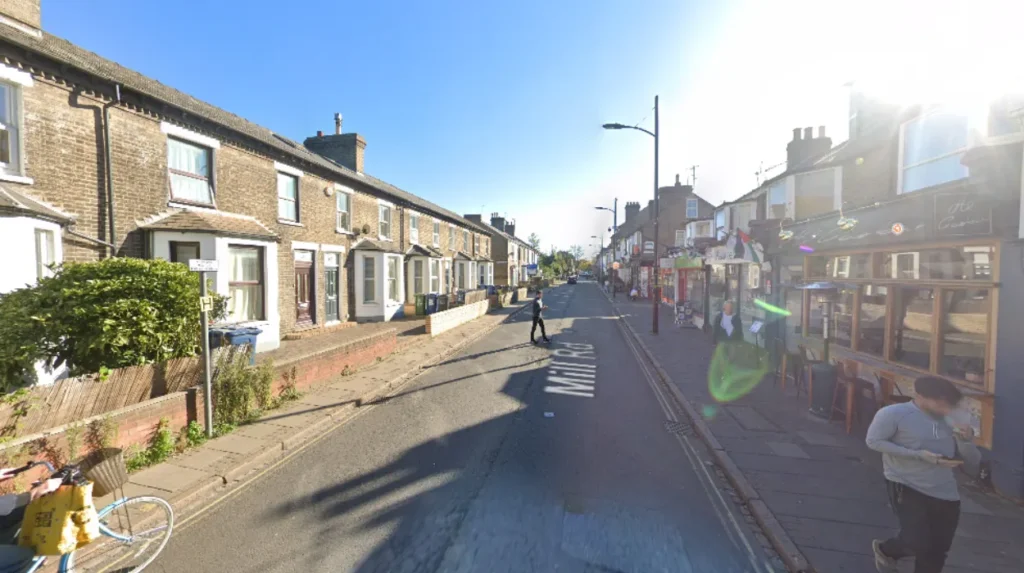
Cycling in Cambridge reduces urban carbon emissions, eliminates central traffic congestion, lowers local air pollution, and improves population cardiovascular health by integrating minimum daily active transport quotas directly into ordinary commuting schedules.
Active transportation modes in Cambridge account for millions of individual journeys every year, directly offsetting private vehicle trips across the district. Department for Transport data indicates that widespread cycle usage prevents thousands of tons of localized carbon dioxide emissions annually across East Anglia. Nitrogen dioxide concentration levels remain lower along filtered city corridors compared to neighboring urban highways.
Public health outcomes show positive correlations with high cycle usage rates. University of Cambridge epidemiological studies highlight that daily active travel reduces personal risks of type two diabetes, ischemic heart disease, and mental health conditions.
The economic impact includes reduced household spending on vehicle fuel, lower car parking expenditure, and decreased road infrastructure maintenance burdens for municipal councils. Traffic flow stays predictable for delivery services and emergency vehicles due to reduced private motor car volume on historic inner streets.
What Regulations and Safety Standards Apply to Cyclists in Cambridge?
Cyclists in Cambridge must follow the Highway Code, maintain functional front white and rear red lights during darkness, use working braking systems, and obey legal traffic signals, cycle-specific traffic lights, and pedestrian priority rules.
UK traffic law regulates cycling on public roads through the Road Traffic Act and updated Highway Code mandates. Cyclists must stop at red traffic signals, respect zebra crossings, and observe one-way street directional restrictions unless explicit exemption signage allows two-way cycle movement. Night riding requires a front white light, a rear red light, and a red rear reflector.
Bicycles operated on public highways must feature two working independent braking systems. Helmet usage remains legally optional in Great Britain, though local transport authorities strongly encourage head protection for all demographics.
Shared-use paths require cyclists to yield right of way to pedestrians, maintain controlled speeds, and use audible warning bells when overtaking. Police officers can issue fixed penalty notices for dangerous riding, red-light running, or riding on footways not explicitly designated for shared usage.
How Will Future Infrastructure Projects Expand Cycling in Cambridge?
Future Cambridge infrastructure projects will expand cycling through the Greater Cambridge Partnership Greenways initiative, delivering twelve dedicated active travel routes that link outlying rural villages directly into the central municipal network.
The Greater Cambridge Partnership manages the Greenways scheme, an infrastructure investment funding twelve regional active travel corridors. These routes connect surrounding satellite communities like Waterbeach, Comberton, St Ives, and Linton straight to central employment campuses.
Phase two of the Chisholm Trail will complete missing infrastructure links around Cambridge Main Station and southern development corridors, establishing a seamless traffic-free north-south passage. Municipal master planning policies require all new commercial developments, including North West Cambridge and the Cambridge Biomedical Campus, to build segregated cycle tracks and secure storage facilities.
Integrated digital infrastructure projects involve continuous cycle counting sensors, smart traffic signals prioritizing groups of riders, and expanded electric bike rental schemes. These ongoing active travel investments support regional climate neutrality targets while ensuring sustainable mobility growth across Cambridgeshire.
What are the best routes for commuting by bike in Cambridge?
The best commuting routes are the Chisholm Trail for north-south journeys and the Busway Cycleway for travel from northern villages like St Ives. Central commuters rely on the CERA corridor to reach the Biomedical Campus efficiently. These pathways provide safe, traffic-free, grade-separated riding conditions.
Where can I safely park my bicycle in central Cambridge?
Safe parking is available at the central railway station CyclePoint hub, which provides two thousand eight hundred sheltered, CCTV-monitored spaces. Secure cycle racks are also located at Grand Arcade, Parkside, and university department sites. Always use a strong Sold Secure rated D-lock attached to a permanent frame anchor.
Is cycling safe for visitors and beginner riders in Cambridge?
Cycling is safe for beginners because Cambridge offers flat terrain, extensive low-traffic streets, and physically segregated bike lanes. Beginners should stick to designated off-road paths like the Chisholm Trail or Adams Road cycle street. Always follow local road signs and yield to pedestrians on shared-use pathways.
Do I need a helmet and lights to ride a bike legally in Cambridge?
Helmets are legally optional in the UK, but functional front white and rear red lights are mandatory when riding at night. Bicycles must also feature working independent front and rear brakes under national road transport laws. Reflective gear is recommended to increase visibility during low-light winter hours.
How do I rent an electric or standard bicycle in Cambridge?
Standard bikes and electric bicycles can be rented through app-based city transport schemes operating across public drop zones. Local bike shops located near the train station and historic city centre offer daily or weekly rentals. These hire options allow visitors and short-term commuters to travel easily across the city.