

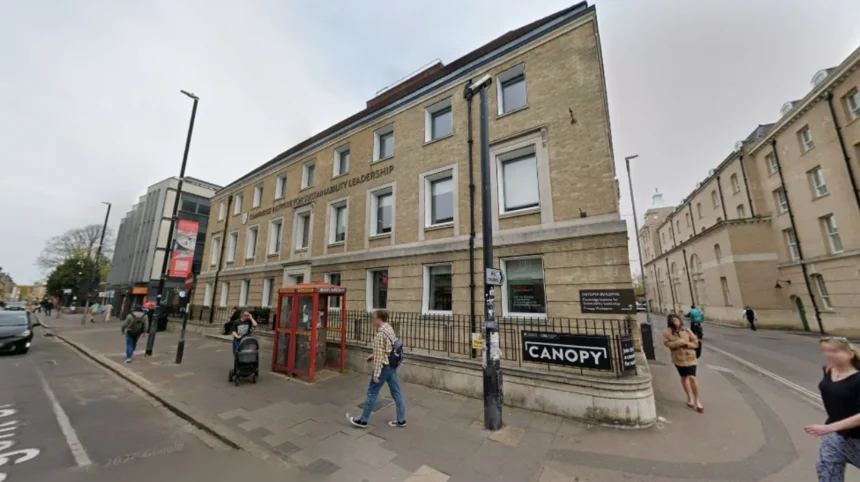
Council Tax in Cambridge is an annual local tax levied on domestic properties to fund essential public infrastructure and local services. Cambridge City Council collects these funds on behalf of several precepting authorities, including Cambridgeshire County Council and local emergency services.
- How are Council Tax bands calculated and structured in the city of Cambridge?
- What Council Tax discounts and exemptions are available to Cambridge residents?
- How can you check your Council Tax band and verify your annual bill details?
- How can property owners challenge a Council Tax band in Cambridge?
- What happens if I fail to pay my Council Tax bill in Cambridge on time?
- Are students completely exempt from Council Tax in Cambridge?
- How do home improvements affect my Council Tax band in Cambridge?
- Can I spread my annual Council Tax payments over 12 months instead of 10?
- What is the Council Tax penalty for leaving a property empty in Cambridge?
Council Tax was officially introduced across England, Scotland, and Wales under the Local Government Finance Act 1992. This legislation replaced the unpopular Community Charge, often known as the Poll Tax, which had replaced the historic domestic rating system in 1990.
The primary purpose of Council Tax is to generate localized revenue to support municipal operations and public welfare. Cambridge City Council acts as the central billing authority within the local government district of Cambridge.
The domestic property tax system operates through a structured framework where every dwelling is assigned a specific valuation band. Valuation bands determine the baseline annual bill for each household.
Revenue collected through this mechanism directly funds essential municipal functions such as refuse collection, street cleaning, public park maintenance, social care, highway upkeep, and public safety operations managed by local police and fire services.
The overall financial requirement for Cambridge is established through annual budgetary approvals by elected local councilors. The total charge for each billing year reflects the combined operational demands of Cambridge City Council, Cambridgeshire County Council, the Cambridgeshire Police and Crime Commissioner, and the Cambridgeshire and Peterborough Fire Authority. For instance, a household in Cambridge contributing to annual Council Tax pays toward both city-level environmental upkeep and county-level social services.
Understanding the structure of Council Tax in Cambridge enables residents to evaluate their financial obligations correctly. Property valuations, historical banding decisions, local precept splits, and applicable legal frameworks determine the precise liability for every address in the city.
How are Council Tax bands calculated and structured in the city of Cambridge?
Council Tax bands in Cambridge are determined by the Valuation Office Agency based on the estimated market value of domestic properties on April 1, 1991. The government established eight distinct bands ranging from Band A to Band H to categorise property values.
The Valuation Office Agency operates as an independent executive agency of HM Revenue and Customs. During the national valuation exercise in 1991, assessors evaluated all residential properties in England to establish baseline open-market values. Properties constructed after April 1, 1991, are assigned a band based on what their open-market value would have been had they existed on that specific base date.
The local valuation structure relies on strict financial thresholds for each property category:
- Band A properties were valued up to £40,000.
- Band B properties were valued between £40,000 and £52,000.
- Band C properties were valued between £52,000 and £68,000.
- Band D properties were valued between £68,000 and £88,000.
- Band E properties were valued between £88,000 and £120,000.
- Band F properties were valued between £120,000 and £160,000.
- Band G properties were valued between £160,000 and £320,000.
- Band H properties were valued over £320,000.
Annual billing amounts for each band are calculated as a fixed proportion of the Band D benchmark charge. The statutory ratios set by national legislation assign Band A a multiplier of six-ninths of Band D, while Band H pays eighteen-ninths, which equals double the Band D rate. For example, a terraced house in Petersfield assigned to Band C pays eight-ninths of the Band D total, whereas a large detached home in West Cambridge assigned to Band G pays fifteen-ninths.
These fixed statutory proportions ensure that local tax liabilities scale proportionately with historical property valuations across all electoral wards in Cambridge.
What Council Tax discounts and exemptions are available to Cambridge residents?
Council Tax discounts and exemptions reduce or eliminate financial liability for qualifying Cambridge households based on occupancy status, income level, or personal circumstances. Statutory reductions range from a 25 percent Single Person Discount to complete 100 percent property tax exemptions.
The legal framework governing discounts assumes that two adults occupy every residential property as their main home. When fewer than two chargeable adults reside in a property, statutory disregards or discounts apply under the Local Government Finance Act 1992. Certain individuals are legally disregarded when counting the number of adult occupants in a household.
Multiple categories of residents qualify for statutory disregards or full reductions:
- Full-time higher education students enrolled at qualifying institutions such as the University of Cambridge or Anglia Ruskin University.
- Single adult occupiers residing alone in a domestic property.
- Individuals diagnosed with a severe mental impairment, verified by a qualified medical professional.
- Care workers providing assistance for at least 35 hours per week to a resident who is not a spouse or young child.
A single person living in a Romsey flat receives an automatic 25 percent reduction on their annual bill upon application. Properties occupied entirely by full-time university students qualify for a Class N exemption, reducing the Council Tax bill to zero. Low-income households may also claim support under the Cambridge City Council Tax Reduction scheme, which provides means-tested bill adjustments based on household earnings and capital assets.
Understanding eligibility criteria ensures that households claim appropriate financial adjustments while maintaining compliance with local billing regulations.
How can you check your Council Tax band and verify your annual bill details?
Residents can check their Council Tax band and verify billing accuracy through the official UK Government online property search tool or by contacting Cambridge City Council. Reviewing bill details ensures that property details, occupancy status, and valuation bands remain precise.
Verifying a property band requires accessing the official Valuation Office Agency database via the central GOV.UK portal. Users enter their postcode and street address to instantly view the assigned valuation band, historic banding status, and local authority references. Cambridge City Council also maintains online portal services where residents can inspect itemized annual statements, view payment schedules, and track applied discounts.
Checking a Council Tax statement requires systematic verification of several key structural elements:
- Confirming the property address and local authority account number match official records.
- Checking the correct valuation band is applied to the property.
- Verifying that applicable reductions, such as a Single Person Discount or student exemption, are listed on the account.
- Reviewing the breakdown of precept allocations assigned to local services.
For instance, a homeowner in Chesterton checking their annual bill should confirm that the total reflects the correct Band D rate of £2,467.02 for the 2026/27 financial year, adjusted for any claimed reductions. If an error appears regarding occupancy or banding, the resident must notify Cambridge City Council immediately to correct the record and adjust payments.
Regular verification protects taxpayers against overpayment and ensures that local council records accurately reflect current property conditions.
How can property owners challenge a Council Tax band in Cambridge?
Property owners and occupiers in Cambridge can formally challenge a Council Tax band by submitting a proposal to the Valuation Office Agency if evidence demonstrates the banding is incorrect. Formal challenges require submitting comparative property sales data from April 1991.
The right to challenge a property band is governed by statutory regulations under the Council Tax (Alteration of Lists and Appeals) Regulations 1993. A valid proposal can be submitted if a resident became the new taxpayer within the last six months, or if physical alterations, demolition, or external environmental changes have permanently affected property value.
Submitting a valid banding challenge involves executing specific procedural steps:
- Gathering historical evidence of sales prices for similar properties in the immediate neighborhood around April 1, 1991.
- Submitting a formal proposal through the online Valuation Office Agency portal.
- Providing documentation showing physical structural changes, such as partial demolition or conversion into flats.
- Awaiting the formal review decision from the regional listing officer.
For example, a homebuyer acquiring a property in Mill Road who discovers identical neighboring houses are placed in Band B while theirs is in Band C can file a proposal within six months of moving in. Taxpayers must continue paying their existing Council Tax bill during the appeal process to avoid recovery action by Cambridge City Council. If the Valuation Office Agency agrees with the proposal, the band is reduced, and overpaid tax is refunded.
Understanding the formal review process allows property owners to correct historical valuation errors through proper administrative channels.
What happens if I fail to pay my Council Tax bill in Cambridge on time?
If a payment is missed, Cambridge City Council issues a reminder giving seven days to clear the arrears. Failure to pay after receiving a reminder causes the right to pay by installments to be lost, making the full annual balance due immediately. Continued non-payment leads to a court summons, liability orders, and potential recovery action via enforcement agents or direct earnings attachments.
Are students completely exempt from Council Tax in Cambridge?
Properties occupied exclusively by full-time higher education students are completely exempt from Council Tax under Class N regulations. To qualify, students must be enrolled in a course lasting at least one academic year with a minimum of 21 study hours per week. Households containing both students and non-students receive a discount rather than a full exemption.
How do home improvements affect my Council Tax band in Cambridge?
Adding physical extensions or structural enhancements generally does not trigger an immediate increase in your property valuation band while you remain the owner. However, the Valuation Office Agency reassesses the property when it is sold or leased on a long-term basis. The structural additions are then factored into the valuation, which may result in a higher band for the new buyer.
Can I spread my annual Council Tax payments over 12 months instead of 10?
Yes, Cambridge City Council allows residents to request 12 monthly installments instead of the standard 10-month payment plan spanning April to January. Requests must be made directly to the council before or at the start of the financial year. Adjusting the schedule reduces the monthly payment amount while keeping the overall annual charge identical.
What is the Council Tax penalty for leaving a property empty in Cambridge?
Unoccupied and unfurnished properties in Cambridge do not receive a standard discount, and full Council Tax remains payable after initial grace periods expire. Properties left empty and substantially unfurnished for more than one year incur an Empty Homes Premium. This additional surcharge increases the standard bill by 100 percent to 300 percent depending on how long the dwelling remains vacant.