

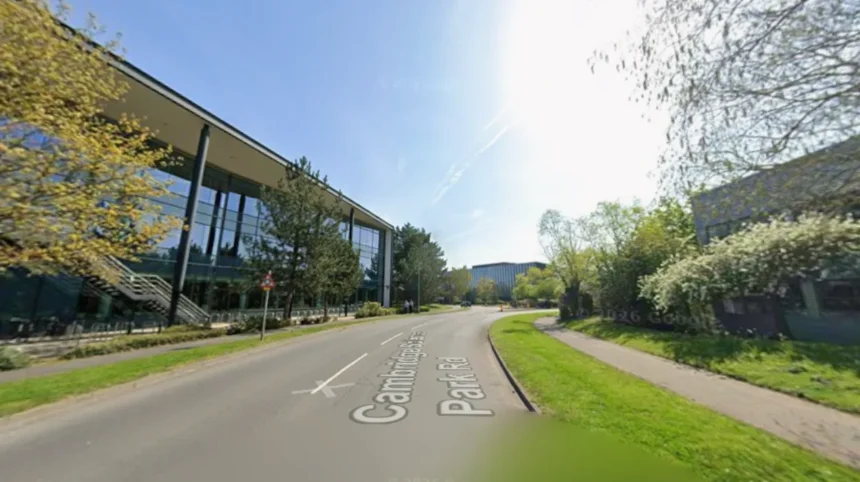
The Cambridge Science Park is the oldest and largest science park in the United Kingdom, serving as a commercial research hub for over 170 technology and life science companies. Established in 1970 by Trinity College, Cambridge, the 152-acre development houses 1.9 million square feet of high-tech laboratory and office space north of Cambridge city center. The park supports a workforce of 7,000 research and development professionals operating in fields such as biotechnology, artificial intelligence, telecommunications, and industrial technology.
- How Was the Cambridge Science Park Established?
- What Is the Infrastructure and Site Layout of the Park?
- Which Major Companies and Sectors Operate in the Park?
- How Does the Park Drive the Silicon Fen Economy?
- What Are the Transport and Accessibility Options for the Park?
- How Does the Cambridge Science Park Compare to Global Hubs?
- What Future Expansions Are Planned for the Site?
The park forms the geographic core of the Silicon Fen cluster, an innovation network worth billions to the British economy. By bridging academic research at the University of Cambridge with commercial industrial applications, the park accelerates technological spin-outs and international investment. Facilities include specialized wet laboratories, high-capacity fiber networks, conference centers, and child care infrastructure designed to sustain complex long-term commercial research projects.
How Was the Cambridge Science Park Established?

Trinity College founded the Cambridge Science Park in 1970 under the leadership of Senior Bursar Sir John Bradfield following recommendations from the 1969 Mott Report. The Mott Report urged the University of Cambridge to build closer ties with research-intensive industries to stop local brain drain and commercialize academic discoveries. Trinity College utilized 152 acres of land originally granted by King Henry VIII in 1546, which had served as farmland and a World War II military vehicle depot.
Construction began in 1971, converting former gravel pits into landscaped grounds with lakes and low-density commercial buildings. The first commercial tenant, Laser-Scan, moved onto the property in 1973 to commercialize automated mapping technologies. Economic stagnation in the United Kingdom delayed initial expansion, resulting in only 25 percent site occupancy by 1978. The microcomputer boom of the 1980s accelerated growth, turning the park into a profitable model for commercial science hubs across Europe.
What Is the Infrastructure and Site Layout of the Park?
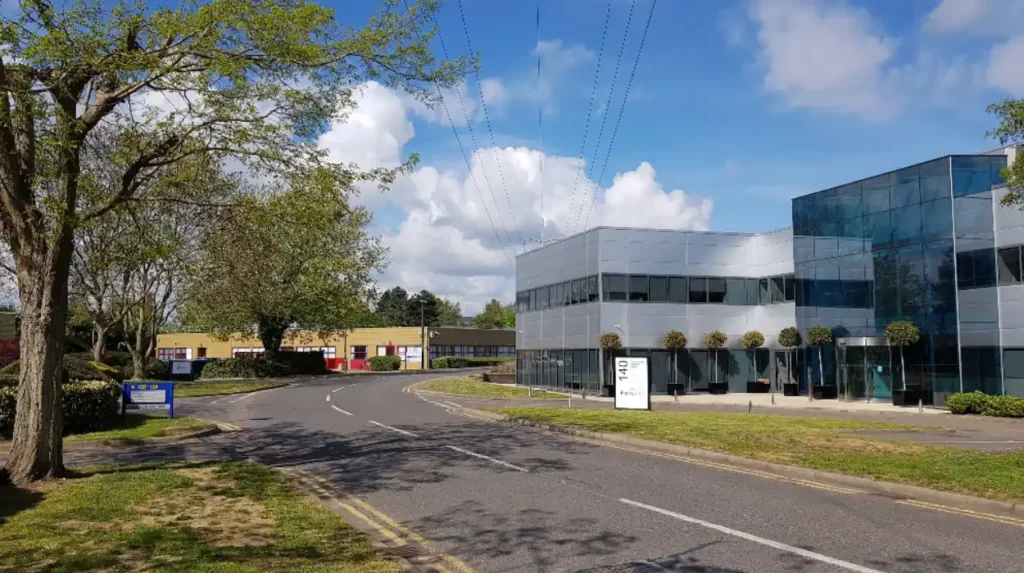
The site comprises 152 acres containing 58 dedicated commercial buildings with 1.9 million square feet of working space. The physical design prioritizes low building density, reserving large areas for landscaped greenery, mature trees, and natural attenuation lakes. Road networks inside the estate accommodate commercial logistics, pedestrian paths, and cycling lanes connected directly to the Cambridgeshire Guided Busway.
Buildings range from single-tenant corporate headquarters to multi-occupancy incubator units designed for early-stage university spin-outs. Advanced physical infrastructure includes containment level 2 and 3 laboratories, specialized hazardous waste extraction channels, and direct connection to the Janet academic dark fiber network. On-site amenities include the Trinity Centre conference facility, fitness centers, nurseries, and Electric Vehicle charging stations.
Which Major Companies and Sectors Operate in the Park?
Over 170 businesses operate within the park, split between life sciences, information technology, industrial technology, and specialized professional services. Sector breakdown analysis shows 40 percent of tenants focus on biomedical technologies, 35 percent on software and computer hardware, 15 percent on advanced engineering, and 10 percent on support services. Companies range from early university start-ups to research divisions of major multinational corporations.
In the life sciences sector, major tenants include AstraZeneca, Worldpay, and Endomag, which develop targeted cancer therapies and medical devices. Computer science and electronics tenants include technology corporations such as Philips, Roku, Aveva, Beko, and Huawei. Advanced materials research is represented by firms like Johnson Matthey and Xaar plc. These enterprises collectively submit hundreds of international patent applications annually from their Cambridge facilities.
How Does the Park Drive the Silicon Fen Economy?
The park acts as an economic multiplier for the regional Silicon Fen ecosystem, generating high-value research jobs and venture capital investment. Commercial outputs from park tenants contribute billions of pounds in exports annually to the economy of the United Kingdom. Proximity to University of Cambridge research departments allows rapid technology transfer, turning university research into commercial products.
The cluster effect created by the park attracts global venture capital, corporate investors, and specialized patent attorneys to the region. Higher average earnings for the 7,000 site workers boost regional consumer spending, service sectors, and property developments across Cambridgeshire. Success at the park established a template for adjacent developments, including St John’s Innovation Centre and the Cambridge Biomedical Campus.
What Are the Transport and Accessibility Options for the Park?
The Cambridge Science Park sits on the northern edge of Cambridge, adjacent to the A14 dual carriageway and the M11 motorway. Transport infrastructure links the park directly to London, Stansted Airport, and major UK freight ports. The opening of the Cambridge North railway station in 2017 provided direct rail connections to London King’s Cross and London Liverpool Street within walking distance of the estate.
Local public transit access includes dedicated stops on the Cambridgeshire Guided Busway, offering rapid bus services to the city center and surrounding villages. The park maintains extensive cycle path networks linked to the Cambridge national cycle routes to encourage non-car commuting. Commuters also access communal car parking spaces, electric vehicle charging bays, and organized car-sharing schemes managed by the park authority.
How Does the Cambridge Science Park Compare to Global Hubs?
The Cambridge Science Park differs from international science parks like Silicon Valley in California or the Research Triangle Park in North Carolina due to its dense historic integration with a single university. While Silicon Valley spans an entire geographic region, the Cambridge Science Park focuses its high-tech activities within a 152-acre master-planned site. Its spatial concentration yields higher density research collaboration per square foot than sprawling American corporate campuses.
Unlike European public-sector science parks, Trinity College privately funded and developed the Cambridge Science Park using its own capital reserves. This commercial management model allowed long-term planning decisions independent of political funding cycles. The park maintains higher academic publishing and patent rates per employee compared to general commercial business parks in Western Europe.
What Future Expansions Are Planned for the Site?
Trinity College and management partners Bidwells are implementing a comprehensive site renewal masterplan to update older 1970s office blocks into modern decarbonized lab facilities. The redevelopment strategy replaces outdated single-story offices with multi-story, energy-efficient research buildings to increase working floor area without reducing green parkland. New construction standards mandate BREEAM Excellent ratings, solar panel arrays, and heat pump infrastructure.
The masterplan adds speculative laboratory facilities to support fast-growing biotech spin-outs needing immediate expansion space. Further site investment focuses on autonomous transit shuttles, enhanced digital connectivity infrastructure, and expanded community facilities. These upgrades ensure the Cambridge Science Park remains competitive against emerging life science developments across Europe and East Asia.
Who owns the Cambridge Science Park?
The land and core estate are owned by Trinity College, Cambridge, which founded the site in 1970. Commercial property firm Bidwells manages the site operations, leasing, and master planning on behalf of the college.
Can members of the public visit the Cambridge Science Park?
The park is primarily a private commercial workspace for tenant companies, but members of the public can access its open landscaped grounds, lakes, and public catering venues. High-security laboratory spaces and corporate offices remain strictly restricted to authorized badge holders.
How do start-ups get office or lab space in the park?
Early-stage companies can apply to lease flexible desk or laboratory space through multi-occupancy incubator units on the site. Applications require evidence of research-led operations and academic or commercial technology validation.
How far is Cambridge Science Park from Cambridge North Station?
The park is located approximately 0.5 miles from Cambridge North railway station. Commuters can reach the main entrance in less than 10 minutes on foot or via dedicated cycle pathways.
What is the difference between a science park and a business park?
Science parks require formal links to higher education research institutions, focusing primarily on commercial research and high-tech development. Standard business parks cater to general commercial activities like sales, logistics, administrative offices, and retail operations without research requirements.