Cambridge contains over 25 lesser-known green spaces, secluded college gardens, and local nature reserves that sit away from main tourist routes. Key examples include Clare Fellows Garden, Stourbridge Common, Cherry Hinton Chalk Pits, and the University Botanic Garden glasshouses.
- Which hidden college gardens in Cambridge allow public entry?
- Where are the best secret nature reserves in Cambridge?
- What secluded riverside commons and meadows exist in Cambridge?
- Which hidden historic parks and walled gardens sit in central Cambridge?
- How does the Cambridge University Botanic Garden protect rare flora?
- What wildlife and ecological benefits do Cambridge’s secret parks provide?
- How can visitors plan a walking route through Cambridge’s secret green spaces?
Cambridge is famous for the Backs and Parker’s Piece, yet the city maintains an extensive network of quiet ecological sanctuaries managed by Cambridge City Council and the Wildlife Trust for Bedfordshire, Cambridgeshire and Northamptonshire.
These locations preserve rare chalk grassland, ancient fenland, and historic orchards across the urban boundary. Visitors who explore beyond the central River Cam corridor find quiet walking paths, medieval commons, and diverse wildlife habitats that remain free from heavy foot traffic throughout the year.
The city of Cambridge covers an area of 40.7 square kilometers and allocates roughly 20 percent of its land to public open spaces and protected conservation sites. Many of these sites are tucked behind residential streets, industrial estates, or collegiate walls in wards such as Petersfield, Romsey, and Cherry Hinton.
Understanding the layout of these hidden parks allows residents and travelers to experience the botanical heritage and biodiversity of Cambridgeshire without encountering seasonal crowds.
Which hidden college gardens in Cambridge allow public entry?
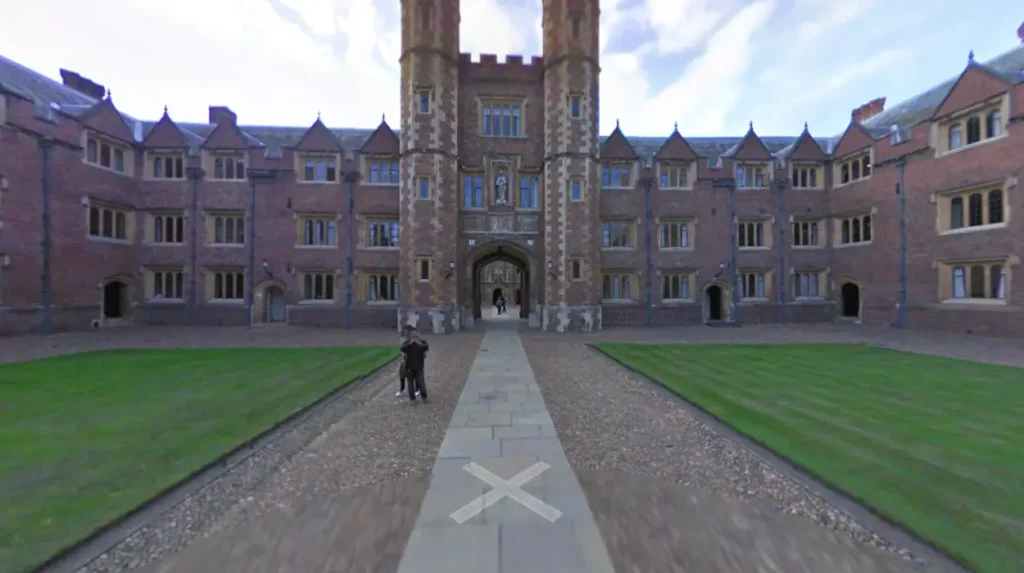
Several Cambridge colleges open their private, walled gardens to visitors during specific weekday hours at no charge or for a nominal fee. Notable examples include Clare College Fellows Garden, Christ’s College Fellows Garden, and Emmanuel College Fellows Garden.
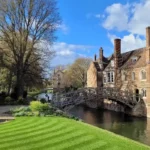
Clare College Fellows Garden sits on the west bank of the River Cam and features a sunken garden, a herbaceous border, and a pond designed by Neville Butler in 1947. The garden opens to the public on weekdays from 10:00 AM to 4:30 PM during term time, offering views of Clare Bridge, which was built in 1640. Visitors enter through the main gate on Trinity Lane and walk past the Old Court to reach this secluded riverside sanctuary.
Christ’s College Fellows Garden dates back to the 16th century and contains a black mulberry tree planted in 1608 under the reign of King James I. This two-acre walled garden is located off St Andrew’s Street and remains open to visitors Monday through Friday between 9:30 AM and 4:00 PM. The grounds also feature a historic swimming pool built in the mid-17th century, making it one of the oldest outdoor pools in the United Kingdom.
Emmanuel College boasts a spacious Fellows Garden and a Paddock area with a large duck pond fed by Hobson’s Conduit, a 17th-century watercourse. The college permits public access to its grounds daily from 9:00 AM to 6:00 PM via the entrance on St Andrew’s Street. Visitors can walk around the Chapman’s Garden and view the Oriental plane tree planted in 1802, which spans over 35 meters across the lawn.
Where are the best secret nature reserves in Cambridge?
Cambridge hosts five major Local Nature Reserves that protect rare chalk habitats, wetlands, and urban woodlands away from the city center. Top examples include Cherry Hinton Chalk Pits, Logan’s Meadow, Paradise Local Nature Reserve, and Barnwell East Nature Reserve.
Cherry Hinton Chalk Pits sits three miles southeast of the city center and spans 13 hectares of former limestone quarries excavated between the 18th and 20th centuries.
Managed by the Wildlife Trust, this Site of Special Scientific Interest supports rare plants such as the great pignut, moon carrot, and bee orchid. Steep chalk cliffs rising up to 20 meters surround a sheltered basin that traps warmth and creates a distinct microclimate for butterflies like the chalkhill blue.
Paradise Local Nature Reserve occupies 1.9 hectares of wet woodland and fen along the west bank of the River Cam near Newnham. Designated in 1995, the reserve contains mature willow carr, alder trees, and reedbeds accessible via a raised wooden boardwalk. Birdwatchers record species such as kingfishers, lesser spotted woodpeckers, and reed warblers within this dense riverside thicket located just 800 meters south of Silver Street Bridge.
Barnwell East Nature Reserve lies on the eastern edge of the city off Coldham’s Lane and covers 1.4 hectares of grassland and scrub. Cambridge City Council manages the site to support amphibians, including the great crested newt, alongside 25 species of breeding birds. The reserve borders Barnwell West Nature Reserve, forming a continuous wildlife corridor that connects suburban neighborhoods to Coldham’s Common.
What secluded riverside commons and meadows exist in Cambridge?
Cambridge preserves medieval common lands along the River Cam that offer open pastures, grazing cattle, and quiet walking trails away from central punting stations. Prominent examples include Stourbridge Common, Ditton Meadows, Sheep’s Green, and Coe Fen.
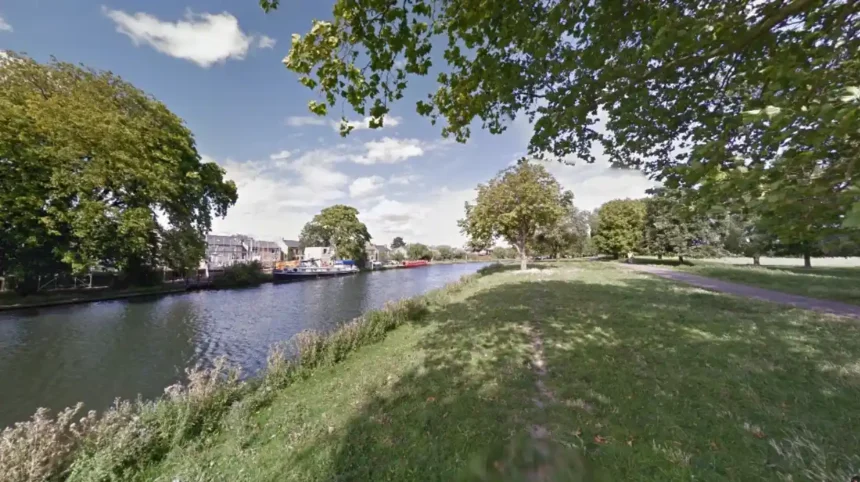
Stourbridge Common spans 19 hectares in the northeast ward of Abbey and served as the site of the medieval Stourbridge Fair from 1199 until 1933. The common lies along the south bank of the River Cam and borders the historic Leper Chapel, built around 1125. Red Poll cattle graze the alluvial floodplain between April and October, maintaining the species-rich neutral grassland and wet ditches.
Ditton Meadows sits directly east of Stourbridge Common and covers 16 hectares of open floodplain pasture extending toward the village of Fen Ditton. A paved cycle and pedestrian path runs along the river edge, providing unobstructed views of university rowing crews training on the water. The meadows remain largely undeveloped and attract wintering waterfowl, including teal, wigeon, and snipe, during colder months.
Sheep’s Green and Coe Fen together form a 30-hectare wetland grazing pasture situated between Newnham and Trumpington Road. Designated as a Local Nature Reserve, this area features braided river channels, pollarded willows, and historic sluices dating back to the 19th century. Footpaths wind through marsh marigold beds and wet meadows, offering a tranquil corridor within a ten-minute walk of the Fitzwilliam Museum.
Which hidden historic parks and walled gardens sit in central Cambridge?

Central Cambridge contains several quiet pocket parks, former burial grounds, and botanical enclosures hidden behind busy commercial streets. Key examples include St Andrew the Great Burial Ground, Mill Road Cemetery, Histon Road Recreation Ground, and Petersfield Green.
Mill Road Cemetery covers 3.6 hectares in the Petersfield ward and was established in 1848 as a parochial burial ground for 13 Cambridge parishes. Closed to new burials in 2002, the site functions as a managed wildlife sanctuary containing mature yew trees, horse chestnuts, and over 200 species of wildflowers and fungi.
Monumental stones dedicated to notable 19th-century figures, including Thomas Hobson’s descendants and university scholars, stand among shaded woodland paths.
Histon Road Cemetery sits north of the city center and spans 1.5 hectares of Victorian parkland designed by architect John Claudius Loudon in 1843. Loudon laid out the grounds using a grid of intersecting paths lined with weeping ash, holm oak, and cedar trees. Today, the cemetery operates as a peaceful public garden with designated wildflower zones and heritage gravestones maintained by the Friends of Histon Road Cemetery.
New Square and Christ’s Pieces sit adjacent to the Grafton Centre, yet Christ’s Pieces retains a secluded memorial garden dedicated to Diana, Princess of Wales, established in 1998. This enclosed corner features box hedges, white roses, and stone benches shielded from surrounding traffic. Visitors pass through wrought-iron gates off Emmanuel Road to access this quiet formal garden.
How does the Cambridge University Botanic Garden protect rare flora?
The Cambridge University Botanic Garden spans 16 hectares on Bateman Street and curates over 8,000 plant species from around the world for scientific research and conservation. Key features include the Limestone Rock Garden, the Winter Garden, and the Chronological Bed.
Founded in 1831 by Professor John Stevens Henslow, Charles Darwin’s mentor, the garden moved to its current site on Trumpington Road in 1846. The institution maintains nine national plant collections, including species of Alchemilla, Bergenia, Fritillaria, and Tulipa. While the main lawns attract visitors, the Fen Display and the Dry Garden remain quiet zones showcasing water conservation and East Anglian wetland ecology.
The Dry Garden was planted in 1980 to demonstrate drought-tolerant landscaping in a region that receives an average annual rainfall of just 550 millimeters. This section receives zero artificial irrigation and thrives using Mediterranean and steppe species such as lavender, euphorbia, and sea holly. Researchers monitor soil moisture levels here to develop sustainable urban planting models for future climate conditions across the United Kingdom.
What wildlife and ecological benefits do Cambridge’s secret parks provide?
Cambridge’s hidden green spaces reduce urban heat island temperatures by up to 3 degrees Celsius and support over 1,500 documented species of flora and fauna. Key ecological groups include pollinators, bats, amphibians, and farmland birds.
Urban green corridors across Cambridge link isolated habitats, allowing species such as the soprano pipistrelle bat and the hedgehog to move safely through residential districts. Surveys conducted by the Cambridgeshire and Peterborough Environmental Records Centre document over 300 species of bees, wasps, and hoverflies thriving in unmown cemetery meadows and chalk pits. These pollinator populations directly support allotment gardens and residential orchards across the city.
Wetland reserves like Logan’s Meadow and Coe Fen act as natural floodwater retention basins during peak winter rainfall along the River Cam catchment. The alluvial soils and root systems absorb excess surface runoff, reducing flood risk for surrounding historic buildings and infrastructure. In addition, mature tree canopies in sites like Mill Road Cemetery sequester carbon and filter particulate air pollution generated by central road networks.
How can visitors plan a walking route through Cambridge’s secret green spaces?
Visitors can connect six hidden green spaces in a single 5.5-kilometer circular walking route starting at Cambridge Railway Station and ending at Jesus Green. Key waypoints include Mill Road Cemetery, Petersfield Green, Emmanuel College, Christ’s Pieces, and Stourbridge Common.
Begin at Cambridge Railway Station and walk 900 meters north along Devonshire Road to enter Mill Road Cemetery through the Norfolk Street gate. Spend 20 minutes walking the shaded perimeter path before exiting onto Mill Road and heading west toward Petersfield Green. Continue north across Parkside to reach the St Andrew’s Street entrance of Emmanuel College, where visitors can walk around the Fellows Garden and duck pond.
From Emmanuel College, cross the road into Christ’s Pieces and follow the tree-lined avenue north toward Maids Causeway. Cross the road onto Midsummer Common and follow the riverside towpath northeast for 1.8 kilometers until reaching Stourbridge Common and the 12th-century Leper Chapel. Return toward the city center via the river path or board a local bus on Newmarket Road to complete the circuit in approximately two hours.
What are the quietest parks in Cambridge away from tourists?
Stourbridge Common, Cherry Hinton Chalk Pits, and Mill Road Cemetery are the quietest green spaces in Cambridge. These locations sit outside the central tourist circuit and attract local walkers, birdwatchers, and residents rather than large tour groups.
Can the public visit Cambridge college gardens for free?
Yes, several Cambridge colleges allow free public access to their gardens during specific weekday hours. Emmanuel College, Christ’s College, and Clare College open their Fellows Gardens to visitors without charge outside of exam periods in May and June.
Are there any secret nature reserves in Cambridge?
Cambridge has several hidden nature reserves, including Paradise Local Nature Reserve near Newnham, Logan’s Meadow beside the River Cam, and Barnwell East Nature Reserve. These protected sites feature raised boardwalks, wet woodlands, and rare chalk grassland habitats.
Where can you see wildlife and grazing cattle in Cambridge?
You can see Red Poll cattle grazing freely on Stourbridge Common, Midsummer Common, Sheep’s Green, and Coe Fen between April and October. These riverside meadows also support kingfishers, reed warblers, great crested newts, and rare butterfly species.
What is the best time of year to visit hidden gardens in Cambridge?
Spring and early summer, from April to July, offer the best conditions for visiting Cambridge’s hidden gardens and chalk pits. During these months, wildflowers, historic mulberry trees, and herbaceous borders reach peak bloom before summer heat dries the meadows.