Key Points
- Police pulled over 101 drivers on the M1 during a targeted motorway operation, handing out fines and penalty points.
- Officers dealt with 46 motorists for mobile phone offences, which included tapping screen mounts to adjust satnav routes or switch songs.
- Four HGV drivers were caught during the checks, raised by police as a higher safety risk due to the size of their vehicles.
- Officers sat inside an unmarked lorry cab between October 12 and October 16 to film drivers from an elevated position.
- Drivers caught holding a phone face a £200 fine and six points, while touching a mounted device can result in a charge of driving without due care and attention.
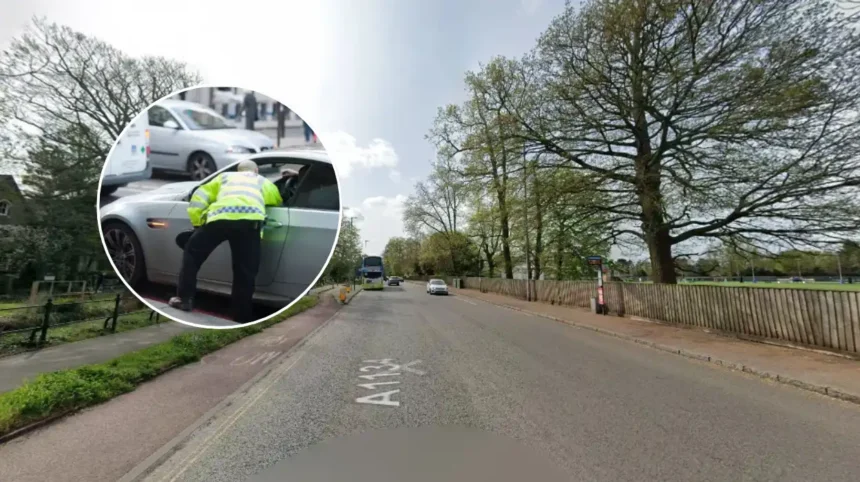
M1 Motorway (Cambridge Tribune) October 30, 2026 — Police officers patrolling the M1 motorway stopped 101 drivers during a targeted traffic operation after discovering that many motorists completely misunderstand the legal rules surrounding mobile phone use while driving.
Police issued penalty points and financial fines to dozens of motorists after observing them touching mobile devices, even when the handsets were secured in dashboard cradles or windscreen mounts.
Officers deployed an unmarked heavy goods vehicle (HGV) during a multi-day crackdown running from 12 October to 16 October to catch offenders red-handed from an elevated vantage point.
Of the 101 motorists intercepted during the operation, 46 drivers were formally dealt with for offences relating to mobile device interaction. Officers observed individuals making calls, sending text messages, interacting with satellite navigation maps, or manipulating music playlists while in motion.
Four of those stopped were commercial HGV drivers, leading police to raise serious concerns over the elevated risk posed to other road users by heavy transport operators.
Under current UK traffic legislation, holding a handheld mobile device while driving results in an immediate six penalty points on a driving licence alongside a £200 fixed penalty fine.
However, traffic officers emphasized that interacting with a device mounted in a cradle can still trigger prosecution for driving without due care and attention. Police warned that in severe instances where distractive driving leads to fatal or life-changing collisions, mobile phone interaction in any capacity will be treated as an aggravating factor in court.
What Did Police Officers Say About the Driving Misconceptions?
As reported by Ben Hurst of The Mirror, Sergeant Jim Carrington of the Roads Policing Team explained that whilst public awareness surrounding handheld phones has improved, misconceptions around mounted devices remain widespread:
“The good news is that more and more drivers now understand that holding a mobile phone at the wheel is not acceptable. The bad news is that there are clearly others out there who think they can interact with a device held in a secure mount.”
Sergeant Jim Carrington further detailed the physical risks of taking eyes off the carriageway to adjust digital maps or audio tracks:
“As several drivers have just found out to their cost, that is simply not the case, because if you are searching for an address or looking for an alternative route, you are not paying proper attention to the road in front of you. The same goes for searching for a particular song or skipping the adverts in your favourite podcast. Both actions may seem innocuous, but they can each have catastrophic consequences for you and other road users.”
Police highlighted that taking one’s attention off high-speed carriageways even for a few seconds can result in a vehicle travelling the length of multiple football pitches entirely unmonitored, drastically increasing collision risks.
How Did Officers Catch Drivers Interacting With Mounted Devices?
To monitor driver behaviour effectively inside vehicle cabs, road policing units utilised an elevated, unmarked HGV tractor unit. This raised seating position allowed officers to look directly through the side windows of passengered cars, vans, and commercial HGVs travelling alongside them on the motorway.
When an officer inside the unmarked cab identified a driver using or touching a mobile device, video evidence was logged, and nearby marked police interceptor vehicles were radioed to pull the offender over at the next safe location. The operation targeted key arterial routes to enforce strict compliance with Highway Code rules regarding driver focus and distraction control.
Officers expressed particular concern regarding the four HGV drivers caught during the campaign, pointing out that large articulated lorries require significantly longer stopping distances and can cause catastrophic impact force in multi-vehicle pile-ups.
What Is the Background to UK Mobile Phone Driving Laws?
UK laws regarding mobile device usage behind the wheel were substantially tightened in March 2022 to close legal loopholes that previously allowed drivers to avoid penalties if they were not actively engaged in interactive communication.
Prior to the legislative update, motorists argued in court that taking photos, scrolling through offline music, or searching saved files did not constitute “interactive communication” under older statutory definitions.
The updated regulations made virtually any physical holding or illumination of a handheld device illegal while driving, regardless of whether the vehicle is moving or stationary in traffic queues or at red lights. While drivers are permitted to use handheld devices as satellite navigation tools, the law dictates that the device must be securely fixed in a cradle or dashboard holder before the journey commences.
Crucially, placing a phone in a mount does not confer total immunity from prosecution. Under Section 3 of the Road Traffic Act 1988, drivers who tap, swipe, or program mounted screens while driving can be charged with driving without due care and attention or careless driving if the action compromises their control of the vehicle or attention to the road ahead.
What Is the Prediction for How This Development Will Affect Drivers?
This enforcement action signals a major shift toward stricter monitoring of mounted screen usage, which will directly impact everyday motorists, commercial delivery drivers, and fleet operators.
For standard road users, the widespread deployment of covert HGV enforcement cabs means drivers can no longer rely on looking out for traditional marked patrol cars before touching mounted screens.
Drivers who frequently re-route navigation maps or skip audio tracks during motorway journeys face a significantly heightened risk of receiving three to six penalty points. For novice drivers within two years of passing their test, a single six-point infraction will trigger the automatic revocation of their driving licence.
For commercial fleet operators and logistics companies, police crackdowns on HGV drivers will likely force businesses to implement stricter internal policies.
Employers may mandate hands-free voice command systems or introduce strict disciplinary measures against drivers caught manipulating mounted telematics devices while in motion. Additionally, rising penalty points among drivers will lead to escalating commercial insurance premiums across the transport sector.