

Key Points
- More than 2,000 residents signed a petition debated by Cambridge City Council, warning that rising living costs and rapid growth are pricing young people out of the city.
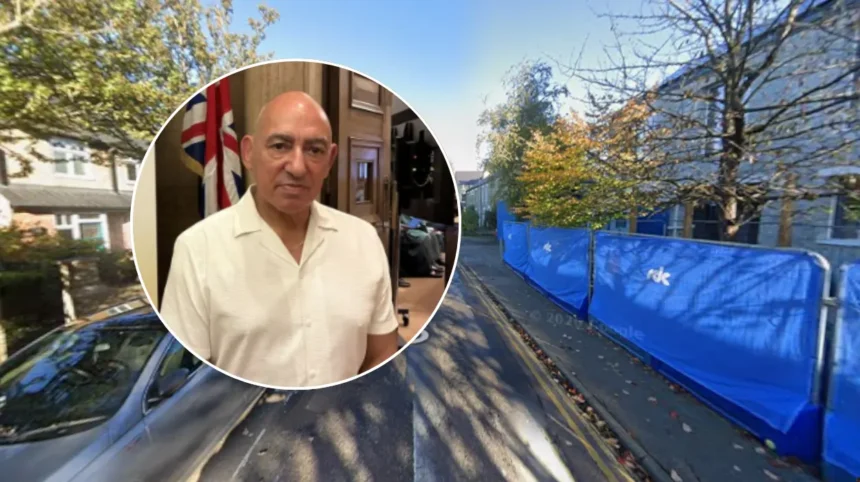
- Lifelong resident Wayne Nightingale started the campaign, stating that decision-makers in council offices are out of touch with the concerns of ordinary residents.
- Mr Nightingale urged the council to disband the Greater Cambridge Partnership, calling the body a wasteful layer of management that makes daily life harder.
- Labour Councillor Mark Ashton backed the petition’s message and proposed creating a single unitary council to bring local authorities together.
- Liberal Democrat Councillor Tim Bick stated that external economic forces will inevitably bring change to Cambridge, but local leaders can still shape the outcome.
CAMBRIDGE (Cambridge Tribune) October 2, 2026— Is Cambridge at risk of becoming completely unaffordable for its local working-class and younger generations?
As reported by Local Democracy Reporter Eoin McCaul of Cambridgeshire Live, Cambridge City Council has officially responded to warnings that the area is “losing the next generation” of residents due to unmanageable living costs and rapid urban expansion.
The issue was formally brought to the council chamber following a petition started by lifelong Cambridge resident Wayne Nightingale, which attracted more than 2,000 signatures from community members concerned about the city’s current trajectory.
What were the primary concerns raised by residents during the council debate?
Addressing the local authority directly, Mr Nightingale expressed frustration over public administrative decisions, asserting that administrative choices made behind closed doors do not align with the reality experienced by ordinary people on the ground.
As reported by Eoin McCaul of Cambridgeshire Live, Mr Nightingale stated during the meeting: “I’m not saying that growth shouldn’t carry on, but making their decisions in the office is not the same as what I hear in the street. They seem very happy with what I’ve said – it’s not a political thing, just to do with what the people want.”
Mr Nightingale also criticized existing regional infrastructure governance. As documented by Eoin McCaul of Cambridgeshire Live, Mr Nightingale argued that: “We don’t need the GCP, another layer of management which is a waste of money and makes people’s lives day-by-day miserable in Cambridge.”
Following the conclusion of the meeting, Mr Nightingale noted that he was pleased by the supportive comments offered by several elected members, though he queried how the local authority intended to formally communicate its planned actions back to the thousands of petition signatories.
How did local councillors react to the public petition?
Elected representatives from multiple political parties acknowledged the financial strains impacting local communities, though views differed on the exact administrative mechanisms required to fix the problem.
As reported by Eoin McCaul of Cambridgeshire Live, Labour Councillor Mark Ashton, representing Cherry Hinton, sympathised with Mr Nightingale’s stance and admitted it is “difficult to get one answer to these problems.” Cllr Ashton stated: “What you will hear is a lot of words, and all I can say to you Wayne is, keep the fight – keep the faith.”
Cllr Ashton further argued that establishing a single unitary council would have streamlined local administration and helped address regional issues faster, apologizing for past national delays in reorganizing local government structures.
As reported by Eoin McCaul of Cambridgeshire Live, Cllr Ashton added: “What we have got to say to you is we want a better solution and that better solution is getting all the authorities together who have the power to do it. Getting them around one table and banging their heads together to say this makes sense, this makes sense for residents. We’ve got intelligence in Cambridge supposedly – we should be able to do things.”
Taking a broader perspective on the economic pressures hitting the region, Liberal Democrat Councillor Tim Bick, representing Market ward, emphasized that the city is subject to structural headwinds beyond its direct control.
As recorded by Eoin McCaul of Cambridgeshire Live, Cllr Bick stated: “The winds we’re facing will force change of some sort whatever we do, but we can impact what sort.”
Background of the particular development after the news
The debate before Cambridge City Council highlights a longstanding tension within Cambridgeshire over rapid economic development, high housing demand, and local governance structures. Over the past decade, Cambridge has grown rapidly as a national technology and life-sciences hub, attracting significant commercial investment and high-earning professionals.
However, this commercial expansion has coincided with soaring property valuations and rental rates, regularly positioning Cambridge among the least affordable places to live in the United Kingdom relative to local average incomes.
Compounding resident frustration is the multi-tiered nature of local governance across Greater Cambridge. Infrastructure funding and transport planning fall largely under the Greater Cambridge Partnership (GCP) and the Cambridgeshire and Peterborough Combined Authority, operating alongside city and county councils.
Local community groups and campaign leaders have repeatedly voiced concerns that having multiple administrative bodies creates bureaucracy, dilutes accountability, and slows down direct responses to the housing crisis affecting local families.
Prediction: How this development can affect local residents and working-class communities
If current economic trends and housing costs in Cambridge remain unresolved, the city risks accelerating a demographic shift where younger demographics, essential public sector workers, and lower-income families are systematically priced out of the municipality entirely.
For local residents and young adults born in Cambridge, the continuation of these pressures means an increasing reliance on relocation to outlying towns and rural villages across Cambridgeshire, leading to longer daily commutes, increased travel expenses, and the disruption of long-standing family support networks.
For the broader city economy and public services, the loss of younger generations poses structural staffing challenges for crucial sectors, including education, social care, retail, and public transport. Without accessible housing options or unified regional reform, local businesses and public providers will face persistent recruitment difficulties, ultimately impacting the quality and availability of day-to-day services for the remaining population