

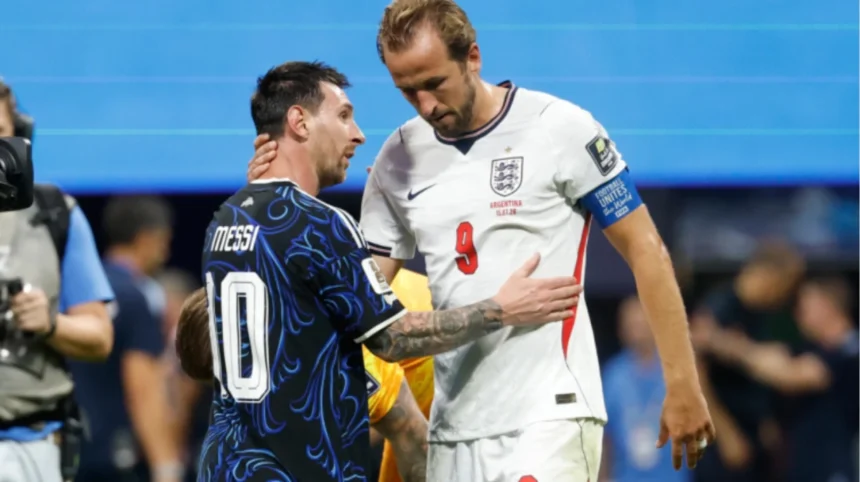
Simply put, that is one extraordinary photo between the captains.
Croatia, Ghana, Panama, Mexico, Norway. Five opponents, five different challenges, and each one a reminder that this England squad was being tested in ways previous generations had failed to overcome. But hey, at least they got to play against Messi.
They had survived every challenge placed in front of them. They had overcome Croatia’s attacking threat, Ghana’s defensive organisation, Panama’s resilience, Mexico’s historic home advantage at the Azteca and Norway’s tactical discipline. Each victory added to the growing belief that this England squad might actually be the one to bring football home.
Then came Argentina.
The defending champions represented the ultimate test. And for 85 minutes, England looked ready to pass it.
A week after conquering the ghosts of the Azteca, England found themselves haunted once again. Having overcome history in Mexico City, Thomas Tuchel’s side stood just five minutes away from a first men’s World Cup final since 1966 before the defending champions turned the tie on its head in devastating fashion.
For so long, this felt like the night England would finally escape the weight of their past.
The opening exchanges reflected the magnitude of the occasion. Argentina dominated possession, as many expected, but England never looked overwhelmed. Instead, Tuchel’s side remained compact and disciplined, frustrating the defending champions and refusing to allow Lionel Messi and his teammates the freedom they so often enjoy.
It was not a classic first half, but it was an intelligent one from England. Every challenge was contested, every second ball fought for, and Jordan Pickford was once again equal to everything Argentina threw at him. The game remained finely balanced, exactly as Tuchel would have wanted.
In the 55th minute, Morgan Rogers, rewarded with another start after an outstanding tournament, produced the decisive moment. His delivery from the right found Anthony Gordon arriving unmarked at the far post, and the Newcastle winger showed remarkable composure to guide his finish beyond Emiliano Martínez. For a moment, England dared to believe.
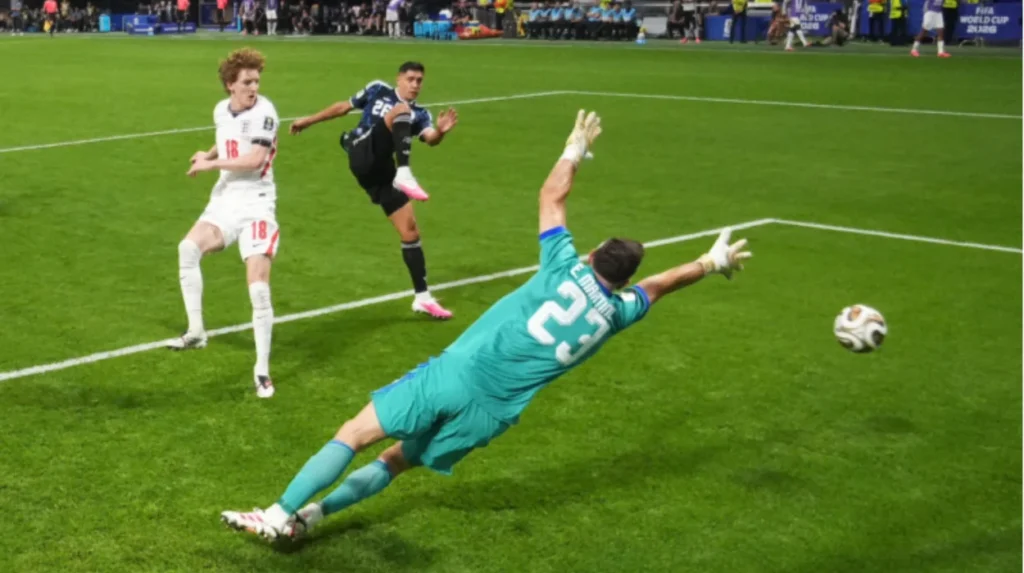
The organisation, discipline and resilience that had carried them through difficult moments throughout the competition appeared ready to deliver one more famous victory—one that would finally take them back to the World Cup final for the first time after six long decades of waiting.
After Gordon’s goal, England abandoned the aggression that had unsettled Argentina throughout the evening. Their midfield dropped closer to the defence, the full-backs became increasingly cautious and possession was surrendered far too easily. Every clearance seemed to come straight back, allowing the world champions to build momentum with each passing minute. Rather than continuing to challenge Argentina, England invited them forward.
It was a decision that ultimately fell short, leaving England vulnerable to the punishment that soon followed on the scoreboard.
That pressure finally became too much to withstand for The Three Lions.
In the 85th minute, Argentina worked a short corner routine that created just enough space for Enzo Fernández to step onto the ball outside the box. The Chelsea midfielder struck with power and precision, sending a fierce effort beyond Jordan Pickford and into the left corner.
Atlanta Stadium erupted.
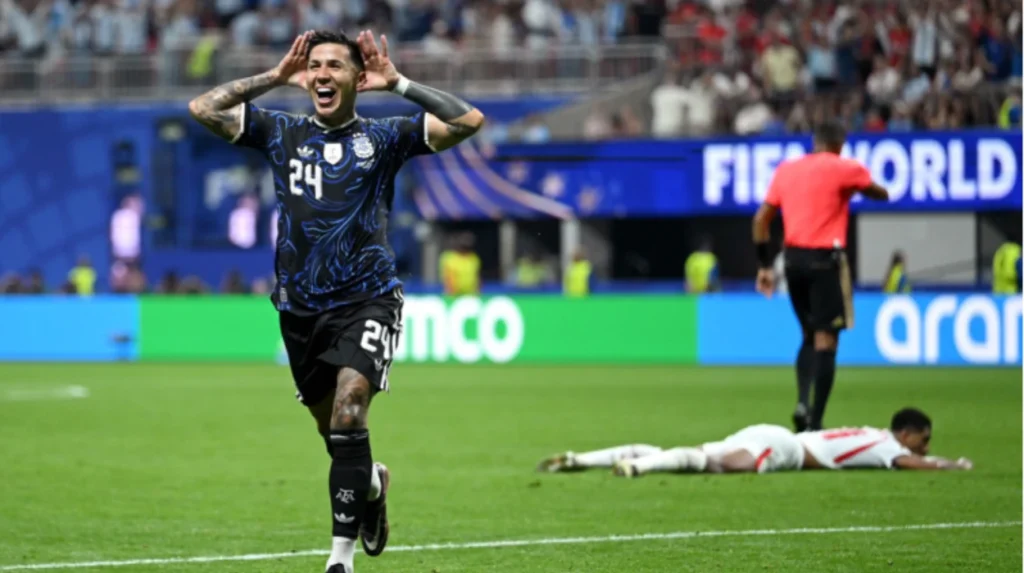
For England, it was a devastating moment. A match that had felt within their control had suddenly slipped through their fingers in the blink of an eye. Tuchel’s decision to retreat had finally been punished.
Alexis Mac Allister struck the post again, giving England a brief glimpse of hope that maybe, just maybe, they could hold on until extra time and regroup.
But Argentina’s pressure never let up. The reigning world champions were searching for one final opening, one final piece of brilliance from Messi to complete a comeback that had seemed unlikely only minutes earlier.
It arrived in the 92nd minute. A stoppage-time winner.
Lionel Messi, quiet by his extraordinary standards for much of the evening, produced the moment only the very greatest players can. The Argentina captain collected the ball on his right, created space and delivered a perfectly weighted cross into the penalty area.
Lautaro Martínez rose highest. His header flew beyond Pickford, and with it went England’s hopes of a first World Cup final appearance since 1966.
A match that had been within their grasp was gone. For a moment, England had dared to dream. Instead, they were left with another chapter in football’s longest-running heartbreak.
At the Azteca, they had conquered history.
In Atlanta, history found them again.