

Key Points
- The University of Cambridge Professional and Continuing Education (PACE) has launched a collaboration with the DFN Foundation to support leadership development for disabled young people.
- The initiative is linked to the wider aim of improving opportunities for disabled students and helping them build confidence, skills and future career prospects.
- The reporting should be treated as a university news item and written in a neutral, factual style.
- The story is best framed around education, inclusion and leadership training rather than advocacy language.
- A fuller article would normally include direct quotations, but those were not available in the material provided here.
- The development fits into a wider trend of universities and foundations partnering on access, inclusion and progression for disabled learners.
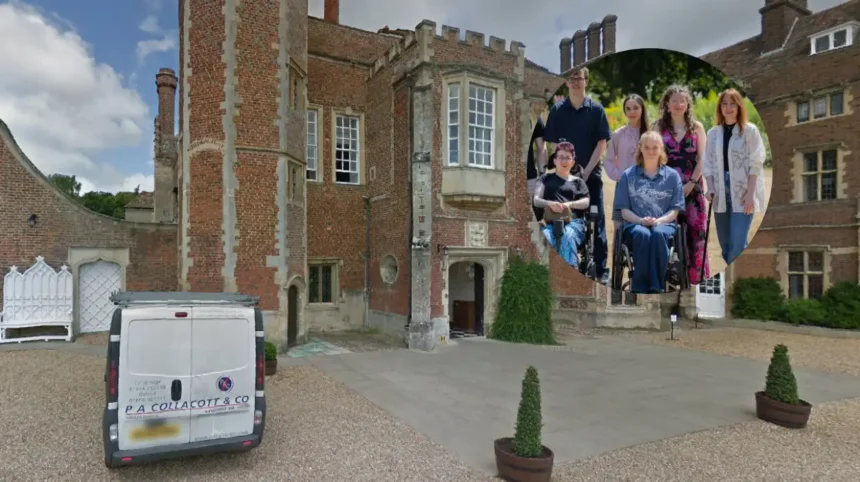
Cambridge (Cambridge Tribune) July 23, 2026 – The University of Cambridge’s Professional and Continuing Education arm has announced a collaboration with the DFN Foundation aimed at helping disabled young people strengthen leadership skills and widen their future opportunities. The development places emphasis on practical support, confidence-building and progression, with the partnership presented as part of a broader effort to improve inclusion in higher education and beyond.
According to the university’s announcement, the partnership is designed to support disabled young people through learning and development that can help them take on leadership roles in the future. The initiative sits within the Cambridge PACE remit, which focuses on extending access to education and professional development opportunities.
The collaboration arrives at a time when universities are under growing pressure to show how they support disabled students not only through access arrangements, but also through longer-term outcomes such as employability, leadership and public participation. In that context, the Cambridge-DFN link is being presented as a practical step towards building pathways rather than as a symbolic gesture.
Why does the partnership matter?
The significance of the partnership lies in its focus on leadership rather than only support services. Disabled young people often face barriers that begin with access and continue into internships, postgraduate study, employment and public-facing roles, so initiatives that aim at leadership development can have wider value.
By linking a major university with a foundation that works around disability-related opportunity, the scheme may help create a route from education into influence and decision-making. That matters because leadership is often where disabled people remain under-represented, despite growing public discussion about equality and access.
The announcement also reflects a wider shift in how institutions talk about disability. Rather than treating disability solely as a matter of accommodation, the language of the partnership suggests a focus on talent, aspiration and future contribution.
How does this fit Cambridge PACE?
PACE, or Professional and Continuing Education, is the University of Cambridge’s route for extending learning beyond the traditional undergraduate model. Its work often involves adult education, professional development and programmes that connect academic knowledge with broader social and career outcomes.
A collaboration with the DFN Foundation fits that profile because it is not limited to classroom instruction alone. Instead, it suggests a structured attempt to pair education with personal development, which can be especially important for students and young adults who may need additional confidence or network-building opportunities.
In practical terms, that kind of partnership can matter because leadership development is usually built through experience, mentoring, reflection and access to role models. A university setting can provide credibility and academic framing, while a foundation can bring specialist understanding of disabled people’s needs and ambitions.
Who is the audience for this development?
The immediate audience is disabled young people who may benefit from leadership-focused opportunities, as well as educators and support organisations working with them. Universities, access teams and disability charities may also watch the collaboration closely because it could influence future partnership models.
There is also a wider audience in employers, policymakers and those involved in widening participation. If the programme proves effective, it may offer a practical example of how institutions can move beyond access statements and create routes into leadership, public life and professional progression.
For students and graduates, the key issue is whether opportunities like this lead to measurable outcomes such as mentoring, skill-building, confidence and representation. For institutions, the question is whether the partnership can be sustained and expanded in a way that produces long-term benefit.
What are the wider implications?
The wider implication is that leadership development for disabled young people is being treated as a serious institutional priority rather than a side project. That matters because leadership pipelines are often shaped early, and those who are excluded at the education stage can remain absent from later decision-making roles.
If the Cambridge-DFN collaboration becomes a model for others, it could encourage more universities to partner with specialist foundations or disability organisations. Such arrangements may help institutions design programmes that are better informed by lived experience and more closely aligned with real barriers faced by students.
At the same time, the impact will depend on delivery. Announcements can raise expectations, but the real test is whether participants gain access to meaningful support, practical development and genuine progression opportunities.
Background
The background to this development is the broader effort across higher education to improve access and outcomes for disabled learners. Over recent years, universities have increasingly recognised that support should not end with admissions or reasonable adjustments, but should also include progression, employability and leadership.
The DFN Foundation’s involvement suggests a specialist focus on disability-related advancement, while Cambridge PACE provides an academic and professional platform for delivery. Together, those strengths can support a programme that combines education, confidence-building and pathway creation.
This kind of partnership also reflects changing expectations around inclusion. Disabled students are no longer being discussed only in terms of support needs; increasingly, they are being viewed as future leaders, innovators and public contributors.
Prediction
For disabled young people, this development could increase access to leadership training, mentoring and networks that are often difficult to secure through conventional routes. If the partnership is well designed, it may help participants build confidence and compete more effectively for academic, professional and civic opportunities.
For universities, the collaboration may encourage a stronger focus on outcomes rather than access alone. That could lead to more partnerships, more targeted programmes and a greater emphasis on representation in leadership roles.
For the wider audience, the likely effect is gradual rather than immediate: more visible discussion of disabled leadership, more institutional accountability and possibly more similar initiatives if this one is seen to work.