
Key Points
- An outline planning application for Cambridge 25, a large employment park at Junction 25 of the A14, has been submitted to Greater Cambridge Shared Planning Service (GCSPS).
- The development is designed to support logistics, advanced manufacturing and mid-tech businesses, with a community hub, café and ancillary uses.
- Nearly half of the site will be green infrastructure, including a new nature park, with a commitment to better than 20% biodiversity net gain.
- The project aims for Net Zero carbon in line with the UK Green Building Council framework and buildings targeted at minimum BREEAM Excellent.
- Transport improvements include two new access points onto the A1307 and upgraded connections with the A14, alongside enhanced public rights of way for active travel.
- Two rounds of public consultation took place in Autumn 2025 and Spring 2026, with local feedback shaping elements such as the nature park and tree belts.
- Graeme Cosgrove, development director at Lolworth Developments, says the scheme could deliver around 2,900 new jobs near communities including Oakington, Northstowe, Bar Hill, Longstanton and Eddington.
- If approved, initial works could start in autumn 2027, with main construction commencing in 2028.
- The outline planning application (OPA) is supported by Parameter Plans, a Design Code, an Environmental Impact Assessment and a comprehensive Transport Assessment.
- South Cambridgeshire District Council will act as the local planning authority to determine the application after GCSPS officers process and review it.
Cambridge (Cambridge Tribune)July 08, 2026 — A new employment park at Junction 25 of the A14, have been submitted to Greater Cambridge Shared Planning Service (GCSPS) in a move that could reshape economic growth and transport patterns across North West Cambridgeshire.
- Key Points
- How does the application fit into local planning and consultation processes?
- What has the developer said about jobs, growth and community impact?
- What are the next steps and likely timeline for construction?
- Background to the Cambridge 25 development
- How could Cambridge 25 affect local residents, workers and businesses?
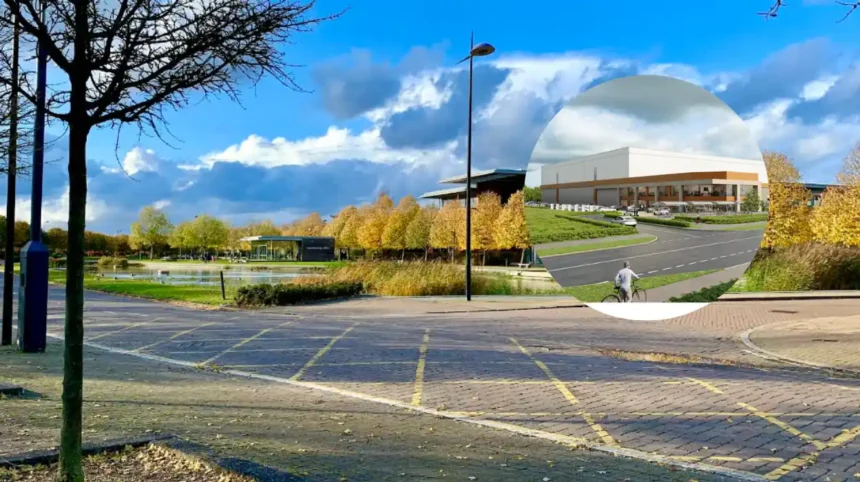
The outline planning application seeks permission to create a high-quality, landscape-led employment park which would provide space for new and expanding businesses as Greater Cambridge grows, according to the submitted documentation. The site is identified and promoted as a suitable location for major employment use development in the draft Greater Cambridge Local Plan, giving the project a clear strategic footing within regional planning policy.
Cambridge 25 has been designed for business occupiers across a mix of commercial sectors including logistics, advanced manufacturing, and mid-tech. It will have a community hub, a café and a range of ancillary uses, ensuring that the development is not simply a collection of warehouses but a place where workers and local residents can interact.
The site will be publicly accessible and permeable. Nearly half of the Cambridge 25 site would be dedicated to green infrastructure, including a new nature park, reflecting a strong emphasis on environmental quality alongside commercial development.
Other key components include using existing tree belts and natural features within a landscape-led design that also includes a commitment for better than 20 per cent biodiversity net gain (BNG). The buildings are to be highly energy efficient, built to a minimum of BREEAM Excellent, with an aspiration to achieve Outstanding where possible. The project is targeting Net Zero carbon in line with the UK Green Building Council framework.
Enhancement and integration of public rights of way are intended to encourage active travel, while the transport strategy includes creating two new vehicular access points onto the A1307 and upgrading connections with the A14.
How does the application fit into local planning and consultation processes?
The OPA is accompanied by Parameter Plans and a Design Code, to establish the development and design quality parameters, as well as an Environmental Impact Assessment and a comprehensive Transport Assessment, officials said. These supporting documents are critical to demonstrating that the scheme meets statutory requirements and local planning expectations.
The two rounds of public consultation took place in Autumn 2025 and Spring 2026, providing local residents and stakeholders with opportunities to comment on the proposals. As reported by the Cambridge Tribune, the local communities’ feedback has helped to shape the scheme, through ideas for the nature park to the strengthening of tree belts and planting, and the OPA submission generally.
This iterative consultation process reflects a commitment to incorporating local concerns into the design, rather than treating the application as a purely technical submission. The involvement of South Cambridgeshire District Council, local communities and stakeholders at all levels has been described by the developer as “really helpful engagement” that has improved the scheme.
What has the developer said about jobs, growth and community impact?
Graeme Cosgrove, development director at Lolworth Developments, said:
“Everyone wants to see the Greater Cambridge area continue its record as a place with a strong economy, high standards of living, attractive green space, and opportunities for people to live well.”
“Cambridge 25 has the potential to provide around 2,900 new jobs near to existing and growing communities like Oakington, Northstowe, Bar Hill, Longstanton and Eddington, thinking sustainably and long-term about the best way to connect and deliver successful growth in the decades to come,” he added.
“Our plans are informed by some really helpful engagement with South Cambridgeshire District Council, local communities and stakeholders at all levels. They’re better for it and we’re grateful to everyone who has contributed and shaped the scheme,” Cosgrove continued.
“I hope we’ll have the opportunity to secure outline planning permission this year and progress with investing and establishing a great new place for businesses to thrive,” he said.
These statements, attributed to Cosgrove by the Cambridge Tribune, underline the developer’s ambition to link economic growth with environmental and social objectives, positioning Cambridge 25 as a long-term investment in the region.
What are the next steps and likely timeline for construction?
Project timeline details indicate that, subject to validation, the Cambridge 25 planning application will be processed and reviewed by the GCSPS officers before being determined by South Cambridgeshire District Council, as the local planning authority. This means the application will undergo technical scrutiny before a formal decision is made.
Assuming the application is approved, it would be followed by future reserved matters applications, which would deal with more detailed design and layout issues. The development programme envisages initial works to start on site in autumn 2027, with main construction commencing in 2028, according to the planning submission.
This timeline suggests that even if outline permission is granted in 2026, the project will not be fully realised for several years, with significant construction activity expected from 2028 onwards.
Background to the Cambridge 25 development
The Cambridge 25 proposal emerges within the context of the draft Greater Cambridge Local Plan, which identifies the site near Junction 25 of the A14 as a suitable location for major employment use. The location is strategically important due to its proximity to key transport corridors, including the A14 and A1307, and its proximity to existing and planned residential communities such as Oakington, Northstowe, Bar Hill, Longstanton and Eddington.
The development is being led by Lolworth Developments, with Graeme Cosgrove acting as development director. The project has been subject to two rounds of public consultation, in Autumn 2025 and Spring 2026, allowing local residents and stakeholders to influence aspects such as green infrastructure, tree belts and access arrangements. The outline planning application is supported by a suite of technical documents, including Parameter Plans, a Design Code, an Environmental Impact Assessment and a Transport Assessment, reflecting the scale and complexity of the proposed employment park.
How could Cambridge 25 affect local residents, workers and businesses?
If Cambridge 25 is approved and built as proposed, the development could have significant effects on different groups in the region.
For local residents in villages and towns such as Oakington, Northstowe, Bar Hill, Longstanton and Eddington, the project could bring increased employment opportunities close to home, potentially reducing the need for long commutes to Greater Cambridge. The inclusion of a community hub, café and ancillary uses may also provide new local services and social spaces. However, residents may also face changes in traffic patterns, especially with two new access points onto the A1307 and upgraded A14 connections, which could affect congestion and noise levels in the surrounding area.
For workers across North West Cambridgeshire, the potential creation of around 2,900 new jobs could open up opportunities in logistics, advanced manufacturing and mid-tech sectors. The emphasis on active travel and enhanced public rights of way may also encourage more sustainable commuting options, such as cycling and walking, particularly if transport links are improved as planned.
For existing and future businesses, Cambridge 25 could offer high-quality, energy-efficient workspaces built to BREEAM Excellent standards and aligned with Net Zero carbon goals. This could attract companies looking for modern, sustainable premises with good transport access. The mix of commercial sectors, including logistics and advanced manufacturing, suggests that the site could support a diverse range of employers, potentially strengthening the local economic base.
At a broader level, the development’s focus on biodiversity net gain, green infrastructure and a new nature park could enhance the environmental quality of the area, provided that these commitments are fully implemented and maintained. If the project proceeds on the stated timeline, with initial works from autumn 2027 and main construction from 2028, the region could see a gradual transformation over the next decade, with significant economic and environmental impacts depending on how the scheme is managed and delivered.