

Key Points
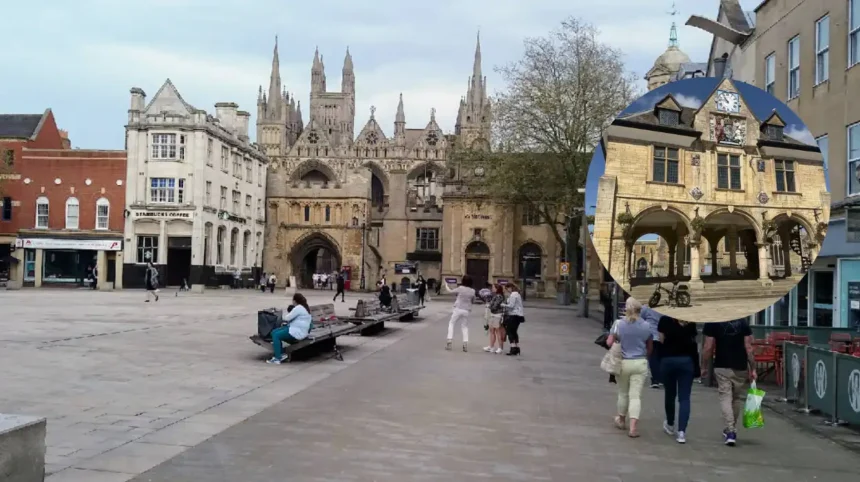
- Peterborough city centre redevelopment plans have been made public, focusing on Cathedral Square and St John’s Squares.
- The project is funded with £1.5 million from the Government’s Pride in Place Impact Fund.
- New facilities include accessible public toilets, around 20 temporary market stalls, more hanging baskets and additional greenery.
- ‘Playful structures’ are being designed for climbing and seating to make the area more child-friendly.
- Peterborough MP Andrew Pakes said the upgrades aim to create a more welcoming, community-focused city centre.
- Cllr Numan Ali Iqbal, Cabinet Member for Growth and Regeneration, described the city centre as “the beating heart of Peterborough”.
- The Pride in Place programme is a £5 billion, 10‑year initiative launched in September 2025 (as reported in user materials; official sources say September 2025/2026 depending on wording) to support up to nearly 250 areas.
- Under the programme, 169 areas receive £2 million per year for a decade, while 95 additional areas get one‑time grants of £1.5 million.
- Neighbourhood Boards led by local residents, councils, MPs, businesses and community groups decide how funding is spent.
- The initiative is part of Labour’s Plan for Change and aims to reverse long‑term decline in high streets and town centres.
Cambridge (Cambridge Tribune) July 07, 2026 – A major redevelopment of Peterborough city centre has been outlined, with plans to deliver accessible public toilets, new market stalls, additional greenery and child‑friendly public structures around Cathedral Square and St John’s Square. The project is backed by £1.5 million of funding from the Government’s Pride in Place Impact Fund, as confirmed by statements from Peterborough MP Andrew Pakes and council officials.
- Key Points
- How Will the Redevelopment Change Daily Life for Shoppers, Families and Market Traders?
- What Do Council Leaders and Local Politicians Say About the Aim of the Project?
- How Does Peterborough’s Upgrade Fit Into the National Pride in Place Programme?
- What Specific Facilities and Features Are Included in the Peterborough Scheme?
- Background: How the Pride in Place Programme Was Developed and What It Entails
- Prediction: How This Development Could Affect Peterborough Residents, Businesses and Visitors
As reported by the Cambridge News, the redevelopment aims to create a more welcoming city centre with improved community and public spaces that encourage residents and visitors to spend more time there. The funding is part of the wider national Pride in Place programme, which the government has described as a flagship communities initiative providing up to £5 billion over 10 years to support nearly 250 in‑need areas across the UK.
How Will the Redevelopment Change Daily Life for Shoppers, Families and Market Traders?
The first visible changes will be decorative and environmental. Over the next few weeks, new hanging baskets will be installed in the city centre as the initial stage of a greening programme. Council officers are also investigating options for introducing more planting to create shaded, cooler areas, responding to concerns about heat and lack of comfort in urban spaces.
For families and children, the council plans to commission designs for “playful structures” that can be climbed and sat upon, combining fun with additional seating. These installations are intended to make the area more child‑friendly while reducing pressure on traditional benches and increasing the overall capacity for informal rest points.
As reported by the Cambridge News, Cllr Numan Ali Iqbal, Cabinet Member for Growth and Regeneration, said the initiative would deliver “more pop‑up markets in the city centre, more toilets right in the centre for people who are coming to shop or attend events, and more greenery for people to enjoy”. He added that the city centre is “the beating heart of Peterborough” and that the scheme is part of a major regeneration effort to attract more investment, encourage new shops and increase retail offer.
What Do Council Leaders and Local Politicians Say About the Aim of the Project?
MP Andrew Pakes, who has been quoted in relation to the plans, stated that the project is designed to create a more welcoming city centre with improved community and public spaces that encourage residents and visitors to spend more time there. His remarks underline the political framing of the scheme as a community‑focused regeneration effort rather than a purely commercial upgrade.
Cllr Numan Ali Iqbal expanded on this vision, noting that the council wants Peterborough city centre to be “a destination of choice for both our residents and visitors, somewhere that is fun, interesting and entertaining to spend time”. He linked the funding to a broader strategy of regeneration intended to attract investment, support new shops and provide high‑quality homes for families and people of all ages.
How Does Peterborough’s Upgrade Fit Into the National Pride in Place Programme?
The Peterborough project is one of many local interventions supported by the Pride in Place programme. Central government announced its £5 billion Pride in Place programme in September 2025 (as stated in official government publications), with the initiative seeing 169 areas across the country selected to receive £2 million every year for a decade. An additional 95 areas receive one‑time grants of £1.5 million to upgrade public amenities.
As explained on GOV.UK, each of the nearly 250 areas receiving funding must form a Neighbourhood Board that brings together residents, local businesses, grassroots campaigners, workplace representatives, faith leaders and community organisations. These boards are responsible for generating a vision for the future of their area and setting out a pathway to deliver that over the course of the 10‑year programme and beyond. Funding can be spent on what matters most to local people, from improvements to pavements and high streets to investment in culture and green spaces.
Analysts and commentators have described the programme as a shift towards reimagining high streets as mixed‑use, experience‑led destinations rather than purely retail spaces. Of the total £5 billion, around £301 million is earmarked specifically for high streets, signalling a policy focus on town centres that have suffered from long‑term decline.
What Specific Facilities and Features Are Included in the Peterborough Scheme?
The Peterborough redevelopment plans include several concrete elements:
- Accessible public toilets, to be located in the centre for people shopping or attending events.
- Around 20 uniform temporary market stalls, to be purchased by the council to attract more traders and a wider range of specialist and artisan markets.
- New hanging baskets and additional planting to increase greenery and create cooler, shaded areas.
- Designs for playful, climbable structures that also provide seating, aimed at making the area more child‑friendly.
These elements combine to create a mix of practical infrastructure (toilets, market stalls), environmental improvements (greenery, shade) and social features (playful structures) that together aim to increase the attractiveness and usability of the city centre.
Background: How the Pride in Place Programme Was Developed and What It Entails
The Pride in Place programme is the UK government’s flagship communities programme, designed to provide up to £5 billion of long‑term support to up to 250 of the most in‑need communities. The initiative was announced in September 2025 as part of the Labour government’s Plan for Change, with the stated aim of reversing long‑term decline in local neighbourhoods, particularly high streets and town centres.
The selection of areas is based on a ranking system using the Index of Multiple Deprivation and a Community Needs Index, rather than on a competitive application process. This approach is intended to ensure that funding goes to areas with the greatest need, without requiring councils to submit bids. Once selected, areas must establish Neighbourhood Boards that put local people at the centre of defining their area’s future.
The programme includes not only infrastructure investment but also policy measures to protect local assets such as pubs and libraries, and to restrict the establishment of unwanted betting shops, vape shops and “fake barbers”. Local councils are encouraged to use their powers to acquire boarded‑up storefronts and abandoned businesses for community projects, including local startups, health centres or housing. The devolution bill currently in Parliament extends the timeframe for local groups to raise funds for such purchases from six months to twelve months.
Prediction: How This Development Could Affect Peterborough Residents, Businesses and Visitors
The Peterborough city centre redevelopment, funded by Pride in Place, is likely to have several tangible effects on different groups.
For shoppers and visitors, the addition of accessible toilets and more seating (including playful structures) should make the city centre more comfortable and convenient, potentially increasing the time people spend there. More greenery and shaded areas may improve comfort in warmer weather, encouraging longer visits and more frequent use of public spaces.
For market traders and small businesses, the introduction of around 20 uniform temporary market stalls could create new opportunities for specialist and artisan sellers, diversifying the range of products available in the city centre. If the area becomes more attractive and better equipped, existing retailers may also benefit from increased footfall and longer dwell times.
For residents, the regeneration vision described by local leaders suggests a longer‑term ambition to make Peterborough city centre a place where “families and people of all ages want to live”. If the upgrades are successful in making the area more lively, safe and attractive, this could support further investment in housing and commercial premises, potentially influencing local property values and the Mix of businesses in the area.
However, the impact will depend on how well the Neighbourhood Board and council engage residents and traders, and whether the physical improvements are matched by sustained programming (events, markets, cultural activities) that keeps the space active throughout the year. If the project delivers on its stated aims, it could contribute to a broader shift in Peterborough’s city centre from a primarily retail destination to a mixed‑use, community‑focused hub, consistent with the national direction of the Pride in Place programme.