

Key Points
- Cambridge-based Draper Laboratory is expanding its IMPACT Center on Dutton Street in Lowell, Massachusetts, transforming the Mill City into a technology hub
- The $105 million Integrated Microelectronics Production and Advanced Chip Technology facility will span approximately 108,000 square feet across three stories
- Wexford Development LLC submitted the revised site application to Lowell’s Historic Board on Monday night, June 8, 2026
- The parcel sits within Lowell’s downtown historic district in the Hamilton Canal Innovation District (HCID)
- Assistant City Manager Yovani Baez Rose called the HCID Parcel 15 part of a “really important corridor” with significant economic development potential
- The IMPACT Center will bring at least 150 permanent jobs to Lowell beyond temporary construction crews
- Draper Laboratory previously operated the computer guidance system that helped land Apollo 11 on the moon
- The facility will expand Draper’s advanced microelectronic design, production, and packaging for U.S. military, aerospace, and government customers
- The IMPACT Center is part of the $800 million Lowell Innovation Network Corridor (LINC), a public-private development project
- Governor Maura Healey announced Draper as LINC’s anchor tenant in March 2024, committing $25 million to IMPACT Center and $75 million to overall LINC
- Wexford Science & Technology is driving LINC development with a $600 million investment, known for mixed-use innovation-focused communities
- The City Council unanimously authorized City Manager Tom Golden to execute a land disposition agreement on HCID Parcel 15 with Wexford in March 2026
- Joe Reagan, Wexford’s executive vice president for development, said the company is under agreement to purchase the land, previously reported at $1.49 million
- The revised application expands the building from two to three stories and from 75,000 to approximately 108,000 square feet
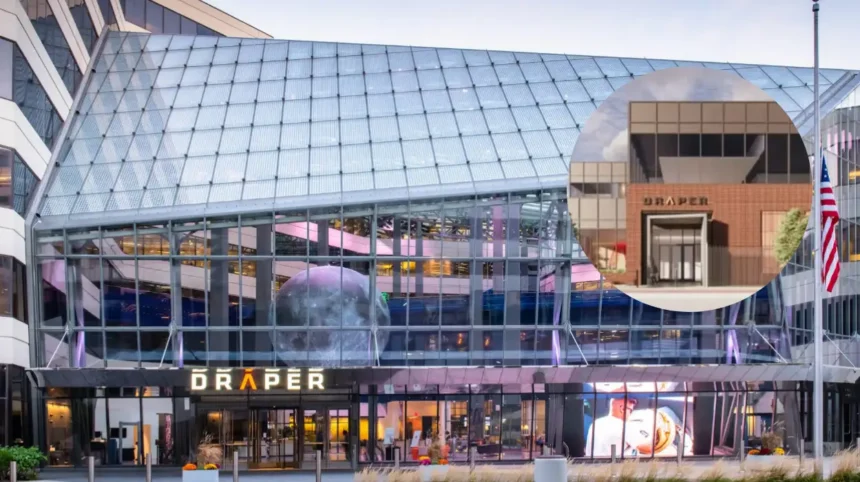
- Architecture balances adjacent mill buildings’ look with security and production requirements, acknowledging Lowell’s industrial heritage through materiality
- Primary material is thin brick cast onto insulated concrete panels with terra cotta accents and glazed glass panels
- Red brick on lower floors references historic mill buildings defining Lowell’s canal district architectural character
- Key features include specialized electronics laboratories, flexible conference spaces, traditional and open offices, and a café in the 61-foot-tall building
- Historic Board member Jeff Harris requested details on the 8-foot tall black wrought iron-style fencing intended for security
- The board requested more details on rooftop mechanical screening, bollard and loading dock design, and outdoor seating before unanimously approving
- No public members spoke in favor or opposition; all Historic Board members voiced support
- IMPACT Center is expected to break ground this fall (Fall 2026) with an August 2028 completion date
Cambridge (Cambridge Tribune)June 10, 2026 — Lowell, Massachusetts stands poised to transform from the historic Mill City into the emerging Tech City with the expansion of Cambridge-based Draper Laboratory’s IMPACT Center on Dutton Street, the city’s main thoroughfare not far from City Hall.
- Key Points
- How Large Will the New IMPACT Center Facility Be?
- What Jobs Will the IMPACT Center Create for Lowell Residents?
- Why Is Wexford Development LLC Leading This $105 Million Project?
- How Does the IMPACT Center Fit Into the Lowell Innovation Network Corridor?
- What Architectural Features Balance Lowell’s Mill Heritage With Modern Security Needs?
- Did the Historic Board Approve the IMPACT Center Development?
- When Will the IMPACT Center Break Ground and Complete Construction?
- Background of the IMPACT Center Development
- How Will This IMPACT Center Development Affect Lowell Residents, Workers, and the Regional Technology Economy?
The $105 million Integrated Microelectronics Production and Advanced Chip Technology facility represents a transformative investment in on-shore microelectronics production critical to national security. Wexford Development LLC submitted the revised site application to Lowell’s Historic Board on Monday night, June 8, 2026, seeking approval for the three-story, 108,000-square-foot structure.
How Large Will the New IMPACT Center Facility Be?
The revised application calls for the IMPACT Center to rise from two to three stories and expand from 75,000 square feet to approximately 108,000 square feet. The 61-foot-tall building will house specialized electronics laboratories, flexible conference spaces, traditional and open offices, and a café.
As stated in the Historic Board application,
“The architecture and design team said the building balanced the look of the adjacent mill buildings facing Market Street with the security and production requirements of an advanced manufacturing facility.”
What Jobs Will the IMPACT Center Create for Lowell Residents?
Besides temporary construction crews for the facility buildout, the IMPACT Center is expected to bring at least 150 permanent jobs to Lowell. These positions will focus on advanced microelectronic design, production, and packaging skills critical to maintaining America’s technology edge in defense systems.
As reported by the Lowell Sun, Draper Laboratory is the same company that operated the computer guidance system that helped land Apollo 11 on the moon. The Lowell development represents an expansion of its advanced microelectronic design, production, and packing for Draper’s U.S. military, aerospace, and government customers.
Why Is Wexford Development LLC Leading This $105 Million Project?
Wexford Development LLC, the company submitting the revised site application, is the development arm of Wexford Science & Technology. Wexford Science & Technology is known for its mixed-use, amenity-rich, innovation-focused communities blending industry and university community models.
Joe Reagan, the executive vice president for development at Wexford Science & Technology, said the company was currently under agreement with the city to purchase the land, which was previously reported for $1.49 million. Pulling together this transformative project involves a $600 million investment from Wexford.
In March 2026, the City Council unanimously authorized City Manager Tom Golden to execute a land disposition agreement on HCID Parcel 15 with Wexford to build the microelectronics facility. A formal land disposition agreement with Wexford is when the purchase price for the land would be agreed upon.
How Does the IMPACT Center Fit Into the Lowell Innovation Network Corridor?
The IMPACT Center is the latest addition to the Lowell Innovation Network Corridor (LINC), a proposed $800 million public-private development project. LINC was made possible by the collaboration of UMass Lowell, the University of Massachusetts Building Authority, and the city of Lowell, with significant support from the Commonwealth of Massachusetts.
In March 2024, Governor Maura Healey joined state and local leaders to announce that Draper would serve as an anchor tenant in LINC. Her administration committed $25 million to the IMPACT Center and $75 million to the overall LINC project.
Assistant City Manager and Director of Planning and Development Yovani Baez Rose, who is also a member of the Historic Board, called the Hamilton Canal Innovation District parcel part of a “really important corridor.”
“It’s gotten bigger since the early-day discussions that we had,”
she said.
“But we’re very excited about the economic development component of this project.”
The parcel sits within the city’s downtown historic district in the Hamilton Canal Innovation District (HCID).
What Architectural Features Balance Lowell’s Mill Heritage With Modern Security Needs?
The architecture and design balances the look of adjacent mill buildings facing Market Street with security and production requirements of an advanced manufacturing facility. The design
“acknowledges the industrial heritage of the canal district through its materiality and form, while embracing the future with its modern aesthetic.”
The primary material is thin brick, which will be cast onto an insulated concrete panel that will be erected as the envelope of the structure with terra cotta accents and glazed glass panels.
“The use of red brick on the lower floors is a direct reference to the historic mill buildings that define the architectural character of Lowell’s canal district,”
the application said.
“This foundational element provides a visual anchor to the past, while its clean, modern application signals a new chapter for the area. The contrast between solid brickwork and the extensive use of glass on the upper floors creates a dynamic interplay between tradition and modernity. This approach avoids mimicry, instead opting for a respectful dialogue between old and new.”
Did the Historic Board Approve the IMPACT Center Development?
No member of the public spoke in favor of or opposition to the application, and all the Historic Board members voiced support for the project. The board unanimously approved the application with conditions.
Historic Board member Jeff Harris said he wanted to see details on the fencing, which the architect described as an “8-foot tall, black, wrought iron-style fence.” The fencing plans were not part of the application’s schematics nor visible on the renderings of the project.
The size of the fencing was “intended to prevent someone from coming up to touch the building and put a listening device or something like that on the exterior of the building,” Reagan said.
The board also asked for more details on the materials to screen the rooftop mechanicals, the bollard and loading dock design, and outdoor seating and landscaping before unanimously approving the application.
When Will the IMPACT Center Break Ground and Complete Construction?
The IMPACT Center is expected to break ground this fall (Fall 2026) for an August 2028 completion date. Construction crews will begin building the three-story, 108,000-square-foot microelectronics facility on Dutton Street.
Background of the IMPACT Center Development
The IMPACT Center (Integrated Microelectronics Production and Advanced Chip Technology) emerged from growing national concerns about reliance on foreign microelectronics production for critical defense systems. The project represents a strategic investment in on-shore production capacity essential to U.S. military, aerospace, and government operations.
Governor Maura Healey’s March 2024 announcement established Draper Laboratory as the anchor tenant of the Lowell Innovation Network Corridor (LINC), committing $25 million specifically to the IMPACT Center and $75 million to the broader LINC project. This $800 million public-private development project emerged from collaboration between UMass Lowell, the University of Massachusetts Building Authority, the city of Lowell, and the Commonwealth of Massachusetts.
Wexford Science & Technology drives the overall LINC development with a $600 million investment. The company specializes in mixed-use, amenity-rich, innovation-focused communities that blend industry and university community models. The IMPACT Center is specifically a project of Wexford’s development arm, Wexford Development LLC.
The site location at HCID Parcel 15 on Dutton Street sits within Lowell’s downtown historic district in the Hamilton Canal Innovation District. Assistant City Manager Yovani Baez Rose emphasized the corridor’s importance during the June 8, 2026 Historic Board meeting.
Draper Laboratory’s historical significance includes operating the computer guidance system that helped land Apollo 11 on the moon. The Lowell expansion builds on decades of experience developing advanced technology for military and government applications.
The City Council’s March 2026 unanimous authorization of City Manager Tom Golden to execute the land disposition agreement with Wexford marked a critical milestone. Joe Reagan confirmed the company is under agreement to purchase the land, previously reported at $1.49 million.
How Will This IMPACT Center Development Affect Lowell Residents, Workers, and the Regional Technology Economy?
This $105 million development will directly affect Lowell residents by creating 150+ high-skilled technical jobs in microelectronics manufacturing—a field with limited domestic production capacity. Local workers will gain access to national security careers previously concentrated in Boston metropolitan areas or outside Massachusetts.
For Lowell’s workforce, the IMPACT Center establishes the city as a microelectronics hub, potentially attracting additional defense and aerospace companies to the Lowell Innovation Network Corridor. The 150 permanent jobs beyond construction crews represent sustained employment opportunities in advanced manufacturing.
The $800 million LINC project’s broader economic impact suggests ripple effects throughout the region: increased demand for local services, housing, retail, and infrastructure. Assistant City Manager Yovani Baez Rose emphasized the “economic development component of this project” during Historic Board discussions.
For UMass Lowell students and the regional education system, the partnership creates expanded research opportunities and educational pathways in engineering, cybersecurity, and microelectronics. The Commonwealth’s $25 million commitment to IMPACT Center demonstrates state investment in workforce development.
The architectural design balancing Lowell’s mill heritage with modern security requirements reflects the city’s transformation from industrial manufacturing to advanced technology. Red brick referencing historic mill buildings signals “a new chapter for the area” while maintaining visual connection to Lowell’s canal district character.
However, the expansion requires specialized workforce development. The 150 jobs demand skills in microelectronics design and packaging, meaning local residents may need training programs to qualify. The collaboration between UMass Lowell, Wexford, and Draper addresses this through expanded research and education capacity.
For the broader Massachusetts technology economy, the IMPACT Center strengthens the Commonwealth’s defense industrial base and on-shore microelectronics production capacity. Governor Healey’s administration committed significant resources demonstrating the state’s commitment to maintaining America’s technology edge.
The August 2028 completion date means Lowell residents will see construction activity beginning Fall 2026, with temporary construction jobs preceding permanent employment opportunities. The 8-foot security fencing, while not visible on renderings, reflects the facility’s national security requirements.
For students and professionals in technology fields, including those in Islamabad pursuing engineering degrees, this development illustrates how public-private partnerships can transform historic industrial cities into technology hubs. The model combines academic partnership (UMass Lowell), private development (Wexford), government support (Commonwealth), and anchor tenant commitment (Draper) to create sustainable economic development.
The Historic Board’s unanimous approval with conditions represents community support for economic transformation while maintaining historic district character. Requests for additional details on rooftop mechanical screening, bollard design, and outdoor landscaping demonstrate balanced consideration of security needs and neighborhood aesthetics.