
Key Points
- England’s first “cycle street” has officially opened on Adams Road in western Cambridge
- The project cost £2.4 million and includes red road painting and widened footpaths
- Approximately 3,000 cyclists use Adams Road daily before the redesign
- The scheme prioritises cyclists and pedestrians over vehicle traffic
- Most on-road parking has been removed as part of the redesign
- Junctions have been redesigned to improve safety for active travel
- The project is part of the Greater Cambridge Greenways scheme by the Greater Cambridge Partnership (GCP)
- The greenway aims to connect Cambridge with the village of Comberton
- The GCP stated the changes address narrow sidewalks and congested intersections
- The Greenways network includes 12 active travel routes into Cambridge from surrounding villages
- The overall Greenways network completion was programmed for 2025
- Greater Cambridge Partnership confirmed the street puts “people before cars”
Cambridge(Cambridge Tribune) June 01, 2026 — A roadway touted as England’s inaugural “cycle street” has been inaugurated for public use on Adams Road in western Cambridge, marking a significant milestone in the UK’s cycling infrastructure development. The £2.4 million initiative, which is reportedly frequented by 3,000 cyclists daily prior to the redesign, now prioritises cyclists and pedestrians over vehicle traffic as its core design principle. According to the Greater Cambridge Partnership (GCP), these modifications are intended to address persistent challenges in the region stemming from narrow sidewalks and congested intersections that长期以来 posed safety risks.
- Key Points
- How Did the Redesign Transform Adams Road?
- Why Is This Cycle Street Part of the Greater Cambridge Greenways Scheme?
- What Are the Greater Cambridge Greenways?
- Who Supported and What Perspectives Were Shared About the Project?
- What Challenges Did the Area Face Before the Redesign?
- How Does This Compare to Cycling Infrastructure Elsewhere in England?
- What Makes a Cycle Street Different From Regular Cycle Lanes?
- Background of the Particular Development
- Prediction: How This Development Can Affect Cambridge Residents and Cyclists
- What Impact Will This Have on Everyday Cyclists in Cambridge?
- How Will This Affect Pedestrians and Local Residents?
- What Are the Broader Implications for Cambridge’s Transport Future?
How Did the Redesign Transform Adams Road?
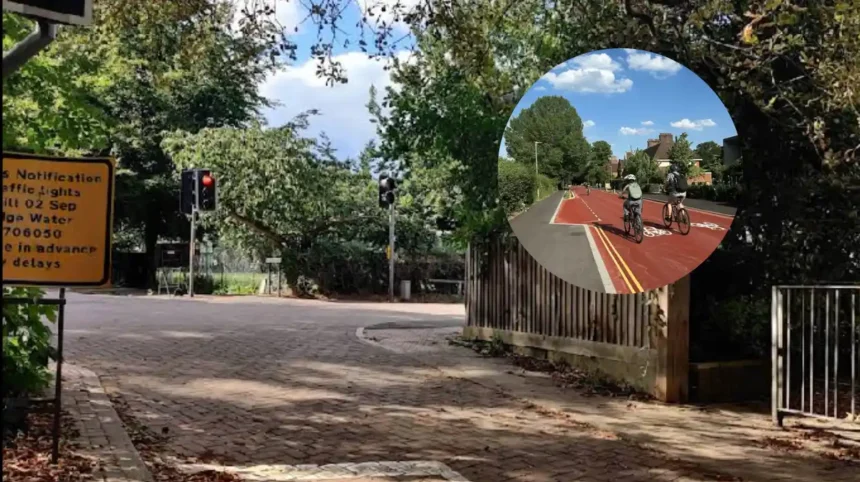
As reported by BBC News, the £2.4m project includes the road being painted red and footpaths being widened to create a more visible and safer environment for active travel. The redesign removed most on-road parking spaces, changed junction configurations, and gave cyclists and pedestrians priority over motor vehicles. This physical transformation converts what was previously a standard residential road into a space where cycling is the dominant mode of transport rather than an afterthought.
The red road marking serves as a visual cue to drivers that they are entering a space where cyclists have precedence, a design approach commonly used in European cycling infrastructure but previously unimplemented in England at this scale. The widened footpaths accommodate increased pedestrian traffic and improve accessibility for people using wheelchairs, pushchairs, and mobility aids.
Why Is This Cycle Street Part of the Greater Cambridge Greenways Scheme?
This development is a component of a broader “greenway” initiative spearheaded by the Greater Cambridge Partnership (GCP), aimed at enhancing walking and cycling routes connecting the city to the village of Comberton. The GCP indicated that these modifications seek to address persistent challenges in the area, stemming from narrow sidewalks and congested intersections that have long frustrated active travel users.
What Are the Greater Cambridge Greenways?
The Greater Cambridge Greenways are a network of 12 active travel routes into Cambridge from surrounding villages, with the aim to provide safe, well-connected active travel links within Cambridgeshire for walkers, cyclists and where possible horse riders. The scheme seeks to provide new and improved walking, cycling and – where appropriate – equestrian links between Cambridge and villages to the north of the city, as well as onward links to employment sites and public transport hubs.
As noted in documentation from Melbourn Parish Council, completion of the Greenways network was currently programmed for 2025, indicating this Adams Road project represents one of the later stages of the broader infrastructure rollout. The GCP held a consultation on newly proposed alignments for related routes last October, which follow routes behind major roads and through villages.
Who Supported and What Perspectives Were Shared About the Project?
The Greater Cambridge Partnership confirmed on their official X (Twitter) account that England’s first “cycle street” has officially opened on Adams Road — a £2.4m redesign that puts people before cars. This messaging emphasises the philosophical shift underlying the project: prioritising human-scale transport over motor vehicle dominance.
What Challenges Did the Area Face Before the Redesign?
According to the GCP, the modifications address persistent regional challenges stemming from narrow sidewalks and congested intersections that created safety hazards for cyclists and pedestrians. With approximately 3,000 cyclists already using Adams Road daily before the redesign, the infrastructure was clearly not keeping pace with actual demand. The narrow footpaths made walking difficult, particularly for families with children, elderly pedestrians, and people with mobility impairments.
The congested intersections presented particular dangers, as cyclists and vehicles competed for limited space at junction points. The redesigned junctions now separate these user groups more effectively, reducing conflict points and improving overall safety.
How Does This Compare to Cycling Infrastructure Elsewhere in England?
This project represents England’s first “cycle street,” distinguishing it from standard cycle lanes or cycle paths that exist elsewhere in the country. The distinction matters: a cycle street integrates cycling into the entire road space rather than confining it to a narrow lane, fundamentally changing how the road functions and how users interact within it.
What Makes a Cycle Street Different From Regular Cycle Lanes?
Unlike traditional cycle lanes that occupy a fraction of road width, a cycle street redesigns the entire roadway to prioritise cyclists. The red paint, removed parking, and redesigned junctions work together to create a cohesive environment where cycling is the default mode of transport. This approach aligns more closely with cycling infrastructure standards in the Netherlands and Denmark, where cycle streets are common.
The innovation lies not just in physical infrastructure but in the legal and cultural framework that establishes cyclist priority throughout the entire road, not just in designated sections.
Background of the Particular Development
The Greater Cambridge Greenways programme emerged from growing recognition that Cambridge’s transportation infrastructure needed fundamental reform to accommodate increasing cycling demand and reduce car dependency. The programme was developed by the Greater Cambridge Partnership (GCP), a local transport body responsible for sustainable transport initiatives in the Cambridgeshire region.
The network comprises 12 active travel routes designed to connect Cambridge with surrounding villages, providing safe alternatives to car travel for commuting, shopping, and leisure. The programme’s aim explicitly includes providing “safe, well-connected active travel links within Cambridgeshire for walkers, cyclists and where possible horse riders”.
Planning for the Greenways involved public consultations, with GCP holding consultations on proposed alignments in October 2024 for routes following alignments behind the A10 and through Milton Village. The Adams Road cycle street represents the culmination of years of planning and represents one of the first completed implementations of the cycle street concept in England.
The £2.4 million investment demonstrates significant financial commitment to active travel infrastructure, with the project completion coinciding with the broader Greenways network’s programmed 2025 completion date. This timing suggests the Adams Road project was among the final major components to be completed in the initial phase of the Greenways programme.
Prediction: How This Development Can Affect Cambridge Residents and Cyclists
What Impact Will This Have on Everyday Cyclists in Cambridge?
The opening of England’s first cycle street is likely to significantly increase cycling rates in western Cambridge by removing safety concerns that previously deterred potential cyclists. With 3,000 cyclists already using Adams Road daily before the redesign, the improved infrastructure could attract thousands more residents who previously avoided cycling due to safety concerns. The red road marking and clear cyclist priority will likely make cycling feel more accessible to families, children, and older adults who might have felt vulnerable on standard roads.
Cyclists can expect smoother, faster journeys with fewer interruptions from vehicles at junctions. The removal of parking spaces and redesigned junctions will reduce conflicts between cyclists and turning vehicles, one of the most dangerous situations cyclists face. This could reduce journey times and increase cycling’s appeal as a reliable commuting option.
How Will This Affect Pedestrians and Local Residents?
Pedestrians will benefit from widened footpaths that improve accessibility and reduce crowding, particularly important for families with pushchairs, wheelchair users, and elderly residents. The prioritisation of people over cars means quieter, safer streets with reduced vehicle speeds and volumes, potentially improving air quality and noise levels for residents living along Adams Road.
However, local residents who previously relied on on-road parking may face challenges as most parking spaces were removed. This could require adjustments to parking habits, potentially increasing reliance on off-street parking or alternative transport modes for short trips.
What Are the Broader Implications for Cambridge’s Transport Future?
The success of this cycle street could catalyse further cycling infrastructure investment across Cambridge and potentially influence other English cities to adopt similar cycle street designs. If the Adams Road project demonstrates measurable increases in cycling rates and reductions in accidents, it may become a template for future infrastructure projects.
The project’s integration into the wider Greenways network suggests Cambridge is building a comprehensive cycling network rather than isolated improvements. This connected approach could transform cycling from a niche activity into a mainstream transport option for Cambridge residents, potentially reducing car dependency and congestion citywide.
For commuters living in villages like Comberton, the greenway connection to Cambridge could make cycling a viable commuting option, potentially reducing traffic on major roads and providing health benefits through increased physical activity. The broader Greenways network, including routes to employment sites and public transport hubs, suggests Cambridge is positioning itself as a leader in sustainable urban transport.
The 2025 completion target for the full Greenways network indicates this is not a one-off project but part of sustained infrastructure transformation. If delivery continues as planned, Cambridge residents can expect increasingly comprehensive cycling and walking infrastructure over the coming years, fundamentally reshaping how people move through the city and its surrounding areas.