
Barnwell Priory and the Leper Chapel of Saint Mary Magdalene are two of the oldest surviving medieval structures in Cambridge, England. Located approximately 1.5 miles east of the historic city centre along Newmarket Road, these sites offer a distinct look into the religious, medical, and social history of medieval Cambridgeshire. While millions of tourists visit the central University of Cambridge colleges each year, these eastern suburban sites provide a quieter, highly factual look at twelfth-century Norman architecture and monastic life. This comprehensive guide provides the necessary historical context, practical visitor information, and geographic details required to plan a successful visit to these ancient locations.
- What is the history of Barnwell Priory and the Leper Chapel in Cambridge?
- Where are Barnwell Priory and the Leper Chapel located?
- How do visitors access the Barnwell Priory site and the Leper Chapel?
- What architectural features can be seen at these medieval sites?
- What is the connection between the Leper Chapel and Stourbridge Fair?
- Who owns and manages these historical properties today?
- When can tourists visit the interiors of these buildings?
- What other historic sites are located near Barnwell and Newmarket Road?
- What are the future conservation plans for these landmarks?
- FAQs About Cambridge’s Ancient Barnwell
- What is the best way to get to the Cambridge Leper Chapel from the city centre?
- Can you go inside Barnwell Priory and the Leper Chapel?
- What is the historical connection between the Leper Chapel and Stourbridge Fair?
- Why was the Cambridge Leper Chapel built so far outside the historic town centre?
- What is actually left to see at the Barnwell Priory site today?
What is the history of Barnwell Priory and the Leper Chapel in Cambridge?
Barnwell Priory and the Leper Chapel were established in the early twelfth century to serve distinct religious and medical functions in medieval Cambridge. The priory housed Augustinian canons, while the chapel provided isolated worship for individuals suffering from leprosy.
The origin of Barnwell Priory dates to the year 1092, when Picot of Cambridge, the Norman Sheriff of Cambridgeshire, founded a house of Augustinian canons near Cambridge Castle. In the year 1112, Pain Peverel relocated the community to Barnwell, a site chosen for its abundant freshwater springs. The canons expanded the site into a massive monastic complex that operated until the Dissolution of the Monasteries under King Henry VIII in the year 1538. Today, only a single thirteenth-century building remains standing on Beche Road, which historians identify as either the priory capella or the Cellarer’s Chequer.
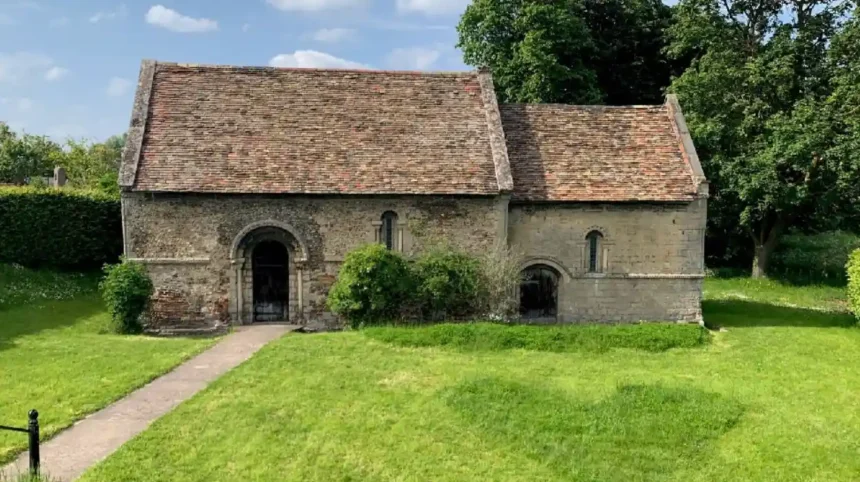
The Leper Chapel of Saint Mary Magdalene, located further east on Newmarket Road, was founded around the year 1125. King Henry I granted the chapel its charter to serve the spiritual needs of the residents of the nearby leper hospital. Leprosy, an infectious disease caused by the bacterium Mycobacterium leprae, required the strict physical isolation of afflicted individuals from the main town population. The chapel stands as one of the oldest complete surviving buildings in Cambridgeshire, retaining its original Norman architectural features, including round-headed windows, a chancel arch, and decorative chevron stone carvings.
As you explore the modern site, you are crossing land with a deep heritage. Read about the full [History of Medieval Cambridgeshire Monasteries and Hospitals] to understand its origins. The survival of these two distinct structures provides physical evidence of how medieval society managed religious devotion and public health outside the town walls.
Where are Barnwell Priory and the Leper Chapel located?
Barnwell Priory and the Leper Chapel are located in the eastern district of Cambridge, England, situated along the Newmarket Road corridor. The remaining priory building sits on Beche Road, while the Leper Chapel stands at the junction of Newmarket Road and Barnwell Road.
The two sites sit approximately 0.5 miles apart from one another within the ancient Barnwell suburb. The Cellarer’s Chequer is positioned at Ordnance Survey grid reference TL 460 589 on Beche Road, surrounded by nineteenth-century residential housing. This location places it roughly 1.2 miles east of the Cambridge Market Square. The area transitions from the dense urban core of the university city to a historically industrial and residential sector.
The Leper Chapel occupies a prominent plot at grid reference TL 471 594, positioned next to the Cambridge United Football Club stadium and the Cambridge North railway line. The chapel sits on the north side of Newmarket Road, coordinates 52.2117° N, 0.1519° E. This specific location was historically isolated from the medieval borough boundaries, separated by open fields and the River Cam, which flows a short distance to the north. This geographical separation was intentional, enforcing the quarantine of hospital patients while maintaining proximity to the major transport route of Newmarket Road.
How do visitors access the Barnwell Priory site and the Leper Chapel?
Visitors can access both historic sites via public bus routes, dedicated cyce paths, pedestrian walkways, or private vehicles from the Cambridge city centre. The locations are open for outdoor viewing daily, with interior access restricted to specific scheduled public events.
Pedestrian and Cycle Routes
Walking from the centre of Cambridge to Barnwell Priory takes approximately 25 minutes along the pedestrian pavements of Newmarket Road. Cyclists can utilise the dedicated, segregated cycle lanes running along Newmarket Road, which connect directly to the Chisholm Trail cycle superhighway. Reaching the Leper Chapel on foot requires an additional 10-minute walk east from the Beche Road priory site.
Public Transport Options
Stagecoach East operates frequent bus services that stop directly adjacent to both historical landmarks. The Number 3 bus route and the Number 11 bus route depart from the Emmanuel Street bus interchange in central Cambridge. Visitors travelling to Barnwell Priory must alight at the River Lane bus stop. Visitors travelling to the Leper Chapel must alight at the Marshall’s Garages bus stop, located less than 100 yards from the chapel entrance.
Vehicular Parking
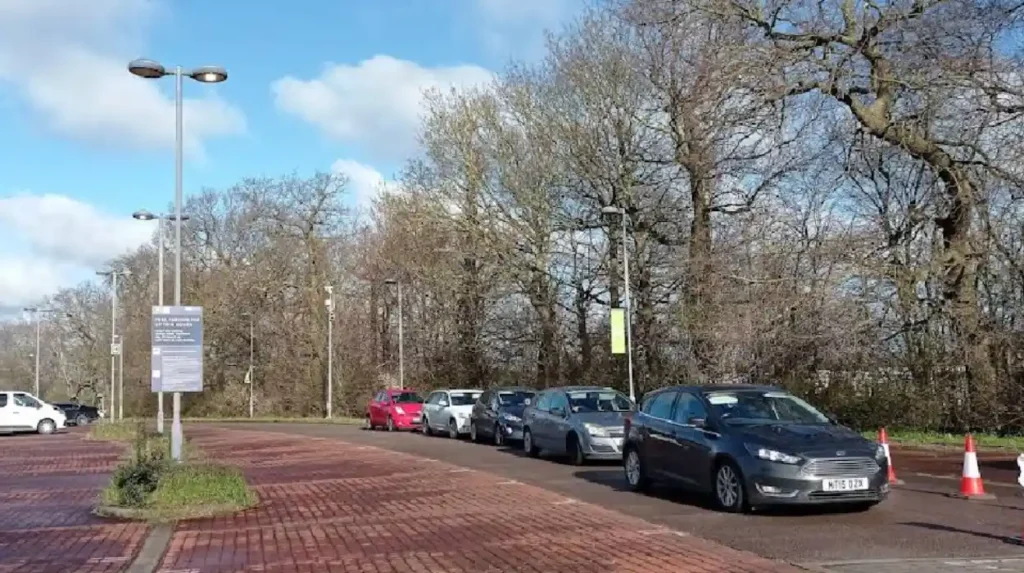
No dedicated visitor parking lot exists at the Barnwell Priory site on Beche Road. Limited on-street parallel parking is available, subject to local resident permit restrictions and electronic pay-and-display parking meters. The Leper Chapel does not possess an onsite car park. Visitors arriving by car can utilise the nearby retail park parking spaces on Newmarket Road, located within a 5-minute walking radius, or use the Newmarket Road Park and Ride facility situated further east.
What architectural features can be seen at these medieval sites?
The sites display distinct architectural elements from the Norman and Early English Gothic periods. The Leper Chapel features twelfth-century Romanesque flint and stone masonry, while the Barnwell Priory fragment displays thirteenth-century vaulted stone ceilings and lancet windows.
The Leper Chapel Architecture
The Leper Chapel of Saint Mary Magdalene is a complete, unaltered example of Norman Romanesque architecture built with a mix of local materials, including flint rubble, freestone dressings, and clunch, a hard variety of chalk. The building structure divides into two distinct sections: a nave measuring approximately 28 feet by 17 feet, and a smaller chancel measuring 18 feet by 14 feet.
Specific architectural details visible on the exterior and interior include:
- The Chancel Arch: A semi-circular stone arch featuring two orders of chevron or zigzag carvings supported by shafts with scalloped capitals.
- Norman Windows: Small, deeply splayed, round-headed windows designed to maximise internal light while maintaining structural integrity.
- External Corbels: A series of carved stone supports along the roofline, some depicting geometric shapes and human faces.
- The South Doorway: An ornate entrance displaying traditional Norman decorative motifs, including roll mouldings and capital carvings.
The Barnwell Priory Fragment (Cellarer’s Chequer)
The surviving fragment of Barnwell Priory, the Cellarer’s Chequer, dates to the mid-thirteenth century, showing the transition to the Early English Gothic style. The building is constructed from field flints and limestone dressings. Its primary architectural feature is the interior roof, which consists of a two-bay rib-vaulted ceiling supported by a central octagonal stone pillar and molded wall corbels. The west wall retains three distinct lancet windows, which are narrow, tall windows with pointed arches characteristic of thirteenth-century English masonry.
What is the connection between the Leper Chapel and Stourbridge Fair?
The Leper Chapel held the legal rights to Stourbridge Fair, which grew to become one of the largest commodities fairs in Europe. King John granted the fair charter to the leper hospital in the year 1211 to generate revenue.
In the early thirteenth century, the hospital faced severe financial deficits due to the high cost of patient care and declining charitable donations. To provide a permanent source of income, King John granted a royal charter allowing the hospital to hold an annual trade fair on the open common land surrounding the chapel site. The fair took place every September, timed around the Feast of the Holy Cross. The chapel authorities collected taxes, stall fees, and customs duties from all merchants who arrived to sell goods.
The fair quickly outgrew its original purpose as a local charity event. By the fourteenth century, the Corporation of Cambridge took control of the fair’s administration, eventually purchasing the full rights in the year 1589. Stourbridge Fair developed into a massive international trading hub lasting up to several weeks each year.
Merchants from across continental Europe gathered in the fields next to the chapel to trade a wide variety of wholesale commodities. These commodities included:
- Textiles: Wool, cloth, silk, velvet, and linen fabrics from Flanders and England.
- Preserved Foods: Salted fish, herring, hops, wholesale grains, and imported spices.
- Raw Materials: Timber, iron, lead, pitch, tar, and domestic charcoal.
The historical significance of the fair is documented by author John Bunyan, who used Stourbridge Fair as the real-world inspiration for “Vanity Fair” in his famous 1678 allegorical novel, The Pilgrim’s Progress. Economist Daniel Defoe visited the fair in the year 1723 and published a detailed account describing it as the greatest fair in the world, noting its immense scale and organized rows of temporary shops.
Who owns and manages these historical properties today?
The Cambridge Past, Present and Future charity owns and manages the Leper Chapel, maintaining it as a public heritage site. The Cambridge City Council maintains ownership of the Barnwell Priory ruin, protecting it under national heritage legislation.
The Leper Chapel passed through various private and institutional owners after the hospital closed. In the year 1816, the architect Thomas Kerrich purchased the building and presented it to the University of Cambridge. The university transferred the ownership of the chapel to the local civic conservation charity, Cambridge Past, Present and Future, in the year 1951. This charity manages the structural upkeep, coordinates public opening hours, removes invasive vegetation, and organises educational visits to ensure the building remains preserved for future generations.
The remaining fragment of Barnwell Priory on Beche Road is owned by the local municipality, the Cambridge City Council. Because of its historical value, Historic England designates the structure as a Scheduled Monument under the Ancient Monuments and Archaeological Areas Act 1979. This legal classification means any structural alterations, archaeological excavations, or maintenance works require explicit permission from the UK Government. The building is kept locked to protect the fragile vaulted interior from vandalism and environmental wear, but the exterior remains fully visible to the public from the pavement.
When can tourists visit the interiors of these buildings?
The interiors of Barnwell Priory and the Leper Chapel are open to the general public during specific heritage festivals, open days, and local cultural events throughout the calendar year. Exterior viewing is accessible without restriction at any time.
While the exterior flint walls can be inspected from the public footpaths 365 days a year, interior entry requires planning around scheduled openings. The Leper Chapel opens regularly for community events, including the annual Cambridge Open Windows event, local art exhibitions, and traditional folk music performances. The Cambridge Past, Present and Future charity lists these specific public opening dates on their official website.
The primary opportunities for interior access include:
- Heritage Open Days: A national festival occurring every September where both the Leper Chapel and the Cellarer’s Chequer open doors to the public for free guided tours.
- The Stourbridge Fair Reenactment: A historical festival held at the Leper Chapel every September that recreates the medieval market with period costumes, traditional crafts, and educational talks.
- Midsummer Common Community Events: Occasional local walking tours organized by the Cambridge Antiquarian Society that include interior viewing of the Beche Road priory vault.
What other historic sites are located near Barnwell and Newmarket Road?
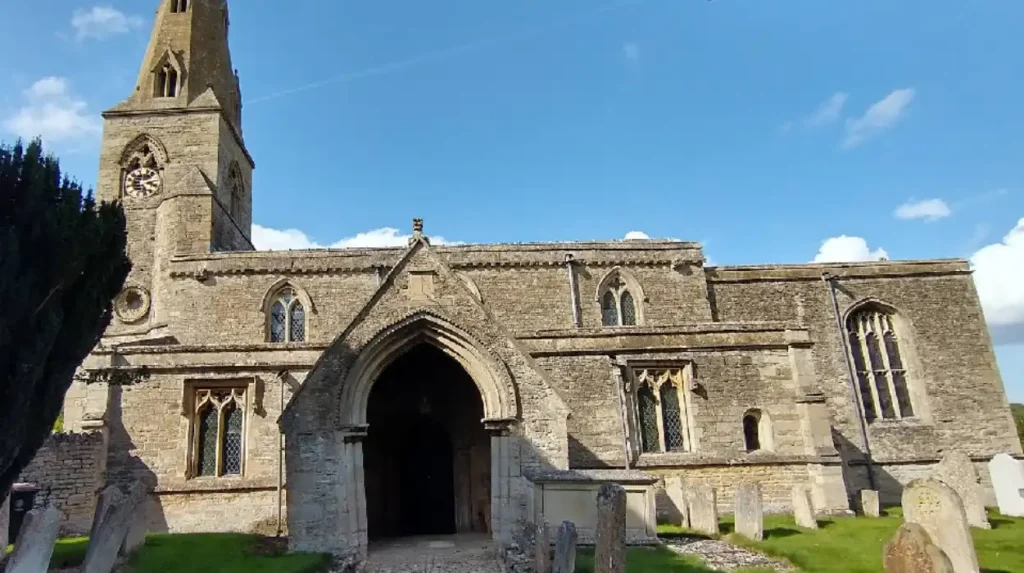
Several significant historical sites sit within a one-mile radius of the Barnwell landmarks, representing different eras of Cambridge’s development. These nearby locations include industrial heritage museums, ancient commons, and historic waterways.
Visitors can combine a trip to the priory and chapel with several nearby points of interest:
The Cambridge Museum of Technology
Situated on Cheddars Lane, less than 0.5 miles from Barnwell Priory, this museum is housed in the original Victorian sewerage pumping station built in the year 1894. It preserves the industrial heritage of the city, featuring original operational steam engines, gas engines, and early electrical printing presses. The site provides an excellent contrast between medieval ecclesiastical history and late-nineteenth-century industrial engineering.
Midsummer Common
This large public common lies directly west of the Barnwell district along the banks of the River Cam. It has been used for communal cattle grazing since the twelfth century, a practice that continues today. The common hosts the annual Midsummer Fair, a gathering granted by a charter from King John in the year 1211, making it contemporary with the history of the Barnwell Priory canons.
The River Cam Boathouses
Walking north from the Leper Chapel across the pedestrian footbridge leads to the main stretch of university boathouses along the River Cam. This area showcases the nineteenth- and twentieth-century rowing traditions of the University of Cambridge colleges, providing a scenic walking path back toward the central city area.
What are the future conservation plans for these landmarks?
The future conservation plans focus on structural preservation, environmental monitoring, and increasing public accessibility through digital tools and community partnerships. Ongoing efforts aim to protect the fragile limestone and flint masonry from traffic pollution.
The Leper Chapel faces ongoing preservation challenges due to its position next to Newmarket Road, a major four-lane arterial traffic route. The vibration from heavy vehicles and the deposition of particulate exhaust pollution cause steady weathering of the external Norman stone carvings. Cambridge Past, Present and Future works alongside structural engineers to monitor the mortar joints and apply sacrificial lime mortars to protect the underlying historic masonry. Future plans include creating enhanced educational signage and digital 3D virtual tours to allow global researchers to examine the interior carvings without accelerating physical wear on the structure.
At the Barnwell Priory site, conservation efforts focus on managing the internal moisture levels of the subterranean vaulting. The Cambridge City Council conducts regular structural surveys to check for water ingress from the surrounding residential gardens. Because the building stands in a dense urban neighbourhood, community clean-up groups work to keep the exterior clear of litter and invasive weeds. These combined efforts ensure that these two distinct monuments continue to stand as educational assets, reminding visitors of the deep layers of social, religious, and medical history that exist beyond the university centre.
FAQs About Cambridge’s Ancient Barnwell
What is the best way to get to the Cambridge Leper Chapel from the city centre?
The quickest way to reach the Leper Chapel from central Cambridge is by taking the Stagecoach Number 3 or Number 11 bus from Emmanuel Street and alighting at the Marshall’s Garages stop. Alternatively, you can cycle along the dedicated lanes on Newmarket Road or take a scenic 25-minute walk. No dedicated car parking is available on-site, so public transport or cycling is highly recommended.
Can you go inside Barnwell Priory and the Leper Chapel?
The exteriors of both buildings are fully visible from the public pavements at any time, but interior access is restricted. The Leper Chapel opens its doors regularly for specific local cultural events, community services, and art exhibitions managed by Cambridge Past, Present and Future. The remaining Barnwell Priory building is kept locked for structural preservation but opens to the public during the annual Heritage Open Days in September.
What is the historical connection between the Leper Chapel and Stourbridge Fair?
In the year 1211, King John granted a royal charter to the leper hospital, allowing it to hold an annual trade fair to generate funds for patient care. This event eventually grew into Stourbridge Fair, which became one of the largest and most important wholesale commodities markets in medieval Europe. The fair took place in the open fields directly surrounding the chapel, attracting international merchants for centuries.
Why was the Cambridge Leper Chapel built so far outside the historic town centre?
The Leper Chapel of Saint Mary Magdalene was intentionally built 1.5 miles east of the medieval town boundaries to enforce physical isolation. Because leprosy was a highly feared and poorly understood infectious disease, medieval public health customs required patients to live and worship outside the main town walls. This geographic separation allowed the hospital to quarantine the afflicted while remaining close to the major transport route of Newmarket Road.
What is actually left to see at the Barnwell Priory site today?
The only surviving structure of the massive medieval Barnwell Priory complex is a single thirteenth-century stone building on Beche Road, known as the Cellarer’s Chequer. The rest of the monastery was demolished in the year 1538 during the Dissolution of the Monasteries under King Henry VIII. Today, visitors can view the exterior flint masonry, early English lancet windows, and the remains of its historical vaulted roof layout from the street.