

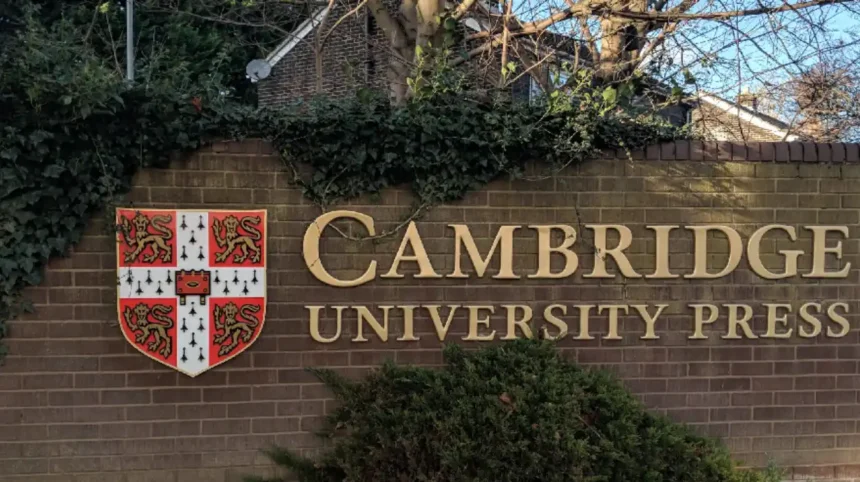
Cambridge University Press operates from Cambridge, a historic city in eastern England, where it has maintained continuous publishing operations since 1534. The press occupies multiple facilities throughout Cambridge, with its main headquarters located on Shaftesbury Road and a significant presence on the Edinburgh Building site. Cambridge serves as the operational heart for the world’s oldest publishing house, positioned 50 miles north of London in Cambridgeshire county. The city’s concentration of academic excellence, historical infrastructure, and intellectual resources makes it an irreplaceable foundation for the press’s global scholarly mission.
- What Is Cambridge University Press, and Where Did It Originate?
- Where are the Cambridge University Press Facilities Located in Cambridge City?
- Why Does Cambridge University Press Remain in Cambridge City?
- How Does Cambridge City’s History Connect to Academic Publishing?
- What Types of Publications Come from Cambridge University Press City?
- How Does Cambridge University Press Impact Global Education from Its City Location?
- What Makes Cambridge City Essential for University Press Operations?
- How Has Cambridge University Press Evolved Within Its City Context?
- What Role Does Cambridge City Play in Future Publishing Developments?
- FAQs About Cambridge University Press City
- Is Cambridge University Press the same as Cambridge University?
- Can anyone visit Cambridge University Press in Cambridge?
- Why is Cambridge University Press located in Cambridge and not London?
- Does Cambridge University Press only publish academic books?
- How old is Cambridge University Press, and where has it been located?
What Is Cambridge University Press, and Where Did It Originate?
Cambridge University Press represents the publishing department of the University of Cambridge, established through a letters patent granted by King Henry VIII in 1534. The press holds the distinction of being the oldest continuously operating university press and publishing house globally. Cambridge University Press functions as both a charitable enterprise under the university’s aegis and a major international publisher of academic, educational, and research materials. The organization publishes over 50,000 titles across print and digital formats, serving scholars, students, and general readers in more than 200 countries.
The press originated in Cambridge because the university required printing capabilities for theological and academic texts during the Reformation period. King Henry VIII’s charter authorized the university to print and sell books, creating a permanent institutional connection between Cambridge and scholarly publishing. This royal privilege positioned Cambridge as one of only three entities in England with unrestricted printing rights during the 16th century. The geographical anchoring in Cambridge city established patterns of collaboration between publishers and university scholars that persist today. Early printing operations centered near the university’s colleges, creating a publishing infrastructure that evolved into today’s modern facilities.
Where are the Cambridge University Press Facilities Located in Cambridge City?
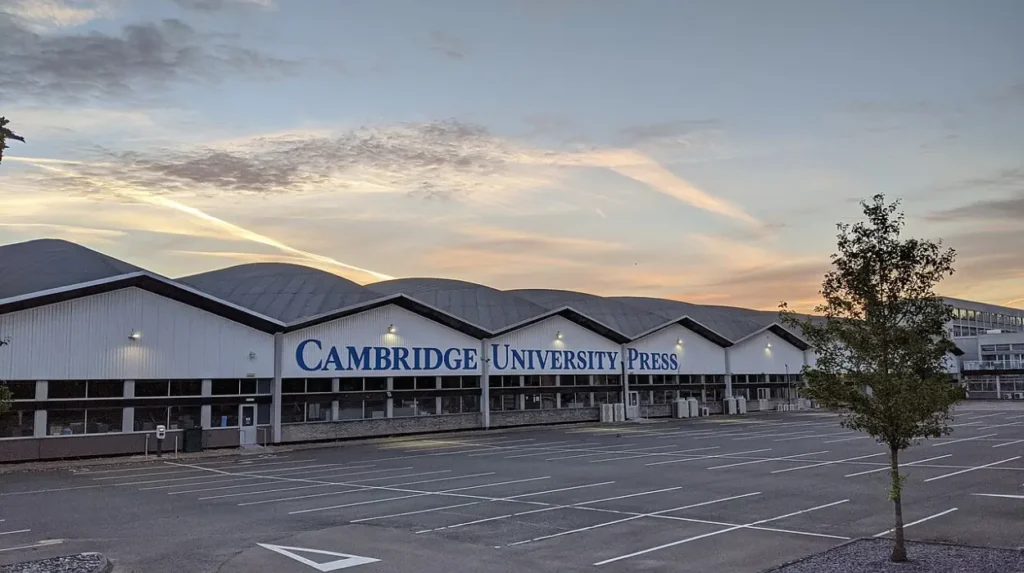
Cambridge University Press maintains its primary headquarters at Shaftesbury Road, Cambridge CB2 8BS, which houses executive offices, editorial departments, and administrative functions. The Edinburgh Building on Shaftesbury Road serves as another major facility, containing production departments, warehousing operations, and distribution infrastructure. The press operates the Cambridge University Press Bookshop at 1 Trinity Street, Cambridge CB2 1SZ, positioned in the historic city center adjacent to university colleges. Additional facilities exist throughout Cambridge for specialized functions, including digital content development, printing coordination, and archive preservation.
The Shaftesbury Road campus encompasses approximately 11 acres of operational space dedicated to publishing activities. This location sits approximately 1.5 miles southeast of Cambridge city center, accessible via public transportation and major roadways. The Edinburgh Building complex, completed in the 1980s, consolidates multiple publishing functions that previously operated from scattered locations across Cambridge. The Trinity Street bookshop occupies a historic storefront that has served book retail purposes for over 150 years, providing public access to press publications. The geographical distribution of these facilities reflects Cambridge’s compact urban structure and the press’s integration into the city’s academic ecosystem.
Why Does Cambridge University Press Remain in Cambridge City?
Cambridge University Press maintains its Cambridge city location due to its constitutional relationship with the University of Cambridge, which requires physical and operational proximity. The press draws intellectual resources from Cambridge’s concentration of 31 colleges, 150 departments, and approximately 12,000 academic staff members. Cambridge city provides access to specialized talent in editing, scholarly communication, design, and academic publishing unavailable in comparable density elsewhere. The location facilitates collaboration between press editors and university faculty who serve as authors, peer reviewers, and subject matter experts across disciplines.
Historical infrastructure represents another retention factor, as Cambridge contains specialized facilities, archives, and institutional knowledge accumulated over 490 years of publishing operations. The city’s global reputation for academic excellence enhances the press’s credibility and attracts high-quality manuscript submissions from researchers worldwide. Cambridge’s status as a UNESCO Creative City of Literature reinforces its identity as a publishing center. The press benefits from Cambridge’s transportation links, including direct rail service to London in 50 minutes and proximity to Stansted Airport for international operations. The university’s governance structure requires the press to operate as a university department rather than an independent commercial entity, necessitating Cambridge-based operations.
How Does Cambridge City’s History Connect to Academic Publishing?
Cambridge established itself as a center of learning in 1209 when scholars from Oxford migrated to the city following town-gown conflicts. The university’s growth created demand for books, initially met through manuscript production and later through early printing technology. The first Cambridge printing press operated from 1521 to 1522 under John Siberch, though it failed commercially. King Henry VIII’s 1534 charter created permanent printing authorization that distinguished Cambridge from other English cities where printing faced restriction.
The Stationers’ Company in London monopolized most English printing until the late 17th century, making Cambridge one of the few legal alternatives for certain publications. This privileged status attracted printers, booksellers, and papermakers to establish Cambridge operations, building a publishing ecosystem. The Cambridge University Press, as a formal institution, emerged in 1584 when the university appointed its first official printer, Thomas Thomas. By 1698, Cambridge operated under the Printing Act as one of three authorized printing locations in England alongside London and Oxford. The city’s publishing heritage created specialized labor markets, distribution networks, and commercial relationships that reinforced Cambridge’s position as a publishing center through subsequent centuries.
What Types of Publications Come from Cambridge University Press City?
Cambridge University Press produces academic monographs representing original research across the humanities, social sciences, physical sciences, and life sciences. The press publishes approximately 400 peer-reviewed academic journals covering disciplines from archaeology to zoology, making it one of the largest journal publishers globally. Educational materials constitute a major output category, including textbooks, course materials, and assessment resources for primary through higher education levels. English language teaching materials represent a significant publishing focus, with Cambridge producing curricula, dictionaries, and learning resources used in over 130 countries.
Reference works, including dictionaries, encyclopedias, and handbooks, form another publication category, with titles such as the Cambridge Dictionary serving millions of users digitally. The press publishes Bibles and religious texts, maintaining a tradition dating to its first complete Bible printing in 1629. Digital publications include online journals, e-books, databases, and learning platforms that account for increasing revenue shares. Cambridge also produces trade books for general audiences on topics including history, science, and current affairs, though academic titles remain the core focus. The press publishes approximately 2,000 new titles annually while maintaining a backlist of over 50,000 active titles available globally.
How Does Cambridge University Press Impact Global Education from Its City Location?
Cambridge University Press reaches over 1 billion learners annually through educational materials, assessments, and digital platforms distributed internationally. The press collaborates with Cambridge Assessment to provide examination materials used by 8 million candidates across 170 countries each year. English language teaching resources published in Cambridge influence curriculum development and language instruction methodology in education systems worldwide. Research publications from Cambridge disseminate scholarly work that shapes academic discourse, policy development, and scientific advancement across disciplines.
The press operates as a nonprofit charitable enterprise, reinvesting surplus revenue into university research, libraries, and academic programs. Since 2000, Cambridge University Press has contributed over 1 billion pounds to the university’s academic mission through profit transfers. Open access initiatives from Cambridge make research freely available, with approximately 30 percent of journal articles now published under open access models. The press’s editorial standards and peer review processes establish quality benchmarks that influence academic publishing practices globally. Cambridge’s digital platforms serve researchers in developing countries through discounted or free access programs, expanding knowledge distribution beyond traditional commercial markets.
What Makes Cambridge City Essential for University Press Operations?
Cambridge provides institutional stability through the university’s 813-year continuous operation and established governance structures. The city concentrates specialized expertise in academic publishing, with workforce skills developed through generations of industry presence. Cambridge’s intellectual environment supports quality control, as proximity to leading scholars enables rigorous peer review and editorial oversight. The university’s global reputation attracts international talent, creating diverse editorial teams and multinational perspectives within Cambridge-based operations.
Physical archives in Cambridge contain historical records, original manuscripts, and institutional knowledge documenting five centuries of publishing evolution. The city’s scale allows integrated operations where editorial, production, marketing, and distribution functions coordinate efficiently. Cambridge’s conservation areas and heritage protection ensure preservation of historic publishing sites and architectural assets. The press maintains relationships with approximately 60 Cambridge-based printing and binding firms, creating local supply chain resilience. University governance requires the press to maintain Cambridge operations as a condition of its charitable status and royal charter authorization.
How Has Cambridge University Press Evolved Within Its City Context?
Cambridge University Press transitioned from small-scale printing to industrial publishing during the 19th century, constructing the Pitt Building in 1833 to house expanding operations. The press established international offices beginning in the early 20th century, opening branches in New York, Melbourne, and other cities while retaining Cambridge headquarters. Digital transformation accelerated after 2000, with Cambridge building online platforms, databases, and e-publishing systems managed from city facilities. The press acquired specialized publishers and imprints, integrating them into Cambridge operations while maintaining centralized editorial control.
Recent decades brought the consolidation of scattered Cambridge facilities into purpose-built complexes on Shaftesbury Road, modernizing infrastructure while maintaining city presence. The press invested over 100 million pounds in digital systems and content platforms between 2010 and 2020, developed and operated from Cambridge. Workforce composition shifted toward digital specialists, data analysts, and platform developers, though Cambridge remains the primary employment location with approximately 2,500 staff. The press expanded open access publishing, developing infrastructure in Cambridge to support new business models and funding arrangements. Cambridge continues serving as the innovation center where the press develops new publishing formats, distribution methods, and scholarly communication tools.
What Role Does Cambridge City Play in Future Publishing Developments?
Cambridge serves as the research and development hub where the press experiments with artificial intelligence applications, machine learning for content discovery, and automated publishing workflows. The city hosts partnerships between the press and university computer science, engineering, and linguistics departments exploring publishing technology innovations. Cambridge provides access to start-up ecosystems and technology talent supporting digital transformation initiatives. The press maintains Cambridge as the governance center where strategic decisions, editorial policies, and academic standards originate.
Future investments in Cambridge infrastructure focus on sustainable operations, with plans for carbon-neutral facilities and environmentally responsible production systems. The press continues expanding Cambridge employment in digital content development, data science, and platform engineering roles. Open research initiatives based in Cambridge explore new peer review models, preprint systems, and research integrity tools. The city remains essential for maintaining institutional identity and connection to the university’s academic mission despite increasing global operations. Cambridge University Press commits to Cambridge as its permanent operational headquarters, anchoring its future development to the city’s academic ecosystem and historical publishing legacy.
FAQs About Cambridge University Press City
Is Cambridge University Press the same as Cambridge University?
No, Cambridge University Press is not the same as Cambridge University, though they are closely connected. Cambridge University Press operates as the publishing department of the University of Cambridge, functioning under the university’s governance structure. The press holds charitable status and exists to support the university’s academic mission through scholarly publishing.
Can anyone visit Cambridge University Press in Cambridge?
Yes, the public can visit the Cambridge University Press Bookshop located at 1 Trinity Street in central Cambridge. This retail location provides access to press publications, university merchandise, and academic materials. However, the main publishing facilities on Shaftesbury Road, including the headquarters and Edinburgh Building, are operational offices not generally open for public tours. The bookshop operates during standard retail hours and welcomes visitors interested in purchasing or browsing Cambridge publications.
Why is Cambridge University Press located in Cambridge and not London?
Cambridge University Press remains in Cambridge due to its constitutional relationship with the University of Cambridge, established by royal charter in 1534. The press requires physical proximity to university scholars who serve as authors, editors, and peer reviewers across academic disciplines. Cambridge provides access to specialized academic talent, historical publishing infrastructure, and institutional resources unavailable elsewhere.
Does Cambridge University Press only publish academic books?
No, Cambridge University Press publishes a diverse range of materials beyond academic books, though scholarly works remain the core focus. The press produces approximately 400 peer-reviewed journals, educational textbooks, English language teaching materials, and assessment resources used globally. Cambridge publishes reference works, including dictionaries and encyclopedias, religious texts, including Bibles, and digital learning platforms.
How old is Cambridge University Press, and where has it been located?
Cambridge University Press was established in 1534 through a royal charter from King Henry VIII, making it 490 years old and the oldest continuously operating publishing house in the world. The press has maintained operations in Cambridge, England, throughout its entire history, initially operating from locations near university colleges. Modern facilities consolidated on Shaftesbury Road in Cambridge during the 20th century, though the press expanded international offices in cities including New York, Melbourne, and Singapore. Despite global operations, Cambridge remains the headquarters and primary operational location since the press’s founding in the 16th century.