

Key Points
- A vehicle struck a railway bridge near Dullingham in Cambridgeshire, blocking all lines and causing major disruption to train services.
- The incident was reported at 05:47 on Tuesday, 3 February 2026, with disruption expected until at least 07:30.
- Affected routes include services between Cambridge and Ipswich/Harwich International, with trains between Cambridge and Newmarket cancelled or revised.
- Greater Anglia trains were diverted via Ely where possible; Newmarket and Dullingham stations not served.
- Network Rail assessed the bridge and confirmed it safe, allowing lines to reopen, though some delays persisted.
- Greater Anglia advised passengers to check journeys, offered tickets on Great Northern services between Ely and Cambridge, and allowed advance ticket holders to travel earlier/later.
- This incident compounded other disruptions, including a broken-down engineering train near Diss on the Norwich-London line.
- Cambridgeshire has a history of bridge strikes, notably Ely’s Stuntney Road bridge, Britain’s “most bashed” with 18 strikes in 2023-24.
- Vehicle strikes caused over 100 days of passenger delays UK-wide last year, costing £20 million in repairs and disruptions.
- Authorities urge drivers to check vehicle heights and signs to prevent future incidents.
Cambridgeshire (Cambridge Tribune) February 7, 2026 -A vehicle collision with a railway bridge near Dullingham has blocked all lines, sparking widespread train disruptions across Cambridgeshire routes operated by Greater Anglia. Services between Cambridge and Ipswich, including to Harwich International, faced cancellations and diversions early on 3 February, with Network Rail expecting delays until mid-morning.
- Key Points
- What Caused the Disruption Near Dullingham?
- Which Train Routes Were Affected?
- How Long Did the Disruption Last?
- What Advice Did Greater Anglia and National Rail Give?
- Is This a Common Issue in Cambridgeshire?
- What Measures Prevent Future Bridge Strikes?
- What Is the Broader Impact on Passengers?
- How Does Network Rail Respond to Such Incidents?
What Caused the Disruption Near Dullingham?
National Rail Enquiries reported the incident at 05:47 on 3 February 2026, stating:
“A vehicle striking a bridge in the Dullingham area means all lines are blocked.”
As a result, trains running between Cambridge and Newmarket were cancelled or revised.
Rail Business Daily detailed that
“a lorry became wedged under a bridge near Dullingham in Cambridgeshire, blocking the train line,”
impacting routes between Ipswich and Cambridge. Greater Anglia confirmed it was
“working to arrange alternative travel options.”
Network Rail’s assessment, as per BBC News, found the bridge safe after the strike, enabling lines to reopen, though diversions via Ely persisted temporarily.
Which Train Routes Were Affected?
Routes between Cambridge and Ipswich/Harwich International bore the brunt, per National Rail. Trains to/from Newmarket and Dullingham were not served, with diversions routing via Ely.
Greater Anglia services from Ipswich to Cambridge were redirected to Ely, contributing to ongoing delays. The update was last issued at 06:11 on 3 February.

This occurred amid broader East Anglia issues, including a broken-down engineering train near Diss blocking Norwich to London Liverpool Street.
How Long Did the Disruption Last?
Disruption was forecast until 07:30 on 3 February, with lines blocked from 05:47. BBC reported Network Rail’s evaluation in Dullingham confirmed safety, restoring operations, but “some delays remain.”
Rail Business Daily noted temporary blockages, with Greater Anglia managing alternatives swiftly.
What Advice Did Greater Anglia and National Rail Give?
National Rail advised:
“If you are travelling from Newmarket or Dullingham, please use the help point so that Greater Anglia can arrange alternative arrangements for you.”
Tickets were valid on Great Northern between Ely and Cambridge, and advance holders could travel earlier or later trains.
Greater Anglia urged passengers to
“verify their travel plans prior to departing from home.”
Compensation was available for delays, requiring tickets and journey notes.
Check the National Rail Enquiries Journey Planner for real-time updates.
Is This a Common Issue in Cambridgeshire?
Cambridgeshire bridges frequently suffer strikes. BBC News highlighted Ely’s Stuntney Road bridge as Britain’s “most bashed,” with 18 incidents in 2023-24, previously ranking fourth and fifth nationally.
Residents claim more frequent hits, including a February closure after a removal van wedged underneath; Cambridgeshire Police noted:
“Thankfully bridge has .”
Lorries carrying tomatoes and produce have also lodged there.
Stonea Road bridge was repaired in February 2021 with a new protection beam, lowering clearance to 2m; Ellie Burrows, Network Rail’s Anglia route director, said: “The disruption this incident caused shows why it’s so important for motorists to know the height of the vehicle they are driving… Motorists should do their bit too and wise up, size up.”
UK-wide, 1,532 strikes last year caused over 100 days of delays and £20 million costs.
What Measures Prevent Future Bridge Strikes?
Network Rail installs protection beams, as at Stonea, to minimise disruptions. Cambridgeshire County Council updates signage, e.g., 2m at Stonea.
Network Rail urges:
“Operators and drivers to properly plan their routes, know the height of their vehicles and be vigilant for road signs.”
They report repeat offenders to Traffic Commissioners and recover costs.
Ely bridge inspections post-strikes confirmed no structural damage in recent October 2025 incidents (20, 22, 24).
What Is the Broader Impact on Passengers?
Strikes equate to over 100 days of delays annually UK-wide. In Cambridgeshire, repeated Ely incidents block Station Road and cause hours-long closures.
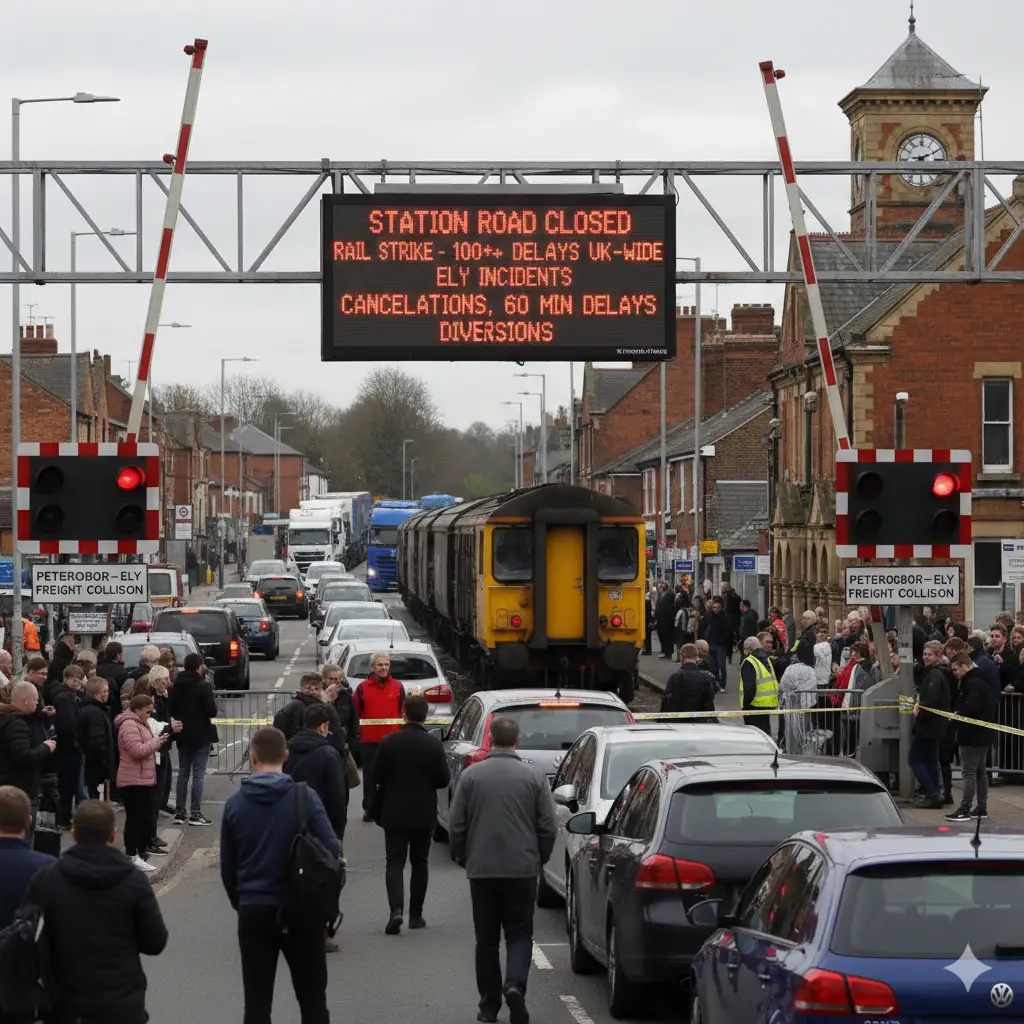
Passengers face cancellations, 60-minute delays, and diversions, as in past Peterborough-Ely freight train-level crossing collisions.
How Does Network Rail Respond to Such Incidents?
Teams conduct “detailed inspections” post-strike, confirming safety before reopening. In Dullingham, evaluation allowed resumption.
Network Rail monitors via X hashtag #Dullingham.
This latest Dullingham event underscores persistent risks in Cambridgeshire’s rail network, where low bridges and tall vehicles clash routinely, urging greater driver vigilance to safeguard vital commuter links.