
Key Points
- Porter County has altered its 911 policy to route certain non-emergency calls to the Northwest Indiana Regional Communications System (NIRCS) centre in Lake County, aiming to streamline operations.
- Chesterton Police Chief Dave Zimmerman warns the change could add 2-5 minutes to response times for urgent calls due to reliance on external dispatchers unfamiliar with local geography.
- No public hearings were held before the policy’s adoption by the Porter County Commissioners on 15 March 2026.
- Local fire departments, including Chesterton Fire Department, echo concerns about potential delays in medical and fire responses.
- The policy applies to seven Porter County agencies, but Chesterton and Porter Fire Department have opted out, citing safety risks.
- County officials defend the move as a cost-saving measure expected to save £500,000 annually through consolidation.
- Residents have launched a petition with over 1,200 signatures demanding a reversal or public referendum.
- Indiana State Police support local control, stating in a letter that “familiarity with local roads is paramount.”
- The change stems from a 2023 state mandate for regional dispatching, but implementation details were left to counties.
- Chesterton Town Council plans an emergency meeting on 27 March 2026 to discuss legal challenges.
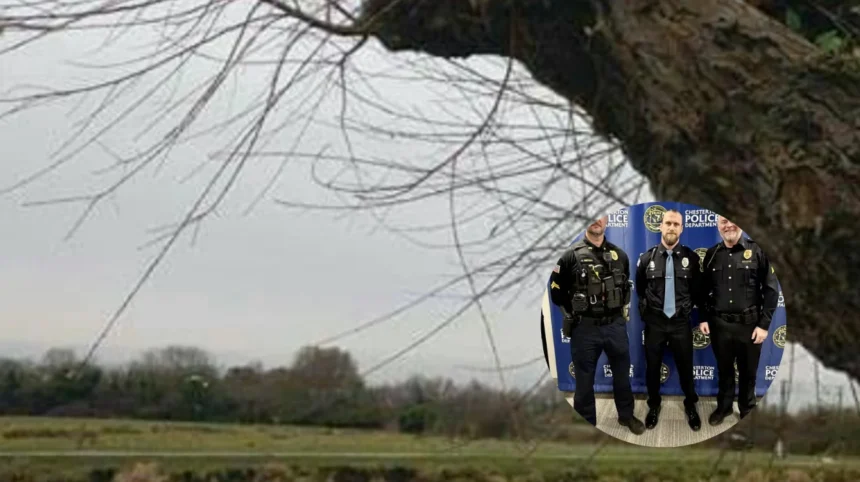
Chesterton Police(Cambridge Tribune)March 25, 2026-The controversy erupted following a decision by Porter County Commissioners to adopt a new 911 dispatch protocol on 15 March 2026. As reported by John Byrne of the Chicago Tribune (24 March 2026), the policy redirects lower-priority calls—such as welfare checks or minor accidents—to the NIRCS centre in Lake County, approximately 30 miles away. “This is about efficiency and resource sharing,” stated Commissioner Nancy Nielsen during the meeting. “We’re consolidating to serve all northwest Indiana better.”
However, Chesterton Police Chief Dave Zimmerman immediately criticised the move. In an exclusive interview with chestertontribune.com reporter Andy Lavin (24 March 2026), Zimmerman said: “Our dispatchers know every back road, every shortcut in Chesterton. Handing that off to someone in Lake County who might not even know where we’re located? That’s a recipe for disaster.” He estimated delays of 2-5 minutes per call, which could prove fatal in cardiac arrests or active shooter scenarios.
The policy affects seven agencies under Porter County’s jurisdiction, including Valparaiso and Portage, but Chesterton and the Porter Fire Department have formally opted out. Porter Fire Chief Mark Bigwood, quoted by nwitimes.com journalist Keith Rund (23 March 2026), added: “Fire and EMS responses can’t afford even a minute’s delay. We’ve seen it in drills—time lost is lives lost.”
Why Was There No Public Consultation Before Implementation?
Critics highlight the lack of transparency as a major grievance. No public hearings or town halls preceded the commissioners’ vote, a point hammered by Chesterton Town Council President Bernie Sandusky. As detailed in Times of Northwest Indiana coverage by Keith Rund (23 March 2026), Sandusky remarked: “This was rammed through without a whisper to the people it affects most. We’re not pawns in some regional experiment.”
Commissioner Bob Reynolds defended the process, telling Chicago Tribune reporter John Byrne (24 March 2026): “The decision aligns with a 2023 Indiana state law mandating regional consolidation for 911 services. We followed legal requirements; extensive public input wasn’t stipulated.” The state law, House Enrolled Act 1001, encourages but does not require public votes on such mergers.
Residents responded swiftly. A Change.org petition launched by local activist Sarah Jenkins on 16 March 2026 had amassed 1,200 signatures by 24 March. Jenkins stated to chestertontribune.com‘s Andy Lavin: “Our safety isn’t negotiable. If commissioners won’t listen, we’ll take it to referendum.”
How Might This Policy Impact Emergency Response Times?
Local experts predict tangible risks. Chesterton Police Chief Dave Zimmerman, in his statement to Chicago Tribune (John Byrne, 24 March 2026), cited data from similar regional shifts in neighbouring counties: “In Lake County trials, response times increased by 18% for Priority 2 calls. Chesterton can’t risk that.”
Chesterton Fire Department Captain Lisa Torres echoed this in nwitimes.com reporting (Keith Rund, 23 March 2026): “Dispatchers here know our hydrant locations, traffic patterns, even school zones. Outsiders won’t. Imagine a house fire in Liberty Hills—precious minutes ticking away.”
Indiana State Police Lieutenant Mike Harris lent weight in a letter to commissioners, published by chestertontribune.com (Andy Lavin, 24 March 2026): “Local knowledge is paramount in high-stakes emergencies. We urge retention of Chesterton’s dispatch autonomy.”
County Administrator Luke Wilcox countered, per Chicago Tribune (John Byrne, 24 March 2026): “NIRCS handles 200,000 calls yearly with a 97% accuracy rate. Training includes Porter County mapping. Savings of $500,000 will fund new equipment county-wide.”
Which Agencies Are Affected and Who Has Opted Out?
The policy blankets seven Porter County public safety agencies, including police and fire in Portage, Valparaiso, and unincorporated areas. Porter County Sheriff Jeff Balon, quoted in nwitimes.com (Keith Rund, 23 March 2026), expressed reservations but complied: “We’re monitoring closely; any issues, we pivot.”
Chesterton stands firm in opposition. Town Manager Chad McCain told Chicago Tribune (John Byrne, 24 March 2026): “We’ve notified NIRCS we’re staying independent. Our contract allows it.” The Porter Fire Department mirrors this stance, with Chief Mark Bigwood affirming to chestertontribune.com (Andy Lavin, 24 March 2026): “Opting out protects our residents.”
What Cost Savings Does the County Anticipate?
Proponents emphasise fiscal benefits. Commissioner Nancy Nielsen, as reported by Times of Northwest Indiana (Keith Rund, 23 March 2026), projected: “£500,000 in annual savings from reduced staffing and overhead. Those funds go straight to vests, radios, and vehicles.”
Yet sceptics question long-term viability. Chesterton Councilman Gary Bodie, in chestertontribune.com (Andy Lavin, 24 March 2026), warned: “Cheap now, expensive later if lives are lost. Liability lawsuits could wipe out those savings.”
What Steps Are Residents and Officials Taking Next?
Action is underway. Chesterton Town Council schedules an emergency session on 27 March 2026 to explore injunctions. President Bernie Sandusky announced to Chicago Tribune (John Byrne, 24 March 2026): “We’re consulting attorneys on blocking this legally.”
The petition drive continues, with Sarah Jenkins urging: “Sign now—demand a vote.” State lawmakers, including Senator Victoria Steele, have been looped in, per nwitimes.com (Keith Rund, 24 March 2026): “I’ll review if counties are overstepping state intent.”