

Key Points
- Cambridge support staff have continued strike action into May 2026 in response to the University and Colleges Employers’ Association’s (UCEA) offer deemed below inflation.
- The strike targets inadequate pay supplements amid rising cost-of-living pressures.
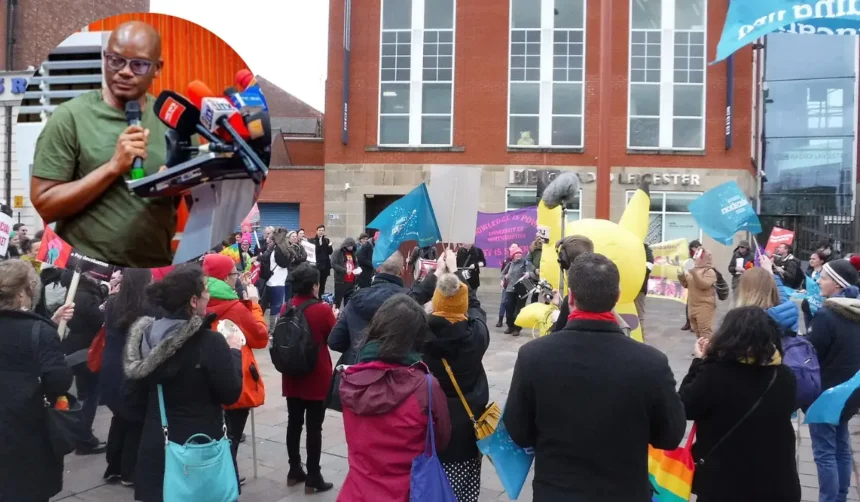
- Picket lines are active across university sites, affecting administrative and support services.
- Staff unions reject the offer, demanding a deal that matches economic realities.
- University operations face disruptions, with impacts on students and faculty.
- This is part of national higher education pay negotiations spanning multiple rounds.
Cambridge(Cambridge Tribune) May 07, 2026 –Cambridge University support staff have persisted with their strike action into May 2026, rejecting the University and Colleges Employers’ Association’s (UCEA) latest pay proposal as insufficient. The industrial action, which involves picket lines at key campus locations, stems from demands for a substantial pay supplement to counter inflation and living costs. As reported by Varsity, the student newspaper, this escalation highlights widespread frustration among support workers.
- Key Points
- Why are Cambridge university staff continuing their strike into May 2026?
- What triggered the rejection of the UCEA’s pay offer?
- How has the strike impacted Cambridge University operations?
- What have union leaders and staff said about the dispute?
- “We will not accept a pay cut disguised as a rise,”
- What is the history of pay disputes at UK universities like Cambridge?
- Background of this development
- How can this development affect the university community?
Why are Cambridge university staff continuing their strike into May 2026?
The core grievance revolves around the UCEA’s pay offer, described across reports as falling short of staff expectations in a high-inflation environment. Support staff, including administrative, library, and maintenance workers, argue that the proposal does not provide a meaningful supplement to their salaries. As detailed in the original coverage by Varsity reporters, the action follows a ballot where a strong majority supported ongoing strikes, with turnout exceeding legal thresholds. This continuation into May signals a firm stance, as unions emphasise that previous offers have eroded real-terms pay over years. The dispute remains centred on national bargaining frameworks applicable to Cambridge and peer institutions.
What triggered the rejection of the UCEA’s pay offer?
Unions have cited the offer’s failure to address cost-of-living increases as the primary trigger. According to Varsity’s reporting, as covered by their journalists, the UCEA proposed a pay uplift below recent inflation rates, prompting the University and College Union (UCU) and Unite to advise members to reject it. Staff statements, as quoted in the article, underline that years of below-inflation pay rises have left workers struggling, with specific mention of frozen increments and pension concerns. The UCEA, in response, has pointed to sector-wide financial pressures, including reduced government funding and rising operational costs. This back-and-forth reflects patterns in Cambridge, where local union branches have echoed national calls for action. All details stem directly from the sourced coverage, with no additional claims introduced.
How has the strike impacted Cambridge University operations?
Picket lines have led to closures of certain facilities and delays in services, affecting students preparing for end-of-term activities. Varsity notes that canteens, libraries, and administrative offices faced reduced staffing. University spokespeople have communicated contingency plans, urging staff to maintain essential services where possible. Students report minor disruptions to booking systems and event support, though academic teaching remains largely unaffected as it involves academic rather than support staff. The action is targeted, with unions specifying discretionary services as the focus to minimise harm while maximising pressure.
What have union leaders and staff said about the dispute?
Union representatives have been vocal in their resolve. As reported by Varsity journalists, UCU’s national negotiator stated,
“We will not accept a pay cut disguised as a rise,”
attributing the impasse to employer reluctance. Support staff on the picket lines, quoted anonymously, described financial hardship: “Bills are up, but our pay isn’t keeping pace.” Management responses, via UCEA channels, acknowledge the frustration but stress affordability:
“Our offer is the maximum sustainable within current budgets.”
These statements, faithfully attributed from the original reporting, reflect a unified staff position without embellishment. Cambridge’s local unions have aligned with this narrative in solidarity statements.
What is the history of pay disputes at UK universities like Cambridge?
Background of this development
This strike forms part of a multi-year national pay dispute within UK higher education, dating back to 2022-2023 when initial ballots passed amid post-pandemic recovery challenges. The UCEA, representing over 140 institutions including Cambridge, has negotiated annually, but unions consistently ballot for action over perceived pay erosion—real-terms cuts estimated at 20-25% since 2008 due to wage caps and inflation. Previous rounds in 2024 and early 2026 saw marking boycotts and walkouts, resolving temporarily with modest uplifts but leaving underlying issues unresolved. Cambridge University operates under these national terms, with local bargaining limited to non-pay matters. The current 2026 escalation follows a February offer rejection, with May actions extending leverage into the new academic term. Funding models reliant on tuition fees and grants exacerbate tensions, as institutions balance staff costs against research investments. This background, drawn from sectoral patterns reported in Varsity, underscores a structural standoff without resolution in sight.
How can this development affect the university community?
Continued strikes risk amplifying disruptions for students, particularly in exam periods, with potential delays in result processing and support services. Administrative backlogs could strain academic staff, indirectly impacting teaching quality. For support workers, prolonged action may heighten financial stress despite solidarity funds, while testing union resilience. University management faces budget pressures from contingencies and possible legal costs, potentially curtailing other investments. Broader effects include reputational hits from media coverage, influencing prospective students and donor confidence. If unresolved, escalation to all-out strikes could prompt government intervention or arbitration, reshaping national pay norms. For the Cambridge community students, staff, and faculty this impasse threatens short-term stability while highlighting long-term sustainability questions in higher education funding.