
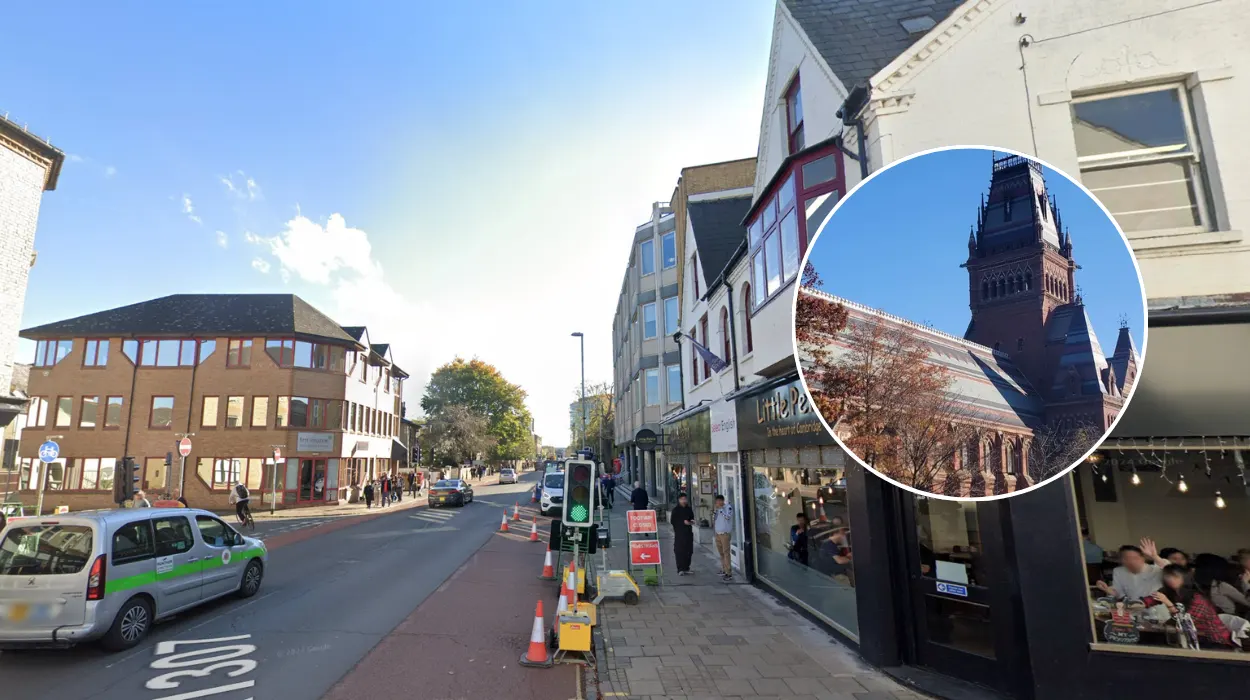
People express mixed opinions about living in Chesterton, a residential neighborhood in east Cambridge, Massachusetts, primarily because it offers an attractive mix of suburban tranquility, top-tier amenities, and proximity to elite tech and academic hubs, yet faces criticism for exorbitant housing costs, transportation headaches, and a perceived lack of vibrancy. While families and high-income professionals celebrate its safety, schools, and short commutes to MIT and Kendall Square, others particularly young singles, budget-conscious renters, and car-dependent commuters lament the premium prices, parking scarcity, and relative isolation from Cambridge’s bustling nightlife and cultural core.
- Strong Appeal: Safety and Family-Friendly Environment
- Proximity to Economic Powerhouses
- Educational Excellence and Academic Access
- Walkability and Daily Conveniences
- Parking and Traffic Nightmares
- Perceived Lack of Vibrancy and Nightlife
- Harsh Weather and Seasonal Discomforts
- Infrastructure and Service Shortcomings
- Generational and Socioeconomic Splits
This polarization reflects broader tensions in high-demand urban enclaves: exceptional quality of life for those who can afford it versus inaccessibility and lifestyle compromises for everyone else.
Strong Appeal: Safety and Family-Friendly Environment
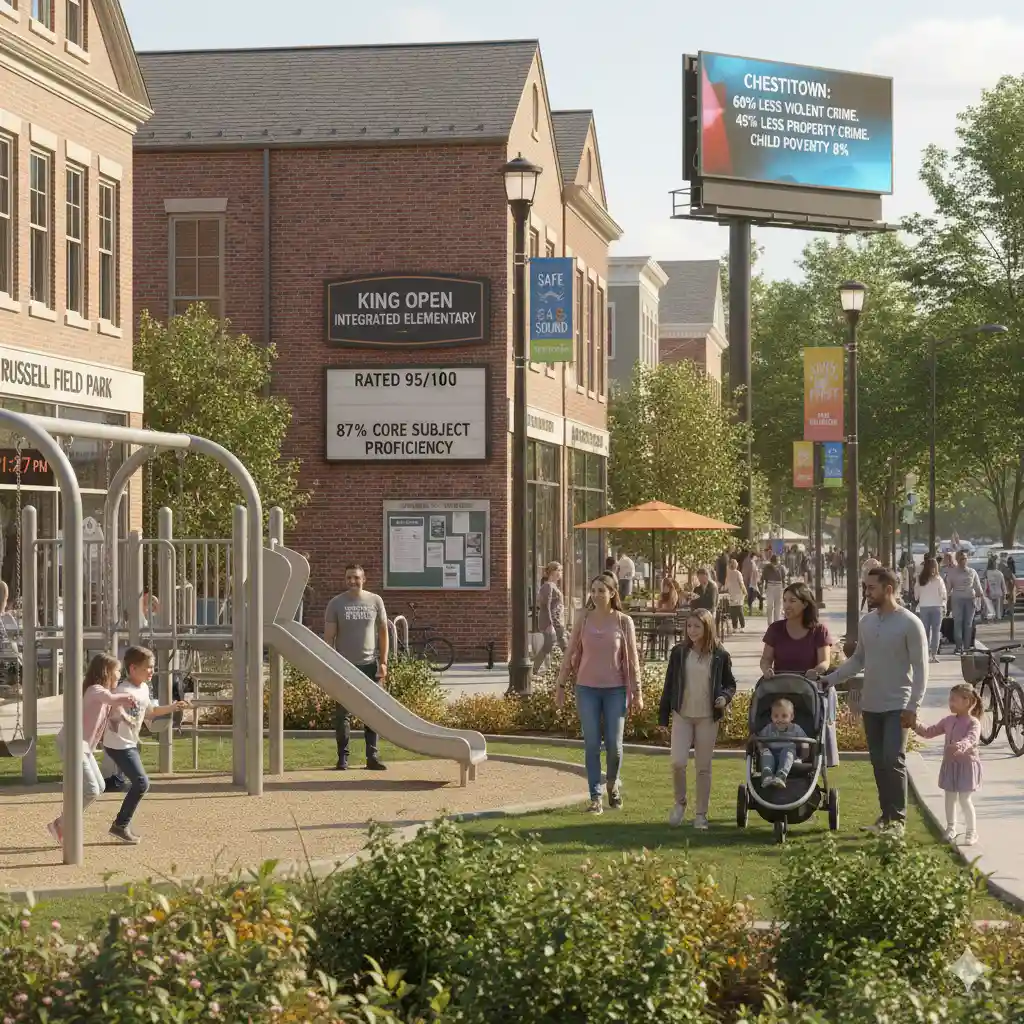
A primary reason for positive views centers on Chesterton’s outstanding safety record, with violent crime rates at 1.2 per 1,000 residents 60% below national averages and property crimes 45% lower at 12.4 per 1,000. Residents frequently praise the family-oriented atmosphere, bolstered by well-maintained parks like Russell Field and top-rated public schools such as King Open Integrated Elementary, achieving 95/100 GreatSchools ratings with 87% proficiency in core subjects. Parents highlight low child poverty rates (8%), abundant pediatric services, and community events on Chesterton Road that foster neighborly bonds, making it ideal for raising children amid urban opportunities.
Long-term homeowners view the neighborhood’s stability as a hedge against volatility elsewhere in Cambridge, with steady property appreciation (4.5% annualized over five years) justifying upfront costs.
Proximity to Economic Powerhouses
Professionals in biotech, tech, and academia rave about Chesterton’s strategic location, just 10-15 minutes on foot or bike from Kendall Square, the “Silicon Valley of the East” home to Moderna, Google, Pfizer, and the Broad Institute, employing over 20,000 in high-paying roles averaging $140,000 base salaries. Median household incomes reach $133,847, with per capita earnings at $81,448 and unemployment below 3%, attracting young engineers and researchers who value 22-minute average commutes versus Boston’s gridlock. Hybrid work arrangements (55% of the workforce) further enhance its draw, allowing seamless integration of work, gym sessions at Nuffield Health, and evening strolls along the Charles River.
Educational Excellence and Academic Access
Chesterton’s assignment to Cambridge Public Schools, one of Massachusetts’ highest-performing districts with per-pupil spending over $28,000, garners universal acclaim. Cambridge Rindge and Latin High School boasts 92% graduation rates and 82% college matriculation, while proximity to MIT (4% acceptance) and Harvard (3.4%) provides free lectures, museums, and summer programs. Adult learners appreciate Cambridge Adult School’s no-cost courses in coding and ESL, enrolling thousands annually, reinforcing the neighborhood’s reputation as an intellectual haven.
Walkability and Daily Conveniences
With a Walk Score of 89/100, residents enjoy hyper-local amenities: Forge Baking Company for artisan loaves, Harvest Co-op for organics, Tatte Bakery outposts, and Thai Haley for affordable ethnic eats all within 0.5 miles. Weekly farmers’ markets and independents on Chesterton Road create a self-sufficient vibe, appealing to those ditching cars (68% of households). Bluebikes stations every 0.4 miles and Linear Park trails support active lifestyles, earning praise from fitness enthusiasts.
The most vehement detractors point to Chesterton’s unaffordability, where median home prices hit $995,000 in 2026 (Chesterton average $1.05 million for 1,800 sq ft) and one-bedroom rents range $3,200-$3,900 monthly necessitating $156,000 annual household incomes to cover basics amid an 80% cost-of-living premium over U.S. norms. Property taxes add $12,000-$15,000 yearly at 1.23% rates, while family groceries inflate 28% due to organic-focused markets like Whole Foods ($6/lb avocados). First-time buyers and moderate earners feel systematically excluded, with inclusionary zoning (20% affordable units) dismissed as insufficient amid fierce bidding wars closing 7% above ask.
Parking and Traffic Nightmares
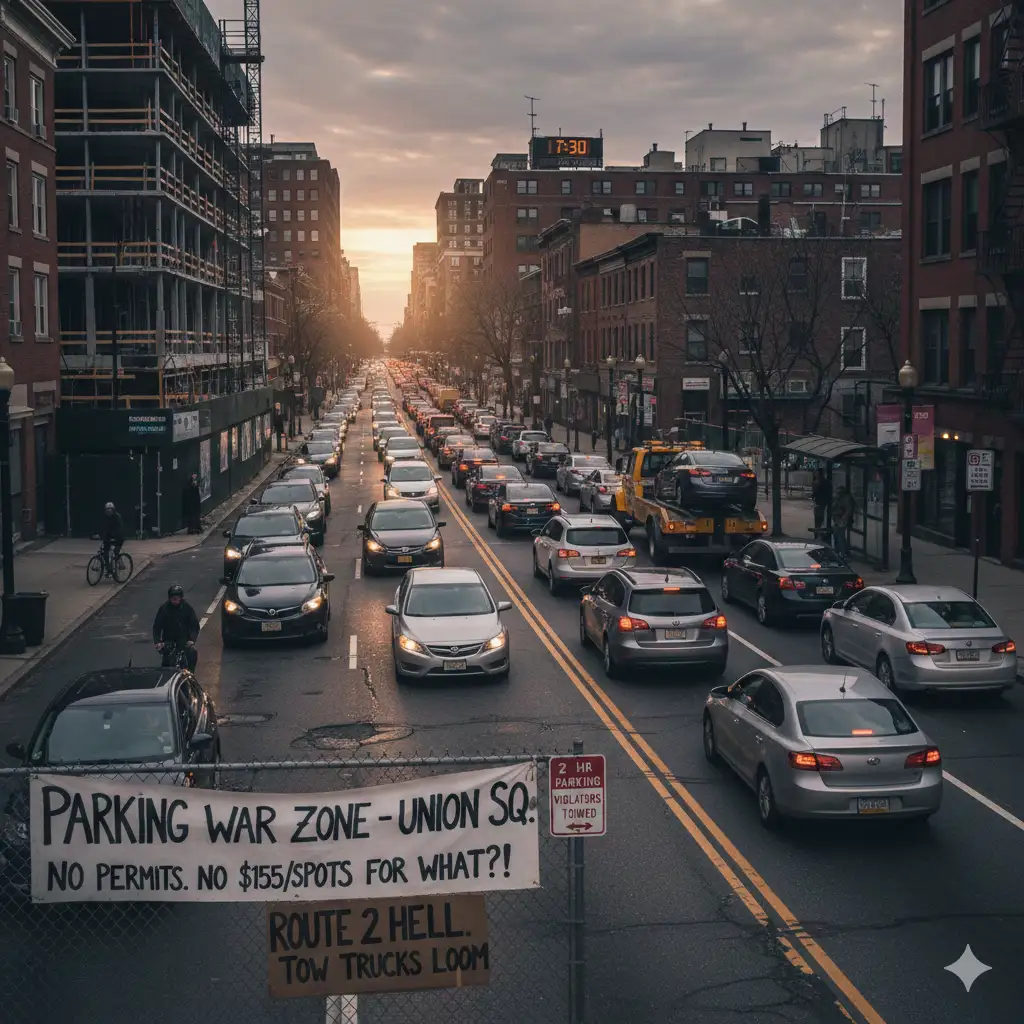
Car owners decry chronic shortages resident permits cost $155/year for just 500 spots with street parking limited to two hours and aggressive towing common. Route 2 backups stretch commutes to 45 minutes during peaks (7-9am, 4-6pm), while MBTA buses (routes 77/62) run irregularly evenings, frustrating those without bikes or unlimited transit passes ($90 monthly). Construction from Union Square developments (2026-2029) exacerbates potholes and noise, turning side streets into de facto parking war zones.
Perceived Lack of Vibrancy and Nightlife
Young singles and social butterflies often describe Chesterton as “sleepy” or “family-heavy,” lacking the 50+ restaurants, dive bars, live music venues, and indie theaters of Central Square (1-2 miles away). Quiet evenings suit parents but bore 20-34-year-olds (62% unmarried in the demo), who must trek for nightlife, complaining of a “suburban bubble” despite urban addresses. Cultural access requires planning around Harvard/MIT events, alienating spontaneous types.
Harsh Weather and Seasonal Discomforts
Newcomers from warmer climates balk at humid continental extremes: 82°F summers with 70% humidity (heat index 95°F), brutal winters dipping to 23°F lows with 52 inches snow and wind chills to -5°F, spiking heating bills to $400 monthly. Short daylight (8 hours December) fuels seasonal affective disorder complaints, while spring flooding risks (FEMA Zone X updates) and fall leaf cleanup burden homeowners.
Visibility of homelessness (up 15% citywide post-2024 cuts), discarded syringes near Lechmere station, and occasional encampments unsettle some, despite daily cleanups. Poverty pockets (11.9% rate) and income disparities amid $133k medians highlight gentrification tensions, with long-timers resenting tech influx driving rents skyward.
Infrastructure and Service Shortcomings
Premium grocery reliance inflates family budgets ($850 monthly for four), lacking big-box discounters like Costco (3 miles). Public transit lags west Cambridge’s options, with no direct main station links and Citi 2 bus delays. Sidewalk cracks and post-plow potholes irk pedestrians, while premium childcare ($2,400 infant monthly) strains young families.
Retirees note sparse senior programming beyond Atria assisted living ($7,000/month), while empty-nesters decry family dominance. Expats love diversity (42% white, 21% Asian, 16% Hispanic) but face high international school fees ($40,000). Students shun it for Central Square’s energy, viewing Chesterton as “professor-ville.”
Speculators criticize decelerating appreciation (0.2% YoY amid 6.2% rates) and 4.2% cap rates trailing national 6%, warning of tech layoff risks post-2024 slowdowns. Historic preservationists clash with four-story condos eroding charm, while flood retrofits add $5,000-10,000 upfront costs.
Generational and Socioeconomic Splits
Affluent households ($200k+) embrace the premium for safety/schools/proximity; middle-income families ($100k) feel squeezed (housing 45% budgets). Boomers value stability, millennials weigh hybrid perks against space trade-offs (average 1,200 sq ft condos), Gen Z eyes Somerville alternatives. Reddit locals split: families “love it,” singles “pass.”
Rapid tech in-migration (2.1% population growth) sparks resentment among pre-2015 renters displaced by 3-5% hikes, with inclusionary units criticized as tokenistic. Long-timers mourn “old Cambridge” authenticity lost to chain cafes.
Q1 2026 tech rebound (3,500 jobs) reignites optimism, but Red Line expansions disrupt with noise/dust through 2028. Affordability votes loom, potentially capping rents 5%, polarizing further between owners (value protection) and renters (relief seekers).