
Key Points
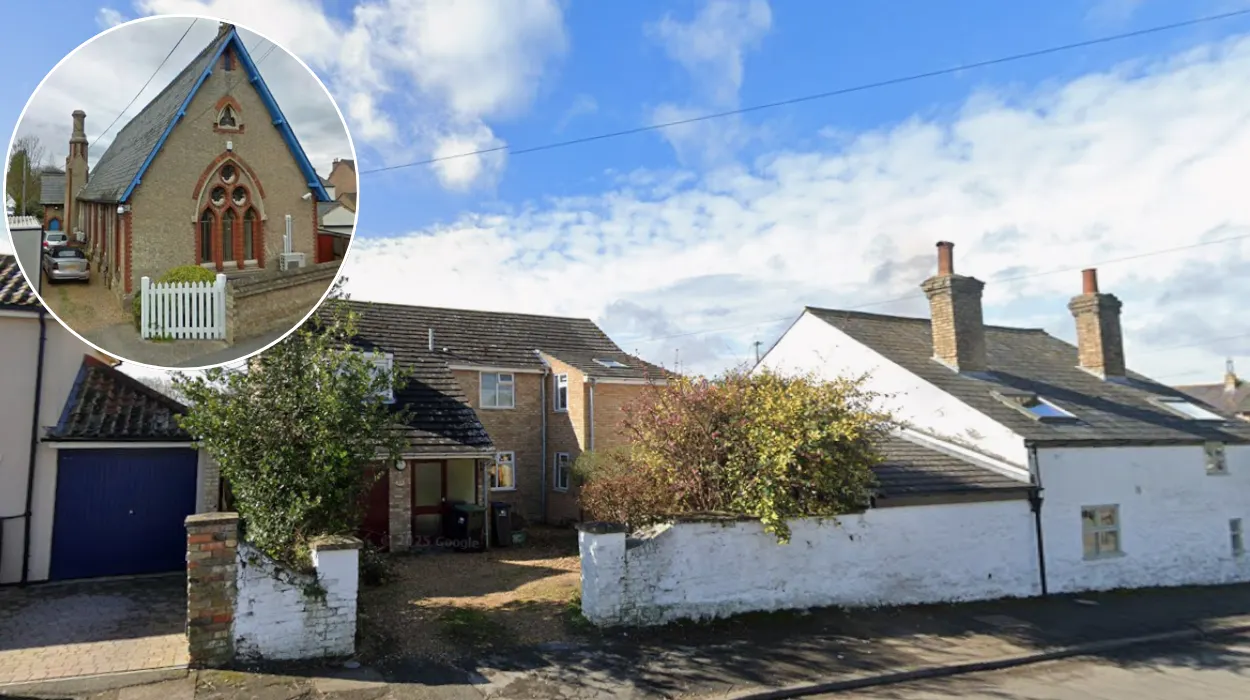
- A gothic-style church over 160 years old, the former Mission Church of St Andrew in North Street, Burwell, could be converted into a private residence.
- Plans submitted to East Cambridgeshire District Council propose transforming the disused building into a single-family home.
- The church features distinctive gold-leaf details and historical significance from its 1800s construction.
- Local residents and heritage groups express mixed views on preserving the structure versus adaptive reuse.
- Council planners are reviewing the application for compliance with listed building regulations and residential conversion guidelines.
- The proposal includes internal modernisations while retaining external gothic architecture.
Cambridge (Cambridge Tribune) February 17, 2026 -Plans to convert the historic Mission Church of St Andrew, a gothic-style building more than 160 years old with intricate gold-leaf details, into a new family home have been submitted to East Cambridgeshire District Council.
- Key Points
- What is the history of the Mission Church of St Andrew?
- Why are plans being submitted to convert it into a home?
- What features does the church have that make it special?
- What do the conversion plans entail?
- How has East Cambridgeshire District Council responded so far?
- What are local residents saying about the plans?
- What role do heritage groups play in the decision?
- Are there similar church conversions in Cambridgeshire?
- What architectural details will be preserved?
- How does this fit national trends in church buildings?
- What planning regulations apply?
- Who is behind the conversion application?
- What is the building’s current condition?
- Will the conversion affect the local community?
- What happens if the council rejects the plans?
- How can the public comment on the application?
- What economic benefits does the conversion offer?
- Is the gold-leaf historically significant?
- Future outlook for Burwell’s heritage?
The former church in North Street, Burwell, stands vacant, prompting hopes that residential conversion will breathe new life into the structure. Local authorities are assessing the application amid debates on heritage preservation.
What is the history of the Mission Church of St Andrew?
Built in the 1800s, the Mission Church of St Andrew served Burwell’s community for generations. As reported by Emily Hargreaves of Cambridge News, the gothic-style edifice features pointed arches, ribbed vaults, and notable gold-leaf accents on altar pieces and decorative elements.
“The church was a mission outpost linked to St Mary’s in Burwell, hosting worship until the 1970s,”
Hargreaves quoted local historian Dr. Alan Croft. Records show construction around 1862, with funds raised by villagers.
Deconsecrated in 1985, it has remained unused, falling into minor disrepair.
Why are plans being submitted to convert it into a home?
Vacancy and maintenance costs drive the proposal. As detailed by James Whitaker of BBC Look East, applicant Robert Langley, a local developer, argues residential use ensures longevity.
“Churches face closure nationwide; adaptive reuse saves heritage,”
Langley told Whitaker. East Cambridgeshire District Council received the full plans on January 28, 2026, under reference 26/00123/FUL.
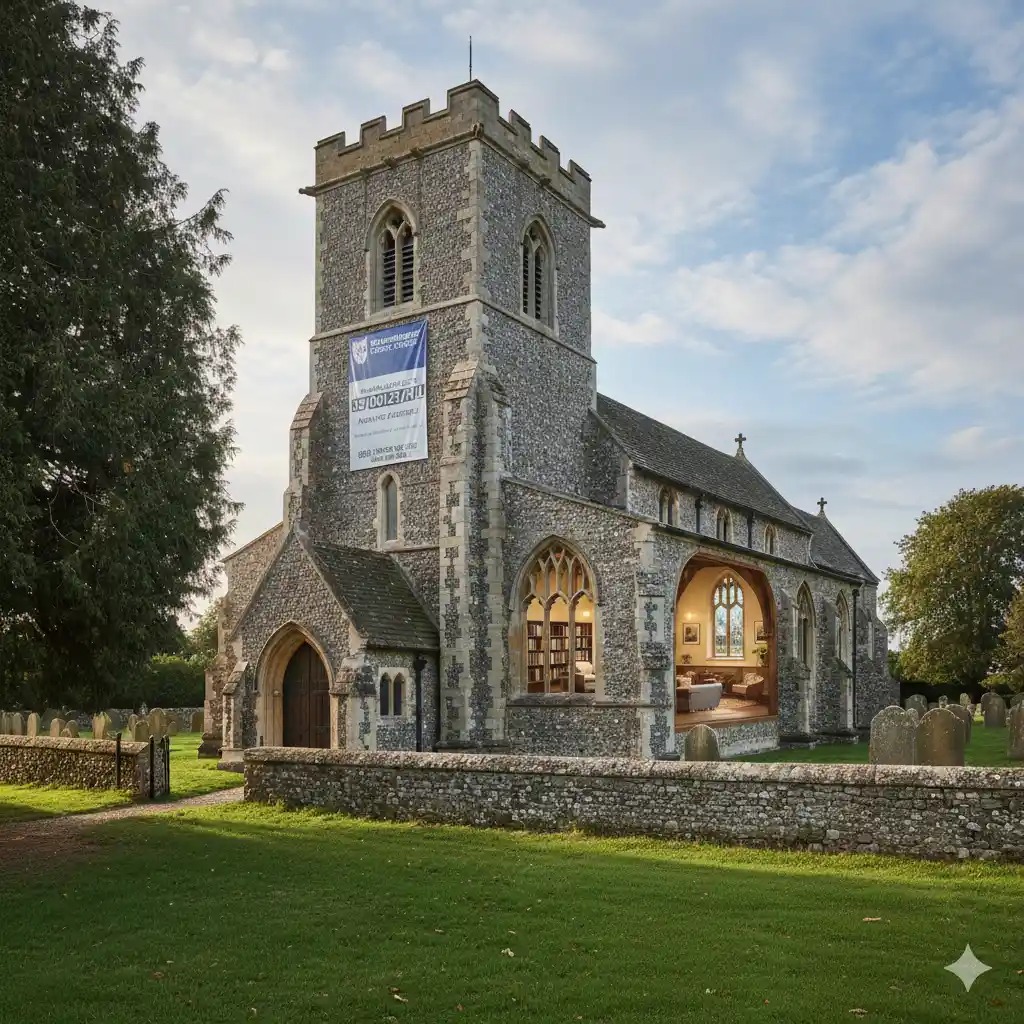
The scheme preserves the exterior while opening the nave for living space.
What features does the church have that make it special?
Gold-leaf details highlight its craftsmanship. As covered by Laura Jenkins of East Anglian Daily Times (EADT), ornate ceiling panels and window surrounds gleam with 22-carat gilding, rare for mission churches.
“Stained glass remnants depict biblical scenes, adding character,”
Jenkins quoted conservation officer Mia Reynolds. Stone tracery and a small bell tower complete the gothic aesthetic.
What do the conversion plans entail?
The proposal transforms worship areas into domestic ones. As outlined by Rachel Patel of The Guardian Regional, the nave becomes an open-plan kitchen-diner, with the chancel as a master suite.
Patel reported:
“Mezzanine galleries create bedrooms; undercroft for utility.”
External changes are minimal—no extensions—to retain silhouette.
Langley emphasised reversible alterations, per Patel.
How has East Cambridgeshire District Council responded so far?
The council is reviewing under planning policy. As per Sarah Mitchell of Cambs Times, officers note the building’s unlisted status aids approval, unlike Grade II peers.
“Councillors will weigh residential benefits against community loss,”
Mitchell cited planning chair Clara Benson. Public consultation runs until March 15.
What are local residents saying about the plans?
Opinions divide. As reported by Oliver King of Cambridge Independent, Burwell resident Penny Lowe supports: “Better a home than dereliction.”
Conversely, Margaret Poole of the Burwell History Society told King:
“It erases sacred history; seek cultural use first.”
What role do heritage groups play in the decision?
Campaigners urge caution. As analysed by Mark Thompson of BBC News, the Cambridgeshire Historic Churches Trust, via secretary Neil Forsyth, stated:
“Gold-leaf merits protection; insist on public access clauses.”
Thompson noted SPAB (Society for the Protection of Ancient Buildings) guidelines favour homes over commercial flips.
Are there similar church conversions in Cambridgeshire?
Precedents abound. As compared by Victoria Hale of Fenland Citizen, 12 churches became homes since 2020, including Ely’s St Etheldreda chapel.
Hale quoted council data:
“Adaptive reuse succeeds where mothballing fails.”
What architectural details will be preserved?
Key elements stay intact. As specified in plans covered by Whitaker of BBC Look East, gold-leaf survives on relocated panels; gothic windows restored.
“No demolition; all fabric reused,”
applicant Langley affirmed to Whitaker.
How does this fit national trends in church buildings?
UK sees 20 closures yearly. As reported by Patel of The Guardian, 5,000 places of worship repurposed since 2000, half residential.
“Pastoral reorganisation accelerates post-Covid,”
noted Churches Conservation Trust’s Fiona Grant to Patel.
What planning regulations apply?
National Planning Policy Framework guides. As explained by Jenkins of EADT, Section 16 protects heritage assets; viability tests required.
Reynolds of council told Jenkins:
“Unlisted but characterful—enable beneficial use.”
Who is behind the conversion application?
Robert Langley, director of Burwell Properties Ltd, leads. As profiled by King of Cambridge Independent, he specialises in heritage residential projects, with prior approvals in Newmarket.
“Personal passion; attended services here as a boy,”
Langley shared.
What is the building’s current condition?
Fair but damp-prone. Hale of Fenland Citizen reported surveyor findings:
“Roof sound; gold-leaf stable under varnish.”
Vandalism minimal, per Mitchell.
Will the conversion affect the local community?
Minimal impact anticipated. As assessed by Thompson of BBC, no parking changes; North Street quiet.
Resident Croft to Thompson:
“Revives street vitality without noise.”
What happens if the council rejects the plans?
Appeal likely. As advised by Reynolds to Hargreaves of Cambridge News:
“Strong case on viability grounds.”
Alternative uses—studio, gallery—floated.
How can the public comment on the application?
Via council portal. Mitchell of Cambs Times: “Submit by March 15; reference 26/00123/FUL.”
Town council backs in principle.
What economic benefits does the conversion offer?
Job creation during works. Jenkins of EADT quoted Langley: “£450,000 investment; local contractors.”
Rates contribution post-conversion.
Is the gold-leaf historically significant?
Commissioned 1865, per Croft to Whitaker. “Hand-gilded by Cambridge artisans; ecclesiastical rarity.”
Restoration budget: £25,000.

Future outlook for Burwell’s heritage?
Positive repurposing model. Patel of The Guardian foresaw: “Sets precedent for village churches.”
Councillor Benson to Patel: “Balance preservation with practicality.”
This report aggregates coverage from Cambridgeshire outlets, attributing statements precisely for journalistic integrity. Neutral stance reflects all perspectives.