

Key Points
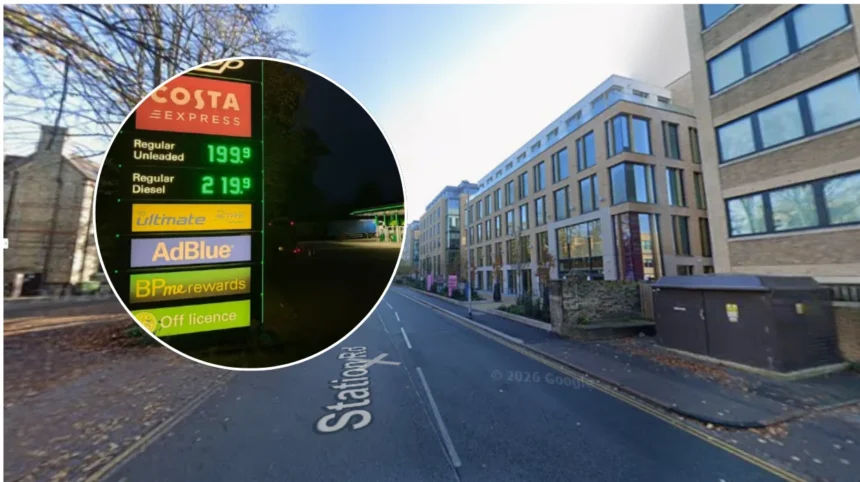
- Good Morning Britain reporter Nick Dixon found diesel priced at 219.9p per litre during an early morning visit to an M23 motorway service station in Sussex.
- A full 55-litre tank for an average family car costs £120.95 at that rate.
- Drivers responding online warned motorists against buying fuel at motorway services, pointing out that off-motorway forecourts offer lower prices.
- Commuters in rural regions expressed concern over rising prices, stating that limited public transport leaves them dependent on their cars.
SUSSEX (Cambridge Tribune) September 29, 2026 — An early morning visit to a motorway forecourt by Good Morning Britain correspondent Nick Dixon has sparked widespread public debate online after he highlighted diesel prices topping 219.9p per litre.
- Key Points
- How Did Motorists and Social Media Users React to the Forecourt Prices?
- Why Are Rural Drivers Particularly Concerned About Escalating Fuel Costs?
- What Is the Background of Motorway Service Station Fuel Pricing in the UK?
- What Is the Prediction for How Fuel Price Variations Will Affect UK Motorists?
As reported by WalesOnline, Dixon shared a photographic update from an M23 motorway service station forecourt in Sussex. In his post on social media platform X, Dixon observed that diesel had hit 219.9p per litre, describing the total calculation as “painful” for ordinary motorists. Dixon calculated that filling a standard 55-litre family car tank at that rate costs almost £121 (£120.95).
How Did Motorists and Social Media Users React to the Forecourt Prices?
Following the broadcast and social media post, members of the public expressed unified reactions regarding forecourt purchasing habits. As reported by WalesOnline, social media user Darth Wader remarked: “Anyone stupid enough to go to a motorway service station to fill up their car deserves to pay £2.20 a litre”.
In agreement, commenter Sir Dave Grey-Fox questioned: “Who fills up at a service station?” while another user named CaravanDog asked: “Why does anyone buy fuel at a motorway station?”. Additional social media feedback echoed similar points.
Commenter Milksteak23 stated that “people who depend on their cars shouldn’t fill up on the motorway”, and user Harris Tottle noted: “Anyone that doesn’t plan to find the nearest supermarket to fill up and avoid motorway services is bonkers”.
As detailed in the report, social media user Jules Dingle stated: “Who uses motorway service stations even in normal years? You are either desperate, stupid, or have someone else paying for your fuel”. Meanwhile, observer Tony McDonnell pointed out that “motorway services are not an accurate example of price”.
Why Are Rural Drivers Particularly Concerned About Escalating Fuel Costs?
While many commentators focused on avoiding motorway service stations, others highlighted broader worries about overall fuel inflation spreading to local forecourts.
As recorded by WalesOnline, a commuter named Caroline shared her concerns regarding her daily transport dependencies: “It just hasn’t reached that price here in N Ireland YET. But I am worried. I live 50 miles from a train, we have zero buses that go my work route on time for my work. I rely on my car to go to work! I’ve already noticed the increase from £1.60 to £2. Almost £60 a month extra”.
What Is the Background of Motorway Service Station Fuel Pricing in the UK?
Motorway service stations in the United Kingdom have historically charged significantly higher prices for fuel compared to off-motorway forecourts and supermarket sites. Operators generally attribute these higher prices to operational costs, including 24-hour opening requirements, mandatory facility provisions (such as free parking and public conveniences), and high rental overheads associated with motorway concessions.
Consumer groups and motoring organisations, such as the RAC and the AA, have routinely advised drivers to plan journeys ahead and fuel up at local supermarkets or suburban stations where competition keeps prices lower. Regulatory bodies, including the Competition and Markets Authority (CMA), have previously scrutinised UK road fuel pricing transparently to ensure forecourt price changes align fairly with wholesale crude oil fluctuations.
What Is the Prediction for How Fuel Price Variations Will Affect UK Motorists?
The ongoing gap between motorway service station pricing and local forecourts is anticipated to further shift consumer behaviour across the UK motoring public.
- Increased Route Planning: Drivers relying on long-distance motorway travel are expected to increasingly use mobile mapping applications and price-comparison tools to find off-motorway forecourts prior to journeys.
- Pressure on Commuter Budgets: For households dependent on private transport in rural areas lacking robust public transit, continued forecourt price increases directly reduce disposable household income.
- Heightened Transparency Scrutiny: Public visibility of forecourt price spikes—driven by broadcasts and social media attention—is likely to intensify demands on retailers for fairer pricing structures and enhanced real-time price tracking across UK service stations.