Key Points
- A Freedom of Information request has revealed the names of buildings across Cambridgeshire waiting for “potentially unsafe cladding” to be replaced.
- The list includes 10 high-rise residential buildings, all in Cambridge, and 64 medium-rise buildings across Cambridge, Huntingdonshire, Peterborough and South Cambridgeshire.
- The Cambridgeshire and Peterborough Combined Authority’s board is recommended to approve an updated Local Remediation Acceleration Plan at its meeting next week.
- The revised plan addresses risks including landlord reluctance, contractor capacity and developer disputes.
- Government deadlines require cladding replacement on high-rise buildings by the end of 2029 and medium-rise buildings by the end of 2031.
- The Combined Authority says requiring remediation does not automatically mean a building is unsafe to live in.
- Five medium-rise buildings have completed remediation, two are undergoing works and 14 have started or are due to start shortly.
- The plan follows the Grenfell Tower fire, which killed 72 people, and the government’s subsequent national remediation programme.
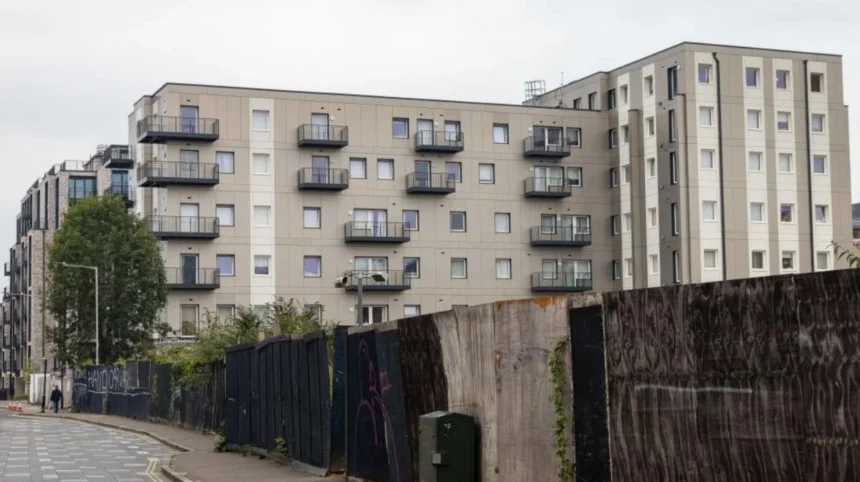
Cambridgeshire (Cambridgeshire Tribune) November 20, 2026 — A Freedom of Information request has revealed the full list of Cambridgeshire residential buildings still waiting for “potentially unsafe cladding” to be replaced, nearly 10 years after the Grenfell Tower fire.
As reported by the Hunts Post, the list identifies 10 high-rise buildings, all in Cambridge, and 64 medium-rise buildings across the county. The buildings include flats attached to Cambridge Fire Station, developments in Peterborough, Huntingdon and South Cambridgeshire, and several blocks in the Orchard Park area.
The Cambridgeshire and Peterborough Combined Authority’s board is recommended to approve a new plan to replace cladding on residential buildings at its meeting next week.
Earlier this month, the CPCA’s growth committee heard that the updated plan will address key risks, including landlord reluctance, contractor capacity and developer disputes.
In 2025, following the second phase of the inquiry into the Grenfell Tower fire, which killed 72 people, the government introduced targets for cladding to be replaced on residential flat buildings.
For medium-rise buildings, defined as those between 11 and 18 metres, the deadline is the end of 2031. For high-rise buildings over 18 metres, the deadline is the end of 2029.
What does the new plan cover?
As reported by Eoin McCaul of the Cambridge Independent, the revised Local Remediation Acceleration Plan sets out the authority’s strategy to ensure cladding that does not meet fire safety standards on residential buildings of five storeys or more is replaced.
The plan replaces an earlier Local Remediation Acceleration Plan approved in 2025. It has been developed with the fire service, councils and government.
The CPCA’s growth committee met this month to discuss the revised plan and recommended that the board approve it.
While building owners hold ultimate responsibility for carrying out the work, a new Bill being considered by Parliament could introduce fines of up to £500,000 for those who fail to address issues without delay.
As reported by the Hunts Post, the report to the CPCA noted that a few buildings have come in and out of scope after being assessed in detail.
It said 150 medium-rise buildings had been assessed, with 62 needing remediation and two currently undergoing remediation. A further 39 buildings have yet to be assessed.
The report specified that “potentially unsafe cladding” covers external wall systems which could involve cladding types, insulation and cavity barriers.
Which high-rise buildings are affected?
All 10 high-rise buildings requiring cladding replacement are in Cambridge.
As previously reported by the Local Democracy Reporting Service, the buildings include the Parkside Place development, which includes flats attached to Cambridge Fire Station.
The full list of high-rise residential buildings with potentially unsafe cladding is:
| Building | Address | Postcode | Town/city | Floors |
|---|---|---|---|---|
| Cyan Building | 121-193 Glenalmond Avenue | CB2 8DH | Cambridge | 7 |
| 1-32 Orchid Building | 15-32 Glenalmond Avenue | CB2 8DB | Cambridge | 7 |
| Aqua Building | 194-209 Glenalmond Avenue | CB2 8DB | Cambridge | 7 |
| Meade House | 2 Mill Park | CB1 2FG | Cambridge | 7 |
| Parkside Terrace | Parkside Place, Newmarket Road | CB1 1HQ | Cambridge | 8 |
| Petersfield House | Parkside Place, Newmarket Road | CB1 1HQ | Cambridge | 7 |
| The Lauro Building | Aberdeen Avenue | CB2 8DL | Cambridge | 7 |
| The Triangle Block A | 1-71 Warren Close | CB2 1LB | Cambridge | 7 |
| The Triangle Block B | 130-153 Warren Close | CB2 1LE | Cambridge | 7 |
| The Triangle Block C | 72-192 Warren Close | CB2 1LE | Cambridge | 7 |
Parkside Terrace is the tallest building on the list, at eight storeys.
Which medium-rise buildings are affected?
The Freedom of Information response also identified 64 medium-rise residential buildings requiring cladding replacement.
The majority are in Cambridge, with 45 within the city council’s boundaries. Three are in Huntingdonshire, all on Princes Street in Huntingdon. Thirteen are in Peterborough and three are in South Cambridgeshire, within the Orchard Park development in Cambridge.
The full list of medium-rise residential buildings with potentially unsafe cladding is:
| Building | Address | Postcode | District | Floors |
|---|---|---|---|---|
| Sherman House | 1-16 Rustat Avenue | CB1 3RF | Cambridge | 5 |
| Brandt House | 1-11 Rustat Avenue | CB1 3RQ | Cambridge | 5 |
| Adams House | 1-23 Rustat Avenue | CB1 3RE | Cambridge | 5 |
| Lichfield House | 1-41 Rustat Avenue | CB1 3RD | Cambridge | 5 |
| 26-65 Bailey House | Rustat Road | CB1 3PG | Cambridge | 5 |
| 66-89 Bailey House | Rustat Road | CB1 3PG | Cambridge | 6 |
| Block C, Tripos Court | Homerton Street | CB2 8NY | Cambridge | 5 |
| Block E, Tripos Court | Homerton Street | CB2 8NY | Cambridge | 5 |
| The Levels | 150 Hills Road | CB2 8PB | Cambridge | 6 |
| Clay Farm Centre | Hobson Square, Hobson Avenue, Trumpington | CB2 9FN | Cambridge | 5 |
| Crick House | Station Place | CB1 2FA | Cambridge | 6 |
| Dovecot House | 12 Lime Avenue | CB2 9DF | Cambridge | 5 |
| Firebrick Building | 88-102 Glenalmond Avenue | CB2 8DD | Cambridge | 5 |
| Indigo Building | 103-117 Glenalmond Avenue | CB2 8DD | Cambridge | 5 |
| Malachite Building | 118-130 Glenalmond Avenue | CB2 8DD | Cambridge | 6 |
| Magenta Building | 278-332 Glenalmond Avenue | CB2 8DT | Cambridge | 5 |
| Emmanuel House | Lilywhite Drive | CB4 1WL | Cambridge | 5 |
| Fellows House | Lilywhite Drive | CB4 1GP | Cambridge | 5 |
| Gilbert House | 6 Mill Park | CB1 2FJ | Cambridge | 6 |
| Huxley House | 8 Mill Park | CB1 2FL | Cambridge | 6 |
| Great Northern Road | 2-34 Great Northern Road | CB1 2FX | Cambridge | 6 |
| Great Northern Road | 36-66 Great Northern Road | CB1 2FX | Cambridge | 6 |
| Kingston House | 1-25 Puddicombe Way | CB2 0AF | Cambridge | 6 |
| Linton House | 1-25 Puddicombe Way | CB2 0AE | Cambridge | 6 |
| Milton House | 1-26 Puddicombe Way | CB2 0AD | Cambridge | 6 |
| Newton House | 1-25 Puddicombe Way | CB2 0AB | Cambridge | 6 |
| Northcroft House | Nine Wells Road | CB2 9DA | Cambridge | 5 |
| Parkside Place – Chester House | Parkside Place, Newmarket Road | CB1 1HQ | Cambridge | 6 |
| Parkside Place – Parkside House | Parkside Place, Newmarket Road | CB1 1HQ | Cambridge | 6 |
| Paxman House | 59-77 odds, Scholars Walk | CB4 1DW | Cambridge | 5 |
| Purbeck House | Purbeck Road | CB2 8HY | Cambridge | 6 |
| Riverside Place | Riverside | CB5 8JF | Cambridge | 5 |
| Royce House | Hartfree Lane, Trumpington | CB2 9EQ | Cambridge | 5 |
| 95-109 odds, Stanley House | Fitzgerald Place | CB4 1WA | Cambridge | 6 |
| 111-149 odds, Block 2d, Taylor House | Fitzgeralds Place | CB4 1WA | Cambridge | 6 |
| The Caldwell Building | 10 Lime Avenue | CB2 9DE | Cambridge | 5 |
| The Copper Building | Kingfisher Way | CB2 8BL | Cambridge | 5 |
| The Oak Building | Kingfisher Way | CB2 8DA | Cambridge | 5 |
| The Steel Building | Kingfisher Way | CB2 8BT | Cambridge | 5 |
| The Stephenson Building | Station Place | CB1 2FR | Cambridge | 6 |
| Windslow House | Green Lane, Trumpington | CB2 9DG | Cambridge | 5 |
| Block 2A | 11-27 odds, Pepys Court | CB4 1GF | Cambridge | 5 |
| 29-43 odds, Pepys Court | Pepys Court | CB4 1GF | Cambridge | 6 |
| Clay Farm Centre | Hobson Square, Hobson Avenue, Trumpington | CB2 9FN | Cambridge | 5 |
| The Copper Building | Kingfisher Way | CB2 8BL | Cambridge | 5 |
| 1-16 Keyworth Court, Block 1-16 | Princes Street | PE29 3PU | Huntingdonshire | 5 |
| Hawkins Court | Princes Street | PE29 3PS | Huntingdonshire | 5 |
| Dilleys Court | Princes Street | PE29 3PT | Huntingdonshire | 5 |
| 2-26 Cubitt Way | Cubitt Way | PE2 9NG | Peterborough | 5 |
| 89-105 Cubitt Way | Cubitt Way | PE2 9NG | Peterborough | 5 |
| 1-39 Cubitt Way | Cubitt Way | PE2 9NG | Peterborough | 5 |
| Clarkson House | East Station Road | PE2 8UE | Peterborough | 6 |
| Connect 21, cores 1 | 2-40 Hammonds Drive, Fengate | PE1 5AA | Peterborough | 5 |
| Connect 21, cores 2 | 42-72 Hammonds Drive, Fengate | PE1 5AA | Peterborough | 5 |
| Connect 21, cores 3 | 74-104 Hammonds Drive, Fengate | PE1 5AA | Peterborough | 5 |
| Connect 21, cores 4 | 106-136 Hammonds Drive, Fengate | PE1 5AA | Peterborough | 5 |
| Connect 21, cores 5 | 138-168 Hammonds Drive, Fengate | PE1 5AA | Peterborough | 5 |
| Connect 21, cores 6 | 170-200 Hammonds Drive, Fengate | PE1 5AX | Peterborough | 5 |
| Connect 21, cores 7 | 202-232 Hammonds Drive, Fengate | PE1 5AX | Peterborough | 5 |
| Connect 21, cores 8 | 234-264 Hammonds Drive, Fengate | PE1 5AX | Peterborough | 5 |
| Connect 21, cores 9 | 266-304 Hammonds Drive, Fengate | PE1 5AX | Peterborough | 5 |
| 14-34 Sweetpea Way | Sweetpea Way | CB4 2ZA | South Cambridgeshire | 5 |
| 54-70 Sweetpea Way | Sweetpea Way | CB4 2ZA | South Cambridgeshire | 5 |
| 4-12 Buttercup Road | Buttercup Road | CB4 2GX | South Cambridgeshire | 5 |
Are the buildings unsafe to live in?
The CPCA has emphasised that just because a building needs cladding replaced, this does not mean it is unsafe to live in.
Mitigations may be put in place, such as an upgraded fire alarm system to allow residents to evacuate simultaneously instead of following a “stay put” policy.
A CPCA spokesperson said the Local Remediation Acceleration Plan is reviewed every year after being first published in July 2025, in line with the government’s national remediation plan.
The spokesperson said: “Figures for remediation are compiled at intervals and reported to our Growth Committee and Board.
“The latest for medium rise buildings show that five buildings have had remediation completed, two are undergoing remediation, and 14 have started or are due to start shortly. Regulators are working with those responsible for each building to move them forward.”
The spokesperson added: “The Combined Authority funds the Remediation Manager and Inspector posts at Cambridgeshire Fire and Rescue Service. They assess buildings and work with those responsible to get works done, and where they are not meeting their obligations, regulators will take appropriate action.”
They said: “Requiring remediation does not mean a building is unsafe to live in. Each building is assessed by a qualified fire engineer through an external wall report, and mitigating measures, such as changes to the fire alarm system, may be in place while works are planned and carried out. That process, from first reports to completed works, can take 18 months to two years.”
What risks could delay the work?
As reported by the Cambridge Independent, the updated plan addresses “key risks” including “landlord reluctance, contractor capacity and developer disputes”.
The report presented to the committee added that “contractor capacity and quality of workmanship is a particular risk given this is a nationwide task”.
Government funding has paid for a remediation manager and remediation inspector to be employed for two years from the start of 2026, hosted by Cambridgeshire Fire and Rescue Service.
Sean Hedger, the remediation manager, told the committee that replacing cladding is a “lengthy process” which can take up to two years.
He said he was concerned about the term “unsafe buildings” because it could worry residents, reassuring them that they are still safe to live in.
As reported by the Cambridge Independent, Mr Hedger said:
“Just because a building requires remediation of the external wall system it does not mean that the building is unsafe to live in. Responsible persons would often put in interim measures such as an upgraded fire alarm system to enable simultaneous evacuation instead of a stay-put policy.”
He said that, in areas of the country where residents have had to move from their flats, this is “generally” due to “a mixture of fire safety and structural issues as well”.
Cllr Sarah Conboy, chair of the growth committee and a Huntingdonshire district councillor, said:
“This comes from a very difficult place. Many of us will remember the heart-wrenching experience that happened at Grenfell – the horrendous loss of life, but also the impact it had on a whole community as well as everybody involved in responding to that incident.”
County councillor Ros Hathorn said:
“This is one of the most important things we need to do because Grenfell caused massive damage, but also damaged people’s confidence in living in flats.
“And actually we need to rebuild that reassurance and until we do that it is going to be very challenging to respond to the housing crisis.”
What has the authority said previously?
As reported by the Cambridge Independent in September, the CPCA said it was “confident” it would meet the government’s target for high-rise buildings to have their cladding replaced by December 31, 2029.
The authority said the region had 34 high-rise residential buildings of seven storeys or more, of which 21 required no further action.
Three had already had their cladding or flammable insulation partially or fully replaced.
That left 10 buildings requiring work by the government deadline.
The authority also reported that Cambridgeshire and Peterborough had 144 medium-rise residential buildings, defined as five or six storeys. Of those, 59 needed no further action and 84 required their cladding to be replaced by December 31, 2031.
A report to the panel noted that it is “ultimately the responsibility of building owners” to make sure that “risks have been identified and necessary action taken”.
It said that “very good progress has been maintained” and the authority is “on track to carry out all necessary assessments and engagement with landlords” to meet its targets.
Background of the development
The Grenfell Tower fire occurred in London in 2017 and killed 72 people. The tragedy led to a major national review of building safety, external wall systems and the use of cladding on residential towers.
Following the second phase of the Grenfell Tower Inquiry, which concluded in 2025, the government introduced deadlines for the replacement of unsafe cladding on residential flat buildings.
The CPCA published its first Local Remediation Acceleration Plan in July 2025. It set out a strategic approach to speeding up the remediation of buildings with fire safety issues, particularly those identified after national building safety reviews.
The plan is designed to ensure that partners work from a shared set of data and towards common objectives, under the Cladding Safety Scheme National Remediation System.
The Combined Authority’s role is to convene, monitor, manage and intervene where necessary. Ultimate responsibility for remediation rests with the building owner, or potentially the developer.
Prediction: How could this affect residents?
For residents of the listed buildings, the development could lead to a clearer timetable for external wall works, although the CPCA says the process can take between 18 months and two years from first reports to completed works.
Residents may see contractors, scaffolding, inspections and fire-safety measures at their buildings as remediation is planned and carried out. The authority says mitigating measures, including upgraded alarm systems enabling simultaneous evacuation, may already be in place while works are arranged.
For leaseholders and landlords, the plan could increase pressure to resolve cladding issues before the government deadlines of 2029 for high-rise buildings and 2031 for medium-rise buildings. The proposed legislation could also create a financial risk for owners who delay necessary work.
For prospective buyers and tenants, the publication of the list may prompt more questions about a building’s external wall assessment, remediation status and any interim fire-safety arrangements. The CPCA’s position is that a requirement for remediation does not, by itself, mean that a building is unsafe to occupy.