

Key Points
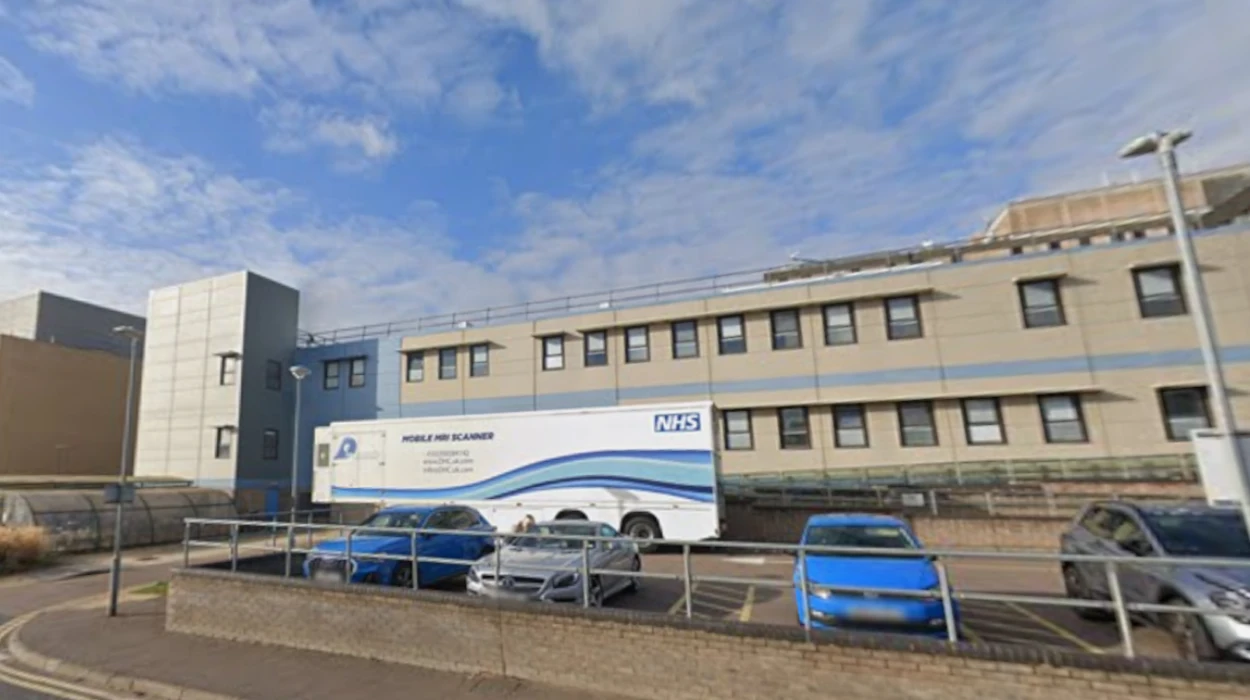
- Cambridge University Hospitals NHS Foundation Trust (CUH) has ordered an independent “rapid but thorough” review of the neurosciences service at Addenbrooke’s Hospital in Cambridge after concerns were raised about aspects of the service.
- The neurosciences unit at Addenbrooke’s is regarded as one of the country’s leading centres, treating complex brain injuries, head trauma and other neurological conditions for patients from a wide geographical area.
- CUH has said the review will examine “a number of clinical teams” within neurosciences rather than focusing on a single individual or incident.
- The investigation will be carried out independently by two official health bodies, with the work expected to finish by the end of February and findings due to be sent to the trust by the summer.
- CUH has pledged to publish the findings and to act on all recommendations emerging from the review in order to strengthen clinical governance and improve patient safety.
- The decision to order the review follows earlier scrutiny of the trust’s handling of concerns about suspended orthopaedic paediatric surgeon Kuldeep Stohr, whose work on children’s operations was examined in a separate independent review.
- That earlier report found the trust had missed multiple opportunities to respond to concerns about Ms Stohr’s surgeries, raising wider questions about how issues are escalated and addressed within the organisation.
- Addenbrooke’s and the adjoining Rosie Hospital were rated “Good” overall by the Care Quality Commission (CQC) in their most recent full inspection, with maternity at the Rosie rated “requires improvement” for safety but “good” for being well-led.
- The CQC has previously highlighted the hospital’s strong neurosurgery referral-to-treatment performance, finding that neurosurgery waiting times were better than the England average in 2019.
- CUH has stressed that patient safety remains its “highest priority” and that the review is part of its routine commitment to monitoring outcomes and identifying areas where care can be improved.
- The trust has framed the review as an opportunity to “strengthen clinical governance arrangements” across the neurosciences service and ensure robust oversight of complex care.
- The review comes amid wider national scrutiny of specialist services and clinical governance in the NHS, particularly in high‑risk areas such as neurosurgery and paediatric surgery.
- Patients currently receiving care in neurosciences at Addenbrooke’s have been told services are continuing as normal while the review takes place.
- Local and national media coverage, including Sky News and the BBC, has underlined both the prestige of Addenbrooke’s as a world‑renowned teaching hospital and the seriousness of the concerns now being examined.
Cambridge (Cambridge Tribune) February 2, 2026 –Addenbrooke’s Hospital’s high‑profile neurosciences service is undergoing an independent “rapid but thorough” review after concerns were raised about aspects of care, in a move its parent trust says is designed to strengthen clinical governance and reassure patients about safety in one of the UK’s leading brain and spine centres.
- Key Points
- Why has Addenbrooke’s ordered a ‘rapid’ review of its neurosciences service?
- What exactly will the rapid review look at?
- Who is carrying out the review and how long will it take?
- How has the hospital described the focus on patient safety and governance?
- How is this linked to the earlier investigation into surgeon Kuldeep Stohr?
- What is the status and reputation of Addenbrooke’s and the Rosie Hospital?
- How strong is the neurosciences service at Addenbrooke’s considered to be?
- What has been reported about the nature of the concerns?
- What does this mean for current patients and services?
- How does this fit into wider scrutiny of maternity and specialist services at CUH?
- What happens next and what should people watch for?
Why has Addenbrooke’s ordered a ‘rapid’ review of its neurosciences service?
As reported by Tom Cheshire of Sky News, Cambridge University Hospitals NHS Foundation Trust (CUH) has taken what he described as the “unusual step” of commissioning an urgent, independent review of the neurosciences service at Addenbrooke’s Hospital following concerns about the service. The trust has not publicly detailed the precise nature of those concerns, but has confirmed that they relate to the performance and oversight of several clinical teams rather than a single practitioner.
According to Sky News, the review was initiated after issues were flagged about aspects of the way the neurosciences service is delivered, prompting CUH to seek external assurance on quality and safety. The BBC has similarly reported that the hospital has “initiated a review of its neurosciences services in response to raised concerns”, quoting the trust’s description of the exercise as both “independent” and “rapid”.
What exactly will the rapid review look at?
As reported by Sky News, CUH has stated that the investigation will consider “a number of clinical teams” within neurosciences, which typically includes neurosurgery, neurology, neuro‑intensive care and related subspecialties that manage complex brain injuries and head trauma. Sky News said it is “understood the review will look at the whole service and not one individual”, indicating a broad, system‑wide focus on culture, governance, outcomes and escalation processes.
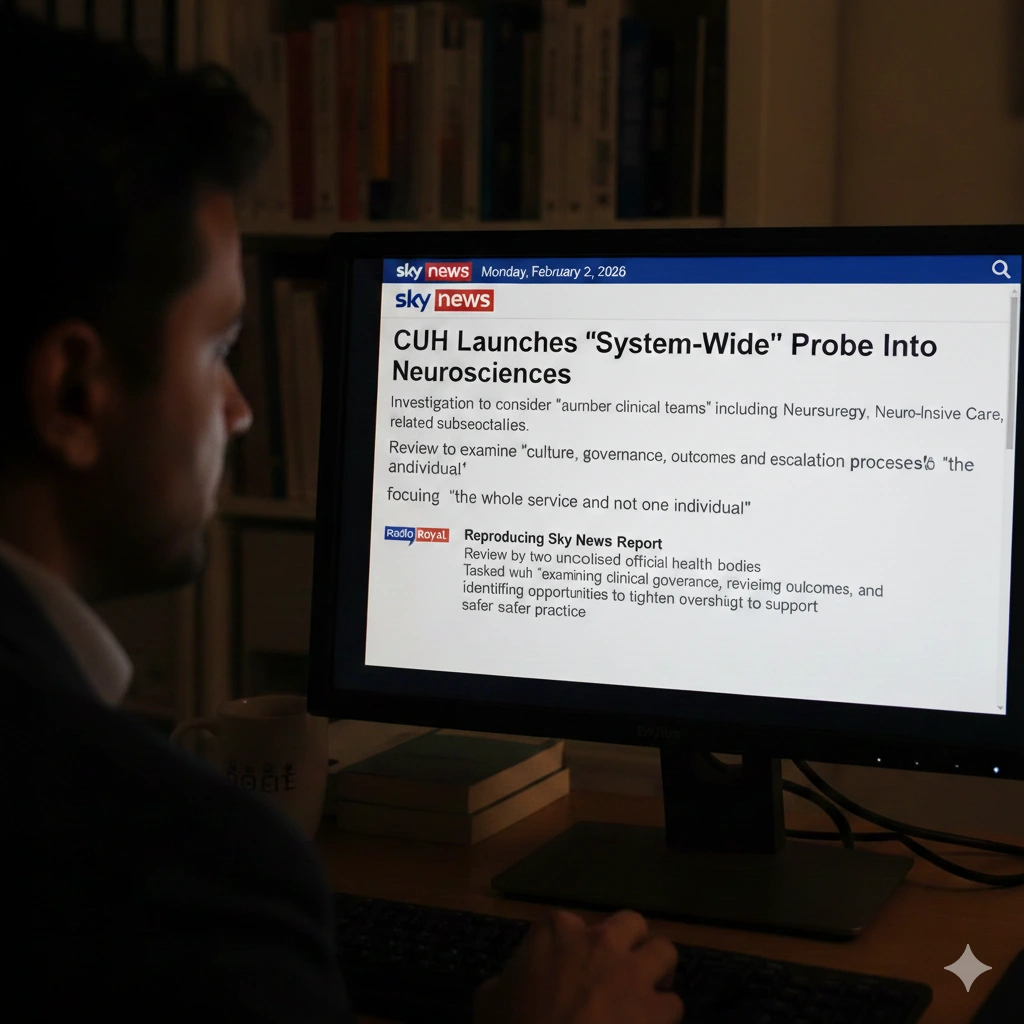
According to coverage carried by Radio Royal, which is reproducing the Sky News report, the review will be undertaken by two official health bodies, although their names have not been publicly disclosed in the available reporting. The trust has said the reviewers will be tasked with examining clinical governance arrangements, reviewing outcomes, and identifying any opportunities to tighten oversight and support safer practice across the service.
Who is carrying out the review and how long will it take?
As reported by Sky News and re‑published by Radio Royal, the investigation is being conducted independently by two official health organisations external to CUH. The trust has described the process as “rapid but thorough”, signalling an intention to balance speed with depth of scrutiny.
Sky News has reported that the rapid independent investigation is expected to conclude by the end of February, with the findings to be submitted to CUH by the summer. The trust has said it intends to publish the review’s outcome and to implement all recommendations made by the review team, though specific timelines for publication and follow‑up actions have not yet been set out publicly.
How has the hospital described the focus on patient safety and governance?
As reported by Sky News, a spokesperson for Cambridge University Hospitals NHS Foundation Trust stated that
“patient safety is our highest priority”,
adding that the trust “continually review[s] outcomes across our services to identify where improvements can be made and to ensure patients receive the best possible care”. Radio Royal’s report reproduces the same statement from the CUH spokesperson, underlining the trust’s emphasis on ongoing monitoring and quality improvement.
In the same statement, the CUH spokesperson said
“the review is examining a number of clinical teams to identify opportunities to strengthen clinical governance arrangements”,
indicating that the trust sees the exercise as a way to reinforce and refine the frameworks that oversee complex clinical decision‑making. The BBC has likewise reported that the trust commissioned the independent evaluation in response to concerns and that it will examine “several clinical teams”, aligning with the governance‑focused rationale set out by CUH.
How is this linked to the earlier investigation into surgeon Kuldeep Stohr?
As reported by Sky News, the decision to launch the neurosciences review comes only months after the same trust was subject to an independent investigation into suspended orthopaedic paediatric surgeon Kuldeep Stohr. Sky News previously revealed that concerns had been raised about Ms Stohr’s surgical work on children, prompting CUH to order a separate review.
In the report referenced by Sky News in its latest coverage, the independent investigators found that the trust had missed “multiple opportunities” to act on concerns about Ms Stohr’s surgeries. Sky’s article on the neuroscience review places this finding in direct context, suggesting that the new investigation reflects a wider effort by CUH to address issues around whistleblowing, escalation, and the speed with which concerns are recognised and acted upon.
What is the status and reputation of Addenbrooke’s and the Rosie Hospital?
As reported by the Care Quality Commission (CQC), Addenbrooke’s and the Rosie Hospitals – which together form Cambridge University Hospitals’ main acute and maternity site – were rated “Good” overall at their most recent inspection. The CQC’s summary for the location explains that the Rosie, a purpose‑built women’s and maternity hospital adjacent to Addenbrooke’s, provides tertiary maternity services and a level 3 neonatal intensive care unit for a wide catchment area including Cambridgeshire and parts of North Essex, East Hertfordshire, Suffolk and Bedfordshire.

The BBC has reported that Addenbrooke’s and the Rosie were rated “good” by the CQC in 2023 following their last overall inspection, and noted that in 2019 the CQC found the hospital’s referral‑to‑treatment rate for neurosurgery was performing above the England average. According to the CQC’s maternity inspection summary, the Rosie’s maternity service is currently rated “requires improvement” for the “safe” domain but “good” for “well‑led”, with the hospital as a whole retaining a “good” rating.
How strong is the neurosciences service at Addenbrooke’s considered to be?
As reported by Sky News, Addenbrooke’s is described as a “world‑renowned hospital” benefiting from the prestige of its close association with the University of Cambridge, with its neurosciences service counted among the country’s leading units. Sky’s coverage highlights that the service treats complex brain injuries and head trauma, indicating that it functions as a specialist referral centre as well as serving the local population.
The BBC’s reporting notes that neurosurgery at Addenbrooke’s has previously performed above the national average on referral‑to‑treatment times, underlining a track record of relatively strong performance on access metrics before the current concerns were raised. The CQC’s location‑wide reports, while not focused exclusively on neurosciences, consistently describe Addenbrooke’s as a major tertiary provider with a broad range of specialist services supporting patients across the wider Eastern region.
What has been reported about the nature of the concerns?
As reported by the BBC, Addenbrooke’s Hospital has said it ordered a “rapid but thorough” review of neuroscience services after concerns were raised, but the trust has not specified publicly what those concerns relate to. The BBC article emphasises that the independent evaluation will examine “several clinical teams” and notes that CUH has declined to give detailed examples of cases or incidents prompting the review.
Sky News’ report, re‑carried by Radio Royal, frames the concerns in the context of the earlier Stohr investigation, suggesting that questions have been raised over how problems are identified and escalated in high‑risk specialties. However, neither Sky News nor the BBC reports cite specific patient cases or outcomes in neurosciences, and both outlets make clear that the review is intended to look broadly at the service rather than attributing blame to a particular individual.
What does this mean for current patients and services?
As reported in the BBC’s coverage, the hospital has initiated the review while continuing to run its neurosciences services, and there has been no indication that routine or emergency care in neurology or neurosurgery has been suspended. CUH’s statement, quoted by both Sky News and the BBC, stresses that the purpose of the review is to ensure patients “receive the best possible care” and to identify where improvements can be made, implying that care will continue with enhanced scrutiny rather than service reduction.
Radio Royal’s reproduction of the Sky News story similarly focuses on the governance aspects of the review rather than any immediate change in service configuration, indicating that the trust expects the unit to keep functioning while external reviewers examine records, outcomes and governance processes. Patients and families are being reassured through public statements that their safety is the trust’s primary concern and that any issues identified will be addressed.
How does this fit into wider scrutiny of maternity and specialist services at CUH?
As reported by the CQC in its inspection summary for Addenbrooke’s and the Rosie, maternity services at the Rosie Hospital were inspected under the national maternity inspection programme, with inspectors rating safety as “requires improvement” and “well‑led” as “good”. The CQC noted issues including staffing pressures, monitoring of waiting times and some gaps in safety checks, even as it recognised improvements in governance and risk assessment processes.
The fact that CUH is now commissioning an external review of neurosciences, following the independent investigation into Ms Stohr’s paediatric orthopaedic surgeries and amid ongoing national scrutiny of maternity care, places the trust within a broader pattern of heightened oversight of specialist and high‑risk services. Regulators and external reviewers are increasingly focusing on how quickly concerns are escalated, how robustly governance frameworks work in practice, and how large teaching hospitals balance innovation and complexity with safe everyday care.

What happens next and what should people watch for?
As reported by Sky News, the rapid review is expected to finish by the end of February, with a report to be sent to CUH by the summer. The trust has committed to publishing the findings and implementing all recommendations, which means the coming months are likely to bring detailed public scrutiny of how neurosciences at Addenbrooke’s is organised, monitored and led.The BBC has highlighted that the hospital’s overall CQC rating remains “good”, and that Addenbrooke’s continues to be seen as a leading neuroscience centre despite the current concerns.
Patients, staff and local residents will be watching closely for the review’s conclusions, the trust’s plan to respond, and any subsequent changes to service structures, staffing or governance that emerge as CUH seeks to demonstrate that lessons have been learned from both this inquiry and the earlier investigation into Ms Stohr’s practice.