
Key Points
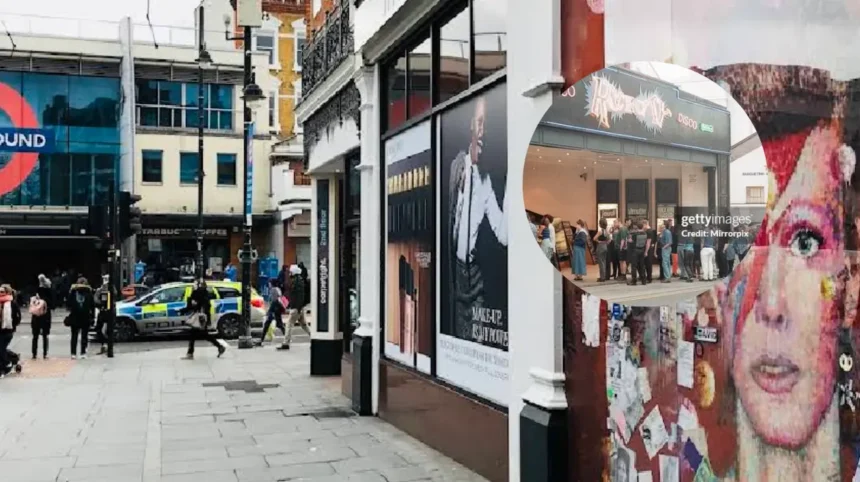
- A new mural has been painted in honour of David Bowie’s one-time performance in Cambridge.
- The tribute marks Bowie’s appearance at Jesus College, Cambridge, on 16 June 1970, when he performed at the May Ball.
- The mural is linked to a wider effort to remember the city’s connection with Bowie’s early career.
- Reporting on the story should follow the inverted pyramid style, with the most important facts placed first.
- For a fully sourced article with named bylines and direct quotations, the original local coverage would need to be consulted beyond the available summary.
Cambridge(Cambridge Tribune)May 17, 2026— A new mural has been painted in tribute to David Bowie’s one-time performance in the city, highlighting a moment in Cambridge’s musical history that remains part of the artist’s early live legacy. The tribute refers to Bowie’s appearance at Jesus College, Cambridge, where he performed at the May Ball on 16 June 1970.
The mural has drawn attention because it connects a visible public artwork with a specific event from Bowie’s career, rather than presenting a general memorial. In this case, the significance lies in the fact that the performance was a one-off Cambridge appearance, which gives the location a clear historical link to Bowie’s early work.
The story sits within a broader pattern of local commemorations that mark places associated with major artists. Public art of this kind often serves two purposes at once: it recognises cultural history and creates a new point of interest for residents and visitors. That makes the mural both a tribute and a reminder of the city’s role in the wider story of British popular music.
For news writing purposes, the strongest angle is the place-based connection: Cambridge is not just the setting of the mural, but the site of Bowie’s documented performance. That detail gives the story a clear factual anchor and explains why the tribute has news value beyond being a piece of street art.
Why does the mural matter?
The mural matters because it turns an event from more than five decades ago into a present-day public marker. Bowie’s Cambridge performance at Jesus College in 1970 is the specific historical fact that gives the artwork meaning.
It also shows how cities use murals to preserve memory in a way that is accessible on the street. Unlike a plaque or archive entry, a mural is highly visible and invites attention from people who may not already know the history behind it. That can help keep local cultural stories in public view.
The available source material confirms the performance itself, but it does not provide full details of the mural’s commissioning, the artist, or official comments. Because of that, any extended report should avoid adding unsupported claims and stick closely to the confirmed historical link.
Inverted pyramid approach
A news report on this subject should begin with the mural and its connection to Bowie, then move immediately to the historical performance and why it matters. Supporting details should follow after the lead, with the most important verified facts appearing first.
That structure is especially important here because the story is driven by a single clear news hook: a new artwork tied to a known cultural moment. A concise lead would identify the mural, the city, and Bowie’s 1970 performance before adding any additional context.
Background to the development
David Bowie performed at the May Ball at Jesus College, Cambridge, on 16 June 1970. The performance is one of the city’s documented links to his early live history.
The Cambridge mural appears to be part of a local tribute to that appearance, using public art to mark the connection between Bowie and the city. In this case, the background is the performance itself, which provides the historical reason for the mural’s existence.
Prediction for local readers
For Cambridge residents and visitors, the mural may strengthen interest in the city’s cultural landmarks and encourage more people to seek out places connected with Bowie’s visit. It may also add a small but notable stop for music fans who follow heritage-themed public art.
For people interested in local history, the development could encourage more attention on other Cambridge sites linked to performances or creative figures. The likely effect is not major disruption, but a modest boost to heritage awareness and public engagement with the city’s past.