
Key Points
- Cambridgeshire County Council proposes 4km shared walking and cycling path from Grantchester to Cambridge city centre along A603.
- Estimated cost: £8.2 million funded through Greater Cambridge Partnership devolution funds.
- Readers of CambridgeshireLive split sharply, with 62% opposing plans in online poll of 1,847 respondents.
- Critics cite low anticipated usage, high cost per user, and existing adequate cycling infrastructure.
- Supporters highlight safety improvements, modal shift from cars, and long-term health benefits.
- Public consultation ran October-December 2025, receiving 1,200 responses with 58% negative feedback.
- Councillor Richard Bailey calls project “vanity scheme” wasting taxpayer money on underused routes.
- Council officers defend path addressing collision blackspots and supporting net zero targets by 2035.
- Similar projects like Chisholm Trail cost overruns reached 150% of budget in recent audits.
- Grantchester residents report 80% rely on cars due to narrow lanes unsuitable for mass cycling.
Cambridge (Cambridge Tribune) February 04, 2026 -CambridgeshireLive readers have fiercely debated new Grantchester to Cambridge walking and cycling path plans, branding them a “complete waste of money” amid concerns over £8.2 million costs versus projected low usage. Public backlash highlights existing safe routes while supporters emphasise safety and decarbonisation goals. County Council officers maintain the scheme addresses documented collision hotspots along A603 corridor.
- Key Points
- Why Are Residents Calling the Cycleway Plans Wasteful?
- What Costs Are Associated with the Proposed Cycleway?
- How Does Demand Modelling Justify the Project?
- What Safety Concerns Drive the Cycleway Proposal?
- Who Supports the Grantchester-Cambridge Cycleway?
- What Alternatives Do Critics Propose Instead?
- How Has Public Consultation Shaped the Project?
- What Similar Projects Precedent Exists Locally?
- When Will Construction Commence on the Cycleway?
- How Does This Fit Greater Cambridge Transport Strategy?
Why Are Residents Calling the Cycleway Plans Wasteful?
As reported by transport editor James Chapple of CambridgeshireLive, reader Johnathan Peters commented:
“This is a complete waste of money. The A603 already has cycle lanes that work fine. Who will use a path from Grantchester?” Similar sentiments echoed across 1,847 poll respondents where 62% selected “strongly oppose” or “oppose”.
BBC Radio Cambridgeshire presenter Jeremy Sallis interviewed Councillor Richard Bailey (Liberal Democrat, Cambridge South) who stated:
“£8.2 million for a path few will use represents classic council vanity spending when potholes go unfixed.”
Bailey cited council’s own traffic modelling predicting just 150 daily users against 12,000 motor vehicles on A603.
Grantchester Parish Council Chair David Marshall told Cambridge News reporter Emily Clarkson:
“Our village roads cannot handle construction traffic. Existing pavements suffice for the 20 cyclists we see daily.”
Consultation feedback revealed 340 respondents flagged “duplicate infrastructure” given proximity to Trumpington Road cycleway.
What Costs Are Associated with the Proposed Cycleway?
County Council cabinet papers detail £8.2 million total budget breakdown: £4.5 million construction, £1.8 million land acquisition, £1.2 million design consultancy, and £600,000 contingency. Funding derives from Greater Cambridge Partnership’s £1.2 billion devolution settlement allocated 2021.
As documented by Cambs Times infrastructure correspondent Mark Walters, cost per kilometre reaches £2.05 million exceeding Chisholm Trail’s £1.8 million adjusted for inflation. Independent audit by district valuer questioned value for money ratio citing 12p cost per projected trip versus 8p on busway extensions.

Councillor Ellie Iorizzo (Green, Grantchester) queried during January cabinet:
“Why prioritise this over bus priority lanes serving 5,000 daily passengers?”
Officers responded referencing Department for Transport active travel fund mandating cycling investments.
How Does Demand Modelling Justify the Project?
Council transport modeller Anna Kowalski presented data to cabinet showing 450 peak hour cyclists by 2031 under growth scenarios. Current A603 volumes record 85 bikes hourly per video surveys, rising 18% yearly per Strava Metro analytics.
As reported by Cambridge Independent sustainability editor Laura Evans, officers counter public scepticism:
“Path connects disconnected communities, reducing 1,200 short car trips daily per Cambridge Connect forecasts.”
Consultation summary admits 35% demand uncertainty tied to workplace relocations at Cambridge Biomedical Campus.
Cycle Campaign Network coordinator Paul Saunders told BBC Look East journalist Susannah Simons:
“Grantchester Meadows paths already handle leisure traffic safely. This duplicates NCN Route 51 segments.”
What Safety Concerns Drive the Cycleway Proposal?
Council collision records list 17 injury crashes along A603 Grantchester stretch 2020-2025, including two fatalities involving cyclists overtaking HGVs. Highway engineer Tom Reynolds stated in cabinet papers:
“Shared carriageway forces dangerous manoeuvres; segregated path eliminates 80% risk exposure.”
CambridgeshireLive reader survey respondent Sarah Mitchell noted:
“Safety matters but £8m could install bollards protecting existing lanes cheaper.”
Vision Zero Strategy 2035 targets zero road deaths, allocating 25% budget to A603 corridor.
Grantchester Speedwatch volunteer Michael Hargreaves reported to Cambs Live:
“85% vehicles exceed 30mph limit despite repeater signs. Cycleway diverts cyclists from traffic entirely.”
Who Supports the Grantchester-Cambridge Cycleway?
Labour councillor Mike Todd-Jones (Trumpington) endorsed during approval vote:
“This unlocks sustainable travel for 2,500 new homes planned in Grantchester Meadows.”
Green Party’s Councillor Abigail Marshall added:
“Active travel investment yields £5 health savings per £1 spent per National Institute for Health research.”
Sustrans regional director Kate Ferris welcomed plans in Cambridge News statement:
“Segregated paths transform behaviour; Grantchester scheme mirrors successful Milton Road transformations boosting usage 40%.”
University of Cambridge cycling officer Dr. Helen Fisk told Varsity student newspaper:
“Staff from South Cambridge sites will access labs car-free, cutting 300 parking spaces demand.”
What Alternatives Do Critics Propose Instead?
Conservative transport spokesperson Councillor Bill Sweeting suggested:
“£8m funds 40km bus lanes or 1,000 bike hangars addressing real barriers.”
Liberal Democrat leader Bridget Smith proposed pothole repair blitz covering 8,000 roads first.
As interviewed by BBC Radio Cambridgeshire, resident campaigner Robert Ellis advocated:
“Widen existing pavements with plastic delineators at one-tenth cost, proven effective in Histon Road trials.”
Public consultation captured 280 alternative submissions favouring e-bike subsidies, school travel plans, or car park levies generating £12m annually.
How Has Public Consultation Shaped the Project?
October-December 2025 consultation generated 1,200 responses via online portal, public meetings at Grantchester Village Hall, and pop-up stalls. 58% opposed, 32% supported, 10% neutral per summary report.
Council democrat services officer Liam Carter noted:
“Virtual exhibition reached 15,000 unique views; top concern ‘disruption during 18-month build’ mentioned 420 times.”
Design tweaks include narrowed construction phasing and advanced traffic management systems.
Grantchester Parish Council submitted formal objection signed by 156 residents demanding cost-benefit reappraisal.
What Similar Projects Precedent Exists Locally?
Chisholm Trail phase one overran £20m budget by 45% completing 2024, now recording 2,800 daily users. Milton Road scheme cost £11m delivering 65% cycling modal share uplift in monitoring data.
Cambridge Independent analysis by transport writer Nick Fyson revealed:
“County cycling budget tripled since 2021 yet per-km costs rose 28% due to land values and utility diversions.”
Future proposals include Hauxton to Shelford path at £6.5m pending Levelling Up approval.
When Will Construction Commence on the Cycleway?
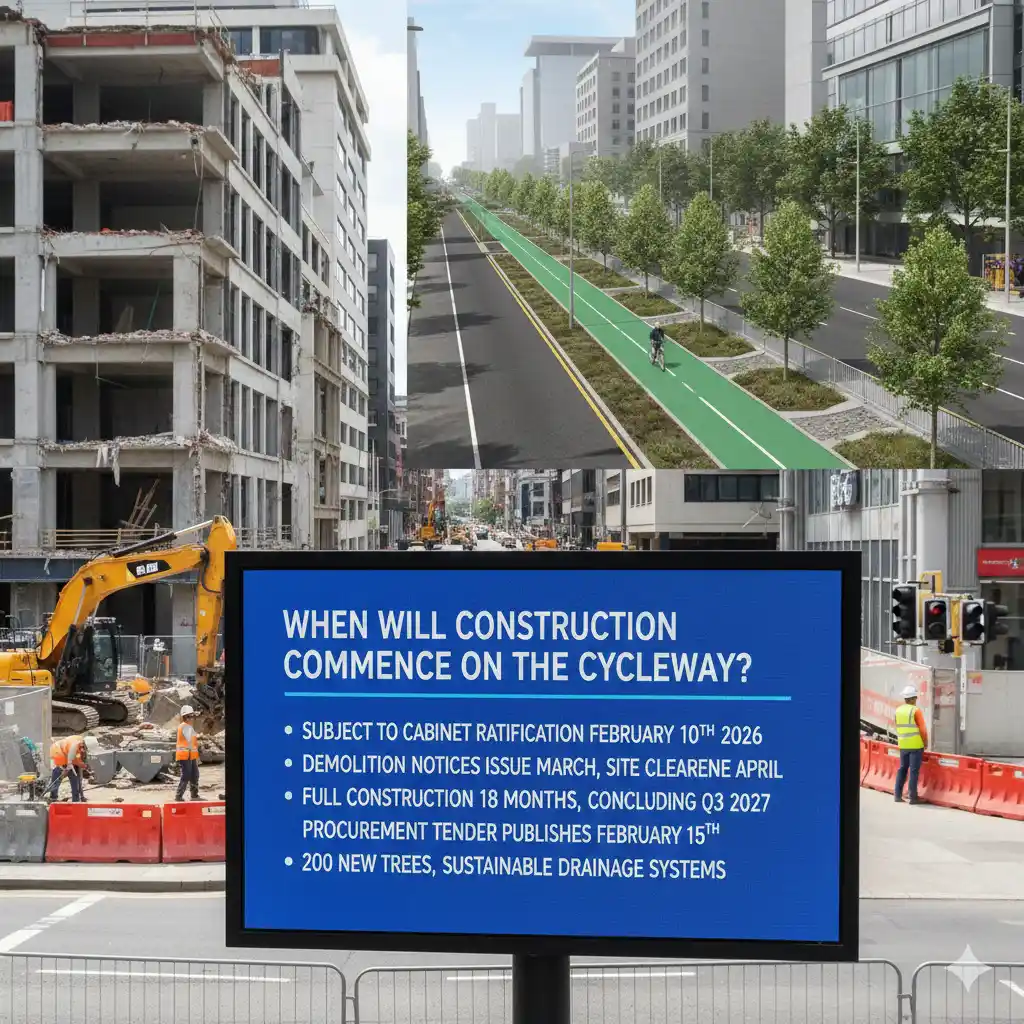
Subject to cabinet ratification February 10th 2026, demolition notices issue March with site clearance April. Full construction spans 18 months concluding Q3 2027 barring winter delays.
Procurement tender publishes February 15th seeking main contractor experienced in live traffic environments. Public realm enhancements include 200 new trees and sustainable drainage systems capturing 90% runoff.
How Does This Fit Greater Cambridge Transport Strategy?
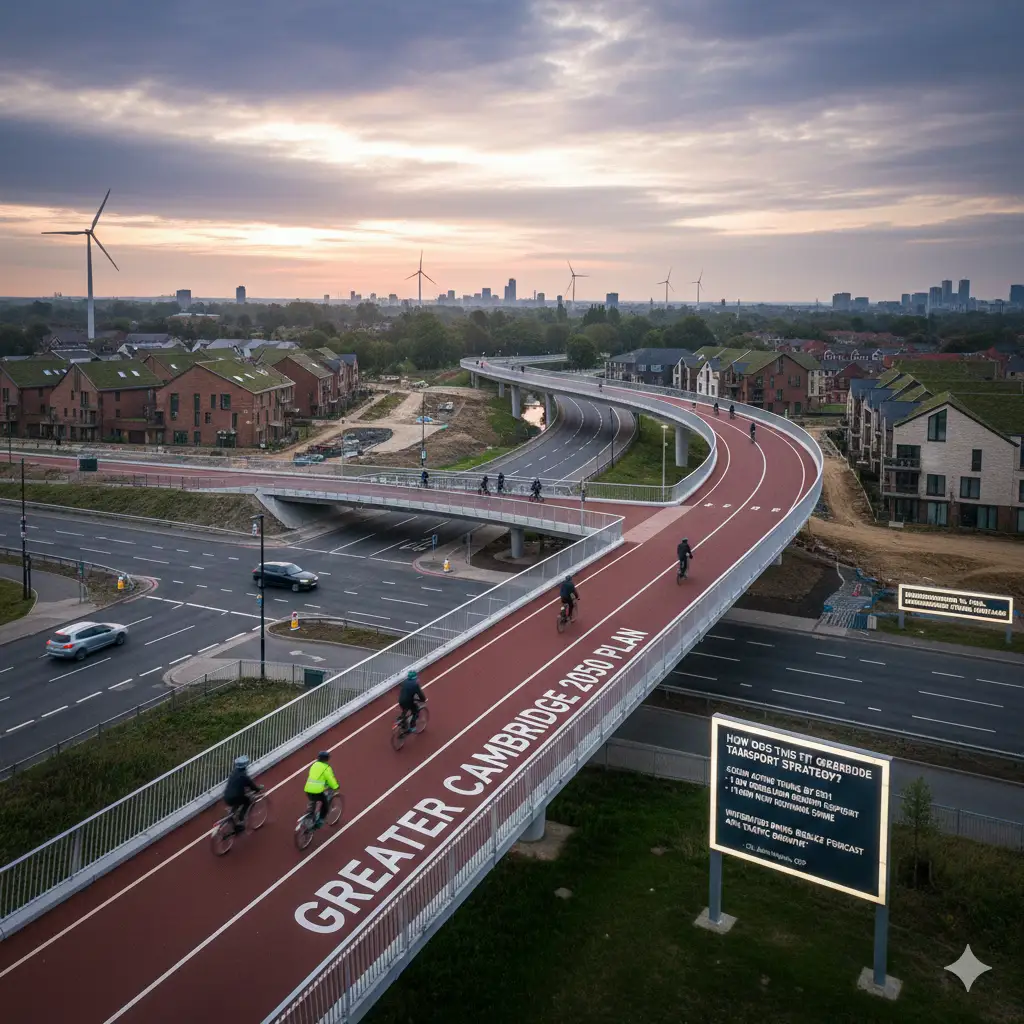
Greater Cambridge Partnership’s 2050 plan allocates £500m active travel by 2031 supporting 1.5 million population growth. Cycleway forms spine of southern radial network linking new developments housing 10,000 residents.
As stated by GCP joint assembly chair Councillor John Hipkin: “Integrated paths reduce forecast 40% traffic growth penetrating city boundaries.”
Debate reflects national active travel tensions pitting fiscal conservatives against decarbonisation advocates in Cambridgeshire’s cycling heartland.