

Key Points
- Cambridgeshire County Council has approved a £58 million highways maintenance and improvement programme for 2026-27, following a similar £59 million allocation for 2025/26.
- The funding will cover improvements on 210 kilometres (130 miles) of roads, including key routes such as A1307 Hills Road in Cambridge, A142 Ely Road in Witcham, and A605 Elton near Peterborough.
- Breakdown includes £36.5 million for road maintenance, £4.5 million for footpaths and cycleways, £3 million for bridges and structures, £2.5 million for soil-affected roads, and £3.45 million for safer, greener travel via the Local Transport Grant.
- The council faces an £800 million maintenance backlog, with the £58 million addressing 7.25% of it; soil-affected roads could cost four times more to repair.
- Work is prioritised using a new scoring system based on road type, active travel links, public transport routes, condition, proximity to schools or care homes, and usage levels.
- Specific schemes include resurfacing parts of Mill Road (£650k), Market Street footways (£523k), Hundred Foot Bank in Little Downham (£862k), Sixteen Foot Bank (£1.2m), Spittals Way (£1.2m), Earith Road (£630k), and Granham’s Road in Great Shelford.
- Additional £8 million from Cambridgeshire and Peterborough Combined Authority, plus government grants via Department for Transport; work starts April 2026 to March 2027.
- Cllr Alex Beckett, Chair of Highways and Transport Committee, stated: “By prioritizing preventative maintenance, we are prolonging the lifespan of our roads and minimizing the necessity for expensive reconstruction down the line.”
- Cllr Alex Beckett further said: “However we travel, we’ve all seen the impact decades of under investment has had on our highway network. This is the largest capital investment in highways on record for Cambridgeshire, nearly double what we were spending four years ago. While we need government help to address the substantial backlog of repairs, it really is a step change in how we do highway maintenance and will make a meaningful difference for all of us.”
- Cllr Neil Shailer, Vice-Chair, said: “This programme is based on a clear process – it not only means we can evidence those needs, but we can be more strategic in our approach. We can prioritise the funding we have available, secure more from government and represent good value for money. I look forward to these improvements being rolled out across the county.”
- The programme prioritises local highway improvements (LHIs), trees, weeds, vegetation, drainage, road safety, active travel, potholes, road linings, signs, street lighting, and bus shelters.
- Earlier context: £10 million extra from government via Combined Authority for 2025/26 pothole fixes, part of £500 million national pot; Mayor Dr Nik Johnson welcomed it, saying: “This is welcome additional funding for our highway authorities – Cambridgeshire County Council and Peterborough City Council – who for too long have had to manage in the face of funding cuts.”
- Transport Secretary Heidi Alexander stated: “Potholes have plagued motorists for far too long, but today’s record investment will start to reverse a decade of decline on our country’s roads… We are investing £1.6bn to fix up to seven million more potholes next year. This government is firmly on the side of drivers.”
- Ongoing issues: Council criticised previous contractor M Group for “ridiculous” pothole repairs under £51 million contract (up for renewal 2027); examples showed repairs failing within 14 days.
- Public encouraged to report potholes via Gov.uk.
Cambridgeshire (Cambridge Tribune) March 5, 2026 – Councillors at the Highways and Transport Committee have given the green light to a £58 million programme aimed at repairing and enhancing the county’s severely deteriorated roads, addressing a massive maintenance backlog amid ongoing complaints about potholes and poor infrastructure.
- Key Points
- What Triggered the £58m Road Repair Approval?
- Which Roads Will Benefit from the Funding?
- How Is Prioritisation Determined?
- What Is the Funding Breakdown and Timeline?
- Why Are Cambridgeshire Roads in Such Poor Condition?
- What Do Councillors Say About the Programme?
- How Does National Funding Support Fit In?
- What Challenges Remain Despite the Investment?
What Triggered the £58m Road Repair Approval?
The approval came during a committee meeting on Tuesday, March 4, 2026, where councillors endorsed the comprehensive highways maintenance and improvement programme for 2026-27. As reported by BBC News, Cambridgeshire County Council announced the allocation, which builds on a £59 million programme approved for 2025/26 and represents the largest capital investment in highways on record for the county, nearly double the spending four years ago.
This step follows decades of underinvestment, with the county’s roads requiring over £400 million in maintenance, excluding an additional £530 million for soil-impacted roads, contributing to the total £800 million backlog. The new funding, including an extra £20 million enabled by the council’s recent business plan, along with £8 million from the Cambridgeshire and Peterborough Combined Authority, targets preventive measures to extend road lifespans and avoid costlier reconstructions.
Which Roads Will Benefit from the Funding?
The £58 million will facilitate resurfacing and repairs on 210 kilometres of roadways, prioritising high-impact routes. Key examples include the A1307 Hills Road in Cambridge, A142 Ely Road in Witcham, and A605 Elton near Peterborough, as detailed in the council’s announcement covered by BBC.
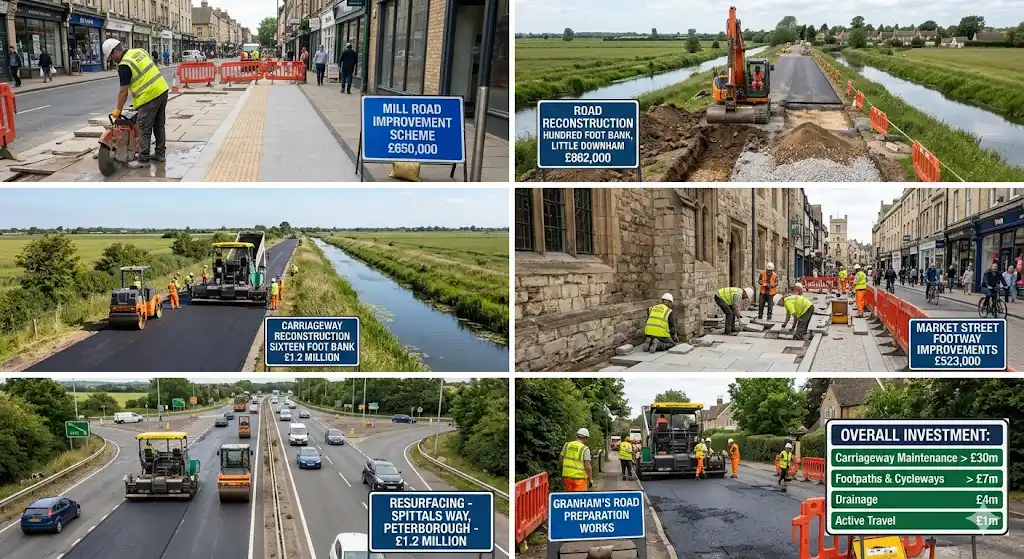
Specific schemes approved encompass £650,000 for parts of Mill Road, £523,000 for footway improvements on Market Street, £862,000 for reconstructing Hundred Foot Bank in Little Downham, £1.2 million at Sixteen Foot Bank, £1.2 million on resurfacing between roundabouts on Spittals Way in Peterborough, £630,000 for parts of Earith Road, and preparation work for Granham’s Road in Great Shelford. Further allocations cover over £30 million in carriageway maintenance, more than £7 million on footpaths and cycleways, £4 million on drainage, and £1 million on active travel initiatives.
How Is Prioritisation Determined?
A new prioritisation process scores schemes against criteria like road type, active travel links, public transport usage, condition, proximity to schools or care homes, and overall usage, ensuring the right treatments for each location. Cllr Neil Shailer of Cambridgeshire County Council, as quoted in the official council release, explained:
“This programme is based on a clear process – it not only means we can evidence those needs, but we can be more strategic in our approach.”
What Is the Funding Breakdown and Timeline?
The budget splits into £36.5 million for general road maintenance (including potholes, linings, and signs), £4.5 million for footpaths and cycle lanes, £3 million for bridges and structures, £2.5 million for soil-affected roads (with trials starting summer 2026), and £3.45 million from the Local Transport Grant for safer, greener, accessible travel. An extra £1.5 million targets long-term soil road solutions.
Funding sources include Department for Transport grants, Cambridgeshire and Peterborough Combined Authority contributions, and council resources. Delivery begins in April 2026, running through to March 2027, following design and development phases.
Why Are Cambridgeshire Roads in Such Poor Condition?
Cambridgeshire’s highways suffer from a £800 million backlog, with soil-affected roads costing up to four times more to repair due to expansive clay soils causing subsidence. As per BBC reporting, the council is lobbying for “fairer funding” from government and partners.
Past issues include criticism of M Group Services, the contractor under a £51 million annual deal (renewal due 2027). As covered by GB News, the council described some pothole repairs as “ridiculous,” “unbelievable,” and failing within 14 days, with photos showing crumbling patches labelled “very poor workmanship.” M Group Director Matthewes responded:
“We collaborate with Cambridgeshire County Council to deliver over 50,000 pothole repairs annually adhering to the required standards and the contractual obligations set by our client.”
What Do Councillors Say About the Programme?
Cllr Alex Beckett, Democrat Chair of the Highways and Transport Committee at Cambridgeshire County Council, emphasised prevention:
“By prioritizing preventative maintenance, we are prolonging the lifespan of our roads and minimizing the necessity for expensive reconstruction down the line.”
He added in the council’s press release:
“This is the largest capital investment in highways on record for Cambridgeshire… it really is a step change in how we do highway maintenance and will make a meaningful difference for all of us.”
Cllr Neil Shailer reinforced the strategic shift, noting the process allows prioritisation, better government funding bids, and value for money.
How Does National Funding Support Fit In?
The programme benefits from prior national pledges, including £10 million extra for 2025/26 via the Combined Authority, part of a £500 million UK-wide pot (25% performance-based). Mayor Dr Nik Johnson of the Cambridgeshire and Peterborough Combined Authority welcomed it:
“This is welcome additional funding for our highway authorities… who for too long have had to manage in the face of funding cuts.”
Transport Secretary Heidi Alexander affirmed:
“We are investing £1.6bn to fix up to seven million more potholes next year. This government is firmly on the side of drivers.”
The Combined Authority allocates to Cambridgeshire County Council and Peterborough City Council based on agreed formulas, boosting totals to around £37.5 million for the region in 2025/26.
What Challenges Remain Despite the Investment?
While the £58 million tackles 7.25% of the backlog, the council acknowledges the scale of need, with calls for more central support. Ongoing Local Highways Improvement schemes have record £1.67 million for 2025/26, funding 120 community projects like footways and speed limits.
Public involvement is key, with residents urged to report potholes on Gov.uk to inform priorities. The council’s YouTube live-streamed the meeting, and committee papers are public.
This initiative signals a concerted effort to mend Cambridgeshire’s battered roads, though full recovery demands sustained investment amid persistent pressures like soil issues and past contractor shortcomings.