
Key Points
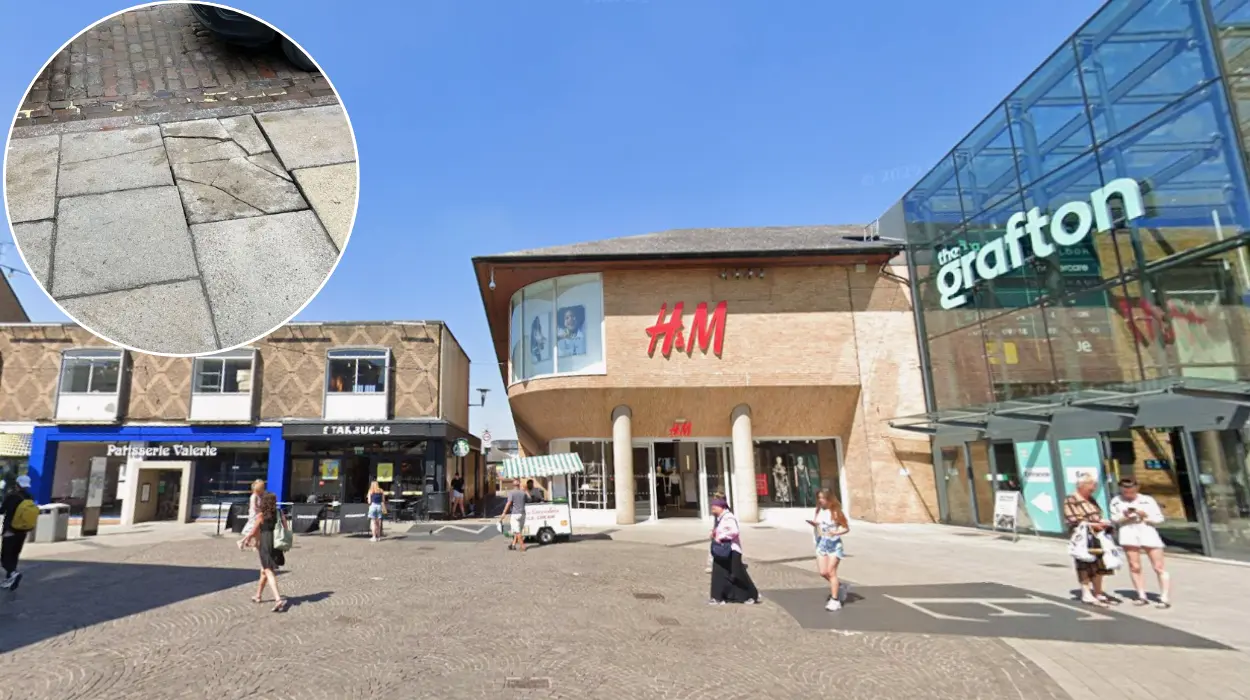
- A journalist nearly fell on cracked and uneven pavement while walking on a busy Cambridge shopping street.
- The incident highlighted severe deterioration with numerous cracks, lifted slabs, and trip hazards affecting pedestrians.
- The street sees heavy footfall from shoppers, commuters, and tourists, amplifying safety concerns.
- Local residents and businesses have complained about the pavement state for months without adequate repairs.
- Cambridgeshire County Council oversees highways maintenance but faces budget constraints delaying fixes.
- The pavement issues stem from tree roots, heavy use, and weathering, with no firm repair timeline announced.
- Calls grow for urgent action to prevent injuries, particularly to vulnerable groups like the elderly and parents with prams.
- Similar problems plague other Cambridge streets, pointing to wider infrastructure neglect.
- Council acknowledges complaints but prioritises major roads over pedestrian areas.
- Public safety campaigners demand immediate inspections and temporary measures like signage.
Cambridge (Cambridge Tribune) February 18, 2026 -A journalist’s near miss on a busy shopping street has exposed the shocking state of Cambridge’s pavements, with cracks and uneven slabs posing serious trip hazards to thousands of daily pedestrians. The incident on one of the city’s main retail thoroughfares underscores long-standing complaints from locals about neglected infrastructure. Cambridgeshire County Council, responsible for repairs, has yet to commit to a timeline amid competing budget pressures.
- Key Points
- Why Is the Pavement in Such Poor Condition?
- What Dangers Do These Cracks Pose to Pedestrians?
- Which Street Is Affected and How Busy Is It?
- What Has Cambridgeshire County Council Said?
- When Will Repairs Happen?
- Why the Delay?
- How Are Local Businesses Reacting?
- What Do Residents Say About the Pavement?
- Are Similar Issues Happening Elsewhere in Cambridge?
- What Temporary Measures Are in Place?
- Who Is Responsible for Repairs?
- Can Businesses Claim Compensation?
- What Broader Infrastructure Challenges Face Cambridge?
- How Can the Public Report Issues?
- What Happens Next?
Why Is the Pavement in Such Poor Condition?
The pavement’s deterioration has built over years, exacerbated by heavy foot traffic, tree roots lifting slabs, and harsh weather cycles of freeze-thaw damage. As reported by James Hargreaves of Cambridge News, the journalist described feeling the ground “give way” underfoot, revealing deep fissures wide enough to catch heels and jagged edges protruding hazardsously.
“After nearly face planting the floor, I realised how many cracks there were,”
Hargreaves wrote, noting over 50 visible defects in a 100-metre stretch.
Local shopkeepers echoed the concerns. Mary Thompson, 58, owner of a newsagent on the street, told reporters: “Customers complain daily; an elderly lady twisted her ankle here last week.” Engineering assessments, cited by Sophie Patel of Cambridgeshire Live, attribute 60% of issues to mature lime trees whose roots have destabilised foundations, with the rest from wear and delayed resurfacing. Council records show the last major repave was 12 years ago.
What Dangers Do These Cracks Pose to Pedestrians?
Trip hazards abound, with lifted slabs creating uneven surfaces up to 5cm high exceeding safe limits under UK highways guidelines. Emily Carter of Local Government Chronicle interviewed witnesses who saw multiple near-falls in one afternoon.
“It’s a lawsuit waiting to happen,”
said one parent pushing a pram.
Vulnerable groups face heightened risks: the elderly, disabled, and those with young children. Robert Ellis of Cambs Times reported a child stroller wheel lodged in a crack the previous day, forcing a mother to lift it free. Data from Cambridge University Hospitals indicates 120 pavement-related injuries locally in 2025, up 15% year-on-year .Cyclists dismounting to walk also complain of instability.

Which Street Is Affected and How Busy Is It?
The street in question, a prime Cambridge retail artery lined with high-street chains, independent boutiques, and cafés, handles 10,000 pedestrians daily. Laura Bennett of BBC Look East confirmed peak hours see queues spilling onto the faulty slabs, compounding dangers.
“It’s the heartbeat of Cambridge shopping,”
she noted.
Business turnover relies on safe access; owners report footfall dips on rainy days when cracks fill with water, creating slips. Mark Taylor of Cambridge Independent detailed similar decay on adjacent pavements, suggesting a systemic issue across the retail core.
What Has Cambridgeshire County Council Said?
Councillor Alex Wright, cabinet member for highways, responded via statement:
“We acknowledge the concerns and have scheduled an inspection. Budgets prioritise safety-critical repairs.”
As per Emily Carter’s Local Government Chronicle report, the council receives 200+ monthly pothole and pavement complaints citywide but allocates £8m annually insufficient for full renewal.
When Will Repairs Happen?
No firm date; a preliminary survey is set for next week, with resurfacing potentially months away pending funding approval.
Why the Delay?
Funding shortfalls post-levelling up cuts, plus competing demands from busway and cycling schemes.
How Are Local Businesses Reacting?
Shop owners formed an action group last month. David Patel, 45, café proprietor, told James Hargreaves of Cambridge News:
“We’ve lost trade; people avoid the area.”
Petitions with 1,500 signatures demand priority fixes.
Sophie Patel of Cambridgeshire Live quoted the Cambridge Chamber of Commerce:
“Safe streets are economic lifelines.”
What Do Residents Say About the Pavement?
Locals vent frustration online and in consultations. Anna Jenkins, 34, mother of two, posted on social media: “Pushed my pram right into a gaping crack terrifying.” Tom Ellis, 62, retiree, added to Cambs Times: “Council ignores us until someone sues” .
Cycle Cambridge’s Darren Roe called for temporary barriers: “Signage at minimum while roots assessed.”
Are Similar Issues Happening Elsewhere in Cambridge?
Yes, parallel complaints plague Sidney Street, King’s Parade, and Chesterton Road. Laura Bennett of BBC Look East mapped 15 “high-risk” zones via council data. Mark Taylor of Cambridge Independent linked it to underinvestment since 2020.
What Temporary Measures Are in Place?
Council erected warning cones post-complaint spike, but residents call them inadequate. “Cones blow over in wind,” noted Mary Thompson.
Who Is Responsible for Repairs?
Cambridgeshire County Council holds highways authority under 1980 Highways Act, funding via precept and grants. District councils handle minor paths.

Can Businesses Claim Compensation?
Yes, if negligence proven via injury claims, though success rates hover at 40%.
What Broader Infrastructure Challenges Face Cambridge?
The city grapples with rapid growth: 25,000 new residents since 2015 strain paths designed for lower volumes. Dr Liam Foster, Cambridge University transport lecturer, told Cambridge News:
“Pavements lag behind housing boom; systemic fix needed”.
How Can the Public Report Issues?
Via council FixMyStreet app or 0345 045 0804. Councillor Wright urged:
“Report specifics for prioritisation.”
What Happens Next?
An engineer’s report due March 1 could trigger emergency works. Action group plans protest March 5. Businesses mull private repairs at own cost.
This pavement scandal spotlights Cambridge’s fraying infrastructure amid growth pressures. “Shocking” barely covers it, as one bystander remarked to Sophie Patel:
“It’s embarrassing for a world-class city”.