
Key Points
- Cambridge City Council is scheduled to vote on Monday, August 3, 2026, on temporarily reinstating the ShotSpotter gunshot detection system.
- The proposal follows the fatal July 4 shooting of 32-year-old city employee Xavier Bautista, whose body was found more than an hour after he was shot.
- The council originally voted 5-2-2 on May 18, 2026, to discontinue ShotSpotter over privacy concerns, accuracy issues, and fears of over-policing.
- Councilors E. Denise Simmons and Timothy R. Flaherty introduced the policy order to temporarily restore the system while broader public safety technology reviews are conducted.
- Acting Police Commissioner Pauline Wells stated ShotSpotter missed three 2025 shootings in coverage areas because two were indoors and one was a drive-by.
- Nearly 50 residents testified at a July 24 special meeting, with opinions sharply divided between public safety advocates and privacy concerned citizens.
- Councilor Ayah A. Al-Zubi exercised her charter right to delay the vote at the July 24 meeting, calling the timing emotionally charged.
- The system has a 65 per cent false positive rate in Cambridge since 2015, with only 35 per cent of alerts confirmed as actual gunfire.
- Police data shows 11 shootings since 2015 were detected by ShotSpotter but never reported to 911.
- The devices remain in place though deactivated, and reinstatement would come at no additional cost to the city.
Cambridge City Council (Cambridge Tribune) August 03, 2026 – It is set to vote on a policy order that would temporarily reinstate the ShotSpotter acoustic gunshot detection system in areas previously covered by the technology. The proposal, introduced by Councilors E. Denise Simmons and Timothy R. Flaherty, comes after intense public debate following the fatal shooting of Xavier Bautista, a 32-year-old Department of Public Works employee, on July 4, 2026.
- Key Points
- Why was ShotSpotter removed from Cambridge in May 2026?
- How did Xavier Bautista’s death change the debate?
- What do supporters say about reinstating ShotSpotter?
- What are opponents arguing against ShotSpotter?
- What does the data show about ShotSpotter’s performance?
- What would reinstatement involve and cost?
- Background: Timeline of ShotSpotter in Cambridge
- Prediction: How might this development affect Cambridge residents?
The policy order requests the City Manager to work with relevant city departments to temporarily restore and reactivate ShotSpotter while Cambridge conducts a broader public review of public safety technology. The order also specifies that no new data should be collected by ShotSpotter devices beyond what is required by law under the city’s Welcoming Community Ordinance and Surveillance Technology Ordinance.
Why was ShotSpotter removed from Cambridge in May 2026?
The Cambridge City Council voted 5-2-2 on May 18, 2026, to discontinue the ShotSpotter service and remove the devices within 90 days. According to reporting by Spencer Buell of The Boston Globe, councilors who supported ending the programme cited concerns that the technology was unreliable, could lead to over-policing of communities of colour, and might share data with federal authorities whose immigration enforcement policies the city opposes.
As reported by Cambridge Day, the resolution stated that ShotSpotter “has never been independently scientifically validated to be an accurate and reliable source of information”. Critics pointed to the system’s 65 per cent false positive rate, noting it frequently mistakes backfiring cars, fireworks, and other loud noises for gunfire.
Councilor Patty Nolan told Fox News Digital she voted to end the contract because of concerns raised by the American Civil Liberties Union and because she did not believe ShotSpotter made the city safer.
How did Xavier Bautista’s death change the debate?
Xavier Bautista was shot shortly before 4:30 a.m. on July 4, 2026, near the intersection of Broadway and Norfolk Street in Cambridge. According to the Middlesex District Attorney’s Office and Cambridge Police Commissioner Pauline Wells, pedestrians found Bautista’s body at approximately 5:24 a.m., more than an hour after the shooting occurred.
As reported by Josh Swartz of The Boston Globe, the elapsed time between the shooting and discovery of Bautista’s body became a focal point for those arguing ShotSpotter could have enabled faster emergency response. Police said no one called 911 to report the shooting, and an autopsy determined Bautista died from two gunshot wounds.
On July 13, 2026, Rayquon Brown, 29, of Canton, was arrested and charged with murder, carrying a firearm without a license, being an armed career criminal, and conspiring to commit murder in connection with the shooting. Investigators said Brown acted as a lookout during the incident, though no known connection exists between him and Bautista, and the motive remains under investigation.
What do supporters say about reinstating ShotSpotter?
Councilor E. Denise Simmons, who voted against discontinuing ShotSpotter in May, said the push to reinstate the technology grew from concerns raised by residents and city employees at a mid-July meeting attended by more than 100 people after Bautista’s death. As reported by Risha Sinha of The Harvard Crimson, Simmons stated:
“What has changed is not the merits of any argument. What has changed is what we have heard from our residents”.
Councilor Timothy R. Flaherty argued that even if ShotSpotter could not have prevented Bautista’s shooting, a faster alert could have helped police respond sooner and potentially identify suspects who fled the scene. He told the council:
“That opportunity was lost because it wasn’t an immediate response. That young man, the father of a five‑year‑old boy, lay in the gutter for what — it’s been reported — for an hour”.
Councilor Burhan Azeem, who voted present in May, said at a July 24 public meeting:
“I don’t think we should have gotten rid of it, but I don’t think it’s the best technology. If it was my kid, my dad, my fiancée out there, and you told me there was a 5 per cent chance that they could have been saved, well, that is everything to me”.
Cambridge resident Jacqueline Adams urged the council to restore ShotSpotter, citing personal experiences she said demonstrated its value:
“Despite statistics stating ShotSpotters are ineffective, we have experienced firsthand how the use of this system saved a life”.
What are opponents arguing against ShotSpotter?
Councilor Jivan Sobrinho-Wheeler opposed reinstating ShotSpotter, saying the technology failed to detect any of the three shootings that occurred within the range of its sensors in 2025. As reported by Sinha of The Harvard Crimson, he stated:
“ShotSpotter makes it more likely that we have another tragedy like this one because of how dangerously inaccurate it is”.
Acting Police Commissioner Pauline Wells explained that none of the three shootings triggered ShotSpotter alerts because the shots were fired inside buildings or vehicles, and ShotSpotter detection only works outside.
Councilor Ayah A. Al-Zubi, who spoke at times through tears during the July 24 meeting, exercised her charter right to delay the vote, arguing the council was “weaponising” residents’ grief. She said:
“On principle, a just city should not require people to surrender privacy in order to have safety, and that is alleged safety”.
Resident Jeremy Fleishhacker urged Cambridge to prioritise community programmes over surveillance: “Cambridge has, over recent years, systematically defunded non‑police programmes and other essential supports like shelters. It is time we reinvest in our neighbours, not our police and surveillance corporations”.
Gloria Korsman, speaking via Zoom, said: “Real safety means stable housing, food security, mental health care, and opportunities for young and formerly incarcerated people. I urge you to reject ShotSpotter and invest instead in community-based restorative programmes that will actually keep us safe”.
What does the data show about ShotSpotter’s performance?
According to a Cambridge Police Department presentation, 35 per cent of ShotSpotter activations since 2015 have been confirmed cases of gunfire, giving the system a 65 per cent false positive rate. The Cambridge Police Department began using ShotSpotter in 2014, and in the decade since, only 35 per cent of notifications sent through the system were confirmed as actual gunfire.
An April presentation from the Cambridge Police Department found that, since 2015, there were 11 shootings that were picked up by ShotSpotter but not reported to 911. However, in 2025, of the three Cambridge shootings that resulted in injuries and were in areas of ShotSpotter coverage, none resulted in an alert.
Wells said two of those 2025 shootings were indoors and thus out of range, and one was a drive-by. Of the nine shots fired in Cambridge in 2025, only three resulted in alerts.
What would reinstatement involve and cost?
According to spokespeople for the city and SoundThinking, the California-based company that operates ShotSpotter, many of the sensors remain in place and have yet to be removed, though reinstatement would require some work to reinstall the listening devices. At the July 24 meeting, police leadership said they did not believe doing so would come at any cost to the city.
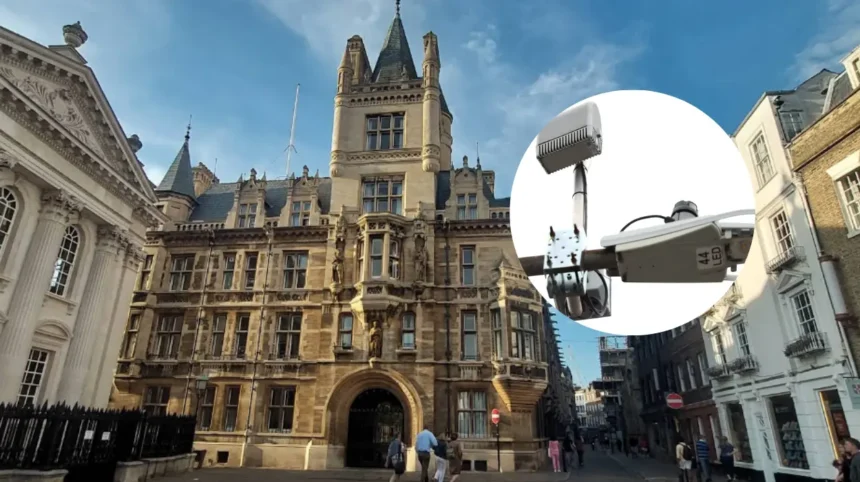
The exact locations of ShotSpotter sensors are not revealed publicly by SoundThinking, although the firm has said it places them atop both public infrastructure and on private property.
Background: Timeline of ShotSpotter in Cambridge
The Cambridge Police Department began using ShotSpotter in 2014, deploying acoustic sensors throughout the city to detect and locate sounds believed to be gunfire. The system was designed to alert first responders to potential shootings so they could respond rapidly, even when no 911 call was made.
In May 2026, following extended public comment and nearly an hour of deliberation, the City Council voted 5-2-2 to end the use of ShotSpotter devices in Cambridge within 90 days. The policy order directed City Manager Yi-An Huang to remove and disable ShotSpotter devices across the city.
On July 4, 2026, Xavier Bautista was fatally shot in an area previously covered by ShotSpotter, reigniting debate over the technology. On July 24, 2026, the City Council held a special meeting to address public safety concerns, but Councilor Al-Zubi exercised her charter right to delay a vote on the policy order to reinstate ShotSpotter.
The council is scheduled to vote on the proposal on August 3, 2026.
Prediction: How might this development affect Cambridge residents?
If the Cambridge City Council votes to reinstate ShotSpotter, the decision could significantly affect public trust in local government, community-police relations, and perceptions of safety across different neighbourhoods. Residents in areas with higher rates of gun violence may experience increased feelings of security if they believe faster emergency response times could save lives, while privacy advocates and communities concerned about surveillance may feel their concerns have been disregarded.
The temporary nature of the reinstatement while broader public safety technology reviews are conducted suggests the council is attempting to balance competing interests, but the outcome could set precedents for how Cambridge approaches surveillance technology in the future. If reinstated, the system’s performance during the temporary period will likely be closely monitored by both supporters and opponents, with accuracy rates and response times becoming key metrics for determining whether ShotSpotter should remain part of Cambridge’s public safety infrastructure long-term.
The decision may also influence how other Massachusetts municipalities approach gunshot detection technology, as Cambridge’s experience has drawn regional attention and could serve as a case study for cities weighing similar public safety versus privacy considerations.