

Key Points
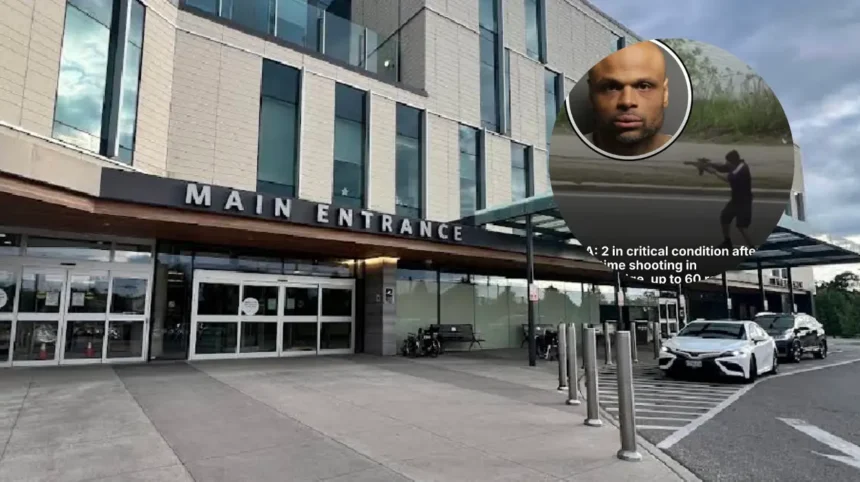
- The alleged gunman in the Memorial Drive shooting in Cambridge, Massachusetts, has been identified as 46‑year‑old Tyler Brown of Boston.
- Brown was released from a psychiatric hospital three days before the shooting and was reportedly on probation at the time.
- On Monday, May 11, 2026, Brown allegedly opened fire on Memorial Drive, firing between 50 and 60 rounds from an assault‑style rifle at passing vehicles and people.
- Two bystanders were seriously wounded; the suspect was shot by a Massachusetts State Police trooper and taken into custody.
- Brown has an extensive prior criminal record, including a 2020 conviction for firing on Boston police officers and a 2014 knife attack.
- Prosecutors in his earlier case sought a 10–12‑year prison term, but he received a 5–6‑year sentence followed by probation.
- Court records indicate Brown was ordered to undergo mental‑health evaluations and treatment as part of his prior sentence.
- Authorities had conducted a welfare‑check‑style well-being call at his Dorchester home earlier on the day of the shooting after he allegedly made suicidal statements and was seen on FaceTime holding an apparent assault‑style rifle.
- The Middlesex District Attorney’s office has confirmed Brown will be charged with multiple firearms offences and two counts of armed assault with intent to murder.
Cambridge(Cambridge Tribune)May 12, 2026 – The alleged gunman in the Memorial Drive shooting in Cambridge, Tyler Brown, was released from a psychiatric hospital just three days before he opened fire on a busy stretch of road, wounding two people in an attack that has reignited debate over mental‑health oversight and gun‑violence risk among repeat offenders.
- Key Points
- Who was involved in the Memorial Drive shooting?
- How did the shooting unfold?
- What is Tyler Brown’s criminal and mental‑health history?
- What role did mental‑health care play?
- What are authorities saying now?
- Background of the development
- Prediction: How this development can affect the local audience
Who was involved in the Memorial Drive shooting?
The suspect, Tyler Brown, 46, of Boston, was identified by law enforcement officials as the man who allegedly opened fire on Memorial Drive in Cambridge on Monday, May 11, 2026. According to the Cambridge Police Department and the Middlesex District Attorney’s office, Brown is now in custody at a Boston hospital and is expected to face multiple charges, including two counts of armed assault with intent to murder and several firearms offences.
Two other individuals were shot and taken to the hospital with serious injuries, while Brown himself was shot by a Massachusetts State Police trooper during the incident. Local media reported that officers from the Massachusetts State Police and Cambridge Police responded rapidly to the scene, which lies along Memorial Drive between River Street and Pleasant Street Extension, near the campus of the Massachusetts Institute of Technology.
How did the shooting unfold?
According to authorities and multiple local outlets, the incident unfolded in the early afternoon, around 12:30 p.m. on Monday, when Brown allegedly walked down the middle of Memorial Drive and fired between 50 and 60 rounds from an assault‑style rifle at passing vehicles and pedestrians. Witnesses described a chaotic scene, with dozens of police officers descending on the area and evacuations or traffic restrictions imposed around the road.
WBZ‑TV and other Boston‑area newsrooms reported that Brown was eventually shot by a Massachusetts State Police trooper and a former Marine who was on the scene, after which he was taken into custody. The two victims were transported to local hospitals and described as being seriously injured but not immediately life‑threatening in later updates.
What is Tyler Brown’s criminal and mental‑health history?
Tyler Brown already had a lengthy criminal record before the Memorial Drive shooting, a fact that has drawn scrutiny from prosecutors and public‑safety officials. As reported by Boston 25 News and the Hindustan Times, court records show Brown was charged in 2020 with attempting to kill Boston police officers after allegedly opening fire on law enforcement during an encounter.
He later pleaded guilty to eight charges, including armed assault with intent to murder and attempted assault and battery with a firearm, stemming from that 2020 incident. Prosecutors in that case had requested a prison sentence of 10 to 12 years, but Judge Janet L. Sanders, then serving in Suffolk County, instead sentenced Brown to five to six years in state prison, with credit for time served, followed by a period of probation.
Court filings and coverage by the Boston Globe and WHDH indicate that Brown’s prior criminal history also included a 2014 knife attack, part of a broader pattern of violent offences. In the earlier case, prosecutors noted that Brown had “an extensive criminal history involving violent offences,” a point that has since been echoed in discussions about his latest alleged attack.
What role did mental‑health care play?
On the day of the Memorial Drive shooting, authorities had already been monitoring Brown’s behaviour. As reported by Boston 25 News and WHDH, Boston police conducted a well-being check at Brown’s home in Dorchester after his parole officer alerted them that he had allegedly made suicidal statements.
During a FaceTime call, Brown was reportedly seen holding what appeared to be an assault‑style rifle and allegedly threatened to use it, which prompted officers to visit his home. According to these accounts, Brown then left the residence and drove to Memorial Drive, where he allegedly began the shooting minutes later.
At the time of the 2020 case, court records indicated that Brown was ordered to undergo mental‑health evaluations and treatment as part of his sentence. Cambridge‑based and regional outlets now report that he had recently been released from a psychiatric hospital three days before the Memorial Drive shooting, raising questions about the adequacy of follow‑up care and the conditions under which he was allowed to return to the community.
What are authorities saying now?
The Middlesex District Attorney’s office has confirmed that Brown will be charged with two counts of armed assault with intent to murder and multiple firearms‑related offences. Middlesex District Attorney Marian Ryan, alongside Massachusetts State Police Colonel Geoffrey Noble and Acting Cambridge Police Commissioner Pauline Wells, has stated that the investigation remains ongoing and that prosecutors will further outline Brown’s criminal history at his arraignment.
Ryan has also emphasized that Brown’s “extensive criminal history involving violent offences” will be a central element in the case, suggesting that prosecutors may seek a significantly harsher sentence than the five‑to‑six‑year term he received in 2020. The DA’s office has declined to detail the specific conditions of his probation or psychiatric discharge, citing the ongoing probe.
Cambridge Police and Massachusetts State Police have reiterated that the public response on Memorial Drive was swift and that officers followed active‑shooter protocols to minimize additional casualties. They have also urged motorists and pedestrians to remain vigilant and to report any suspicious behaviour, especially in densely populated corridors near universities and public transit.
Background of the development
The Memorial Drive shooting and the circumstances surrounding Tyler Brown’s release from a psychiatric hospital three days prior fit into a broader, long‑running debate about how Massachusetts and other US states handle high‑risk offenders with histories of violence and mental‑health instability. Brown’s prior case—where prosecutors sought a 10–12‑year sentence but he received a comparatively shorter prison term—has been cited by some local commentators as an example of leniency that may have contributed to later public‑safety risks.
In the 2020 incident, Brown was charged with opening fire on Boston police officers, and court documents indicate that he had been ordered to undergo mandatory mental‑health treatment and evaluations as part of his 2021 sentence. However, those same records show he was released on probation after serving part of his five‑to‑six‑year term, raising questions about whether the state’s supervision and mental‑health support systems were sufficient to prevent a recurrence of violent behaviour.
The fact that Brown had only recently been discharged from a psychiatric hospital at the time of the Memorial Drive shooting has also focused attention on how behavioural‑health facilities coordinate discharge plans with law enforcement and probation authorities. Local experts and editorial boards have begun to argue that clearer protocols—such as mandatory reporting to probation officers, stricter firearm‑possession checks, and closer monitoring of high‑risk individuals are needed to reduce the likelihood of similar incidents in the future.
Prediction: How this development can affect the local audience
For residents of Cambridge and the wider Boston area, the Memorial Drive shooting and the revelation that the alleged gunman was released from a psychiatric hospital just days before the attack are likely to heighten anxiety about public‑safety gaps and the management of repeat violent offenders. Parents, students, and commuters who regularly use Memorial Drive and nearby corridors may feel less secure, especially if they perceive that prior criminal and mental‑health histories were not adequately reflected in Brown’s release conditions.
Local policymakers and public‑safety officials may face increased pressure from the press and community groups to review probation practices, mental‑health‑discharge protocols, and inter‑agency information sharing between hospitals, courts, and police departments. If those reviews lead to tighter oversight and more stringent requirements for high‑risk individuals, the broader Cambridge and Boston audience could see changes in how probationers are monitored and how behavioural‑health facilities document and report discharge plans.
For families and neighbours of individuals with mental‑health struggles, the case may also spark a more intense public conversation about the balance between protecting civil liberties and ensuring community safety. On the one hand, some may push for stricter intervention measures whenever a person with a history of violence exhibits suicidal or threatening behaviour; on the other, advocates may warn that over‑reliance on surveillance and incarceration could worsen mental‑health outcomes and erode trust in the systems meant to help.
In practical terms, the Cambridge audience may increasingly expect city and state officials to provide more transparent information about how such cases are handled, including how psychiatric‑hospital releases are coordinated with law enforcement and probation. If that transparency materialises, it could improve public confidence; if it does not, the perception of a “system failure” around Tyler Brown’s release may linger and influence future debates over gun regulation, mental‑health funding, and criminal‑justice reform in Massachusetts.