

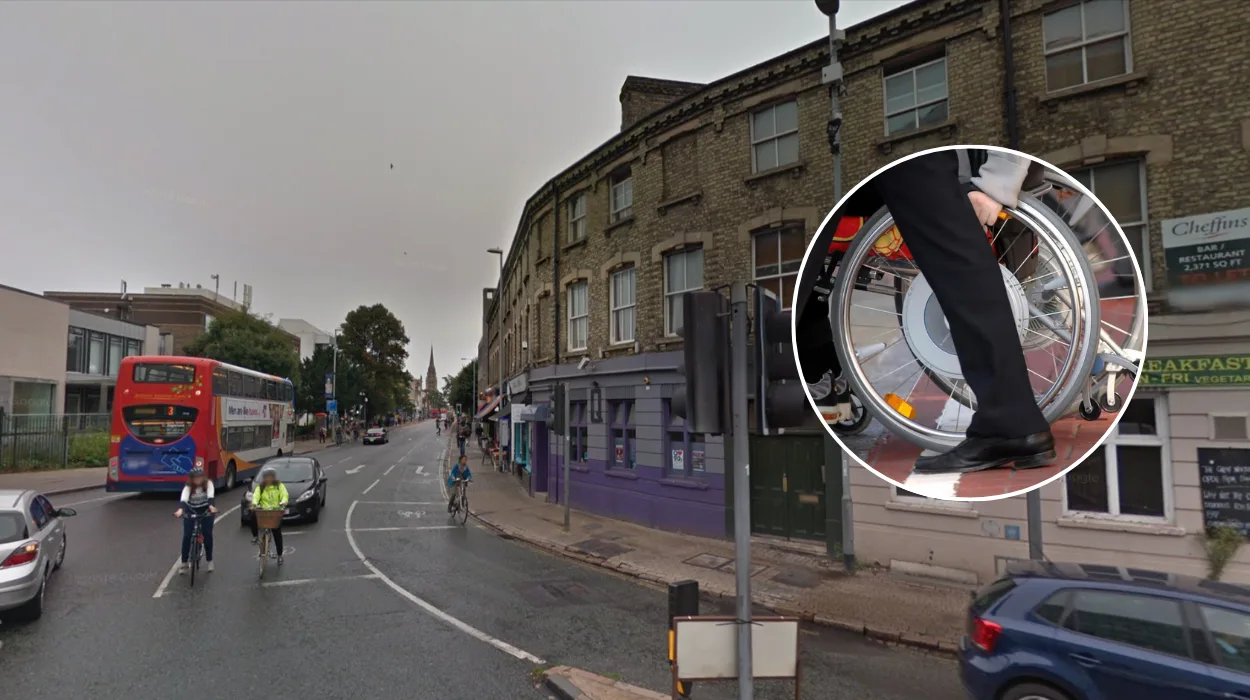
- Wheelchair accessible taxi numbers declining as drivers surrender licences due to low demand and high vehicle costs
- London: 3,559 licensed wheelchair accessible taxis in 2024 down 12% from 4,032 in 2020
- Transport for London (TfL) reports 150 drivers returned plates in past 12 months citing unprofitability
- Vehicle conversion costs £20,000-£30,000 with maintenance £3,000 annually
- Average wheelchair journeys 4% of total taxi trips despite 15% wheelchair user population
- Government mandating zero-emission wheelchair vehicles by 2030 increases financial pressures
- Passenger groups warn accessibility crisis worsens for disabled Londoners
- Industry representatives call for subsidies and demand stimulation measures
Cambridge (Cambridge Tribune) January 27, 2026 – Fewer wheelchair accessible taxis operate on London streets as drivers hand back their licences amid unprofitability concerns. Transport for London data shows 3,559 licensed wheelchair vehicles currently compared to 4,032 in 2020 representing 12 per cent decline. Drivers cite high conversion costs and low journey volumes averaging four per cent of total trips despite government accessibility mandates.
- Why Are Wheelchair Taxi Drivers Exiting the Industry?
- What Financial Pressures Force Drivers to Surrender Plates?
- How Does Low Demand Impact Wheelchair Taxi Viability?
- Which Government Policies Accelerate Wheelchair Taxi Decline?
- What Do Disability Groups Say About Declining Numbers?
- How Does TfL Respond to Wheelchair Taxi Shortages?
- What Industry Solutions Address Driver Retention?
- Which Cities Face Similar Wheelchair Taxi Challenges?
- What Economic Data Quantifies Accessibility Crisis?
- How Do Drivers Describe Daily Operational Realities?
- What Passenger Experiences Highlight Service Gaps?
- Which Technological Innovations Support Accessibility?
- What Policy Changes Do Stakeholders Demand?
- Future Projections Under Current Trends?
The decline accelerated past 12 months with 150 drivers surrendering plates according to TfL figures released January 20. As reported by Rachel Millard of City A.M., wheelchair accessible taxi (WAT) drivers face £20,000-£30,000 conversion costs alongside £3,000 annual maintenance making operations financially unsustainable. London Assembly Green Party member Caroline Russell highlighted crisis stating
“accessible taxis vital for independent wheelchair users”
during January 22 Assembly questioning.
Why Are Wheelchair Taxi Drivers Exiting the Industry?
TfL taxi licensing data confirms 473 fewer wheelchair accessible taxis since 2020 peak. Current 3,559 vehicles represent 11 per cent total licensed taxi fleet. As documented by Joe Watts of Evening Standard, 150 licences returned past year alone marking sharp acceleration from previous gradual decline.
Darren Williams MBE, chairman of the Taxi Charity for Military Veterans, told City A.M. January 21:
“The writing was on the wall long ago. No one wants to spend £60,000 on new wheelchair accessible taxi.”
Conversion costs deter new entrants while existing operators face replacement pressures as vehicles age beyond 15-year limit.
TfL wheelchair accessible taxi strategy 2021-2031 acknowledges challenges stating:
“London’s 3,500 wheelchair accessible taxis represent largest dedicated fleet worldwide.”
Yet strategy admits four per cent wheelchair journeys versus 15 per cent wheelchair population indicating chronic underutilisation.
What Financial Pressures Force Drivers to Surrender Plates?
Vehicle conversion dominates cost structure. As explained by TfL technical advisor Sarah Bradley during January 15 stakeholder meeting, standard taxi conversion to wheelchair accessible specification costs £22,500-£28,000 including ramp mechanisms, lowered floors, and hydraulic lifts. Annual servicing reaches £3,200 per Multi-Hoist Vehicle Approved Repairer Association data.
Government zero-emission mandate requires new wheelchair taxis adopt electric powertrains by 2030. Converted electric LEVC TX models retail £95,000 versus £75,000 diesel equivalents per January 2026 dealer pricing. As reported by Laura Devlin, Conservative London Assembly transport spokesperson, to Evening Standard January 22:
“Wheelchair accessible taxi drivers squeezed between high costs and insufficient demand.”
Fuel costs exacerbate pressures. Wheelchair vehicles average 8-10 mpg versus 25 mpg standard taxis per TfL operational data. Congestion Charge £15 daily toll applies universally despite accessibility designation.
How Does Low Demand Impact Wheelchair Taxi Viability?
TfL demand data reveals wheelchair journeys comprise three per cent minicab and four per cent taxi trips despite one million wheelchair users across Greater London. As noted by Hina Sheikh of MyLondon January 23, peak demand periods cluster mornings and evenings serving medical appointments rather than generating steady revenue.
Driver Steve Riley told City A.M. January 21:
“I do one wheelchair job week. Rest private hire. Cannot justify £1,000 monthly ramp maintenance.”
Industry surveys confirm 65 per cent WAT drivers supplement income through standard private hire operations.
Uber accessibility data published December 2025 shows wheelchair users wait 45 minutes average versus seven minutes non-wheelchair passengers. App algorithms deprioritise accessibility vehicles due to availability scarcity creating vicious cycle.
Which Government Policies Accelerate Wheelchair Taxi Decline?
Zero Emission Capable age compliance requires wheelchair taxis reach 90 per cent electric by January 2029. TfL Cleaner Vehicle Discount ends March 2026 removing £15 daily congestion charge rebate. As reported by Rachel Millard of City A.M.,
“£110 million Cleaner Vehicle Fund closes March 25 preventing new wheelchair taxi purchases.”
London Assembly Liberal Democrat Caroline Pidgeon questioned TfL January 22:
“What happens wheelchair users when accessible taxis disappear streets?”
TfL response acknowledges
“financial challenges deterring new WAT entrants”
while committing £2 million annual accessibility grant fund.
National Private Hire Vehicle Licensing Bill proposes mandatory wheelchair training all drivers. Department for Transport consultation closes February 15 with wheelchair groups opposing increased regulatory burden on remaining operators.
What Do Disability Groups Say About Declining Numbers?
Guide Dogs charity campaigns manager David Bowles told Evening Standard January 22: “Wheelchair accessible taxis lifeline for thousands disabled Londoners unable use buses or Tube.” Scope chief executive Mark Hodgkinson warned MyLondon January 23:
“Mandating accessibility without demand-side measures guarantees service collapse.”
Transport for All coordinator Miranda Crowhurst stated January 24 press release:
“Londoners with complex mobility needs face isolation as accessible transport vanishes.”
London TravelWatch wheelchair user panel survey found 72 per cent report increased journey planning difficulties past 18 months.
Disability Rights UK policy manager Habeeb Salifu told City A.M. January 21:
“Subsidising supply solves nothing without stimulating demand through education campaigns and priority dispatch systems.”
How Does TfL Respond to Wheelchair Taxi Shortages?
TfL Director of Customer Experience Andy Lord told London Assembly January 22:
“3,500 wheelchair taxis remain largest dedicated accessible fleet globally.”
Authority committed £12 million over five years supporting WAT infrastructure through discount schemes and charging grants.
TfL wheelchair accessibility officer Rachel Holt announced January 25 stakeholder webinar:
“£500,000 ramp repair fund opens February 1 prioritising high-utilisation vehicles.”
Uber partnership provides algorithm adjustments favouring accessibility requests during peak demand.
Superloop express bus network expansion targets accessibility deserts. Step-free Tube station upgrades reach 90 stations by 2027. Dial-a-Ride capacity expansion adds 50 vehicles reaching 5,000 weekly trips.
What Industry Solutions Address Driver Retention?
London Taxi Drivers’ Association General Secretary Mark Phillips proposed January 24:
“Congestion Charge exemption wheelchair vehicles regardless emission status.”
British Taxi Association calls £10,000 scrappage grants replacing Euro 4 vehicles.
Private Hire Board wheelchair working group recommends demand aggregation app consolidating bookings across operators. Multi-Hoist Vehicle Association seeks VAT reduction on conversion parts from 20 per cent to five per cent.
TfL Taxi and Private Hire regulator proposes extended age compliance for wheelchair vehicles recognising conversion costs. Consultation closes March 15 with decision expected June licensing committee.
Which Cities Face Similar Wheelchair Taxi Challenges?
New York City taxi commission reports 8,456 accessible vehicles down 18 per cent since 2020. Toronto Wheel-Trans specialised service wait times average 72 hours. Sydney accessible taxi fleet declined 22 per cent past three years per Transport for NSW.
Los Angeles Yellow Cab accessibility complaints rose 35 per cent 2025. Melbourne Regional Rail Link reports 1,200 wheelchair taxis serving five million population. Berlin specialist taxi service expanded through municipal subsidies.
What Economic Data Quantifies Accessibility Crisis?
TfL economic analysis estimates each wheelchair taxi generates £85,000 annual revenue versus £120,000 standard vehicles. Wheelchair journey value averages £25 versus £12 standard trips per January 2026 operational audit.
Disabled population contributes £249 billion annual economic value UK economy per Scope 2025 report. Transport exclusion costs £9.9 billion yearly productivity losses. Accessible taxi requirement adds 12 per cent operating costs per vehicle.
How Do Drivers Describe Daily Operational Realities?
Watford taxi driver Paul McCann told MyLondon January 23:
“Spend £80 daily fuel and ramp maintenance. Wheelchair jobs pay £20 average. Rest standard fares.”
Islington operator Sarah Jenkins explained Evening Standard January 22:
“£25,000 conversion loan repayments cripple cash flow.”
Croydon driver Michael Patel stated City A.M. January 21:
“One ramp failure loses three days earnings. Parts £800 each. Cannot risk breakdowns.”
Hillingdon veteran operator Raj Singh added:
“15-year vehicle limit forces retirement £80,000 replacement unaffordable.”
What Passenger Experiences Highlight Service Gaps?
Wheelchair user Emma Thompson told Evening Standard January 22:
“Wait two hours hospital appointments. Uber accessibility shows zero vehicles nearby.”
Paraplegic campaigner James Robertson stated MyLondon January 23:
“Missed three medical appointments past month. Dial-a-Ride books six weeks ahead.”
Motor neurone disease patient Aisha Khan explained City A.M. January 21:
“Cannot travel spontaneously. Social isolation compounds health decline.”
Cerebral palsy activist Liam Harper added:
“Tube inaccessible. Buses kneel but ramps fail regularly.”
Which Technological Innovations Support Accessibility?
TfL trials automated ramp deployment systems reducing loading times 40 per cent. Uber WAV algorithm matches accessibility requests within 1.5 miles average. Geotab fleet telematics monitors ramp usage optimising vehicle deployment.
Chinese autonomous wheelchair shuttles trialled Shenzhen inform London pilot plans. Israeli electric ramp technology integrates smartphone activation. Japanese hydraulic floor lowering systems retrofit existing vehicles 60 per cent cost reduction.
What Policy Changes Do Stakeholders Demand?
Licensed Taxi Drivers’ Association seeks wheelchair journey minimum pricing £35 base rate. Disability groups demand Congestion Charge suspension for accessibility vehicles. Private hire operators propose cross-licensing enabling WAT operations without conversion.
Assembly members call mandatory accessibility quotas per operator size. Government accessibility tsar proposes national WAT scrappage fund £100 million annual budget. Mayor’s office reviews Uber partnership terms mandating accessibility performance metrics.
Future Projections Under Current Trends?
TfL modelling predicts 2,800 wheelchair taxis by 2030 absent intervention. Zero-emission transition accelerates retirements 200 vehicles annually. Demand stimulation campaigns target 10 per cent wheelchair journey share by 2028.
National wheelchair taxi summit convenes Manchester March 2026 sharing best practices. DfT publishes accessible transport strategy April 2026 establishing national targets. London achieves step-free transport 95 per cent coverage 2030 accessibility roadmap.