
Key Points
- Cambridge City Council has proposed a 4.8% rise in council housing rents for 2026–27 as part of its Housing Revenue Account (HRA) budget.
- The increase is tied to a £41–41.6 million programme for the repair, maintenance and improvement of more than 7,500 council homes in the city.
- The council says the rise follows the new national Rent Standard set by the Regulator of Social Housing, rather than a locally chosen percentage.
- Average weekly rents would rise by around £6–7.82 for the lowest council rents (around 40% of market levels) and about £9.44 for homes let at ‘affordable rents’ (roughly 60–80% of market rents).
- The council argues that the increase is “necessary” to fund essential repairs, improve energy efficiency and support an ambitious plan to deliver around 1,300 new council homes over the next decade.
- Around 65% of tenants receive some form of benefit, with 55% on maximum Housing Benefit or Universal Credit housing costs; the council says most of these households will see the rent rise fully covered by benefits.
- Critics, including some tenants and anti‑poverty campaigners, question whether benefits and wages are keeping pace with rising housing costs and ask “where does the money come from?” for those just above benefit thresholds.
- Concerns have been raised that rent hikes, even when partially subsidised, may exacerbate the cost‑of‑living pressures on low‑income working households and deepen the housing affordability crisis in Cambridge.
- The council’s wider 2026–27 budget seeks to reduce a previously forecast £11.5 million overspend by 2030–31 to £1.5 million, while protecting frontline services and investing in housing.
- The HRA proposals, including the rent rise, will be debated at scrutiny committee and Cabinet before going to a full council meeting on 26 February.
- The rent increase aligns with similar 4.8% rises being considered or implemented by other local authorities and housing providers in England under the same Rent Standard.
- Housing policy experts note that linking social rents to inflation and national rent rules can still leave tenants exposed when wages lag behind and local private rents remain extremely high, as in Cambridge.
Cambridge (Cambridge Tribune) February 10, 2026 – Cambridge City Council’s decision to press ahead with a 4.8% council housing rent rise, tied to a £41 million investment in repairs and new homes, has triggered a heated row among tenants and campaigners who are asking how struggling households will find the extra cash and “where does the money come from?” in a city already grappling with high living costs.
- Key Points
- Why is Cambridge City Council increasing council house rents?
- How much more will council tenants pay?
- What justification does the council give for the rent hike?
- How are benefits and protections supposed to shield tenants?
- Why are tenants and campaigners asking ‘where does the money come from?’
- How does Cambridge’s move fit into wider national rent trends?
- What happens next in the council’s decision‑making process?
- What are the broader implications for housing affordability in Cambridge?
Why is Cambridge City Council increasing council house rents?
Cambridge City Council’s budget for 2026–27 sets out plans to spend about £41–41.6 million from its Housing Revenue Account on the management, repair, maintenance and improvement of its council housing stock. This includes more than 7,500 existing council homes and forms part of a long‑term programme to deliver approximately 1,300 additional council homes over the next ten years.
In its own budget statements, the council explains that the proposed 4.8% rent increase is designed to fund this “significant ongoing investment” in better quality and more energy‑efficient homes. As reported by council officers in Cambridge City Council’s Budget Setting Report 2026–27, rents and service charges from tenants are ring‑fenced in the HRA and are the primary income stream for financing housing management and capital works.
The administration also links the rent rise to wider financial pressures, noting that a previously forecast overspend of £11.5 million by 2030–31 has been brought down to £1.5 million through savings and income measures, and maintaining a robust HRA is part of that overall financial strategy. The council presents the rent policy as a way of protecting services and sustaining investment in affordable housing in a high‑cost city.
How much more will council tenants pay?
The detailed figures in the council’s housing budget illustrate how the 4.8% rise will translate into weekly rent increases for tenants on different rent levels. According to the Budget Setting Report, tenants on the lowest traditional council rents, which are around 40% of market rents, face an average increase of between about £6.14 and £7.82 per week.

For tenants in homes let at ‘affordable rent’, usually set at around 60–80% of local market levels, the average weekly rise is projected at £9.44. As reported by the council’s housing officers in the official budget papers, these figures reflect the application of the 4.8% Rent Standard uplift across the council’s housing stock.
In addition, the council is proposing to apply ‘rent convergence’, a mechanism to equalise differing historical rent levels across similar properties, meaning some tenants who have previously paid relatively low rents may see an additional increase of about £2 per week on top of the 4.8% rise. This aspect has drawn particular concern from some residents who fear disproportionate impacts on specific households or estates.
What justification does the council give for the rent hike?
In its public communications, Cambridge City Council frames the rent increase as an obligation under national rules and as a means of sustaining and upgrading its housing stock. As set out by officers in the council’s own news release on “sound financial management”, rents are “proposed to rise by 4.8% in line with the new Rent Standard issued by the Regulator of Social Housing this year.”
The council emphasises that the £41–41.6 million HRA programme in 2026–27 will fund both day‑to‑day repairs and longer‑term improvements, with £9.8 million earmarked to upgrade the energy performance (EPC ratings) of council homes in the coming year as part of a £39.3 million four‑year plan. As reported by Future Cities Forum, the authority says this represents “significant ongoing investment” to improve the condition and energy‑efficiency of homes for tenants.
Council leaders also argue that increased income is needed to support new council housebuilding, with the 1,300‑home programme intended to address acute local housing need in one of the country’s most expensive rental markets. In statements accompanying the budget, the administration maintains that, without the Rent Standard uplift, the HRA would face tighter constraints on both maintenance and new supply.
How are benefits and protections supposed to shield tenants?
A key plank of the council’s defence of the rent rise centres on the role of the welfare system in cushioning the impact on the lowest‑income households. In its housing budget narrative, Cambridge City Council states that around 65% of its council tenants receive some form of benefit support, and about 55% receive maximum Housing Benefit or Universal Credit housing costs.
As reported in the council’s housing budget briefing, the authority argues that, for most of these households, “any rent increase will be fully covered from their benefits, meaning that there will be no net financial impact on the household.” The council further says it will continue to provide financial and budgeting advice to tenants and encourage them to claim all the support for which they are eligible.
At the same time, the Rent Standard framework used by councils and housing associations is built on the premise that rents for social housing should remain significantly below market levels, especially given the high private rents in cities like Cambridge. Housing policy analysis from national bodies highlights that, even after such uplifts, council and housing association rents typically remain far lower than private sector equivalents, although the relative gap can vary by area and property type.
Why are tenants and campaigners asking ‘where does the money come from?’
Despite the assurances, the proposals have provoked sharp questions from tenants’ groups and anti‑poverty advocates about how residents will cope with another rise against the backdrop of stubbornly high living costs. Housing commentators point out that while rent formulas are pegged to national rent rules and often linked to inflation measures, wages and benefit levels do not always keep pace, particularly for low‑paid workers who receive little or no housing support.
In debates about housing affordability, campaigners often voice a wider concern summed up in the question “where does the money come from?”, highlighting that household budgets are already squeezed by energy bills, food prices and transport costs. Research on rent reform and housing subsidies has found that changes to rent policies can alter the relationship between tenants’ earnings and the subsidies they receive, sometimes increasing marginal effective tax rates and creating complex work incentives.
For those just above benefit thresholds or with fluctuating incomes, even a few pounds extra a week in rent can feel significant, especially in cities like Cambridge where private rents and general costs are far beyond many local earnings. Critics argue that the national rent regime, while predictable for landlords, still passes too much risk down to low‑income tenants, particularly when councils rely heavily on rent receipts to fund investment.
How does Cambridge’s move fit into wider national rent trends?
Cambridge’s 4.8% social rent uplift mirrors similar moves by other local authorities and housing providers following the national Rent Standard. As reported by regional media such as the Barnsley Chronicle and the Chronicle in the North East, councillors in other areas have also faced contentious votes on 4.8% rent increases for thousands of council tenants, with some describing the rises as “difficult but necessary”.
These reports show that Cambridge is not alone in using the 4.8% figure, which flows from the national rent formula rather than being invented locally. Councils across England are grappling with the same trade‑off: higher rents to sustain housing investment and financial stability, versus the risk of worsening affordability for tenants struggling with wider cost‑of‑living pressures.
Housing experts note that the national approach aims to give landlords predictable income paths for long‑term planning, yet the uniform application of percentage increases may not reflect the particular hardships in high‑cost cities or areas with lower wage growth. In this context, Cambridge’s decision is part of a broader national pattern, but the local impact is amplified by the city’s exceptionally high housing market and the scale of the investment programme being pursued.
What happens next in the council’s decision‑making process?
The rent proposals sit within Cambridge City Council’s wider 2026–27 budget and financial strategy, which will go through the usual sequence of committee scrutiny, Cabinet discussion and final approval at full council. The General Fund budget setting report has already been published ahead of a meeting of the council’s Performance, Assets and Strategy Scrutiny Committee, followed by Cabinet on 10 February before a scheduled vote at full Council on 26 February.
The HRA section, including the £41–41.6 million housing investment plan and the 4.8% rent increase, will be debated alongside other elements such as service charges and the council’s broader ambitions for housebuilding and climate‑related upgrades. Opposition councillors and tenant representatives are expected to continue pressing for assurances on hardship support and clarity over how the council will monitor the impact of higher rents on different groups of tenants.
If approved, the new rent levels would typically come into effect at the start of the council’s financial year in April, with tenants receiving updated rent statements and information about how to seek advice or support if they are worried about paying. Campaigners say they will keep a close eye on the roll‑out and may push for targeted relief or further review if evidence emerges that the policy is driving rent arrears or financial distress.
What are the broader implications for housing affordability in Cambridge?
Cambridge already faces one of the most acute housing affordability challenges in the UK, with high private rents and house prices relative to local earnings. At previous housing forums, campaigners and local representatives have repeatedly argued that the most vulnerable residents should be prioritised in housing policy, warning that rising costs risk pushing low‑income households out of the city altogether.
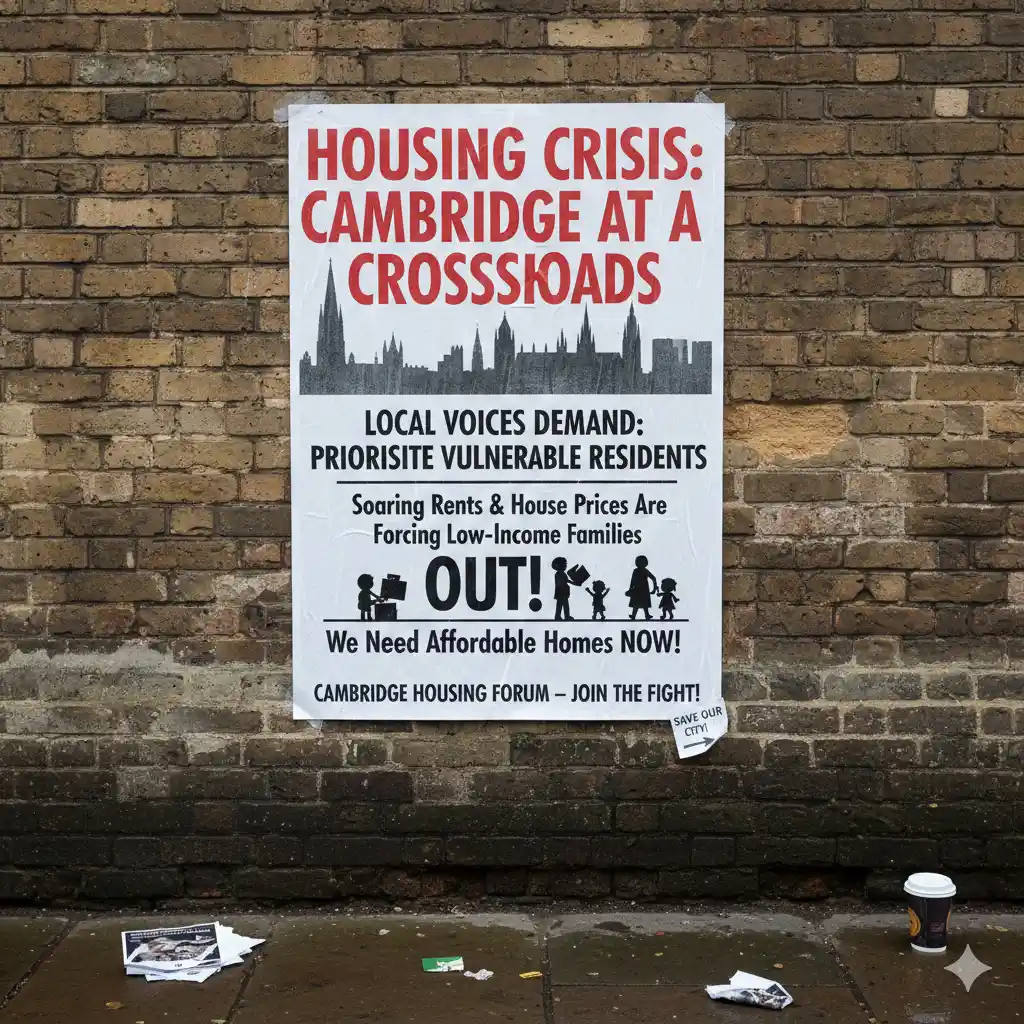
In this environment, the council’s decision to increase rents while also promising substantial investment presents a complex picture for tenants. On one hand, better‑maintained and more energy‑efficient homes can lower long‑term running costs and improve living standards; on the other, short‑term rent rises add to monthly outgoings for households with little financial headroom.
Housing researchers suggest that, in high‑pressure markets like Cambridge, even social rents can feel burdensome when wages lag and other costs spiral, reinforcing calls for more generous housing support, better targeted council hardship schemes and sustained national investment in genuinely affordable housing. As Cambridge City Council seeks to balance its books and deliver new social homes, the question being posed by many tenants – “where does the money come from?” – is likely to remain at the centre of the political debate over who ultimately pays for the city’s housing ambitions.