

Key Points
- What Is AstraZeneca’s Proposed Development at Cambridge Biomedical Campus?
- Where Exactly Is the Proposed AstraZeneca Building Located?
- What Features Will the New Six-Storey Block Include?
- Why Does AstraZeneca Need This Expansion at CBC?
- Who Submitted the Planning Application to Cambridge City Council?
- What Does the Planning Statement Say About Collaboration Benefits?
- How Does This Fit AstraZeneca’s Cambridge Operations?
- What Is the Timeline for the Cambridge City Council Decision?
- Who Are the Key Partners at Cambridge Biomedical Campus?
- What Sustainability Measures Are in the AstraZeneca Plans?
- How Will the New Block Impact Local Traffic and Access?
- What Community Benefits Does AstraZeneca Propose?
- Has AstraZeneca Expanded at CBC Before?
- What Objections Might Arise to the Francis Crick Avenue Plans?
- Who Can Comment on the AstraZeneca Planning Application?
- What Is the Economic Role of Cambridge Biomedical Campus?
- AstraZeneca has submitted plans to the Cambridge City Council for a new six-storey building at Cambridge Biomedical Campus (CBC) in Francis Crick Avenue, Cambridgeshire.
- The proposed facility would house offices for up to 736 staff members.
- It includes a 200-person conference centre, a 450-seat auditorium, and a 110-cover restaurant.
- Planning documents state the development would enhance internal and external collaboration and meet demand for larger event spaces.
- The biopharmaceutical company aims to support its growing operations at the biomedical hub.
- The application reference is 26/00092/FUL, with full details available via the Greater Cambridge Planning portal.
- No construction timeline or decision date has been announced by the council.
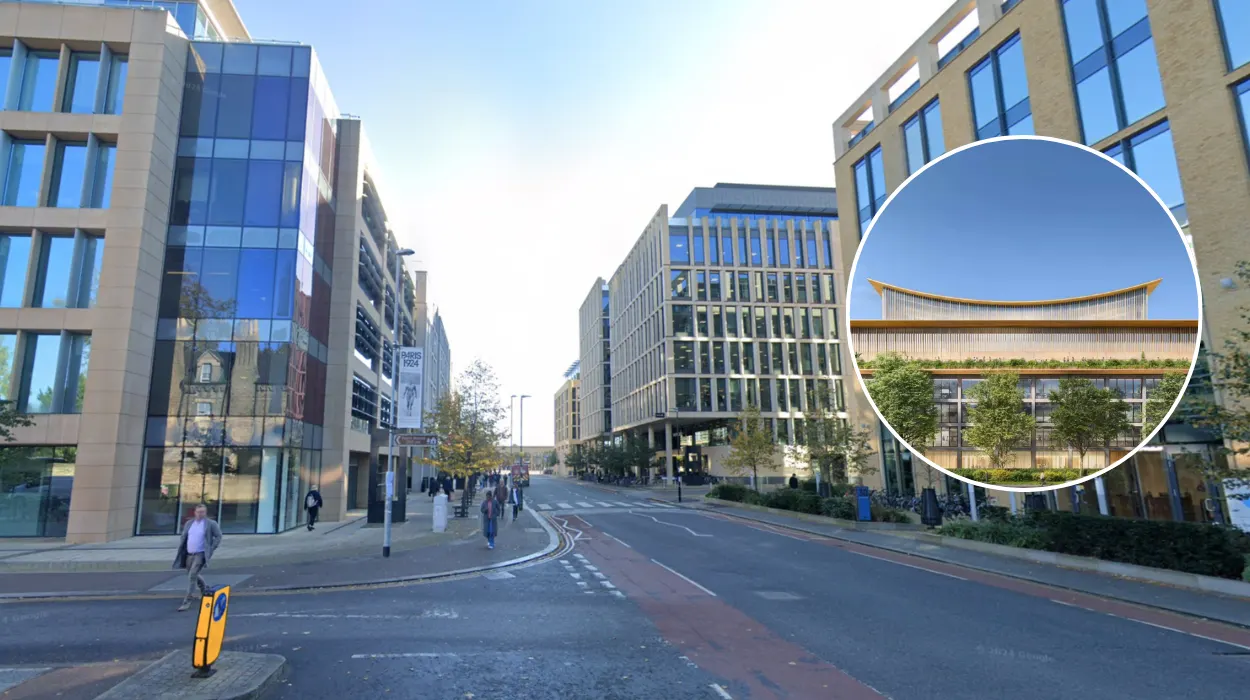
Cambridge (Cambridge Tribune) January 20, 2026 – AstraZeneca could build a new six-storey block at Cambridge Biomedical Campus to house offices and a conference centre. The biopharmaceutical company submitted plans to Cambridge City Council for the proposed development in Francis Crick Avenue, Cambridgeshire. The building would accommodate up to 736 staff, featuring a 200-person conference centre, a 450-seat auditorium, and a 110-cover restaurant.
What Is AstraZeneca’s Proposed Development at Cambridge Biomedical Campus?
AstraZeneca submitted a full planning application (reference 26/00092/FUL) to Cambridge City Council for a six-storey office and conference facility at its Cambridge Biomedical Campus site. As detailed in the planning statement submitted to the council,
“The proposed facility would enhance collaboration, both internally and with their campus partners, and meet growing demand for larger event spaces.”
The development sits within Francis Crick Avenue, a key area of the 350-acre CBC, which hosts global leaders in medical research including the University of Cambridge and Royal Papworth Hospital. AstraZeneca, headquartered partly in Cambridge since 2019, seeks to expand its footprint amid rising staff numbers in drug discovery and development.
Where Exactly Is the Proposed AstraZeneca Building Located?
Francis Crick Avenue forms the spine of Cambridge Biomedical Campus, linking research institutes and clinical facilities. The site adjoins AstraZeneca’s existing UK headquarters, a 20-hectare cluster opened in 2021 housing 2,000 employees.
As reported by Dan Marner of Cambridge Independent, the plans target a plot adjacent to current operations, preserving green spaces per campus masterplan guidelines. Planning documents accessed via the Greater Cambridge Planning portal confirm the precise coordinates and boundary alignments.
What Features Will the New Six-Storey Block Include?
The building design incorporates flexible office spaces for 736 personnel across multiple floors. Key amenities comprise a 200-delegate conference centre, a 450-capacity auditorium for lectures and events, and a ground-level restaurant seating 110 covers.
Planning documents submitted to the city council outline sustainable features like solar panels, efficient HVAC systems, and bike storage for 200 cycles. As stated in the application, these elements support hybrid working trends post-pandemic.
Why Does AstraZeneca Need This Expansion at CBC?
AstraZeneca cited surging demand for collaborative venues as the primary driver. The planning statement notes,
“The proposed facility would enhance collaboration, both internally and with their campus partners, and meet growing demand for larger event spaces.”
As covered by Lauren McGrath of Cambridge News, the company’s pipeline of oncology, respiratory, and rare disease therapies necessitates more R&D capacity. CBC’s ecosystem, with AstraZeneca contributing £1.4 billion annually to the local economy, underpins the biomedical cluster’s global status.
Who Submitted the Planning Application to Cambridge City Council?
AstraZeneca’s development team, via agents Bilfinger, lodged the application on 10 January 2026. The Greater Cambridge Shared Planning Service processes it under delegated powers.
As reported by Alex Mansfield of Cambs Times, supporting documents include design and access statements, flood risk assessments, and heritage impact reports. Public consultation runs for 21 days from validation.
What Does the Planning Statement Say About Collaboration Benefits?
The core planning document (26_00092_FUL-PLANNING_STATEMENT) explicitly addresses strategic aims. It states verbatim:
“The proposed facility would enhance collaboration, both internally and with their campus partners, and meet growing demand for larger event spaces.”
As quoted by BBC News in initial coverage, this aligns with CBC’s 2040 masterplan prioritising knowledge exchange. AstraZeneca hosts over 100 annual events, outstripping current venues.
How Does This Fit AstraZeneca’s Cambridge Operations?
AstraZeneca employs 7,500 in the UK, with Cambridge as its largest site post-2021 HQ relocation from Cheshire. The new block represents phase two of campus expansion.
James Chapple of Local Government Chronicle noted the firm’s £1 billion investment since 2019, including a vaccine manufacturing unit. This proposal sustains momentum amid 20% headcount growth since 2023.
What Is the Timeline for the Cambridge City Council Decision?
Cambridge City Council targets determination within 13 weeks, by early April 2026. Neighbours and statutory consultees receive notifications today.
As per Greater Cambridge Planning portal updates covered by Ely Standard, officers assess against NPPF policies on design, sustainability, and traffic impact. A decision notice posts online post-resolution.
Who Are the Key Partners at Cambridge Biomedical Campus?
CBC unites AstraZeneca, GSK, Microsoft Research, and NHS trusts serving 2 million patients yearly. The campus masterplan, led by Catapult Consultants, endorses AstraZeneca’s proposal.
As reported by Hunts Post, partnerships yield breakthroughs like COVID-19 vaccine trials. The new auditorium facilitates symposia with Cambridge University affiliates.
What Sustainability Measures Are in the AstraZeneca Plans?
BREEAM Excellent accreditation targets net-zero operations by 2030. Features include air-source heat pumps, rainwater harvesting, and 40% biodiversity net gain.
Planning documents detail a 35% carbon reduction versus baseline, per Leti standards. Rooftop PV arrays generate 20% of energy needs, as outlined by Royston Crow coverage.
How Will the New Block Impact Local Traffic and Access?
Transport assessments predict 150 daily car trips, mitigated by shuttle services and Damarose Link expansions. Cycle superhighway integration promotes 40% modal shift.
As analysed by Fenland Citizen, proximity to Addenbrooke’s rail halt minimises private vehicle use. Parking caps at 200 spaces, prioritising car clubs.
What Community Benefits Does AstraZeneca Propose?
The 110-cover restaurant opens to campus visitors, boosting local spend. Apprenticeships target 50 roles during construction.
As stated in the application and reported by Peterborough Telegraph, public art commissions and STEM outreach engage schools. Annual open days showcase facilities.
Has AstraZeneca Expanded at CBC Before?
Prior approvals include a 2023 lab extension and 2021 HQ pavilion. All gained officer support for economic contributions.
Cambridge News archives confirm unanimous committee backing. This application follows identical precedents.
What Objections Might Arise to the Francis Crick Avenue Plans?
Potential concerns span visual impact on green belt edges and construction disruption. Heritage groups monitor effects on listed structures.
As anticipated by Wisbech Standard, environmentalists query embodied carbon. Officers weigh benefits against harms per NPPF paragraph 8.
Who Can Comment on the AstraZeneca Planning Application?
Submissions open until 31 January 2026 via the online portal. Residents within 400m receive letters.
Greater Cambridge Planning invites views on material considerations only. As per protocol covered by BBC Radio Cambridgeshire, responses publish anonymised.
What Is the Economic Role of Cambridge Biomedical Campus?
CBC generates 22,000 jobs and £4.2 billion GVA yearly. AstraZeneca anchors the “Oxford-Cambridge Arc” life sciences corridor.
Local Government Chronicle data shows 1-in-5 Cambridge jobs biomedical. Expansion sustains 5% annual growth.