
Key Points
- A major public art commission has been announced for the new Cambridge Cancer Research Hospital on the Cambridge Biomedical Campus.
- Acclaimed artist Ivan Morison has been appointed to create a large‑scale sculptural installation titled “The Welcome” for the hospital’s main foyer.
- The work will be made from locally sourced clays and glazes drawn from historic clay pits in the East of England.
- The installation will include a sculptural mural, bespoke exhibition screens and seating, forming a creative exhibition space within the hospital’s reception area.
- Morison is working in collaboration with patients, staff and community members to shape the design of the artwork.
- The commission follows a competitive selection process overseen by a panel of NHS staff, patient representatives, local authority partners and independent arts specialists.
- “The Welcome” is the first of several planned art commissions for the Cambridge Cancer Research Hospital, intended to shape the arrival experience for patients, staff and visitors.
Cambridge(Cambridge Tribune) May 18, 2026-A major public art commission has been unveiled for the new Cambridge Cancer Research Hospital on the Cambridge Biomedical Campus, with acclaimed artist Ivan Morison appointed to create a large‑scale sculptural installation for the hospital’s main foyer. The work, titled “The Welcome”, will be fashioned from locally sourced clays and glazes drawn from historic clay pits in the East of England and will form a central creative feature within the hospital’s entrance atrium.
As reported by Cambridge Network, the project marks the first of several planned art commissions for the hospital, which is being developed as a specialist cancer research and treatment centre on the Cambridge Biomedical Campus. The commission is being delivered through CUH Arts, the arts‑in‑health programme of Cambridge University Hospitals, which has emphasised that the artwork will help shape the arrival experience for patients, staff and visitors.
Who is behind the commission?
Ivan Morison is an artist whose work sits at the intersection of art, architecture and theatre, and who has built a collaborative practice involving community participants and institutional partners. According to Cambridge Network, he was appointed following a competitive commissioning process overseen by a selection panel that included NHS staff, patient representatives, local authority partners and independent arts specialists.
In parallel, CUH Arts has described the commission as part of a wider drive to embed creativity into the design and operation of the new hospital, aiming to shape care through creativity in the facility’s public spaces. Morison’s appointment is also framed as aligning with the hospital’s ambition to create a therapeutic and people‑centred environment, rather than a strictly clinical one.
What will the artwork look like?
According to Cambridge Network, “The Welcome” will take the form of a sculptural mural made from locally sourced clays and glazes, alongside bespoke exhibition screens and seating. Together, these elements are intended to form a creative exhibition space within the hospital’s main reception area, offering both aesthetic resonance and functional seating for visitors and staff.
The use of East of England clays is described as a deliberate choice to connect the artwork to the local landscape and geology, reinforcing a sense of place for those entering the hospital. The project is also being developed in close dialogue with patients, staff and community members, who are being invited to contribute ideas and feedback through workshops and public engagement sessions.
How are patients and staff involved?
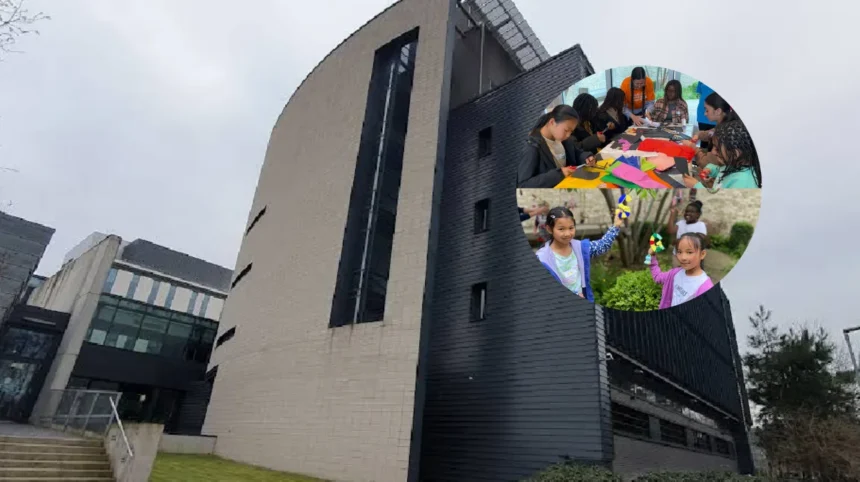
As noted by CUH Arts in its “Conversations with Clay” programme, the hospital has organised a series of free, creative and friendly workshops led by Ivan Morison, offering members of the public and hospital communities the opportunity to help shape the design of the new artwork. These sessions are being held at Addenbrooke’s Hospital and associated community spaces as part of the wider Cambridge Cancer Research Hospital public‑art programme.
Facebook posts from Cambridge Cancer Research Hospital describe the workshops as a great opportunity to help shape the design of public art in the new Cambridge Cancer Research Hospital, inviting participants to explore material experiments and contribute ideas for how the piece should function within the foyer. Information from Cambridge Network adds that patient and staff input is being explicitly written into the commission brief, with the aim that the final installation reflects the lived experiences and priorities of those who will use the hospital most frequently.
Where will the installation be placed?
The sculpture is planned for the entrance atrium of the Cambridge Cancer Research Hospital, which is under construction on the Cambridge Biomedical Campus. According to Cambridge Network, this location is intended to ensure that “The Welcome” forms the first major visual and spatial experience for people arriving at the hospital, whether they are patients, families, visitors or staff.
The atrium’s scale and prominence within the building’s design mean the artwork will be visible from multiple vantage points, including the main reception desk and adjacent circulation routes. Hospital communications from the Cambridge Cancer website indicate that the creative installation will be integrated into the architectural flow of the foyer, rather than simply hanging on a wall, with the aim of reinforcing orientation and wayfinding through colour, texture and form.
How was the artist chosen?
The selection of Ivan Morison was made through a competitive commissioning process coordinated by hospital and arts‑in‑health partners, with the Cambridge Network account noting that the panel included NHS staff, patient representatives, local authority partners and independent arts specialists. This structure is consistent with standard practice in public‑art programmes, where judging panels are designed to balance professional art expertise with institutional and community perspectives.
In addition, the CUH Arts website signals that the hospital’s arts programme is built around a network of artists and exhibitors who apply via a formal submission process, including examples of previous work, CVs and statements of practice. Although the exact details of Morison’s submission are not publicly disclosed, his prior experience in site‑specific and collaborative projects is cited as a factor in the decision to invite him to lead the commission.
Plans for future art projects
“The Welcome” is described by Cambridge Network as the first of several art commissions planned for the Cambridge Cancer Research Hospital, with the intention that visual and sculptural works will be woven throughout the building’s public realm. The hospital’s broader arts‑in‑health strategy, as outlined by CUH Arts, includes a commitment to embedding art into the design of clinical environments to support wellbeing, reduce anxiety and enrich the experience of care.
No specific list of the additional commissions has been published, but the hospital’s online communications indicate that further artists and artworks will be selected over time, including opportunities for local and emerging creators to contribute to the hospital’s cultural landscape. Future projects may extend into waiting areas, corridors and treatment spaces, maintaining the same emphasis on co‑production with patients and staff that is being applied to “The Welcome”.
Background of the development
The commission for “The Welcome” sits within the wider construction and programming of the Cambridge Cancer Research Hospital, a specialist facility being developed on the Cambridge Biomedical Campus to bring together advanced cancer research with clinical care. The hospital is being delivered by Cambridge University Hospitals NHS Foundation Trust, in partnership with academic and research organisations, as part of a long‑term strategy to strengthen cancer services in the region.
At the same time, CUH Arts has been active in integrating creative projects into the trust’s estates, including the existing Addenbrooke’s Hospital site, where workshops such as “Conversations with Clay” have been used to test and refine approaches to community‑led art. The decision to commission a major, collaboratively developed artwork for the new cancer hospital reflects a growing emphasis across the NHS on arts‑in‑health as a tool for improving patient experience and staff wellbeing.
Public‑art commissions of this scale are typically programmed early in the design stages of large hospital builds, allowing artists to respond to architectural plans and spatial layouts. The choice of Ivan Morison, whose practice already crosses between sculpture, installation and participatory performance, aligns with this approach, as his work is designed to evolve in response to the environment and the people who inhabit it.
Prediction for local audiences and stakeholders
For patients and visitors arriving at the Cambridge Cancer Research Hospital, the installation of “The Welcome” is likely to influence their first impressions of the building, potentially softening the clinical atmosphere of a major cancer treatment centre through a tactile, regional material language. Because the piece has been developed in collaboration with patients and staff, it may feel more personally resonant than a conventional corporate‑style artwork, which could help reduce anxiety and foster a stronger sense of belonging.
For local residents and community groups, the commission reinforces the hospital’s role as a cultural as well as a medical institution, widening the range of ways people can engage with the Cambridge Biomedical Campus beyond clinical visits. The ongoing workshops and public‑engagement activities linked to the project may also encourage greater participation in arts‑in‑health initiatives more broadly, potentially leading to further collaborations between hospitals, artists and community organisations across Cambridgeshire.
For artists and creative professionals, the high‑profile commission signals that the NHS and its partners are prepared to invest in ambitious, co‑produced public‑art projects within healthcare environments. This could open up new opportunities for site‑specific work in hospitals and other public‑health settings, especially projects that emphasise local materials, community input and long‑term engagement rather than purely decorative schemes.